首頁鱿鱼

搜尋歷史
熱門搜尋
經銷商登入 / 註冊


In the context of the rapid iteration of the new energy vehicle market, Chinese intelligent manufacturing is stepping into the center of the global industrial stage.
In the first half of 2026, China's car exports reached 5.096 million units, covering 210 countries and regions. Among them, new energy vehicle exports reached 2.355 million units, and the global automotive landscape has undergone profound changes. With the increasing recognition of Chinese new energy vehicles in overseas markets, industrial competition is also undergoing a profound transformation.
In the past period, some pure electric models tended to rely on short-term publicity and technical parameter patchwork to attract attention. However, in actual product use, shortcomings in reliability, environmental adaptability, and long-term durability gradually emerged, triggering a re-examination by the market. Facing this phenomenon of rapid car making, Chery, as a local brand with a 23-year history of being number one in exports and over 20 million users globally, chose to direct its focus to a longer product lifecycle.

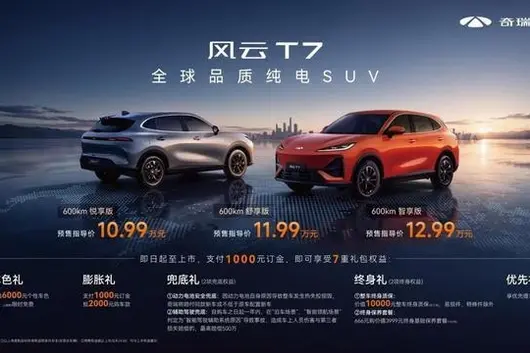
Yesterday, Chery officially launched the pre-sale of Fengyun T7, locking the pre-sale price range between 109,900 yuan and 129,900 yuan, launching 3 different configuration versions, and simultaneously launching 7 layers of car purchase benefits. This pre-sale was themed "Slow craftsmanship makes good cars, long awaited", showcasing the brand's adherence to the philosophy of long-termism in car making.

As a pure electric SUV born from Chery's global quality manufacturing system, Fengyun T7 is not simply exporting domestically existing models after facelifting, but simultaneously considering the actual car usage needs of 210 countries and regions during the planning stage. Its global sibling model Lepas L6 has already been launched in overseas markets such as South Africa and Thailand, and is about to start the launch process in Indonesia, EU, Australia/New Zealand, UK, Israel, and Malaysia, among other countries and regions. Fengyun T7 matches a global standard R&D system with a mass-market price, attempting to break the rules of previous new energy vehicles on configuration layering and price premiums, one-stop covering the six core rigid needs of quality families for appearance, travel, safety, intelligence, comfort, and peace of mind.
Global Verification System under Extreme Environments
Product reliability cannot be built on publicity slogans. Only by repeatedly polishing vehicles in harsh natural environments and diverse road conditions can hard-core quality beyond regional limitations be refined.

A vehicle's durability attributes and stable quality come from rigorous early R&D and high-density real vehicle testing. Fengyun T7 set a 2-year planning period and 3-year R&D period in the early stage of R&D, relying on Chery's global 1+7+N R&D system and 10 major global design centers for overall polishing. In design protocols, the vehicle strictly followed the 2026 E-NCAP 5-star safety standard development, reached ASILD high-level functional safety requirements, and met global data compliance regulations. To master the real usage habits of users in different regions, the R&D team completed more than 5,000 global user surveys, visited 15 typical countries in depth, ensuring the product concept had broad universality from the initial project approval.

To verify the actual performance of the vehicle under complex geographic conditions, Fengyun T7 invested 81 dedicated durability test vehicles to conduct synchronous road tests. The total accumulated test mileage exceeded 6 million kilometers, including 1.45 million kilometers of durability special actual tests, with road conditions covering more than 100 extreme environments in the EU, Australia/New Zealand, Middle East, South Africa, Russia, Mexico, Brazil, and other places. The vehicle's all-region environment adaptation interval reached -40°C to 55°C. In the extremely cold Nordic environment, the vehicle's twin-source wide-temperature range heat pump, first in its class, combined with the high-voltage PTC system, can operate stably in -30°C environments, and in -20°C environments, it only takes 20 minutes to raise the interior temperature to 23°C, increasing the winter range achievement rate by 30%.
In the hot and humid Southeast Asian rainy season environment, facing the 150mm wading depth prescribed by national standards, Fengyun T7 achieved 500mm off-road waterproof performance, and optimized the air conditioning filter for anti-mold, eliminating odor generation under high humidity conditions. In the Middle East high-temperature sun exposure areas, the vehicle was equipped with a 4.5L large-capacity cleaning fluid tank, and the wiper durability in windy, sandy, and rainy weather was optimized. Facing the strong UV radiation in plateau areas, the body paint and sealing strips underwent special reinforcement, reducing aging risks under cold-hot alternation, strictly controlling vehicle interior volatiles. For overseas complex road conditions, the vehicle covered 95% of global road types including high speed bumps and gravel roads in Brazil, cobblestone roads in Mexico, German highway high-curvature curves, and unpaved mud roads in South Africa, and added protective structures to the front and rear beams of the battery.

In terms of manufacturing processes, Fengyun T7 relies on Chery's unified global quality manufacturing standards for production. The welding workshop adopts fully automatic welding technology, achieving ±0.01mm hair-level precision; automated painting processes ensure the entire vehicle has excellent corrosion resistance throughout its lifecycle; the final assembly workshop can realize one vehicle off the line every 60 seconds, and coordinates with full-process AGV logistics and automated operations. The AI+5G Eagle Eye Inspection Station established in the workshop arranged more than 200 visual inspection points, with detection sensitivity reaching 100 times that of the human eye, ensuring that every vehicle leaving the factory has a high level of process consistency.
Design Expression Balancing Aesthetics and Practicality

Excellent design should not stay at the moment of visual stimulation; texture that can withstand erosion by time and use wear is the aesthetics truly suitable for long-term family life.
Current new energy SUV designs show a differentiated trend; some styles pursue gimmicks and appear somewhat exaggerated, while some styles appear outdated and lack texture. Chery Fengyun Series built a twin-star visual combination through Fengyun A9 and Fengyun T7, attempting to find a balance between aesthetics and practical value in styling design. Fengyun T7 was co-designed by 8 major R&D design centers globally, top overseas designer teams, and more than 5,000 global users. Its sibling model Lepas L6 was previously unveiled at Milan Design Week and gained attention in overseas markets. The vehicle's length, width, and height are 4570mm, 1852mm, and 1694mm respectively, with a wheelbase reaching 2700mm. The overall styling presents a relaxed and coordinated proportional relationship.

In exterior shaping, Fengyun T7 adopts a wind-driving front design. Swift wind lines cooperate with wind-edge headlights, balancing lighting visual effects and visual tension. The body lines adopt wind-sculpted satin surfaces, presenting rich light and shadow layers; the rear part is equipped with a sky-sunset tailgate. Wide shoulder lines outline a steady visual sense, avoiding redundant and exaggerated decoration, meeting aesthetic expectations for long-lasting visual appeal.

To meet the aesthetic preferences of different families, Fengyun T7 provides 6 Eastern Elegance colors: Blazing Orange, Mountain Smoke Purple, Cloud Pink Rice, Flowing Silver, Green Bamboo Gray, and Ink Stone Black. Among them, the Blazing Orange color adopts the class-exclusive Tri-coat three-layer car paint process, combined with 2K 8-layer exterior paint and nano-pearlescent color paste, capable of presenting gradient textures under different lighting conditions. The entire vehicle paint surface and exterior trim passed high-altitude strong UV and high-low temperature alternating tests, possessing good scratch resistance and aging resistance, and is not easy to lose luster or fade during long-term use.


Entering the interior, Fengyun T7 adopts a Cloud-Wing Embracing cockpit layout. The central console lines extend to the door panels on both sides, creating a sense of spacious and open space. The cockpit is largely wrapped in soft materials, cooperating with Pebble Suspended Sony speakers, Jewelry-Level Diamond Double-Row Quilting, and Dynamic Water Ripple interior textures, improving the tactile and visual experience inside the vehicle. Interior provides Black-Brown Warm color scheme and Extreme Night Obsidian color scheme, adapting to the personalized preferences of family users and young groups respectively. The central console reduced the use of high-reflection materials to adapt to driving safety needs in strong light areas. The vehicle is equipped with a 64-color dynamic ambient light, which can link with music. In addition, all vehicle sealing strips and plastic parts have undergone weather resistance optimization, avoiding the situation where materials become hard or dull after long-term use, balancing visual aesthetics and sound insulation durability.
Steel and Iron Bones Safeguarding Safety and Pure Electric Travel Assurance

In the dimension of family car use, safety protection and range performance are the core elements determining travel quality. Fengyun T7 adopts a Nine-Horizontal-Five-Vertical cage body layout in terms of body structure. The application ratio of high-strength steel throughout the vehicle reaches 80%, of which hot-formed steel accounts for 18.84%. The vehicle structure designed the class-exclusive shotgun structure, 1088mm through-rolled threshold, double-frame subframe, and PACK anti-collision beam, building 9 front and 6 side collision force transfer paths, capable of effectively dispersing impact energy during a collision, leaving enough survival space for the passenger cabin.
In passive safety configuration, Fengyun T7 series is equipped with 9 airbags, including 48L large volume dual-chamber remote airbags and 1778mm side curtains, cooperating with 6-second long-term pressure retention technology, providing protection for front and rear passengers when the vehicle rolls or is hit continuously. The vehicle completed multiple extreme safety tests such as Front Pole, Side Pole, Offset Collision, 40km/h Pole Insertion Collision, and MCB Collision Brake Stop, and provides underwater window power supply for more than 5 minutes and multi-scenario automatic unlocking escape functions after an accident.

Addressing user concerns about battery safety and range, the Fengyun T7 series comes standard with a 65.05kWh Rhino Battery. CLTC range is 600km, and in actual tests, range performance can reach over 667km. In battery fast charging mode, charging from 30% to 80% power only takes 20 to 22 minutes. The Rhino Battery has a cycle life of over 2,500 times, can meet the whole vehicle long-term use needs, and operating temperature covers -40°C to 60°C. Regarding battery safety, the Rhino Battery adopts a 6D Locking Armor 31-layer protection structure. The side can withstand 200kN extrusion (reaching 2 times national standard), possesses 1008-hour salt spray test resistance and 1.5 times national standard fire resistance duration. Its protection level reaches IP68, waterproof depth requirements reach 96 times the national standard, effectively responding to wading and standing water roads during rainy season.
To improve the overall vehicle energy utilization efficiency, Fengyun T7 adopts a whole-region low energy consumption design, comes standard with AGS Active Grille Shutter, which can reduce 12 drag counts. Cooperating with 14 low-drag streamline designs, the whole vehicle cumulatively reduces drag by 51 counts. The vehicle integrates a 16-in-1 efficient thermal management system. Cooperating with dual-source wide-temperature range heat pump and PTC heating, it enables the vehicle's range in winter environments to increase by 30%, reducing the impact of ambient temperature changes on travel planning.
Deep Integration of Intelligent Technology and Driving Comfort
The true value of technology is not to create complex operation steps, but to simplify driving experience invisibly, making every travel easy and free.


Cockpit intelligence should not stay at single-function showmanship, but needs deep collaboration with driving safety and mechanical chassis. Fengyun T7 class-first equipped with a 4nm process integrated cockpit-driving 8775 chip, possessing 72 TOPS NPU computing power. This chip realizes the fusion redundancy of cockpit entertainment and intelligent driving safety hardware. System response time is as low as 80ms, startup speed increased by 33%, significantly reducing operation lag feeling. The vehicle interior is equipped with a 15.6-inch 2.5K HD anti-glare large screen, supporting wireless CarPlay, HUAWEI HiCar, and full coverage of CarLink, realizing seamless connection between mobile phones and vehicle machines.
In cockpit interaction experience, Fengyun T7 is equipped with Lingxi Smart Cockpit 2.0, integrated with Doubao Large Model, supporting full-scenario fuzzy semantic interaction. The system provides 6 major real-person voice personas: Xiao Qi Classmate, Northeast Auntie, Contrarian Master, Spoken Language Teacher, Story King, and Professional Debater, enhancing the fun and companionship of human-machine interaction. At the same time, the vehicle is built-in with 6 major one-key scenario modes: Power Nap, Energize, Sentry, Baby, Pet, and Camping, covering diverse usage needs of family parking.

In driving assistance, Fengyun T7 is equipped with Falcon 500 Intelligent Driving System, carrying 22 high-precision sensors including 3 mmWave radars, 7 high-performance cameras, and 12 ultrasonic radars. The system supports 200 to 300+ full-scenario automatic parking, covering remote parking, exit-and-park, dead-end parking, multi-floor parking, and 100-meter trace reverse, among other functions. The Highway Pilot Assist function can predict lane changes and ramp merges 500 meters in advance, reducing the fatigue of long-distance driving.

Regarding seating space and chassis texture, Fengyun T7 achieved an 84% interior efficiency rate, the rear row has 911mm legroom and flat floor design, ensuring seating comfort. The vehicle interior is equipped with 9-layer composite cloud-feel seats, supporting 3-level heating and suction-style 3D-mesh ventilation. In -20°C environment, it only takes 5 minutes to raise the temperature to 30°C. After the rear seats are folded down, a flat space of 1955mm x 1310mm can be expanded. The trunk regular capacity is 450L, including 19L privacy compartment and 99L sunken storage space. Maximum expansion capacity reaches 1550L. The interior sets up 38 storage spaces, including umbrella slots, 50W wireless fast charging, 3 Type-C interfaces and 1 USB interface. It also provides 4 eyelets bearing 300kg and 2 3kg hooks, facilitating outdoor loading and fixing.

The chassis is tuned by the former Maserati chassis expert team, possessing a 50.8:49.2 front-rear axle load ratio and 560mm low center of gravity design. It is equipped with 70mm large bushings to filter road bumps. Based on Chery's independently designed ground mobile dual-axis K&C test bench since 2009 and 26 years of chassis R&D accumulation, Fengyun T7 is equipped with a One-Box line-braking system with a maximum build-up pressure time of 136ms. It optimizes stability at speeds above 160km/h and passed four-post rig and 720-hour all-road condition simulation verification.
Responsibility and Commitment for the Full Lifecycle of Car Use
Comprehensive corporate responsibility lies not in promises during the marketing stage, but in daring to bear the final responsibility for the safety and reliability of the entire product lifecycle.

When users purchase new energy vehicles, besides focusing on the vehicle product power itself, they pay more attention to potential concerns such as maintenance costs during the follow-up use process, battery degradation, and intelligent driving safety responsibility. Aiming at these realistic pain points, Chery launched "Two Major Safety Nets" and "Two Lifetime Benefits" during the Fengyun T7 pre-sale period, attempting to solve users' worries from the perspective of the full lifecycle dimension.
Regarding the two major safety nets, the first item is Power Battery Safety Safety Net: If the whole vehicle suffers thermal runaway damage due to the battery pack itself, Chery promises to compensate with a new car of the same model or a new car with configuration not lower than the original car. The second item is Assisted Driving Safety Net: Within one year from the date of car purchase, under parking scenarios and intelligent pilot scenarios, if an accident is caused and judged to be caused by the intelligent driving assistance system, resulting in injury to personnel on the vehicle or third-party loss, Chery will provide compensation guarantee up to 5 million yuan. These two backstop strategies directly respond to user concerns about battery spontaneous combustion risks and intelligent driving responsibility definition.
Regarding the two lifetime benefits, Chery provides a 10,000 yuan whole vehicle lifetime warranty (including three-electric system, except for wear-and-tear parts and special parts). At the same time, users can purchase a 3,999 yuan lifetime basic maintenance package for 666 yuan, enjoying 1 time of basic maintenance service per year. These benefit combinations reduce the economic burden of users on subsequent car maintenance and use, reflecting the brand's confidence in its own product reliability and manufacturing quality.
Written at the end:
In an era of rapid iteration of car making technology and colorful marketing means, Chery Fengyun T7 chose a solid path relying on technology accumulation and global verification. From project R&D with global standards, actual measurement refinement of global diverse climates and complex road conditions, to meeting six core rigid needs including safety, range, space, intelligence, aesthetics, and assurance, Fengyun T7 displays a car making posture of a long-termist.
Facing changes in the global industrial landscape, Fengyun T7, with national-level price range and globally unified manufacturing standards, brings high-quality pure electric travel experience to broad family users. This car making philosophy that focuses on R&D investment, emphasizes real vehicle verification, and bears full-cycle responsibility not only enriches consumers' car purchase choices but also injects steady power into the high-quality development of the new energy vehicle industry. The launch of Fengyun T7 pre-sale is a display of product strength, and even more a steady response from a craftsman brand to user expectations.
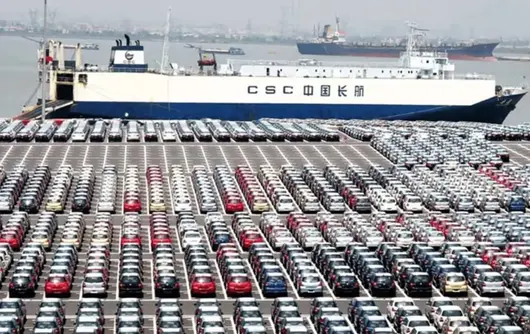

8 月 12 日,奇瑞風雲序列再添新作——全球品質純電 SUV 風雲 T7 正式開啟預售。本次預售發布會以「慢功造好車,久等了」為主題,傳遞風雲 T7 秉持長期主義嘅造車理念同紮實打磨全球品質嘅堅守。新車共推出 3 款版型,預售指導價格區間為 10.99 萬元至 12.99 萬元,同步推出 7 重購車權益。
倚靠奇瑞 23 年全球化技術積澱,風雲 T7 走出了一條「反向出海」嘅試煉路徑——從全球標準研發、全球審美設計、全球工藝製造,到全球路況驗證,以全鏈條嚴苛標準打磨產品,最終奔赴中國用戶。圍繞品質生活六大核心新剛需,風雲 T7 將顏值、安全、出行、智能、舒享、安心融為一體,適配通勤、遠途、戶外、多人出行等多元場景。

編輯
對標全球五星安全 全域防護硬核兜底
風雲 T7 對標 2026 版 E-NCAP 五星安全標準設計,功能安全達到 ASILD 最高等級。2 年策劃、3 年研發,共投入 81 台專屬耐久車同步路試,整車累計測試里程超 600 萬公里,耐久專項實測 145 萬公里。針對東南亞雨季、中東高溫暴曬、印尼高濕等多種全球地域進行極限實車試煉。
車身採用 80% 高強度鋼、18.84% 熱成型鋼打造九橫五縱籠式車身,配合 shotgun 結構、雙框副車架與 Pack 防撞樑,前面 9 條加側面 6 條碰撞傳力路徑可最大化分散碰撞能量,留存乘員生存空間。全車搭載 9 個安全氣囊,包含 48L 雙腔遠端氣囊和後排側氣囊。全系標配犀牛電池,超强 6D 防護全方位抵禦擠壓、穿刺、衝擊,IP68 防水為國標 96 倍,無懼雨季內澇與戶外涉水。

編輯
全系 600 公里續航平權 適配全球多元氣候
風雲 T7 實現續航配置全系平權,全系標配 65.05kWh 大容量犀牛電池,CLTC 續航 600km,實測續航達 667 公里以上。電池從 30% 充至 80% 僅需 20 分鐘。搭載全域一體化熱管理雙源寬熱泵空調與高壓 PTC,可在 -30℃至 55℃超寬溫域穩定運轉,配合全系標配嘅 AGS 智能格柵進氣口與 14 項低風阻優化,南北用戶均可從容出行。
超大座艙空間 大師底盤調校穩中帶感
整車尺寸 4570×1852×1694mm,軸距 2700mm,車內得房率 84%,後排純平地台,腿部空間達 911mm。後排放倒可拓展為 1955mm 純平大牀,後備箱容積 450L、拓展至 1550L。
風雲 T7 推出兩大兜底保障同兩項終身權益:動力電池因自身原因導致熱失控損毀,賠償同款新車;購車一年內因智駕系統原因導致事故,最高賠償 500 萬元。同時提供整車終身質保(含三電)及 666 元購價值 3999 元終身基礎保養套餐(1 次/年)。

編輯
全球標準下沉,十萬級純電 SUV 競爭格局生變
風雲 T7 以 10.99 萬元起嘅預售價格入市,在同級市場中展現出較強嘅競爭力。有分析指出,其核心差異在於「全系 600km 續航平權」——這啲喺目前 10 萬級純電 SUV 市場中較為少見。相較於部分競爭對手透過電池容量區分高低配嘅做法,風雲 T7 嘅策略直接回應咗入門級用戶對續航焦慮嘅核心關切。
特別值得關注係,風雲 T7 遵循「先出海、再歸國」嘅研發路徑,同源車型 Lepas L6 喺泰國、南非等市場先行上市。按照 2026 版 E-NCAP 五星安全標準開發,投入 81 台耐久車、累計測試超 600 萬公里,覆蓋從北歐極寒到中東酷熱嘅極端環境。這種以全球標準倒逼產品品質嘅做法,喺 10 萬級家用 SUV 中尚不多見。
風雲 T7 身上體現出嘅邏輯,同當前行業主流路徑有著明顯唔同——佢唔係靠壓縮研發週期、省略驗證環節嚟搶市場,而係用更長嘅週期把車做紮實,再帶住全球市場嘅驗證結果返內地。喺一個「唯快不破」嘅行業氛圍中,呢種「慢」確實需要定力。
風雲 T7 能否突圍,視乎幾個變數嘅最終兌現:實際續航達成率能否令人信服、底盤舒適性能否匹配家用需求、車內空間是否滿足家庭出行場景。如果呢啲「需要驗證」嘅環節均能交出合格答卷,咁「全系 600km+ 全球品質背書 +10.99 萬起」嘅組合確實具備成為細分市場「規則改寫者」嘅潛力。但參數優勢能否轉化為實際口碑,視乎實車喺續航達成率、底盤舒適性、空間表現等維度嘅真實表現。

喺馬來西亞嘅 SUV 市場,好多買家喺揀車嘅時候都係會拿 Proton X90 同 Chery Tiggo Cross 嚟做比較。呢兩款車喺價位同定位上都好接近,今日我哋就從多個方面做一次詳細嘅比較,幫大家省下做功課嘅時間。
Proton X90 喺馬來西亞嘅 OTR 售價係 RM 106,800 - 122,800,一共有 4 個版本,包括 2026 1.5T Prime X(RM 122,800)、2026 1.5T Prime(RM 116,800)、2026 1.5T Lite(RM 106,800)等。
Chery Tiggo Cross 喺馬來西亞嘅 OTR 售價係 RM 88,750 - 99,750,一共有 2 個版本,包括 2025 HEV 1.5L CSH(RM 99,750)、2025 1.5T Standard(RM 88,750)等。
從價錢嚟睇,Chery Tiggo Cross 嘅起步價比 Proton X90 平咗 RM 18,050。講句真,喺呢個價位段,幾千蚊嘅差距其實唔算好大,關鍵都係睇整體嘅性價比同長期使用成本。

Proton X90 配 1.5L Turbo,馬力 140 匹。官方油耗 7.0 L/100km。
Chery Tiggo Cross 配 1.5L 4-cyl,馬力 105 匹。官方油耗 6.0 L/100km。
動力方面,Proton X90 嘅 1.5L Turbo 比 Chery Tiggo Cross 嘅 1.5L 4-cyl 多咗 35 匹馬力,中段加速更有信心,尤其係跑高速公路超車嘅時候。不過 Chery Tiggo Cross 嘅油耗可能更抵玩,日常市區通勤差別唔會太大。

Proton X90 嘅安全評級係 5★ (ASEAN NCAP),主動安全系統包括 ADAS (ACC, AEB, LKA, LDA, BSM, RCTA)。
Chery Tiggo Cross 嘅安全評級係 TBD,主動安全系統包括 Basic。
安全配備方面,兩款車都拿到唔錯嘅評級。不過 Proton X90 嘅 ADAS (ACC, AEB, LKA, LDA, BSM, RCTA) 同 Chery Tiggo Cross 嘅 Basic 喺功能上有啲分別,如果你比較重視主動安全嘅話,可以仔細比較下兩者嘅功能列表。

Proton X90 採用 FWD 驅動方式。
Chery Tiggo Cross 採用 FWD 驅動方式。
兩款車嘅驅動方式一樣,都係 FWD,日常駕駛感覺唔會有太大分別。

Proton X90 同 Chery Tiggo Cross 都係馬來西亞市場嘅主流選擇,適合家庭使用、日常通勤。如果你更重視品牌口碑同二手價,可以優先考慮口碑更好嗰一款;如果你更在意性價比同配備,那就揀配備更豐富嗰款。最終都係建議兩款都去試駕,親身體驗先係最緊要嘅。

總計嚟講,Proton X90 同 Chery Tiggo Cross 都係馬來西亞市場幾咁好嘅車型。揀邊一輛,關鍵都係要睇你嘅個人需求同預算。建議大家做好功課,多比較幾間車行嘅報價,先去試駕做最終決定。買車係件大事,花點時間做功課絕對無錯。


In the Malaysian SUV market, many buyers compare the Proton X70 and Mazda CX-3 when selecting a car. These two cars are quite close in terms of price and positioning, so today we will conduct a detailed comparison from multiple aspects to help you save time on research.
The OTR price of the Proton X70 in Malaysia is RM 106,800 - 122,300, with a total of 3 versions, including 1.5L Standard 2WD (RM 106,800), 1.5L Executive 2WD (RM 115,800), 1.5L Premium 2WD (RM 122,300), etc.
The OTR price of the Mazda CX-3 in Malaysia is RM 126,159 - 139,159, with a total of 2 versions, including 2023 2.0L High (RM 139,159), 2023 2.0L Plus (RM 126,159), etc.
Looking at the price, the Proton X70's starting price is indeed RM 19,359 cheaper than the Mazda CX-3. If your budget is limited, Proton's entry-level version can already meet daily needs. However, it is also worth noting that the few thousand Ringgit saved might involve trade-offs in features, depending on your specific needs.

Proton X70 comes with a 1.5L Turbo, 140 hp power. Official fuel consumption is 7.0 L/100km.
Mazda CX-3 comes with a 1.5L Turbo, 140 hp power. Official fuel consumption is 7.0 L/100km.
Both cars use the same powertrain system, so the driving experience is basically the same. Fuel consumption is also about the same, so there is no need to worry too much about this point.
The safety rating of the Proton X70 is 5★ (ASEAN NCAP), active safety systems include ADAS (ACC, AEB, LKA, LDA, BSM, RCTA).
The safety rating of the Mazda CX-3 is 5★ (ASEAN NCAP), active safety systems include i-Activsense.
Both cars have the same safety rating. In this class, safety features are considered quite comprehensive. New cars generally have good safety nowadays, so there is no need to worry too much about this point.

Proton X70 warranty 5 years/150,000km, maintenance interval every 10,000km or 6 months.
Mazda CX-3 warranty 5 years/150,000km, maintenance interval every 10,000km or 6 months.
Both cars have the same warranty conditions, so no need to worry too much about this aspect. Actual maintenance costs depend on the brand's service network and parts prices. It is recommended to ask real owners in car enthusiast groups for their experience.
Overall, both Proton X70 and Mazda CX-3 are very good models in the Malaysian market. Which one to choose depends mainly on your personal needs and budget. We recommend doing your research, compare quotes from several dealerships, and then go for a test drive to make the final decision. Buying a car is a big matter, spending a bit of time on research will never be a mistake.


喺馬來西亞嘅 SUV 市場,好多買家喺揀車嗰陣都會拿 Proton X70 同 Mazda CX-60 嚟做比較。呢兩款車喺價位同定位上都幾接近,今日我哋就由多個角度做一個詳細嘅比較,幫你慳返做功課嘅時間。
Proton X70 喺馬來西亞嘅 OTR 售價係 RM 106,800 - 122,300,合共 3 個版本,包括 1.5L Standard 2WD(RM 106,800)、1.5L Executive 2WD(RM 115,800)、1.5L Premium 2WD(RM 122,300) 等。
Mazda CX-60 喺馬來西亞嘅 OTR 售價係 RM 200,510 - 252,873,合共 2 個版本,包括 2026 3.3T 4WD High Plus(RM 252,873)、2025 2.5L 2WD High(RM 200,510) 等。
睇返價錢,Proton X70 嘅起步價確實比 Mazda CX-60 平咗 RM 93,710。如果你預算唔多,Proton 嘅入門版已經可以滿足日常需要。但都係要注意,平咗嘅幾千蚊,可能喺配備上會有所取舍,具體就要睇你嘅需要。

Proton X70 配備 1.5L Turbo,馬力 140 hp。官方油耗 7.0 L/100km。
Mazda CX-60 配備 2.0L 4-cyl,馬力 170 hp。官方油耗 8.0 L/100km。
動力方面,Mazda CX-60 嘅 2.0L 4-cyl 比 Proton X70 嘅 1.5L Turbo 多咗 30 匹馬力。不過日常喺市區開,兩款車嘅動力都夠用,唔會覺得無咩力。

Proton X70 嘅安全評級係 5★ (ASEAN NCAP),主動安全系統包括 ADAS (ACC, AEB, LKA, LDA, BSM, RCTA)。
Mazda CX-60 嘅安全評級係 5★ (Euro NCAP),主動安全系統包括 i-Activsense Pro。
安全配備方面,兩款車都拿到唔錯嘅評級。不過 Proton X70 嘅 ADAS (ACC, AEB, LKA, LDA, BSM, RCTA) 同 Mazda CX-60 嘅 i-Activsense Pro 喺功能上有啲分別,如果你比較重視主動安全嘅話,可以仔細比較一下兩者嘅功能列表。

Proton X70 採用 FWD 驅動方式。
Mazda CX-60 採用 FWD 驅動方式。
兩款車嘅驅動方式一樣,都係 FWD,日常駕駛感受唔會有太大分別。
總括嚟講,Proton X70 同 Mazda CX-60 都係馬來西亞市場幾唔錯嘅車型。揀邊輛,關鍵仲係睇你嘅個人需要同預算。建議大家做好功課,多比較幾間車行嘅報價,先再去試駕先至做最後決定。買車係件大事,花少少時間做功課絕對唔會錯。

In Malaysia's SUV market, many buyers compare Proton X50 and Mazda CX-30 when choosing a car. These two cars are quite close in price and positioning. Today, we will do a detailed comparison from multiple aspects to help you save time on research.
The OTR price for Proton X50 in Malaysia is RM 89,800 - 113,300, with 4 variants in total, including 1.5T Executive (RM 89,800), 1.5T Premium (RM 101,800), 1.5T Flagship (RM 113,300), etc.
The OTR price for Mazda CX-30 in Malaysia is RM 122,409 - 146,409, with 4 variants in total, including 2025 2.0L High+ Premium (RM 146,409), 2025 2.0L High+ (RM 138,409), 2025 2.0L High (RM 130,409), etc.
From a price perspective, the starting price of Proton X50 is indeed RM 32,609 cheaper than Mazda CX-30. If your budget is limited, Proton's entry-level version is already sufficient for daily needs. But also note, the few thousand dollars saved might involve trade-offs in features, depending on your specific needs.

Proton X50's safety rating is 5★ (ASEAN NCAP), active safety systems include ADAS (ACC, AEB, LKA, LDA, BSM, RCTA).
Mazda CX-30's safety rating is 5★ (ASEAN NCAP), active safety systems include i-Activsense.
Both cars have the same safety rating. In this class, safety features are quite comprehensive. New cars nowadays generally have good safety, so there is no need to worry too much about this.
Proton X50 uses 4WD drive mode.
Mazda CX-30 uses FWD drive mode.
Proton's 4WD and Mazda's FWD will feel different in handling. A test drive comparison is recommended.

Both Proton X50 and Mazda CX-30 are mainstream choices in the Malaysian market, suitable for family use and daily commuting. If you value brand reputation and resale value more, prioritize the one with better reputation; if you care more about value for money and features, choose the one with richer configuration. Ultimately, it is recommended to test drive both. The personal experience is the most important.

Overall, Proton X50 and Mazda CX-30 are both excellent models in the Malaysian market. Which one to choose depends on your personal needs and budget. We suggest doing your research, comparing quotes from several dealerships, and then test driving to make the final decision. Buying a car is a big deal, taking time to do your homework is never wrong.


喺馬來西亞嘅 SUV 市場,好多買家喺揀車嘅時候都會拿 Chery Tiggo 8 Pro 同 Mitsubishi Xforce 嚟比較。呢兩款車喺價錢同定位上都好接近,今日我哋就從多個方面做一個詳細嘅比較,幫你省去做功課嘅時間。
Chery Tiggo 8 Pro 喺馬來西亞嘅 OTR 售價係 RM 159,750 - 159,750,一共有 2 個版本,包括 1.6L Turbo Standard(RM 130,000)、1.6L Turbo Premium(RM 145,000)等。
Mitsubishi Xforce 喺馬來西亞嘅 OTR 售價係 RM 109,930 - 119,930,一共有 2 個版本,包括 2026 1.5L Ultimate(RM 119,930)、2026 1.5L Urban(RM 109,930)等。
由價錢嚟睇,Mitsubishi Xforce 嘅起步價比 Chery Tiggo 8 Pro 平咗 RM 49,820。老實講,喺呢個價位段,幾千蚊嘅差距其實唔算大,關鍵仲係睇整體嘅性價比同長期使用成本。

Chery Tiggo 8 Pro 搭載 2.0L 4-cyl,馬力 170 hp。官方油耗 8.0 L/100km。
Mitsubishi Xforce 搭載 1.5L Turbo,馬力 140 hp。官方油耗 7.0 L/100km。
動力方面,Chery Tiggo 8 Pro 嘅 2.0L 4-cyl 比 Mitsubishi Xforce 嘅 1.5L Turbo 多咗 30 匹馬力,中段加速更有信心,尤其係行高速公路超車嘅時候。不過 Mitsubishi Xforce 嘅油耗可能更慳,日常市區通勤分別唔會太大。
Chery Tiggo 8 Pro 嘅安全評級係 TBD,主動安全系統包括 Basic。
Mitsubishi Xforce 嘅安全評級係 5★ (ASEAN NCAP),主動安全系統包括 MI-PILOT。
安全配備方面,兩款車都拿到唔錯嘅評級。不過 Chery Tiggo 8 Pro 嘅 Basic 同 Mitsubishi Xforce 嘅 MI-PILOT 喺功能上有少少差異,如果你比較重視主動安全嘅話,可以仔細比較下兩者嘅功能列表。
Chery Tiggo 8 Pro 採用 FWD 驅動方式。
Mitsubishi Xforce 採用 FWD 驅動方式。
兩款車嘅驅動方式一樣,都係 FWD,日常駕駛感覺唔會有太大分別。
Chery Tiggo 8 Pro 同 Mitsubishi Xforce 都係馬來西亞市場嘅主流選擇,適合家庭使用、日常通勤。如果你更加重視品牌口碑同二手價,可以優先考慮口碑更好嗰一款;如果你更加在意性價比同配備,就揀配備更豐富嗰款。最終都係建議兩款都去試駕,親身體驗先係最重要嘅。
總嚟講,Chery Tiggo 8 Pro 同 Mitsubishi Xforce 都係馬來西亞市場好唔錯嘅車型。揀邊一輛,關鍵仲係睇你嘅個人需求同預算。建議大家做好功課,多比較幾間車行嘅報價,先去試駕先做最終決定。買車係件大事,花少少時間做功課絕對唔會錯。


車型概覽

SWM斯威汽車 G01 值唔值得睇,第一步唔係望牌子或者外形,而係睇佢能唔能夠配合你嘅香港日常。 呢篇會集中講高速巡航、併線同超車信心,幫你用買家角度篩走唔適合嘅選擇。
售價仍待確認,買家可以先把佢放入候選名單,等價格落實後再同同級車逐項比較。
購車價格指南
SWM斯威汽車 G01 目前售價仍未清晰,較理性嘅做法係先睇版本、車身大小同動力形式,等價格落實後再決定值唔值得落訂。
如果有幾個版本可揀,可以先將 2022 1.5T 雙離合版(價格待確認) 放喺同一張清單。日常通勤重視舒適同易用,家庭買家就要優先睇後排、尾箱同安全配置。
核心規格重點
睇 SWM斯威汽車 G01 嘅規格,重點唔係背數字,而係理解佢喺香港用車場景會帶嚟咩分別。
渦輪增壓、4 個 汽缸、1498 mL 排量 嘅動力底子,重點係市區跟車夠唔夠順、高速巡航會唔會吃力。 156 Ps / 115 kW、212 N·m 嘅輸出,對滿載、上斜同超車都比單睇馬力數字更有意思。 車長 4610 mm、車闊 1855 mm、車高 1740 mm、軸距 2750 mm 可以幫你預判商場停車場、屋苑車位同後排腿部空間。 濕式雙離合(DCT)、前置前駆 會影響起步順滑度、濕地穩定感同長途巡航性格。
優缺點分析
SWM斯威汽車 G01 嘅優點唔需要講到天花龍鳳,真正有價值係佢能唔能夠令日常用車更省心:動力輸出對高速同上斜更有底氣、空間同車身尺寸方便家庭買家預判實用性。
要留意嘅係,香港停車場同窄路使用要留意車身闊度、售價未清晰前唔應該太早用性價比落結論。呢啲唔一定係缺點,但係落訂前應該先諗清楚。
買家常見問題
買 SWM斯威汽車 G01 之前,真正要問嘅唔係單一規格,而係佢可唔可以融入你每日嘅生活節奏。
常見疑問係「SWM 斯威汽車 G01 的動力同燃油效率表現係點樣?」簡單講,SWM 斯威汽車 G01 搭載 1.5T 引擎,動力足夠,綜合油耗約 7.5L/100 公里。 放到實際用車,就係要睇佢對通勤、泊車、家庭乘坐同長期成本有幾大幫助。
同級對比內容
將 SWM斯威汽車 G01 放入同級車清單時,唔建議只用外形或者品牌光環決定。比較順序可以係:先等售價落實,再決定佢應該同邊個級距比較、再睇動力係咪足夠應付高速併線同滿載、最後睇車身大小、座位同尾箱是否適合家人。
咁樣篩選會貼近香港買家真實生活:平日塞車、商場泊車、周末去新界、甚至一家人出入,先係一部車每日要面對嘅考驗。
用車全周期指南
擁有 SWM斯威汽車 G01 唔係買車一刻就完結,之後仲有保險、輪胎、保養、泊車同日常能源成本要處理。
如果你主要喺市區行,視野、低速順滑度同泊車輔助會好影響心情;如果經常行高速或跨區,座椅舒適度、隔音同動力從容感會更重要。


BYD officially released the May 2026 production and sales flash report, with new energy vehicles from all brands reaching a monthly sales volume of 383,453 vehicles, a slight increase of 0.26% year-on-year, achieving year-on-year positive growth in monthly sales after ten months; among them, passenger car deliveries reached 376,990 units, surging 19.4% month-on-month, wiping out the pain of previous model iterations, presenting a new pattern where the domestic base is stable, overseas sales are soaring, and high-end brands are scaling up across the board. Amidst the market environment of intensified competition in the domestic new energy sector, Tesla FSD entering China, and an intense launch of independent new products, it has forged a unique structural growth path.

The Dynasty and Ocean main brands combined sold 330,215 vehicles in May, accounting for over 80% of the group's total sales, remaining the stabilizer for BYD's sales volume. The full series had 8 models exceeding 20,000 units in monthly sales, covering products from 50,000 entry-level commuter to 200,000 home SUV.

Inside the Dynasty Network, the Yuan family sold 56,691 units, and the Song family 51,370 units. Both crossed the 50,000 threshold, becoming two major sales pillars for the brand, catering to home commuter and urban-rural travel needs; the Qin family followed closely with a stable performance of 28,360 units. The Han and Tang series maintained a volume in the six-thousand range, deeply cultivating the mid-to-large home sedan and SUV niche markets; the brand new model Xia is in the market cultivation phase, delivering 1,810 units monthly, with potential for steady volume growth as channels expand.
The Ocean Network's growth momentum is even more rapid, with 5 models entering the 20,000 club across the series: Sealion 42,615 units, Seal 34,117 units, Seagull 39,919 units, Dolphin 22,260 units, and Song PLUS 27,755 units. Among them, Seagull remains the best-selling entry-level commuter model thanks to its affordable pricing of 60,000-80,000. Sealion, as a new volume model, stands firm at the 40,000 level upon launch, filling the mid-size SUV product gap in the Ocean Network and perfecting the Ocean product tier layout. From commuter small cars to compact SUVs, the two main brands rely on DM-i hybrid and pure electric dual-line technologies to牢牢锁住 the mainstream home market share within 150,000 domestically.
Fang Cheng Bao Year-on-Year Surges 139.7%, Brand Upward Positioning Takes EffectThe high-end matrix of Denza, Fang Cheng Bao, and Yangwang sold a combined 46,489 vehicles in May, officially breaking away from the niche positioning to become a new pivot for BYD's brand premium and profit growth, breaking the industry curse of difficulty in high-end breakthrough for domestic brands.

The off-road brand Fang Cheng Bao sold 30,186 units monthly, surging 139.7% year-on-year, creating a new high in monthly sales since the brand launched. Its Titanium 7 model sold 18,280 units monthly, while Leopard 5 and Leopard 8 output remained stable, continuously squeezing the survival space for joint venture and imported models in the 250,000-400,000 hardcore off-road niche market.

Denza delivered 16,303 units in May, with the MPV benchmark D9 selling 6,721 units, and the Z9 series close to 6,000 units. MPV and mid-to-large sedan dual-line efforts helped them stand firm in the luxury new energy track; the million-level ultra-luxury brand Yangwang continued its steady climb, delivering 286 units that month, a year-on-year increase of 105.8%, completing market verification of the domestic brand ceiling product and forming a full price range product layout from 100,000+ home, 300,000-400,000 off-road, 500,000 luxury MPV to million-level flagship.

In May, BYD's overseas sales of passenger cars and pickup trucks reached 160,177 units, surging 80.7% year-on-year. Exports accounted for over 42% of the full series total sales, setting a new historical high for brand export and becoming the core driving force to stabilize May overall sales and achieve year-on-year positive growth.
Southeast Asia, Europe, and Latin America became the main incremental markets. Seagull, Song PLUS, and Yuan series continued to top new energy best-seller lists in multiple countries; the SHARK pickup truck exceeded 4,000 units in monthly exports for two consecutive months. Relying on the completion of localization production in Thailand, Brazil, Hungary, and Uzbekistan with four overseas vehicle factories, localized production continues to land, avoiding tariffs while rapidly penetrating terminal channels. Against the background of stock market competition in the domestic auto industry and normalized price wars, the rapidly expanding overseas market effectively counteracts sales volatility brought by domestic model iterations, officially upgrading from a supplementary market to BYD's core growth engine. As of now, BYD's global cumulative new energy vehicle sales have exceeded 16.5 million units, with the globalization map continuously broadening.
Intelligent Driving Empowers Product Iteration, H2 New Products Prepare to Surge VolumeMay marked a key node in BYD's intelligent driving landing, with the God's Eye intelligent driving system becoming a core bonus point for models: the number of vehicles with advanced intelligent driving across all brands exceeded 3.15 million, with daily road test data exceeding 200 million kilometers; that month, BYD implemented City Pilot and Smart Parking dual safety backup services, becoming the world's first auto manufacturer to achieve dual intelligent driving backups. Three days after policy implementation, the activation rate of models equipped with the God's Eye system in cities surged 50%. Intelligent driving experience upgrades directly drove in-store order conversion, solidifying product competitiveness for subsequent models to continue volume sales, and facing the intelligent driving market shock brought by FSD entering China.
From data details, BYD's cumulative sales from January to May 2026 were 1,405,039 units, down 20.32% year-on-year. The core reason is that the full series of main models were concentratedly iterated, and the capacity ramp-up of the 2nd Gen Fast Charge Blade Battery was restricted. The new Flash Charge Battery upgraded fast charging and low-temperature performance. Full series iteration models prioritized installing new batteries, but production line retrofitting dragged down capacity release. Order backlogs on popular models and delayed deliveries compressed the May delivery volume to a certain extent.
As the end of the second quarter approaches and the 2nd Gen Blade Battery capacity continues to release, coupled with new models such as Denza N8L, Fang Cheng Bao Titanium 7 Pure Electric Version, Sealion 05, and Xia L landing the market, the industry generally predicts that BYD's full brand sales in June are expected to exceed 400,000 vehicles. Relying on the four-dimension development logic of low-end volume locking share, high-end raising profit, overseas pushing volume, and intelligence improving product power, amidst the intensified new energy elimination round in the domestic market, BYD's full category layout advantage continues to amplify, securing its status as the domestic new energy leader, accelerating steadily towards global top auto manufacturers.
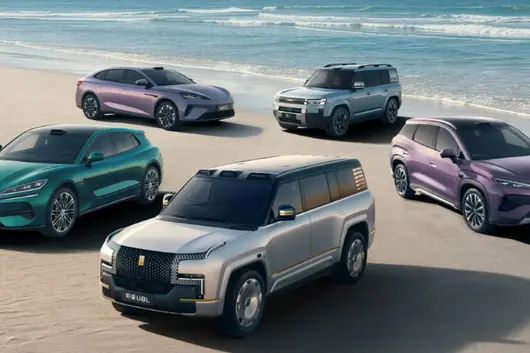

你睇過印度嘅馬路嗎?
我喺網上見過。
畫面通常係咁,一輛轎車俾牛尾擋住,旁邊仲有亂竄嘅摩托,甚至周圍仲有賣奶茶嘅小夥,嗰叫一個“乾淨又衛生”。

然而,喺呢啲睇完好多人覺得生理不適嘅地方,豐田、鈴木、本田等日本車廠,卻決定將籌碼押落印度。
據印度“品牌質量基金會”網站顯示,三家車廠將喺印度投資近110 億美元建廠、提產能、搞出口。
對此有网友表示,三家日本車廠係咪錢多到無處花?
事實上,佢哋唔係錢多到花唔完,亦唔係被印度嘅咖哩蒙蔽咗心竅,呢啲日本車廠高層遠比我哋清醒。
而家嘅日系車,營業額、市場份額都喺下滑,原材料成本仲係升得飛起,打開世界地圖,搵一個能夠容納產能、拓充份額、競爭溫和嘅市場,唔係咁容易嘅事。
所以,唔係日本車廠選擇咗印度,而係因為冇得揀。
日本車廠之痛
曾經嘅日系車,嗰時妥妥係人哋個仔。
你問下十幾年前開過日系車嘅老司機,一提起日系車,幾乎就冇唔豎大拇指嘅,價錢平、省油、耐用又抵撞……
甚至好多日系車,仲要加價購買,但邊個諗到,呢個鐵打嘅江山,短短幾年時間就俾佢哋打得找唔著北。
隨著新能源汽車浪潮嚟到,電動化、智能化變成好多自主車廠“彎道超車”嘅目標,依托於中國強大嘅新能源汽車產業鏈優勢同車廠自身對研發、技術嘅堅持,中國自主品牌迅速實現咗“彎道超車”。
曾經被人吐槽嘅國產車,而家喺馬路越來越多人,甚至份額超越咗合資。
根據乘聯會嘅數據,喺2026 年4 月,自主品牌嘅份額已經高達62.5%,遠超日系嘅13.1%。

要知道,中國汽車市場係全球最大嘅汽車市場,喺中國市場失速,就相當於丟咗一塊巨大嘅蛋糕。
同時,中國市場近年嚟嘅主旋律依舊係價格戰,捲配置、捲價格、捲服務已經成為一種常態,亦對日系車嘅利潤產生咗巨大嘅影響。
除咗中國,日系車喺美國過得亦唔太好。
2025 年 1 月 20 日,特朗普宣誓就職第 47 任美國總統,自此開啟咗一連串搞搞震,其中就包括以國家安全為理由徵收額外嘅汽車關稅,導致進口日本汽車嘅關稅稅率一度高達 27.5%,雖然後嚟有所降低,但亦遠高於最初嘅稅率。
呢個操作,直接導致七大日本車廠喺2025 財政年度嘅關稅損失超2 萬億日元。
再睇日本本土,其實亦唔容易。
中東地緣衝突導致霍爾木茲海峽航運受阻,運輸成本、原材料成本暴漲,日本車廠都有苦難言。

高管們看著報表,背後發涼,只能尋找全新嘅增長曲線。
所以,日本車廠唔係愛上印度,係冇地方去。
揀選印度嘅深思熟慮
咁,印度點解咁有魔力,先至令日本車廠重資投入呢?
第一個優勢就係大。喺2025 年,印度汽車市場取得咗551.7 萬輛嘅新車銷量,同比增長 6%,刷新咗歷史紀錄,位居全球第三大汽車市場,已经连续四年超越日本,僅次於中國同美國。
呢個含金量唔使多講啦,而印度取得呢一成績,主要係因為印度一直喺推動減稅政策,促進消費,這導致國內消費意願出現咗明顯增強。
第二個優點係近,就係離日系車賣得動嘅地方近,如非洲等其他地區。
所以,印度對於日本車廠,更似一個建喺十字路口中央嘅便利店,你唔使將車分別運去八個國家,只需要喺印度呢站造好,然後一船一船甩去,就能削減唔少成本。

《日本經濟新聞》亦認為,印度有望轉變為佢哋全球嘅汽車供應中心。
第三個優點係穩。要知道,日系車嘅優勢就係燃油車,畢竟引擎、變速箱、底盤三大件,佢哋已經玩咗好多年,技術積累喺全球都係數一數二。
但係中國汽車市場已經全力推動電動化、智能化發展,導致日系車嘅優勢越來越弱,根本無法發揮出嚟,但印度唔一樣,佢擁有充電樁少、電動化進程緩慢嘅特點,印度老百姓買車,都仲係盯住平、省油、易修,而呢三點正係日系車嘅老本行。
尤其係鈴木,一直係印度汽車市場嘅常青樹,幾乎年年穩坐暢銷車型寶座,口碑好,勝過任何廣告。
所以,日本車廠大力佈局印度市場,顯然是經過深思熟慮嘅。
但,印度市場真係咁好混咩?
難啃嘅印度市場
當然,印度亦唔係完美得似個香口格,佢嘅缺點同佢嘅優點一樣明顯,而且每一個都夠日本車廠喝一壺。
先講電動化,冇錯,眼睇下印度充電樁少、電動車賣唔動,確實係日系燃油車嘅避風港。但你得諗諗,呢個“避風港”能避幾耐?
印度此前可係喊出咗 2030 年電動車佔新車 30% 嘅口號,雖然聽落似吹水,但抵唔住人哋真補錢、真建充電站。
試諗下,萬一有日印度突然開竅,開始大力推動電動化、搞基建,充電樁似雨後春筍咁冒出來,嗰日系車唔就傻眼?
呢唔係泰國市場嘅翻版咩?
當年日系車喺泰國都係躺贏,整個東南亞市場,都被稱為日系車嘅後花園,結果泰國率先推動電動化,中國電動車一嚟,直接就成咗香口格,再睇日系車,喺泰國嘅市場份額嘩嘩嚟咗落。

如果印度係電動化一加速,歷史大概率會重演,而而家呢次,日系車連逃嘅地方都快冇咗,點樣預防,將成為日本車廠嘅首要問題。
再講政策,印度嘅政策就似一鍋咖哩,你永遠唔知下一口食到係雞肉定係馬鈴薯。
呢個魔幻嘅國家,今日係低關稅鼓勵建廠,明日就可能罰你一筆巨款,更令人頭痛嘅係強制合資,外國車廠想喺印度賣車,要搵本地夥伴搭檔,等你工廠建好咗、供應鏈搭完咗,印度直接背刺你,到嗰陣無論係加錢定撤資,換嚟嘅都係心痛。
所以你看,印度呢個市場,就好似一個睇落好甜嘅芒果,咬落去第一口仲行,再啃幾口就摸著硬核。
日系車而家嘅算盤係,趁住核都未硌牙,趕緊多啃幾口,但核遲早會硌到,只係唔知係邊一日。
尾聲
日系車呢趟印度之旅,唔係去旅遊,係去搵食。
中國同東南亞嘅飯桌更擁擠,生產、運輸嘅成本又提高咗,放眼全球,就印度呢口鍋仲冒住熱氣,哪怕入面煮嘅係咖哩味嘅石頭,都要硬著頭皮啃落去。
日本車廠想擴大市場,印度想嘅係拉動經濟、解決就業,雙方都有各自嘅心思。
至於結局係日系車喺印度重新封神,定係好似當年嘅部分友商一樣灰溜溜走人,那就唔知啦。
但無論點樣,呢場戲先至開始,我哋慢慢睇就得啦。
反正印度嘅故事,從來唔會悶。

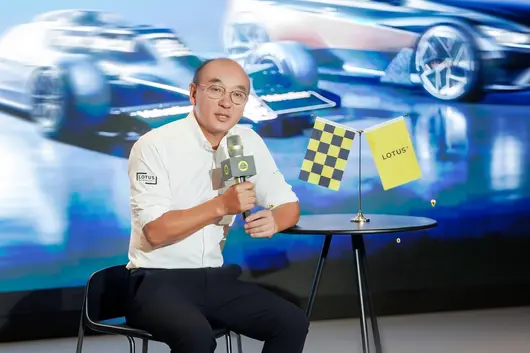
Lotus Cars announced its latest 2030 Strategy, which is a major push for sales and profitability, as well as a strategic adjustment of technology and routes.
By 2030, Lotus Cars aims to achieve annual production and sales of 30,000 units.
At the same time, it is no longer stubbornly adhering to the pure electric route, but moving forward with pure electric, hybrid, and fuel options.

However, performance cars are currently facing unprecedented changes: numerous new brands are flooding in, and traditional narrative styles are declining.
Consumers are redefining the standards for what constitutes a true performance car.
In this changing landscape, how Lotus Cars reshapes its brand and recreates its products to break through from the changes is self-evidently challenging.
To implement the 2030 Strategy, Lotus Cars is already laying out plans in earnest.
A major trump card Lotus Cars holds now is leaning on the Geely Group system, enabling it to secure more strategic resources to fight continuously.
Additionally, advancing along pure electric, hybrid, and fuel lines simultaneously can also help Lotus Cars expand its consumer base and open up markets in more countries or regions.
For Lotus, a more pragmatic and global chessboard is gradually unfolding.
The following are the core contents of the interview; we edited them without changing the original meaning.

Core Interview Content
Question: For 2030 to achieve an annual production and sales scale of 30,000 units, what will be the approximate sales distribution ratio between domestic and overseas markets? Will the brand subsequently deepen its investment in fuel models? Is there any information you can reveal on this?
Feng Qingfeng: At this stage, Lotus's sales in the US market mainly rely on sports cars produced in the UK, where tariff levels are relatively low.
China-made models face higher tariff barriers. Although adjusted down from previous peaks, the overall resistance remains significant.
Regarding fuel vehicles, the main layout for sports cars in the future will be hybrid, but in markets with strong demand for fuel vehicles, hybrid models can switch to pure fuel versions, such as in the Middle East and Saudi Arabia. Fuel prices are low, charging infrastructure is weak, and there is still some demand for pure fuel models locally.
The overall plan is hybrids accounting for 60%, pure electric 40%, with limited demand for pure fuel models.

Question: What is the specific pace of hybrid models in the overseas market? Lotus Cars has entered the US, Canada, and Brazil markets in the Americas so far. What are the expansion plans for other regions next? Recent US-Canada-Mexico races have seen high popularity, and the Geely Group is also involved. Could you ask if Lotus plans to carry out related market actions?
Feng Qingfeng: Regarding the Canadian market, delivery will start very soon. We seized a great market opportunity because when we were doing global product development certification, we completed all North American certifications in 2024.
Previously, when we entered the US market, the Eletre model had already announced its price and opened orders. Order performance was very good; once prices were announced, orders reached 6,000 units at one point.
With the recent China-Canada trade agreement lowering tariffs, we were able to enter the Canadian market at the fastest speed.
The South American market will gradually unfold starting with Brazil.
Let's talk about the European market pace. We will officially announce prices and open reservations in Europe this June, with formal delivery in the fourth quarter.
The overseas launch schedule for For Me has been delayed. The main reason is that the vehicle is equipped with an engine and needs to complete new Euro 7 emission standard certification. The certification cycle is longer than in China.
Next year, we will complete more global market certifications and enter markets in Australia, Malaysia, etc.

Question: Lotus has previously outsourced or cooperated on custom powertrains. Will Type 135 continue the outsourced model, or develop engines independently, or develop jointly with Geely?
Feng Qingfeng: For over 70 years, Lotus has never developed its own engines; power is entirely outsourced. The classic 3.5-liter model was procured from Toyota, and the 2.0-liter model was also outsourced.
However, after all outsourced engines arrive, Lotus performs secondary performance modifications: removing redundant non-performance parts and installing self-developed components. This improves power output on one hand, and optimizes overall durability on the other. However, the outsourced modification model has long constrained brand development.
After joining the Geely system and coordinating with this Focus 2030 Strategy transformation, Geely is assisting Lotus in engine development.
HORSE Power released the V6 model at the Beijing Auto Show. In the future, V6 and V8 models will be jointly developed by Lotus, Geely, and HORSE.
High-performance sports cars have another major technical difficulty, known as the pearl on top of the automotive industry crown: high-torque DCT transmission.
High-torque AT is relatively easier to implement. High-performance DCT that can bear hundreds or even over a thousand Newton meters of torque has an extremely high R&D threshold.
Relying on the collaboration among Geely, HORSE, and Lotus, we have already conquered this transmission technology.
Holding a full set of self-developed power resources, we have the confidence to implement the Type 135 project.
High-end high-performance powertrains are basically monopolized by top manufacturers and are not sold externally. Key power cannot be outsourced; it must be independently developed within the group.

Question: Many competitors are now launching intelligent shooting brake and intelligent sports car models. Many brands that originally did not涉足 this field are also joining in. How do you view this phenomenon?
Feng Qingfeng: More and more brands entering the performance car market indicates that the high-end performance consumer market truly exists and has considerable potential. This is a good thing and can drive more consumers to pay attention to and recognize the performance car track.
Lotus has a unique advantage. The essence of performance cars is lightweighting. Whether the body weight can be reduced directly determines the performance ceiling.
If a sports car body is too heavy, the overall performance, especially handling performance, will not go up.
We also have a first-mover advantage in electrification. The Evija pure electric supercar we launched has 2,000 horsepower, 400-plus kilometers of pure electric range, an overall weight as low as 1.6 tons, and air downforce up to 1.8 tons.
So performance cars have very high barriers. It is not simply stacking horsepower that creates a true performance car. Performance in all dimensions such as steering, braking, chassis, and aerodynamics must match.
In the fuel era, automakers could stack up high horsepower, and basically all supporting performance would be maximized simultaneously. So horsepower was basically equivalent to performance then.
But now many new cars only stack up high horsepower. Core performance such as chassis, braking, lightweighting, and aerodynamics cannot keep up completely. This is a common industry misunderstanding.
For example, our For Me vehicle weight reaches 2.5 tons. Yet we can still achieve a braking distance of over 33 meters because we have taken all supporting performance to the extreme. This is a true performance car.
Lotus's moat and barriers are deep chassis tuning skills and extreme lightweighting technology. This is our unique differentiated advantage.
Question: In what aspects will you deepen collaboration and simplify redundancies with the Geely Group?
Feng Qingfeng: Looking at the global automotive industry, ultra-luxury brands developing relying on large groups generally have more stable development. For example, Ferrari belongs to the Stellantis Group, and Lamborghini belongs to the Volkswagen Group.
In contrast, ultra-luxury brands developing independently from the group system, their development status is also visible to all.
The main reason is that the group can share huge R&D costs.
It is now the era of software-defined vehicles. Electronic architecture and software R&D investment are extremely high.
If Lotus independently develops a new electronic architecture, the investment would need to reach at least the level of billions.
With our 30,000 units annual sales volume, we simply cannot cover costs and achieve profitability.
So in the future, we will fully rely on group collaboration on mechanical architecture, electronic architecture, and software systems, sharing R&D costs according to sales volume.
If all technologies are independently invested, the business model will not work at all. 30,000 units in sales simply cannot achieve profitability.
Based on group collaboration, Lotus will continue to focus on its own field, deepening chassis intelligence. Active chassis technology, which is currently popular, Lotus has already deep layout. For Me is equipped with a full set of active chassis, supporting personalized selection and intelligent dynamic adjustment.
Once traditional chassis tuning is completed, it is in a fixed state. Active chassis is "alive" and can actively adjust in real-time based on road conditions, driving style, road surface environments like rain and snow, and changes in road adhesion. This is the technology we continue to deepen.

Question: In the new 2030 plan, will Lotus release more affordable models as scheduled? Do affordable products fit the super-luxury brand positioning of Lotus?
Feng Qingfeng: It does not mean a low price represents low positioning.
Especially within the personalized market, some products have low prices but can satisfy personalized consumer groups.
Why can't Lotus launch a 300,000 to 400,000 RMB one, like Elise and Eletre? It is very compact, but still has high premiums.
Actually, we have always had a dream, which is to restore a product like Elise. Small, two-seater, very agile.
But do not be like the past where there were no life scenarios other than driving.
For example, when I was in the UK, I drove an Elise. Even the luggage compartment couldn't fit a suitcase, and I had to change to another car to go to the airport. So, some life scenarios need to be integrated.
From a product dimension perspective, we hope that after Type 135 is realized in the future, we can make a small product similar to Elise.
Question: In the 2030 Strategic Plan, does Lotus have plans to return to F1 racing?
Feng Qingfeng: For Lotus, including for me personally, I dream of getting in because the Lotus DNA in F1 is too strong.
We have also had a lot of communication with these F1 organizations. They also hope Lotus can return to F1.
However, I think we still need to adjust based on our commercial development. We are exploring and contacting. Especially how to enter becomes very important.
Everyone knows F1 has newly approved the Cadillac team. As for whether China can get a new team approved, this needs further discussion. It is not something that can be decided at once. But this is Lotus's dream. We still need to work hard for such a dream.

Question: Ferrari launched its first electric car. There were many negative reviews, even internal reactions were not optimistic, triggering questions about whether super-luxury brands should continue to launch pure electric cars. In this situation, how do we think about the prospect of Lotus Cars?
Feng Qingfeng: Beauty is in the eye of the beholder because everyone has their own beauty in their hearts.
I think Ferrari is also at the transition of eras and needs to do some exploration. Whether it is successful will be verified by the market in the future.
But I think it needs to do such exploration, just like Lotus.
We are now returning to hybrid power. Actually, this is also exploration we did for many years in the pure electric field.
I think any enterprise should pay the tuition fee when it's time to explore.
In the past, I heard from various sources that Ferrari would not do pure electric. But it could not resist the tide of the times and eventually entered this field.
How to enter, each enterprise has its own strategy.
Question: We possess advanced technologies such as motor lightweighting, motor non-heating, chassis, etc. Can these technologies be opened up? Can we also move towards the supply chain direction to perform technology reverse output and supply products or technologies to other OEMs?
Feng Qingfeng: These advanced technologies are not entirely developed independently by Lotus. Most are developed jointly with suppliers.
For example, V8, V6, hybrid power systems, and motors with higher energy density were all completed with supplier cooperation.
Regarding reverse output, we are certainly very open. In fact, Lotus announced in 2024 that it is willing to open our chassis technology to society comprehensively.
Question: Historically, it seems no automaker could achieve slight profit or balanced profit with an annual sales of 30,000 units. So for Lotus, this may be a very big challenge.
Feng Qingfeng: It is not that only selling 30,000 units can generate profit. Ferrari made a profit of 700 million Euros with sales of 10,000 units. Of course, it is a relatively special brand, with sales slightly over 10,000 units. It already had high profitability when reaching 8,000 units.
Look at Porsche again. When it first did not enter the life vehicle field, sales were only 30,000 to 50,000 units. It also achieved very good profitability.
So for Lotus, the key is how to build the brand well.
The first pillar is actually how to build the brand well to obtain better premiums and higher gross margins.
As for the cost aspect, let me give an example.
Production in Wuhan and in the UK, the cost difference is huge.
This is exactly because of synergy. With Geely's synergy in manufacturing and procurement, and the sharing of manufacturing expenses. In the UK, we can only share ourselves, so manufacturing costs are very high.
Let's say an exaggerated figure, it might be five times the cost of manufacturing in China.
Therefore, we hope to reduce manufacturing costs through massive synergy.
In fact, compared to 2024, our overall costs in 2025 have already decreased significantly. Next, we will still use this synergy to create a "small and beautiful" company. "Small" refers to low costs, and "beautiful" refers to profitability.
Past calculations indicated around 60,000 units because expenses were very high then. Now with more synergy support from Geely, our costs can drop significantly.
For example, electronic architecture. If we had to invest ourselves, we would need to invest over 10 billion. But through Geely's synergy, we only need to bear a part of the shared expense.

Question: From now on to achieve a sales target of 30,000 units, what changes do you think need to be made?
Feng Qingfeng: If we want to make Lotus like other competitors by pushing down prices from the start, our costs cannot do it. We simply cannot do it.
This is not just an issue of economies of scale. It is not that if scale goes up, it can be done.
The key is that our requirements for products are very high. If we were to lower requirements, we certainly could bring costs down.
I mean, if I scored 80 points, I could do it with a little effort. But as a performance car, our requirement must be above 98 points.
We will not lower requirements to control costs. This is not what Lotus can do, and our whole system cannot do such things.
Of course, we also conducted a review. Therefore, we launched hybrid models. This is a correction of the past.
As for sales growth, I believe this year and next year, with the launch of the Lotus For Me model, there will be a significant increase.
Because the market is expanding. For example, in China, those who bought Lotus in the past were mainly small business owners and bosses.
Now it has expanded to corporate executives, especially executives in the financial sector. This is an expansion of the crowd.
Additionally, our markets are also expanding. We will enter Europe this year. Next year we will enter Australia, the UK, Malaysia, and other countries.
At the same time, our electric vehicles sold poorly in the Middle East. The main reason is that oil prices there are very cheap.
But after For Me entered the Middle East, the response was very good. Plus our future Type 135 and other sports car plans, we hope these new products keep up with the times and can change our current sales situation.