首頁香港燒烤樂

搜尋歷史
熱門搜尋
經銷商登入 / 註冊

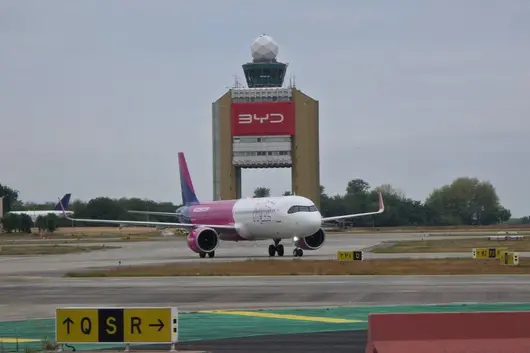
I recently came across a particularly moving video. Zhang Xu, the founder of the almost household-name motorcycle brand, was waiting at the airport in Budapest, Hungary. Glancing out the window by chance, he spotted a huge BYD advertisement on the airport control tower. At that moment, he couldn't help but take out his phone to take a photo and actively gave a like to BYD for fighting abroad to build its business. To be honest, as an ordinary consumer, seeing this scene really touched me. I used to feel that Chinese brands going global was far away from us, but seeing these Chinese brand signs everywhere in a foreign land truly makes people feel that Chinese brands are becoming more and more worthy of pride.

In the video, he was very straightforward, standing at the airport and smiling with emotion: "Let me show everyone, the Awesome Brother Di! Awesome!" He also added: "Salute to the Awesome Chinese Enterprises!" This immediately struck a chord with many netizens. Many people should know that Zhang Xu drives a BYD Qin L daily. Netizens have joked that he "builds motorcycles wilder than anyone else, yet uses cars more economically than anyone else." Actually, we ordinary car owners understand that true recognition never comes from ads, but from long-term, genuine driving experiences. For a tech-savvy entrepreneur to willingly become an organic word-of-mouth advocate is enough to prove that BYD's practicality and quality are truly impressive.

Next, I also looked at the comments. They all praised both the BYD and Zhang Xu Motorcycle brands simultaneously. Zhang Xu has been deeply engaged in the motorcycle industry for years, consistently doing R&D technologies down-to-earth, and striving to break through foreign technological blockades, a true down-to-earth entrepreneur. BYD is the same; for so many years, it has never relied on marketing stunts, but has always done its own research down-to-earth, polishing and iterating upgrades bit by bit in battery, hybrid, and whole-vehicle technologies. One does motorcycles, the other does new energy vehicles. The tracks are completely different, but both individuals and brands are silently persisting in independent innovation and long-term deep engagement in the industry. This two-way recognition between people who understand technology is more convincing than any commercial promotion.

Furthermore, it is worth noting that this like was entirely spontaneous from Zhang Xu. He has no commercial cooperation with BYD. Purely as a car owner and as a domestic goods entrepreneur, seeing his own brand shining abroad made him feel an inner pride. This point really hits the spot; there is no marketing script, no deliberate hype, just the most authentic national pride. For us ordinary people, it is the same. Now when we choose cars or domestic goods, it is no longer compromising, but genuinely believing that domestic goods are good, reliable, and worth supporting. Of course, many people might not know that this advertisement at Budapest Airport is not just a simple brand appearance, but a true reflection of BYD's deep cultivation of the European market. Previously, when talking about overseas markets, it was the domain of Western European, American, Japanese, and Korean brands. Now, BYD has steadily built step by step, with business covering over 120 countries and regions worldwide, forcing its way into a place in the global new energy market belonging to Chinese brands. In my opinion, this is truly not easy. The overseas market competition is fierce; standing firm relies absolutely not on luck, but on genuine product power.

Looking at the latest data makes BYD's strength more intuitively felt. From January to September 2026, BYD's overseas sales of passenger cars and pickups have exceeded 1.3378 million units. The overseas market has long become its core growth driver. Relying on core technologies developed by itself such as Blade Battery, DM-i Super Hybrid, whether it is household passenger cars, commercial models, or energy storage businesses, it has done well. It has gained super user recognition in countries like Thailand, Brazil, Singapore, Hungary. As consumers, we know best: only when core technologies are in our own hands can products be reliable and cost-performance be maximized. This is also the key reason why we are increasingly willing to choose domestic goods.

Actually, this accidental airport encounter, though seemingly a small matter, truly reflects current changes. Now, everyone supporting domestic goods is no longer purely about emotional sentiment, but genuine recognition from the heart. Over these years, we have watched BYD and Zhang Xu grow step by step, not impetuous, not following trends, doing products down-to-earth, using innovation to solidify technical barriers, and bringing the reputation of Chinese Smart Manufacturing bit by bit to the whole world. In the future, we also look forward to more and more Chinese brands going out of the country and into the world. I hope that everywhere in the world, you can see the silhouette of Chinese Smart Manufacturing, making our domestic goods into a true world business card. What do you think?

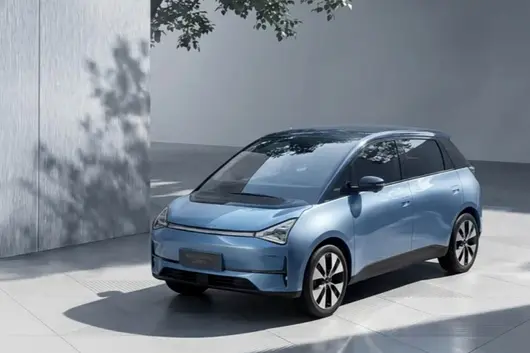
After years of silence, Zotye Auto finally presented the new Wink Y01 International Edition during the long cycle of bankruptcy reorganization. The new vehicle has entered the batch trial production phase, with the SOP mass production countdown initiated. This automaker, once labeled with the 'Copycat Department' tag, attempts to return to the industry's focus with a compact pure electric model aimed at the overseas market.

Capital markets fluctuated accordingly. Many voices viewed the Wink Y01 as a signal of Zotye's rebirth. However, product trial does not equal commercial success. A brand-new design blueprint cannot instantly wipe out the brand's reputation trauma, debt legacy issues, and broken industrial support accumulated over the years. Even if the Wink Y01 is mass-produced as scheduled, Zotye still faces a long road to redemption filled with historical baggage.
Trust Cracks Left by the Past Are Hard to Smooth with a Single New Car
When mentioning Zotye, the public's first impression often revolves around the 'Porsche Ty' label. Over ten years ago, relying on imitating the appearance of mature overseas models, Zotye quickly leveraged the market. Models like the T600 and SR9 saw sales peak, entering the top ten among domestic brand sales. Shortcuts brought short-term dividends but buried fatal brand original sins. When the industry entered the new energy transformation phase, shortcomings such as reliance on appearance imitation and lack of underlying technical accumulation exploded. Quality complaints and weak after-sales systems continued to ferment. Parent company Tianniu Group's debt crisis broke out, factories halted production on a large scale, dealers withdrew en masse, and many old car owners fell into a dilemma of hard-to-find parts and no maintenance support, dragging brand reputation to rock bottom.

Many see the Wink Y01 as proof of Zotye's thorough reform. This new car is built on a new S pure electric small car platform, adopting a minimalist tech aesthetic design. Iconic triangular headlights paired with a three-segment full-width LED light strip, and a four-wheel four-corner body layout maximize cabin space. From the exterior, no shadow of past imitation or plagiarism is visible; the product concept has clearly shifted to independent R&D. Zotye chose to prioritize the Wink Y01 International Edition for overseas markets, targeting regions like India, deliberately avoiding the domestic market temporarily. This itself is a strategic choice. Domestic consumers' stereotypes of Zotye are deeply rooted, and rebuilding user trust in the local market is far more difficult than developing overseas incremental markets.

But repairing brand trust has never been an engineering task completable by a single new car. Automaker reputation building relies on continuous stable product quality control, long-term reliable after-sales support, and a stable enterprise operating status. Zotye has been reorganizing for years, with vehicle business nearly stalled. The dealer network that once covered the country has long dissolved. Even if Wink Y01 lands for sale overseas, if issues such as insufficient parts supply or slow after-sales response occur, past negative memories will immediately bite back at the brand. The market will naturally question: Does the current Zotye possess stable supply chain control capabilities and whole vehicle manufacturing consistency?

The industry environment has undergone earth-shattering changes. Currently, global competition in the compact pure electric track is fierce. Domestic independent brands' overseas offensives are strong, and overseas local car companies are also rapidly laying out economy electric vehicles. Wink Y01 is positioned as a city commuter compact electric vehicle; the product itself has not formed a crushing-level technical barrier. Core parameters such as the three-electric system and smart cockpit have not been fully disclosed to date. Relying solely on exterior design, it is hard to maintain a foothold in the fierce overseas market.
Debt, Capacity, and Supply Chain Form Realistic Thresholds After Mass Production
Product successful production line exit is just the starting point. What truly tests Zotye is the entire business system operating continuously after mass production. Historical management baggage is far more tricky than product R&D. Financially, Zotye has accumulated huge historical losses, with the asset-liability ratio long-term at a high level. Vast historical debts and legal disputes are still being resolved. Completing the bankruptcy reorganization and sorting debts does not mean capital pressure disappears. Whole vehicle manufacturing belongs to the heavy asset industry. Mold maintenance, production line debugging, parts procurement, overseas market certification, and logistics channel construction—every link requires continuous cash flow investment. Wink Y01 targets overseas sales, also needing to cope with different countries' regulation certification and localization adaptation, continuously consuming funds.

Capacity and supply chain systems are another major shortcoming for Zotye. After stopping production for years, although some production bases were retained, production lines have been idle for a long time. Equipment inspection and worker team reconstruction take time. Whole vehicle manufacturing is not simple assembly; it needs a complete set of stable supplier ecosystems. When the past Zotye crisis broke out, many supporting suppliers terminated cooperation. Many parts enterprises still maintain a cautious attitude towards Zotye. New supply chain cooperation often requires payment terms and performance capability backing. Wink Y01 entering the batch trial phase means sample cars can be produced.

Channel level is also a huge challenge. Zotye's domestic dealer network has basically scattered, while building sales and maintenance networks from zero in overseas markets is high cost and long cycle. Zotye chose to cooperate with overseas local enterprises, relying on local partners to complete sales landing. This is a method to reduce risk, but it also means profit space is compressed and brand discourse is in the partners' hands. Comparing domestic automotive companies going overseas, most have laid out overseas showrooms, after-sales centers, and spare parts warehouses years in advance, forming a complete localized system.

There is another layer of hidden risk: enterprise governance stability after reorganization. In the past, Zotye's collapse was not only a product issue; chaotic enterprise governance and blind expansion were important inducements. After reorganization, new management completed organizational streamlining and shut down inefficient assets. However, automotive operations need long-term stable strategic determination. Small electric vehicles themselves have limited gross margin space. If Wink Y01 overseas market sales do not reach the break-even point, the enterprise will find it hard to continuously invest in next-generation vehicle R&D.
Public Car Review
Wink Y01 smooth mass production is undoubtedly an important milestone on the reorganization road for Zotye, which has experienced bankruptcy reorganization. This compact electric vehicle with positive R&D and focusing on overseas markets represents Zotye's attempt to say goodbye to the old path of imitation and return to the whole vehicle manufacturing track. But the landing of a new car does not equal the completion of brand redemption. The historical baggage that has wrapped Zotye for many years, including the solidified negative brand impression in the public's mind, huge historical financial legacy issues, and broken supply chain and channel systems, will not disappear as new cars roll off the line.
The overseas market provided Zotye a buffer zone, avoiding the strict brand scrutiny domestically. However, the global electric vehicle market competition has entered a stock-based game stage. For a new car to stand, it needs stable quality control, reliable after-sales, and continuous capital investment. Zotye's redemption is not a counterattack completed by relying on a single vehicle model, but a long, continuous marathon.
1