首頁香港摩托騎

搜尋歷史
熱門搜尋
經銷商登入 / 註冊

喺馬來西亞嘅 SUV 市場,好多買家喺揀車嗰陣都會拿豐田 Harrier 同賓士 GLB 做比較。呢兩款車喺價位同定位上都非常接近,今日我哋就從多個方面做一個詳細嘅比較,幫你節省咗做功課嘅時間。
豐田 Harrier 喺馬來西亞嘅 OTR 售價係 RM 289,000 - 289,000,一共有 1 個版本,包括 2026 HEV 2.5L Standard(RM 289,000) 等。
賓士 GLB 喺馬來西亞嘅 OTR 售價係 RM 299,888 - 352,888,一共有 1 個版本,包括 Standard(RM 299,888) 等。
從價錢嚟睇,豐田 Harrier 嘅入手價確實比賓士 GLB 平咗 RM 10,888。如果你預算有限,豐田嘅入門版已經可以滿足日常需要。但都係要留意,平嗰幾千蚊,可能喺配備上會有取舍,具體睇你嘅需求。

豐田 Harrier 嘅安全評級係 5★ (ASEAN NCAP),主動安全系統包括 Brand ADAS。
賓士 GLB 嘅安全評級係 5★ (Euro NCAP),主動安全系統包括 Premium ADAS。
安全配備方面,兩款車都取得唔錯嘅評級。不過豐田 Harrier 嘅 Brand ADAS 同賓士 GLB 嘅 Premium ADAS 喺功能上有些差異,如果你比較重視主動安全嘅話,可以仔細睇下兩者嘅功能列表。

豐田 Harrier 採用 FWD 驅動方式。
賓士 GLB 採用 FWD 驅動方式。
兩款車嘅驅動方式一樣,都係 FWD,日常駕駛感覺唔會有太大分別。

豐田 Harrier 同賓士 GLB 都係馬來西亞市場嘅主流選擇,適合家庭使用、日常通勤。如果你更重視品牌口碑同二手價,可以優先考慮口碑更好嗰一款;如果你更在意性價比同配備,就揀配備更豐富嗰款。最終都係建議兩款都去試駕,親身體驗先係最重要嘅。

總體嚟講,豐田 Harrier 同賓士 GLB 都係馬來西亞市場幾唔錯嘅車型。揀邊一輛,關鍵係要看你嘅個人需求同預算。建議大家做好功課,多比較幾間車行嘅報價,先去試駕先做最終決定。買車係件大事,花少少時間做功課絕對唔會錯。


Recently, JPMorgan released a 58-page "China Auto Industry 2027" report, which was recently circulated wildly in the automotive community. It didn't offer positive vibes to the China car market, but instead poured cold water: domestic passenger car retail sales in 2027 might continue to decline, the price war isn't over, and European tariffs and non-tariff barriers are lining up at the door. More heart-wrenching is that the report downgraded ratings for BYD, Geely, Xpeng, and Leapmotor, yet still said BYD is the toughest fighter. Contradictory? No—the second half of the car market competition isn't about who sells more, but who can still make money and retain cash flow. This article only deconstructs the report logic and does not constitute investment advice.

1. A Drop in Sales Isn't the Worst Pain
First, look at demand. In the report model, passenger car retail sales will be about 24 million units in 2025, possibly dropping 21% to 18.96 million units in 2026, and dropping another 5% to 18.01 million units in 2027. The wholesale side, supported by exports, will drop 5% in 2026 and only 1% in 2027. These numbers act like a knife, slicing open "hot production" and "cold consumption": factories can support wholesale via exports, but if domestic consumers don't spend, terminals will continue to squeeze water. JPMorgan provided two scenarios: if the government continues stimulus, sales remain roughly flat; if subsidies phase out, sales drop about 5%. The base forecast assumes policy support, but analysts remain cautious. My judgment is that in 2027, what to watch most isn't "new models launched", but the speed of capacity clearance. If capacity doesn't decrease and demand doesn't rise, inventory will become stones pressing on dealers and automakers. Sales decline is just a symptom; overcapacity is the root cause.

2. Price Wars Thin Profits
The profit picture looks even worse. The report estimates that actual transaction prices still average a 15%-16% discount relative to guide prices, though slightly lower than the 17% high point in the first half of 2025, it is still "hard discounts trading price for volume". More troubling is that new models, smart driving, and cabin chips require continuous burning of cash. As selling prices go down, R&D and marketing go up, revenue growth and profit growth decouple. JPMorgan added another blow: DRAM and NAND prices might rise over 20% in 2027; the deeper the intelligence, the more sensitive automakers are to memory chips. As of the report release, market profit forecasts for China's auto industry have been adjusted down over 40% this year, but JPMorgan's profit forecasts for 2026-2027 are still 10%-11% lower than consensus. Translation: Everyone has already cut once, but it thinks another cut is needed. Dealers shouldn't hide either; inventory turnover relies on short-term loans. Slow sales, falling prices mean a double blow to cash flow and inventory value. Price wars today aren't about who is cowardly who loses, but who collapses the income statement first.

3. European Tariffs Are Just Appetizers
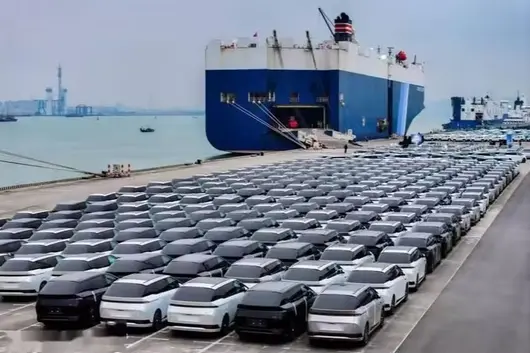
Overseas markets are the growth engine and also a new minefield. China brands' market share outside China surged from 1.5% in 2020 to 8.2% in the first seven months of 2026; overseas PHEV share is about 44%, pure electric 23%, and HEV about 5%. This achievement is fierce, but Europe has started to ramp up pressure: countervailing taxes on China-made pure electric vehicles started in October 2024, and JPMorgan expects trade defense might expand to PHEV by the end of 2027. After mid-2027, relevant entry requirements for the "Industrial Accelerator Act" will gradually take effect; localization production, procurement, minimum selling price, and quotas might all be put on the table. Export VAT refund adjustment adjustments were also listed as risks, but the report explicitly stated they were not officially announced at that time. The solution isn't continuing hard exports, but localization: BYD bets on Thailand, Brazil, Hungary; Geely leverages partners; Leapmotor uses the Stellantis network; Chery deploys Malaysia, Spain, Brazil. My view: Going overseas moves from "selling cars phase" to "building factories phase". Whoever can land supply chain, compliance, and costs together will have a second growth curve.
Conclusion: The harshest part of this report isn't forecasting another 5% drop in sales for 2027, but dragging the industry valuation anchor from the "sales list" to the "income statement". If anti-involution only targets low prices without solving overcapacity, price wars will return in disguise. 2027 is worth watching for four things: whether terminal prices can stabilize, whether capacity can truly clear, whether Europe localization can be delivered, and whether automakers' cash flow can withstand. Don't rush to pop champagne; first see who can still keep their pants on when the tide recedes.

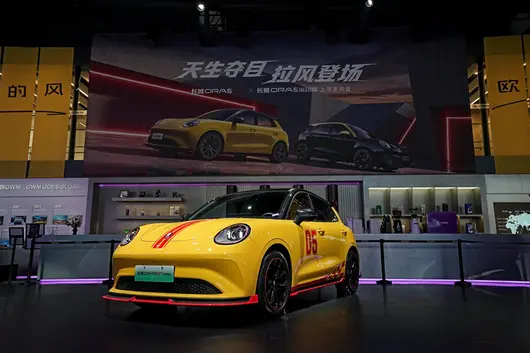
On August 28 at the Chengdu Auto Show, the Great Wall Ora 5GT and Great Wall Ora 5 Sport officially launched. The two new models are positioned as young and sporty hatchbacks, based on the Guiyuan platform, offering three powertrain choices: fuel, HEV hybrid, and pure electric. The limited-time trade-in price starts from 71,800 RMB, focusing on good looks, easy driving, and high style, delivering a factory-fitted premium customization driving experience for the young consumer group.

The positioning of the two models is clearly distinguished: Great Wall Ora 5GT targets users pursuing track-oriented driving pleasure; Great Wall Ora 5 Sport focuses on urban trendy daily commuting. The vehicle adopts natural sports aesthetics design, borrowing the low-pressure diving posture of luxury coupes, possessing an excellent width-to-height ratio, equipped with a complete set of aerodynamic kits directly from the factory, requiring no aftermarket modifications. Great Wall Ora 5GT is equipped with wind-splitting front splitters, wind-sweeping floating spoilers, 19-inch tornado wheels, and flame red GT energy components; Great Wall Ora 5 Sport features exclusive sport bumpers, floating wing, and 18-inch wind blade wheels, providing multiple two-tone exterior color schemes, with paint colors like Lightning Yellow and Storm Black offering high visual recognition.

The chassis was tuned and calibrated by the former McLaren GT chief engineer team, implementing the development concept of "kart-level handling + sofa-level comfort". It uses 55Cr3 high-end alloy spring steel anti-roll bars, optimizing suspension frequency parameters, balancing cornering support and urban commuting vibration filtering. Great Wall Ora 5GT is equipped with integrated sport seats with stronger side wing bolsters; Ora 5 Sport seats obtained the CATARC "Comfort Star" certification, making daily rides more relaxed.

In terms of powertrain, it achieves full coverage with three power options, with no downgrades in appearance, chassis, or smart configuration across versions. The hybrid version is equipped with the Hi2 5th Gen Intelligent Hybrid System, featuring intelligent switching between three engines and six modes; the pure electric version offers fun functions like launch control and V8 simulated exhaust sound; the fuel version uses a 1.5T+7DCT powertrain verified by extensive markets, adapting to different users' driving needs.

Intelligence is a major highlight of both vehicles. The Coffee Pilot 3 Intelligent Driving Assistance System is available, equipped with 27 perception hardware including LiDAR, offering parking spot to parking spot continuous full-scenario assisted driving capability, bringing 300,000-level intelligent driving capabilities down to the 100,000-level range. The infotainment system runs the Coffee OS 3 system, featuring a 15.6-inch 2.5K ultra-clear large screen, supporting large model voice interaction and multi-scenario modes. The pure electric version also features exclusive play modes such as Coffee Space and Vehicle Language Intelligence.

Upon launch, exclusive limited-time cool benefits are launched simultaneously, with up to 10,000 RMB trade-in subsidies, providing low-interest financial plans to lower the threshold for young people to buy cars. Regarding warranty policies, different powertrain versions offer exclusive lifetime warranty rights for the first owner on the engine, transmission, and three-electric systems, paired with unlimited free road assistance, resolving worries about vehicle usage.

As a model already going global, the Ora 5 series has previously launched in Thailand, Brazil, and many European countries, with a positive market reception. The launch of the GT and Sport versions further enriches the product matrix, popularizing factory sport kits, professional chassis tuning, and advanced intelligent driving, providing a new choice for young users pursuing individuality and driving pleasure.


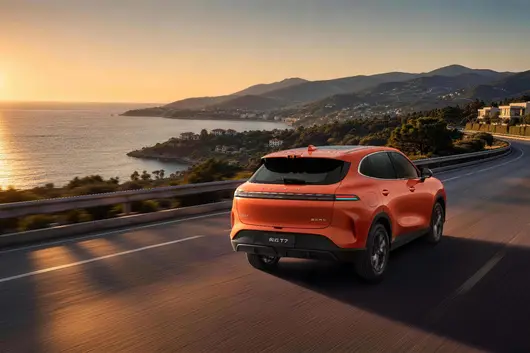
August 12, Chery Fengyun T7 officially started pre-sales, with a pre-sale price ranging from 109,900 to 129,900 RMB. This all-electric SUV positioned for global quality has dropped a bombshell in the 100,000-range home market — bringing multi-floor memory parking, originally exclusive to high-end models above 200,000 RMB, to the standard list of the entire series.
The pain point of difficult parking is never just a "technical issue"
Wandering around multiple levels of a shopping mall garage only to find no parking spot, struggling up and down floors in large residential complex garages, parking into a narrow spot but unable to get out — these scenarios are almost daily occurrences for new drivers, mothers, and female users. On the market, high-level functions like multi-floor memory parking have long been locked in high-end all-electric models above 200,000 RMB, with 100,000 RMB-range home SUVs mostly providing only basic single-floor parking.
What Fengyun T7 aims to do is break through this price barrier.
Falcon 500: A perception system that is "far-sighted, clear, and accurate"
Supporting Fengyun T7's parking freedom is the Falcon 500 driver assistance system. The vehicle is equipped with 3 millimeter-wave radars, 7 high-performance cameras, and 12 ultrasonic radars, totaling 22 high-precision sensors. This perception network builds 360-degree full-domain perception capability, allowing the vehicle to accurately identify the surrounding environment.
Based on this, Fengyun T7 achieves **longest 2 kilometers, no floor limitation multi-floor memory parking**. Whether it is cross-floor passage in a multi-level shopping mall garage, or moving the car up and down floors in a large residential complex stereo garage, the vehicle can automatically complete parking entry.
Even more rare is **300+ full-scenario automatic parking** — the industry's most comprehensive parking capability. Dead-end road parking, one-key trajectory reversing, and irregular narrow parking spots are all a breeze. New cars don't panic in narrow spots, experienced drivers are more at ease with irregular spots, truly saying goodbye to "difficult parking".
8775 Chip: The computing power base for cabin-integrated driving
Behind parking freedom is the industry-first 4nm process cabin-integrated 8775 chip launched by Fengyun T7. This chip boasts 72 TOPS NPU computing power, 1.3 TFLOPS GPU computing power, and 230K CPU computing power, with higher computing power compared to 5-7nm process chips in the same class.
The 4nm process brings not only computing power advantages — system response latency as low as 80ms, startup speed increased by 33%. Cabin-driving hardware fusion redundancy, balancing cabin entertainment and intelligent driving safety. One chip handles both systems simultaneously, avoiding issues of car machine lag and uneven intelligent driving operation.
Paired with end-to-end cabin-driving-parking integrated algorithms, enabling smooth coordination of high-speed NOA, cross-floor parking, and full-scenario automatic parking.
Lingxi Smart Cockpit 2.0: Cockpit experience also surpasses the class

Intelligence goes beyond driving. Fengyun T7 is equipped with a 15.6-inch 2.5K HD large screen, 1000 nits high brightness plus 3A protective coating, anti-glare, anti-reflective, anti-fingerprint. Lingxi Smart Cockpit 2.0 integrates the Doubao large model, bringing six real-person companionship experiences: Xiao Qi Assistant, Northeast Auntie, Debating Master, Language Teacher, Storyteller, Professional Debater. All-brand phone direct connection supports CarPlay, HiCar, CarLink, covering over 99% of phone screen projection on the market.
Six scene modes: Nap, Wake Up, Sentry, Baby, Pet, Camping, enjoy with one click.
Global Quality: Not "piling configurations", but "proven and verified"
Fengyun T7's intelligent configurations are not simply piled up. As a global model, its homologous model Lepas L6 has already launched first in South Africa and Thailand. Development cycle is up to 5 years — 2 years planning, 3 years R&D. Invested 81 exclusive durability test cars, whole vehicle cumulative test over 6 million kilometers, durability special verification 1.45 million kilometers.
Testing covers -40°C to 55°C global extreme temperature zones, 100+ extreme road conditions, completing Southeast Asia rainy season wading, Middle East high-temperature sun exposure, Nordic extreme cold, etc., 7 major classes of extreme environment special verification. 10,000+ braking special, 19,000+ full steering special verification, all issues closed-loop processed.
As Chery Automobile Executive Vice President Li Xueyong said: "Cars are not fast-moving consumer goods, relating to the safety of tens of millions of families, carrying the test of global different road conditions, climate, and habits, some time really dare not save."
Safety Backstop: Let users dare to use, use with peace of mind
Even the strongest high-level intelligent driving functions are useless if users dare not use them. Fengyun T7 launches industry-rare intelligent driving backstop rights: within one year of purchase, in parking or intelligent pilot scenarios, if accident determination is caused by the intelligent driving assistance system, vehicle personnel injury and third-party losses can receive up to 5 million RMB compensation guarantee. At the same time, pairing with power battery safety backstop — if thermal runaway destruction is caused by battery self-reasons, brand compensates same model or same specification new car.
This practice of converting technical confidence into substantive guarantees aims to lower the psychological threshold for users using high-level intelligent driving.
Final Thoughts
From multi-floor memory parking to 300+ full-scenario automatic parking, from 4nm cabin-integrated chip to 5 million intelligent driving backstop guarantee, Fengyun T7 at the price point starting from 109,900 RMB, turns the intelligent driving experience usually only seen on models above 200,000 RMB into a standard feature reachable by ordinary families.
This is not simply a configuration downgrade, but a serious practice about "intelligent driving equality". For family users facing shopping mall garages, residential complex garages, and narrow spot challenges every day, the answer Fengyun T7 brings may just be the one you've been expecting — parking freedom need not be expensive.