首頁青口

搜尋歷史
熱門搜尋
經銷商登入 / 註冊

In 2026, China's intelligent automotive industry is undergoing a deep transformation from feature stacking to experience definition. The key benchmark for measuring its success lies in whether an interactive relationship beyond command input and with richer emotional temperature can be established between humans and vehicles. Whether it is human-machine interaction inside the cockpit or environmental communication outside the cockpit, the implementation of experience ultimately points to the same physical carrier: light.
When intelligent vehicles attempt to establish more natural and efficient communication between humans and machines, optoelectronic systems upgrade from traditional auxiliary components to core requirements that determine the upper limit of experience.
The direct projection of this change is reflected in two key points of two-way communication between humans and vehicles: one is the display interface where the vehicle conveys information to humans, and the other is the light-shadow projection interface where the vehicle expresses intent to the outside world. For the former, AR-HUD has moved from technical verification to mass production; for the latter, smart headlights have completed the extension from simple illumination to information projection and safety interaction.
Of course, under the current industry background, both application scenarios face the same underlying challenges: integration of optical systems, miniaturization, and automotive-grade reliability. This actually means that the logic of competition in in-vehicle optics has undergone a fundamental change—from comparing parameters of single devices to the integration capability contest of system-level optical solutions.
It is at this junction of industrial logic transition that Yipu Optoelectronics' recent strategic layout has taken the lead in providing a system-level implementation plan. This company, which started with freeform optics, not only completed the relocation of its headquarters within a few short months but also successively integrated Suzhou Longma Puxin and Jiangxi De Kai into its territory, consciously building a complete value chain covering optical design, core chips, optomechanical integration, and full-vehicle light-shadow interaction. Adopting the posture of a system integrator, it positions itself for a new round of industrial cycles.
Headquarters Relocation South: Anchoring New Industrial Coordinates for In-Vehicle Photoelectric
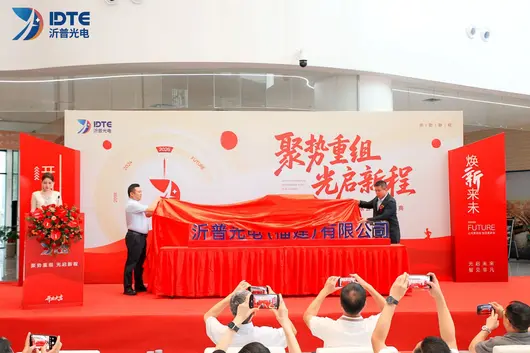
In December 2025, Yipu Optoelectronics completed its headquarters relocation. The new headquarters was established in the Nanxi High-tech Zone, Jinjiang, Fujian. Within the following months, Yipu Optoelectronics' R&D center and core production center were put into operation successively, and on July 28, the headquarters opening ceremony was officially held.

Image Source: Yipu Optoelectronics
For a national high-tech enterprise that was founded in 2018 (core technology accumulation can be traced back to the Tianjin University Micro-Nano Manufacturing Laboratory in 2005) and has deepened in Tianjin for many years, this headquarters relocation south was defined by Guo Yewu, Chairman of Yipu Optoelectronics (Fujian) Co., Ltd., as "a new strategic upgrade".
Currently, Yipu Optoelectronics has achieved complete technical accumulation in key fields such as freeform optical system design, ultra-precision optical component manufacturing and inspection, and optical performance measurement system integration. Moving such technical foundation from Tianjin to Jinjiang, Fujian, its strategic intent far exceeds spatial displacement at the geographical level, but is a strategic choice to re-anchor twenty years of technical accumulation at the industrial highland.

Image Source: Yipu Optoelectronics
The location value of Jinjiang lies in the superposition of multiple advantages.
Jinjiang not only has a complete electronic information and optoelectronic display industry cluster, but also pragmatic and efficient government services and the entrepreneurial spirit of "daring to fight and winning". Guo Yewu stated that Nanyi Xinchuang Port, as an important carrier of regional technological innovation, provides an ideal development platform for Yipu Optoelectronics.
After the headquarters settles in Jinjiang, it will undertake core R&D and operation management functions, forming a collaborative industrial matrix with overseas and domestic production bases and R&D, R&D sales centers located in Shenzhen, Fuyang, Tianjin, Lujiang, Wuhan, Wuxi, Pingxiang, Japan, Malaysia, etc., accelerating the group process of Yipu Optoelectronics. In addition, it is worth mentioning that as a famous hometown of overseas Chinese and a front line of opening up to the outside world, Fujian has natural policy and location advantages in going global, which also forms a high degree of strategic fit with Yipu Optoelectronics' globalization strategy being promoted.

Image Source: Gasgoo
Deeper considerations lie in the convenience of market supply.
Fujian is adjacent to the southern China automotive industry cluster and is the supply chain hinterland of many top new energy vehicle companies. Relocating the headquarters and core processing capabilities here, Yipu Optoelectronics has actually completed a "closer to the market, closer to innovation" strategic upgrade.
In the industrial context where the cycle of in-vehicle optical products is constantly compressed from R&D to mass production, this geographical embedding means faster customer response speed, tighter collaborative R&D rhythm, and lower logistics and communication costs. The overall innovation rhythm of the enterprise will also resonate more in frequency with the industry's iteration cycle.
Strategic Integration: Leap in System Capability by Connecting Points into Chains
If the headquarters relocation south solves the question of "where to compete", then the recent acquisition of Longma Puxin and De Kai better answers the core proposition of "what to compete with".
In May 2026, Yipu Optoelectronics announced the official launch of a strategic acquisition of Suzhou Longma Puxin Technology Co., Ltd. Longma Puxin was initiated by the Chinese Academy of Sciences and an international optics team, focusing on the R&D of MEMS display control chips, passive combiner chips, HUD optomechanics and micro-mirrors, etc. It has mature technology and product layouts in the fields of in-vehicle projection chips, optomechanical integration, and MEMS drive control.

Image Source: Yipu Optoelectronics
Longma Puxin's independently developed LBS (Laser Beam Scanning) MEMS laser scanning core technology has completed automotive-grade reliability and functional safety verification, marking that domestic MEMS optical scanning solutions have entered a new stage of in-vehicle mass production.
The strategic intent of this acquisition is very clear: control core chips upstream. LBS MEMS technology takes MEMS micro-mirrors as the core execution unit, combined with laser light sources and high-speed modulation algorithms, to achieve laser scanning imaging with small volume, low power consumption, no focusing, and high color gamut. Compared with traditional DLP and LCoS solutions, LBS MEMS has better shock resistance, temperature adaptability, and space utilization in harsh in-vehicle environments. For Yipu Optoelectronics, the MEMS chips and micro-mirror capabilities brought by Longma Puxin have enabled it to extend capabilities from optical components to core chips in the optoelectronic display field.
If acquiring Longma Puxin is "controlling upwards", then acquiring Jiangxi De Kai is "expanding downwards".
Recently, Yipu Optoelectronics officially announced the completion of the strategic acquisition of Jiangxi De Kai Auto Lighting Co., Ltd. De Kai has been deeply cultivating in automotive smart lighting for more than ten years, possessing the ability to independently develop full sets of vehicle lamp assemblies, mold development, and automated mass production delivery. Current customers cover more than ten mainstream automotive brands in China.
Yipu Optoelectronics had previously had product layouts in in-vehicle display such as HUD, in-vehicle projection, and out-vehicle projection headlights. The addition of De Kai has helped Yipu Optoelectronics achieve complete coverage in the field of full-vehicle headlights from cockpit display to external lighting, and the systematic competitiveness has undergone a qualitative improvement. As Guo Yewu stated, after this M&A, Yipu Optoelectronics became the only technology enterprise in China currently possessing full-link capabilities from display chips to display modules to display complete machines.
The synergies after the completion of the acquisition are worth deep analysis. Xu Feizhang, CEO of Yipu Optoelectronics (Fujian) Co., Ltd., introduced the actual value of this model to clients to Gasgoo: In the past, customers needed to communicate with multiple suppliers separately, and communication costs and management burdens were quite heavy. Now, Yipu Optoelectronics alone can complete the full-chain collaboration from chips to assemblies, and an internal communication meeting can coordinate the positioning and development of the entire product. This capability is not a simple capacity superposition, but directly responds to the dual demands of partners for delivery efficiency and cost control.
The rhythm of the two acquisitions was compact and the logic was clear — Longma Puxin solves the core chips and scanning technology of "seeing clearly", De Kai solves the out-vehicle light and shadow and mass production manufacturing of "lighting well". Superimposing on Yipu Optoelectronics' original freeform optical design and precision manufacturing capabilities, a full-stack in-vehicle optical capability system covering chips, optics, optomechanics, and full vehicles has already taken shape.
Lu Rui, President of Market Strategy of Yipu Optoelectronics (Fujian) Co., Ltd., further explained the unique value of this system from the perspective of competitive differentiation when interviewed by Gasgoo. After the merger and restructuring, from upstream chips to intermediate optical systems, to manufacturing and overall solutions, Yipu Optoelectronics has formed a complete differentiated layout. Many enterprises in the industry currently neither involve the chip layer nor sink to the bottom-layer optical manufacturing. In the case of missing both ends, even if single solutions can be provided, it is difficult to truly form comprehensive competitive advantages in the three dimensions of technology, processing, and cost. And the superposition of these capabilities is precisely where Yipu Optoelectronics occupies the initiative in the future industrial pattern.
In the past supply chain system, chips, optical devices, optomechanical systems, and full-vehicle applications belonged to suppliers at different levels, with gaps in technical connections and games of commercial interests between each other. When an enterprise can connect from upstream display chips to downstream full-vehicle light-shadow interaction, it gains capabilities extremely scarce in the existing supply system — defining products, optimizing costs, and accelerating iteration from a system-level perspective. This capability is becoming a key variable determining the upper limit of enterprises in the new era defined by experience vehicles.

Image Source: Yipu Optoelectronics
Redefining the Optical "Language" of Human-Vehicle Interaction
While continuously perfecting technical capabilities, Yipu Optoelectronics' understanding of in-vehicle optics is also deepening continuously. This deepening is not only reflected in the expansion of product lines but more in the systematic research and development of common industry problems and the forward-looking layout of future interaction forms.
From the perspective of industry trends, in-vehicle optics is currently at a key node where it transitions from optional configuration to core systems.
With the accelerated arrival of L3 autonomous driving, AR-HUD will provide more intelligent interaction, safety reliability and convenient entertainment scenario applications, and future market potential is expected to continue to be released. In the field of smart headlights, intelligent vehicle light technology such as million pixels has become a main product highlight on many domestic high-end new energy models. In the future, with the market penetration of this configuration, it will inevitably lead the acceleration of in-vehicle interaction and entertainment functions towards personalization and customizability. And in-vehicle projection is gradually becoming an important option for rear screens in mid-to-high-end models with advantages such as large screen format, multi-scenarios, and playability.
These trends all point to a core proposition: light is becoming the core interaction medium between cars and humans. In-vehicle light is expected to become a potential new growth curve for the automotive industry.
But the clarity of trends does not mean the path is smooth. Common problems facing the industry are still prominent: compatibility of safety and regulations, breakthroughs in technical barriers, balance of cost and performance, etc., are all realistic obstacles restricting the large-scale popularization of in-vehicle optics. Taking AR-HUD as an example, larger screen format, smaller volume, higher image quality are future development directions, but how to achieve these goals in limited in-vehicle space while meeting automotive-grade reliability requirements tests the system capabilities of every participant.
Of course, it is precisely in the face of these industry problems that Yipu Optoelectronics' full-stack capabilities highlight the value even more. Guo Yewu clearly pointed out that for people doing precision optics, there is no shortcut, only continuous innovation. "Cars are turning from original driving tools into a mobile home", Guo Yewu stated that after becoming a mobile home, vehicles need to provide more emotional value to guests. As a photoelectric display supplier, we need to continuously provide innovative products from display, sound, haptics and other aspects.
Yipu Optoelectronics is promoting a series of innovation directions. For example, on the car, Yipu Optoelectronics innovatively proposed ultra-short throw partition projection. While meeting user experience, it can also reduce volume and facilitate installation. Xu Feizhang demonstrated the underlying logic of this technology in the product exhibition hall — introducing the ultra-short throw display technology of laser TV into the car, not only achieving higher color gamut, brightness and resolution, but more importantly, the all-in-one design thoroughly solves the pain point of personnel walking and blocking the optical path in traditional projection solutions. Yipu Optoelectronics is also exploring another forward-looking application innovation — integrating LiDAR with digital smart headlights. Traditional LiDAR is installed on the car roof, not only is the shape abrupt, but it also faces safety hazards of inability to self-clean. Since headlights themselves possess mature self-cleaning functions, after embedding LiDAR into the headlight assembly, it can not only guarantee the all-weather reliability of the sensor but also significantly optimize the smoothness of the overall vehicle appearance.

Image Source: Yipu Optoelectronics
Using the latest technology and highest performance to meet the superior experience of terminal users on in-vehicle and out-vehicle display, as Guo Yewu said: "Only continuous innovation can move consumers and inject new vitality into this highly competitive industry."
Lu Rui supplemented Yipu Optoelectronics' differentiated thinking from the perspective of technical routes. In the past, Yipu Optoelectronics focused on optical component manufacturing, lens solutions and optomechanical system delivery, etc., more playing the role of a processing solution provider. With the completion of capabilities such as LBS MEMS chips, Yipu Optoelectronics has also become capable of outputting complete solutions such as micro-projection, ultra-short throw, and high-brightness direct projection in the consumer field, completing the positioning leap from a processing solution provider to a complete solution provider.
Behind this transformation is the re-upgrading of corporate value positioning, entering the higher-value system integration link, and possessing the ability to define product forms and interaction experiences.

Image Source: Yipu Optoelectronics
Summary:
Starting from freeform optics technology, to possessing full-link capabilities covering HUD, optical chips, headlights, etc., Yipu Optoelectronics has taken an evolutionary path from single-point technical breakthroughs to system capability construction. Behind it reflects not only the enterprise's keen grasp of optical technology generational substitution, but also a deep understanding of the underlying trend of the intelligent automotive industry moving towards experience definition.
The headquarters relocation south does not solve simple spatial displacement, but embeds R&D decisions, customer response, and supply chain collaboration into the industrial hinterland, making the enterprise's innovation rhythm and the industry's iteration cycle resonate more in frequency. The strategic integration of Longma Puxin and De Kai completes a complete optical ecology "puzzle", obtaining a capability combination extremely scarce in the existing in-vehicle optical supply system: from optical chips to optical components, from optomechanical systems to full-vehicle light-shadow interaction, all integrated into one, realizing independent and controllable core technologies, and building a unique industrial ecology advantage.
The current automotive industry has a consensus that the first half of intelligent vehicle competition revolves around "three-electric systems", competing in range and acceleration; the contest in the second half anchors on experience and interaction, and all experiences — whether navigation guidance projected by HUD, safety light carpets spread by headlights, or flowing ambient light shadows inside the cockpit — must ultimately be conveyed through light.
Whoever can achieve full-stack control from source to terminal in the light chain will possess the capability foundation to define the next generation of human-vehicle interaction. The "Chip-Optics-Optomechanics-Headlights" full-chain system constructed by Yipu Optoelectronics is precisely building the underlying base for this new era of photoelectric-defined experience that is arriving.
When the light chain extends from components to scenarios, and connects from inside the cabin to outside the cabin, what an enterprise can define is not only product parameters but also a completely new industry trend.


Suddenly, the "Ning King" came out to make a splash again.
On the evening of July 24, CATL released two major documents simultaneously. One was the 2026 Interim Financial Report. Revenue in the first half was 276.91 billion yuan, a year-on-year increase of 54.80%. Net profit attributable to the parent company was 43.284 billion yuan, a year-on-year increase of 41.98%. Calculated, this means daily earnings of 240 million yuan.
The other was a buyback plan, proposing to use funds not less than 20 billion yuan and not more than 40 billion yuan to buy back A-share shares for cancellation, with a buyback price cap of 573 yuan per share, a premium of nearly 50% compared to the closing price of the day. This amount cap set a record high for single share buybacks in the history of A-shares.
At the same time, multiple new energy vehicle manufacturers successively released half-year profit forecasts, with many facing profit pressure. Industry chain profits are visibly concentrating on the battery segment, and this is indeed a major source of CATL's profits. However, if you turn to the details of CATL's financial report, you will find a fact overlooked by the outside world.
That is CATL's true growth engine is actually not just power batteries. Or rather, the game CATL is playing is far bigger than what the outside world sees.
Beyond Vehicle Power Batteries, Pulling Up a Second Growth Curve
In CATL's financial report, the most worth noting is its healthy revenue structure. In the first half, the power battery business contributed 192.125 billion yuan in revenue, accounting for 69.38%, remaining the absolute major portion. However, the performance of the other two businesses is also inescapable, showing a trend of accelerated growth.

First, energy storage battery business revenue was 53.261 billion yuan, accounting for 19.23%, a year-on-year increase of 87.54%. Battery materials and recycling, mineral resource business revenue was 18.811 billion yuan, a year-on-year increase of 67.23%.
More critically, power battery gross margin of 20.63% and energy storage battery 23.96% both saw year-on-year declines, while the gross margin of battery materials and recycling business reached 27.04%, an increase of 5.81 percentage points year-on-year.
That is to say, among the three major main businesses, the only one achieving gross margin improvement is the "recycling business" that outsiders ignore most easily.
Looking further down, CATL has also accumulated considerable capital in the ship power battery field.
Already cumulatively delivered over 900 ship batteries. The first all-electric inland container ship exported from China delivered in the first half of 2026, also equipped with CATL's battery energy storage system. In July, also acquired a stake in Jiangsu Kaiyang Shipbuilding Company, increasing investment in the technical development of ocean-going ship battery systems.
In the commercial vehicle field, sodium-ion batteries have gone into mass production installation, the Tianxing series covers multiple sub-scenarios from logistics vehicles to heavy trucks. In the battery recycling field, holding company Bangpu Recycling has built the nation's largest directional recycling base, with an annual retired battery processing capacity of 270,000 tons, and nickel, cobalt, and manganese recovery rate is as high as 99.6%. The team also won two honors at the European Patent Office's "2026 European Inventor Award" this year, becoming the first Chinese team to win dual awards since the award's inception.

These businesses together constitute CATL's second growth curve beyond power batteries.
When lithium battery scrap volume grows at a speed of more than 20% annually, when the commercialization window for electric ships opens gradually, and when AI computing power data centers begin to propose new structural demands on energy supply, CATL has already extended its tentacles into these tracks. Company executives also clearly stated at the performance exchange meeting that AIDC presents a clear structural market opportunity. CATL will not just provide single product supply, but wants to provide more comprehensive solutions around new energy scenarios.
Therefore, from the financial report it can be seen that CATL's high-speed profit growth in the first half, a large part comes from storage, from recycling, from overseas, rather than simply "earning one more cent" from vehicle manufacturers.
Of course, a fact must be admitted here. The gross margin of the power battery business is indeed declining, price competition pressure in the domestic market is real. Moreover, CATL also has its shortcomings.
The "poaching talent and stealing technology" publicly condemned by Zeng Yuqun previously, lost orders in the Middle East market, additional costs brought by consumption tax policies, these are challenges on the table. It's just that these challenges have not covered up the longer-term growth curve.
Earn Money from "Foreigners", Also Earn Money for the Future
If diversification is CATL's first line of defense against industry risk, then globalization is the second moat it built. From this point of view, CATL is also half a step ahead of current auto companies. The overseas dividends it received are exactly the "big results" that current auto companies are striving hard to layout overseas business to obtain.

In the first half, CATL overseas revenue reached 87.1 billion yuan, gross margin 29.97%, nearly 9 percentage points higher than domestic business gross margin. Overseas market share 33.7%, Hungary, US, Indonesia three overseas factories successively put into production, Volkswagen, BMW, Toyota and other global mainstream car companies lie in the customer list.
Morgan Stanley gave a judgment in the latest report. Diesel vehicle electrification, storage super cycle, sodium-ion battery product cycle, will jointly support CATL to continue strong growth in 2027.
The key point is, CATL overseas business gross margin is significantly higher than domestic. This means, its bargaining power in the global market is actually stronger than in domestic. This is somewhat different from the common perception that "Made in China conquers the world with low prices".
CATL management gave the explanation at the exchange meeting as "Competing on value, not price". This sounds a bit official, but combining with gross margin data, it indeed has its confidence.
Zeng Yuqun summarized CATL's current strategic positioning into one sentence: From "New Energy Industrialization" to "Industrial New Energyization". The first half is what CATL did in the past ten years, making the concept of new energy into a real industry. The second half is what it plans to do in the future, using new energy to transform more traditional industries.
Ships, commercial vehicles, computing power data centers, mineral resources, these are all the landing points of "Industrial New Energyization". Zeng Yuqun himself judged, the future downstream industry boundaries may reach over a thousand times the current level.
And if this judgment holds, then the 40 billion buyback big move is easy to understand.
The company's current stock price is undervalued, this is the core logic of the buyback. On the day the financial report was released, CATL A-share closing price was 383.01 yuan, while the 52-week high was 468.75 yuan. Performance hit a new high, but the stock price fell nearly 20% in half a year. CITIC Securities gave a target price of 490 yuan, UBS 600 yuan, Macquarie HK stock target price 700 HKD.
Under this premise, the real money 40 billion buyback is an attitude given by management to the market.

More importantly, the implementation, all bought-back shares are used for cancellation, not kept for equity incentives, nor placed in treasury stock accounts. This means total share capital decreases by about 69.8 million shares, rights allocated to each shareholder will rise.
Of course, this confidence also needs some question marks. Lithium prices recently showed a rebound, Yichun Jianxiwo lithium mine resumption approval may bring cost fluctuations, consumption tax phased collection from 2% to 4% test on downstream bargaining power, are realities CATL must face next.
However, compared to challenges, this financial report indeed let us see a strong resilience and strategic vision shown by an industry leader. From this point of view, CATL is still the undoubted leader of the new energy sector, without a doubt.


港交所網站掛出一咗一份熟悉嘅招股書。
5 月 28 日,繼去年 10 月首次遞表失效後,智能駕駛解決方案提供商蘇州天瞳威視電子科技股份有限公司(天瞳威視)再次向港股主板發起重衝,由匯豐及華泰國際聯席保薦。

喺智能駕駛賽道從「講故事」轉向「拼量產」嘅 2026 年,天瞳威視嘅二次遞表唔單止係一次資本試探,更係一場關於中國智駕供應商生存現狀嘅集中檢閱。
呢間被認為係「算力效率派」代表嘅公司,一邊連住從采埃孚到上汽、北汽嘅豪華產業資本陣營,一邊卻面臨住現金流緊繃、海外明顯回落嘅現實困境。喺呢場 IPO 嘅博弈中,光鮮同陣痛並存。
01
邊個係「天瞳威視」?
天瞳威視嘅創辦人王曦係一位典型嘅「回國」技術派。佢畢業於北京航空航天大學,後喺英國雷丁大學攻讀計算機科學博士學位。
喺決定創業之前,王曦曾經喺汽車零部件供應商天合汽車(TRW)及采埃孚擔任算法工程師同技術負責人,深度參與咗早期 ADAS 系統嘅開發。
2016 年,王曦捕捉到國內汽車智能化嘅風口,回國喺蘇州創立咗天瞳威視,定位係「以軟件算法驅動智能駕駛」嘅本土解決方案提供商。
公司嘅名字「天瞳」寓意「天之眼」,意在打造車輛感知萬物嘅視覺中樞。佢從最初嘅視覺感知算法起步,逐步擴展至行泊一體域控制器、L4 級自動駕駛系統等軟硬件結合嘅整體方案。

天瞳威視融資情況。資料來源:企查查
成立後不久,天瞳威視就獲得德聯資本、盛世投資嘅天使輪融資。此後十年時間,天瞳威視累計完成咗超過 10 輪融資,融資總額近 10 億元。
從招股書披露嘅股權結構嚟睇,天瞳威視構建咗深度綁定嘅「產業 + 資本」生態圈。
一方面,產業夥伴站台,全球汽車零部件巨頭采埃孚唔單止係其 C 輪領投方,亦係其戰略合作夥伴,持有天瞳威視 6.93% 嘅股份,位列第四大股東;國內方面,上汽集團通過上汽北美產投持股,北汽集團通過北汽產投佈局其中,地平線同商湯科技亦係戰略投資者。
另一方面,地方國資護航,唐山機器人基金、吳中金控等國資背景基金喺 D 輪及 D+ 輪入場,提供咗約 5.23 億元嘅資金支持。

截至最後實際可行日期股權架構
截至目前,王曦透過直接持股同員工持股平台合共控制公司約 40.84% 嘅權益,依然保持住對公司嘅控制權。
02
「兩條腿」行路
天瞳威視喺業務佈局上採取咗「雙軌並行」嘅策略。

喺 L2-L2+ 級輔助駕駛領域,天瞳威視嘅選擇非常務實。佢並冇盲目追逐算力堆疊嘅「軍備競賽」,而係走咗一條高性價比路線。
作為典型嘅視覺派智駕供應商,佢喺 L2 量產方案上以視覺感知為主,融合毫米波雷達同超聲波雷達,能夠喺較低算力平台上實現高級功能。例如,基於地平線 J6B 芯片(約 20TOPS)嘅方案即可支持行泊一體、高速 NOA。
呢種打法擊中咗 10 萬 -20 萬級主流車款對成本敏感嘅痛點。根據灼識諮詢嘅數據,按 2024 年裝機量計,天瞳威視係中國第二大同時提供行車同泊車解決方案嘅以軟件為核心嘅 L2-L2+ 級方案提供商,市場份額為 14.3%。

2024 年中國具備行泊一體能力嘅以軟件為核心供應商格局
截至最後實際可行日期,天瞳威視獲得 23 個汽車品牌嘅 198 款車款嘅 L2-L2+ 級解決方案定點函,並實現 6 個汽車品牌嘅 105 款車款嘅量產;獲得定點函嘅 198 款車款中有 87 款覆蓋海外市場,其中 59 款已實現量產。
但值得注意嘅係,L2-L2+ 市場正在經歷劇烈嘅「紅海化」。
一方面,經緯恆潤、福瑞泰克等本土 Tier1 正在加速追趕;另一方面,部分頭部車廠開始將低階智駕方案從外購轉為內部集成。
天瞳威視能否維持佢喺「性價比方案」領域嘅領先地位,取決於佢能否持續保持算法對低算力平台嘅優化能力,而這需要喺研發投入上持續加碼。

喺高級 L4 級自動駕駛領域,天瞳威視更多扮演「先鋒」角色。這亦係佢近兩年增長最快嘅板塊。
早在 2019 年,佢就參與咗上海洋山港嘅 5G 智能重卡項目。目前佢嘅 L4 方案覆蓋 Robobus、Robotaxi 同 Robotruck。其中,Robobus 係佢最具代表性嘅產品線,已喺蘇州、天津等城市嘅公開道路投入常態化試營運。
2025 年,天瞳威視從 L4 級解決方案產生收入 3.75 億元,佔公司總收入嘅 68% 以上,大部分收入來自 L4 級軟件解決方案。
然而,硬幣嘅另一面係商業化嘅曲折。雖然 L4 業務營收暴增,但佢嘅交付形態目前以「軟硬件一體解決方案」為主,呢種模式本質上接近「項目制交付」或「小規模車隊部署」,與 L2 業務中「純軟件授權 + 白盒交付」嘅高毛利、大規模複製邏輯存在顯著差異。
呢就直接導致 L4 業務毛利率嘅大幅波動:喺部分自研硬件佔比较高嘅項目中,毛利率一度低至 15%。

截至遞表日,公司雖手握超 10 億元嘅 L4 意向訂單,涵蓋 2500 架車,但呢啲訂單預計要喺未來三至五年內先會陸續交付,短期內對現金流嘅改善作用有限。
此外,天瞳威視仲有部分應收來自工程服務,主要涉及道路測試、數據收集支援及數據標註服務以及公司嘅專有工具鏈。
03
財務嘅雙面鏡
招股書嘅財務部分,展現咗智駕行業最真實嘅「B 面」:規模同虧損嘅極限拉扯,同埋賬面現金同營運消耗之間嘅緊張博弈。

營收高增長,但結構劇烈波動。
財務數據顯示,公司嘅營收呈現爆發式增長,從 2022 年嘅 1.72 億元增長至 2024 年嘅 4.83 億元,複合年增長率高達 67.7%。2025 年全年營收進一步增長至 5.5 億元。
但收入結構嘅變化明顯。2023 年,公司依賴 L2-L2+ 業務,佔比 90.2%;去到 2024 年,L4 業務佔比升至 50.2%;2025 年,L4 業務佔比進一步拉高至 68%。呢種「斷崖式」嘅結構切換,雖然證明佢 L4 技術搵到咗落地場景,但亦令市場質疑佢 L2 業務係咪已觸及天花板。
毛利率同純利潤嘅背離,呢係天瞳威視面臨嘅最大挑戰。
從毛利睇,整體毛利率喺 30% 左右徘徊,喺呢個技術密集型嘅智駕行業屬於中等水平。但細拆睇嚟,L2-L2+ 業務嘅毛利率通常能維持喺 40% 以上,純軟件授權模式,而 L4 業務嘅毛利率則因「軟硬件一體」交付中硬件佔比提高而被顯著拉低。
從純利潤睇,雖然表面虧損額較大,2024 年虧損 4.63 億、2025 年虧損約 2 億,呢度包含大量因優先股公平值變動帶來嘅「紙面虧損」。剔除呢個因素後嘅經調整純利潤更能反映公司嘅真實經營狀況:2024 年已收窄至 -438 萬元,但 2025 年並未如市場預期實現轉正,而係錄得約 -1086 萬元,虧損較 2024 年有所擴大。
呢個背後有一個不可回避嘅關鍵前提:調整後嘅「減虧」乃至「接近盈虧平衡」,係喺公司持續壓縮研發投入嘅基礎上實現嘅,研發費用從 2024 年嘅 1.17 億元降至 2025 年嘅 9231 萬元,研發費用率從 2024 年嘅 24.3% 進一步降至 16.8%,而 2022 年呢個數字曾高達 108.7%。對於一家科技公司嚟講,研發強度嘅「退坡」是否會影響未來嘅技術護城河,係一個潛在風險點。
現金流持續告急,最令人擔憂嘅信號。
根據最新招股書,截至 2025 年 12 月 31 日,公司賬上嘅現金及現金等价物為 2.35 億元,較 2025 年 6 月 30 日嘅 3.74 億元淨減少 1.39 億元,現金消耗速度較快。

更值得警惕嘅係經營現金流由正轉負且缺口持續擴大嘅趨勢。2023 年,公司經營活動現金流淨額為正向流入 1.15 億元,但 2024 年迅速轉為淨流出 1.89 億元,2025 年進一步惡化至淨流出 2.93 億元。
與此同時,應收賬款周轉急劇惡化。公司嘅貿易應收款項從 2023 年嘅 0.89 億元升至 2025 年嘅 5.48 億元,三年增長超過五倍,而同期營收增幅僅約 2.7 倍。
更令人擔憂嘅係應收款項周轉天數從 2023 年嘅 191 天同 2024 年嘅 166 天,到 2025 年驟升至 300 天,意味著公司從完成交付到收回款項平均需要接近一年時間。呢相當於變相為客戶提供長期無息墊資,喺資金本就緊張嘅情況下進一步加劇咗流動性壓力。

此外,雖然天瞳威視係首家出海嘅中國智駕軟件供應商,但 2025 年佢嘅海外業務遭遇咗明顯回落。2023 年天瞳威視海外收入為 1.27 億元,佔總營收比重達到 62.2%;到 2025 年海外收入降至 1100 萬元,佔比僅 2.0%。
喺而家全球地緣政治複雜、部分國家對智能汽車數據監管趨嚴嘅背景下,為佢嘅全球化故事增添咗一絲不確定性。
04
結語
天瞳威視嘅二次闖關,係智能駕駛行業進入「淘汰賽」階段嘅一個縮影。
從好嘅方面睇,佢踩準咗 L2 性價比同 L4 場景化落地嘅雙重節奏,且經調整純利潤喺特定口徑下已接近盈虧平衡,呢啲都畀投資者提供咗「有亮點可講」嘅故事線。
但從風險嘅角度睇,情況遠比首次遞表時更為嚴峻。業務重心嘅急速漂移、L4 業務商業化初期嘅盈利磨難、研發投入嘅被動收縮,呢啲此前就已存在嘅問題並未緩解。

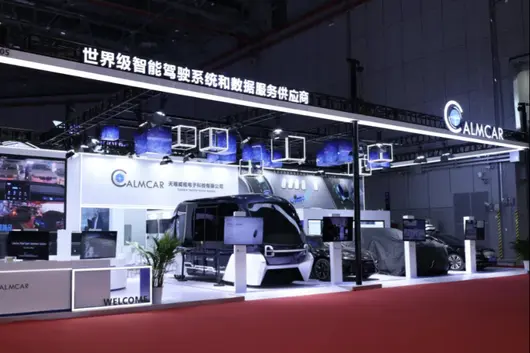
天瞳威視 L4 級智能巴士
而真正令此次 IPO 帶「求生」色彩嘅,係現金流數據嘅實質性惡化:2.35 億元嘅賬面現金,面對每年近 3 億元嘅经营性現金淨流出,安全邊際已不足一年。疊加 300 天嘅應收賬款周轉天數,意味著公司每交付一筆訂單,都要墊付近一年嘅資金成本。
換言之,天瞳威視正處喺一個危險嘅財務窗口期:賬上嘅錢僅夠維持唔足一年嘅正常運作,而 L4 業務嘅大規模交付同回款卻需要更長時間。喺呢個智駕資本熱潮退去、一級市場融資邊際收緊嘅時刻,公司已冇太多等待嘅餘地。
首次遞表失效後僅隔半年便再次衝擊港股,對天瞳威視而言,與其話係戰略選擇,唔如話係現金倒逼下嘅必然之舉。