


首頁雅鲁藏布

搜尋歷史
熱門搜尋
經銷商登入 / 註冊

喺馬來西亞嘅 SUV 市場,好多買家喺揀車嘅時候都會拿寶騰 X90 同福斯 Tiguan 嚟做比較。這兩款車喺價位同定位上都相當接近,今日我哋就從多個方面做一個詳細嘅比較,幫你省做功課嘅時間。
寶騰 X90 喺馬來西亞嘅 O T R 售價係 RM 106,800 - 122,800,一共有 4 個版本,包括 2026 1.5T Prime X(RM 122,800)、2026 1.5T Prime(RM 116,800)、2026 1.5T Lite(RM 106,800) 等。
福斯 Tiguan 喺馬來西亞嘅 O T R 售價係 RM 206,540 - 260,024,一共有 2 個版本,包括 2025 Allspace 2.0T R-Line(RM 260,024)、2025 Allspace 1.4T Elegance(RM 206,540) 等。
從價錢嚟睇,寶騰 X90 嘅起步價確實比福斯 Tiguan 平咗 RM 99,740。如果你預算有限,寶騰嘅入門版已經可以滿足日常需要。但都要注意,平嗰幾千蚊,可能喺配備上會有取捨,具體要看你需要點。

寶騰 X90 採用 FWD 驅動方式。
福斯 Tiguan 採用 FWD 驅動方式。
兩款車嘅驅動方式一樣,都係 FWD,日常駕駛感覺唔會有太大分別。

寶騰 X90 保修 5 年/150,000km,保養間隔 每 10,000km 或 6 個月。
福斯 Tiguan 保修 3 年/100,000km,保養間隔 每 10,000km 或 6 個月。

寶騰 X90 同福斯 Tiguan 都係馬來西亞市場嘅主流選擇,適合家庭使用、日常通勤。如果你更看重品牌口碑同二手價,可以優先考慮口碑更好嗰一款;如果你更在意性價比同配備,那就揀配置更豐富嗰款。最終都係建議兩款都去試駕,親身體驗先係最重要嘅。

總嚟講,寶騰 X90 同福斯 Tiguan 都係馬來西亞市場好好嘅車型。揀邊一輛,關鍵都要睇你嘅個人需要同預算。建議大家做好功課,多比較幾間車行嘅報價,先去試駕做最終決定。買車係件大事,花啲時間做功課絕對唔會錯。



Written by | Li Hezi
Edited by Huang Dalu
Designed by Zhen Youmei
Costs rose directly by nearly 40%, and we are no longer facing an impact, but a question of how to survive." With aluminum prices doubling over the past few years, this entrepreneur focused on aluminum auto parts found it unbearable; at the end of June 2026, he told Automotive Commercial Review.
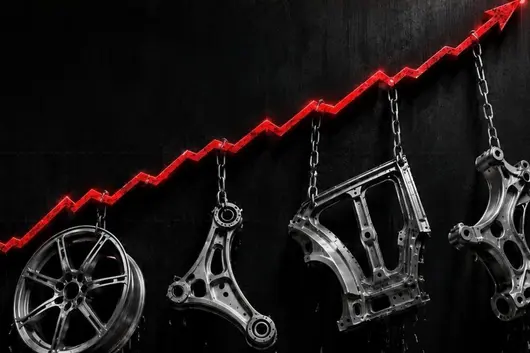
In 2020, domestic electrolytic aluminum prices were around 12,000 yuan/ton. Over the following years, aluminum prices climbed continuously: in 2025, domestic electrolytic aluminum prices broke through the 20,000 yuan/ton threshold; since 2026, aluminum prices have further surged to a high range of 24,000 to 25,000 yuan/ton, with March even briefly exceeding 25,000 yuan/ton, reaching a new high in recent years.
The continued rise in aluminum prices is transmitting downward along the automotive industry chain.
Data from the Global New Automotive Ecology Association shows that the proportion of aluminum in body part costs has increased from around 12% in 2020 to over 22% currently. A typical medium-sized intelligent electric vehicle requires about 200 kg of aluminum; from November 2025 to January 2026 alone, the aluminum material cost per vehicle increased by about 600 yuan.
An aluminum processing company interviewed by Automotive Commercial Review, with an annual output of 60,000 to 70,000 tons, incurred nearly 100 million yuan in additional procurement costs due to the rise in the base aluminum price in the first five months of 2026 alone, most of which the company still had to digest itself.
However, costs did not transmit smoothly along the industry chain. Upstream electrolytic aluminum capacity is constrained by a 45 million-ton capacity ceiling; midstream processing enterprises find it difficult to fully pass on rising raw material costs, while downstream vehicle manufacturers continue to propose annual cost reduction requirements for suppliers, constantly compressing profit margins.
At the same time, although new cars are getting heavier (see the article "Weight Reduction, The Biggest Lie of New Energy Vehicles" published in Automotive Commercial Review on June 25, 2026 at Weight Reduction, The Biggest Lie of New Energy Vehicles), the trend of automotive lightweighting has not slowed. Using aluminum alloys to replace traditional steel to achieve body weight reduction is currently the mainstream lightweighting solution for auto enterprises.
Under cost pressure, manufacturing cost-reduction technologies represented by integrated die-casting are accelerating adoption, and the rise in aluminum prices is amplifying another side of it: while this technology reduces manufacturing costs, it also raises maintenance costs; insurance companies and car owners are bearing new costs for the automakers' "cost reduction".
Setting aside the price increase of memory chips, the ongoing rise in aluminum prices further leverages a series of deep-seated contradictions in China's new energy intelligent network automotive industry chain: rigid capacity upstream, imbalance in bargaining power midstream, limits in cost reduction downstream, and the chain reactions brought by technological route adjustments.
Why Aluminum Prices Can't Be Contained

Chart: Automotive Commercial Review
The continuous rise in aluminum prices first stems from the supply side.
"The ceiling for electrolytic aluminum capacity in China is 45 million tons, and currently the overall state is a tight balance." Cheng Haifeng, General Manager of Nannan Aluminum, an aluminum processing enterprise, told Automotive Commercial Review.
In 2017, multiple departments of the state jointly released the "Special Action Work Plan for Cleaning Up and Rectifying Illegal and Non-compliant Projects in the Electrolytic Aluminum Industry", setting 45 million tons as a rigid upper limit and drawing a red line for the disorderly expansion of the electrolytic aluminum industry; the mechanism of equivalent or reduced capacity replacement is strictly enforced, and enterprises wishing to add new capacity must first shut down or purchase backward capacity of the same scale.
This policy red line has remained firm until now. In March 2025, the National Development and Reform Commission, Ministry of Industry and Information Technology, and ten other departments jointly issued the "Implementation Plan for High-Quality Development of the Aluminum Industry (2025-2027)", once again emphasizing "insisting on the total capacity constraint of electrolytic aluminum".
As of the end of February 2026, domestic operating capacity was close to 44.91 million tons, capacity utilization exceeded 97%, and industry capacity was basically running at full load.
Under the constraint of the 45 million-ton capacity red line, this global largest electrolytic aluminum producing country, China, has seen its capacity growth nearly stall. At the same time, the growth rate of global aluminum output is also slowing down. Global primary aluminum output in 2025 was about 73.78 million tons, with the growth rate slowing dramatically from 3.24% in 2024 to 1.1%.
While capacity is capped, demand is expanding.
New energy vehicles are the most active field for aluminum use. Aluminum materials are widely used in battery pack casings, body structural parts, wheel hubs, and thermal management systems. Automotive Commercial Review learned that traditional fuel vehicles use about 120 to 150 kg of aluminum per vehicle, while new energy vehicles have broken through 200 kg, and high-end models reach over 300 kg.
In April 2026, the retail penetration rate of new energy vehicles in the domestic passenger car market broke through 60% for the first time, and this single item is expected to contribute a million-ton level increase in aluminum demand.
"Downstream fields using aluminum like new energy vehicles are actually still booming," Cheng Haifeng said.
The demand for aluminum from new energy does not come only from automobiles, but also from fields such as photovoltaics. Each GW of photovoltaic installation uses about 12,000 tons of aluminum; global new photovoltaic installation in 2026 is expected to be about 400 GW, corresponding to aluminum demand of about 4.8 million tons; energy storage fields are expected to bring about 570,000 tons of aluminum demand. Combined, these exceed 5 million tons.
With the systemic substitution of "aluminum replacing copper" in fields like new energy vehicle high-voltage wire harnesses and power grid transmission, the aluminum demand structure is shifting from "mainly construction" to "high-end manufacturing + new energy".
Last October, Huatai Securities predicted that in 2026, global electrolytic aluminum supply growth would be about 1.93%, demand growth about 2.3%, and the supply-demand gap might expand to over 800,000 tons. After the outbreak of the Middle East conflict, multiple institutions further downgraded production expectations, making the supply-demand gap potentially larger.
"The rise in aluminum prices is mainly structural," another aluminum auto parts entrepreneur told Automotive Commercial Review.
He continued, "The real reason for the price increase is the supply-demand contradiction between the rapid rise in aluminum demand led by the new energy industry and the domestic 45 million-ton electrolytic aluminum capacity red line."
If the domestic capacity ceiling is the "internal cause" of the aluminum price rise, then the continuous shocks on the global supply side are the "external cause".
In late May 2026, Guinea, the world's largest bauxite producing country, announced it would officially introduce bauxite export control policies in June. The market generally predicts that the total upper limit of Guinea's bauxite exports in 2026 will be 150 million tons, a decrease of about 33 million tons compared to 183 million tons in 2025, a drop of 18%.
Guinea accounts for more than one-third of the global bauxite supply, and China's dependence on it is even higher. From January to April 2026, China accumulated imports of 77.728 million tons of bauxite, of which 62.946 million tons were imported from Guinea, accounting for 81%.
As of the end of June, the policy has not officially landed, but mine shipment volumes have voluntarily contracted. According to preliminary research and estimates by aluminum industry research institution Aladdin (ALD), shipments from 19 mining enterprises in Guinea in June were about 16 million wet tons, a decrease of about 5 million tons compared to the peak in March.
Over the past two years, Guinea has continuously launched a series of policy "combinations" such as raising export tariffs, clearing out idle mining rights, establishing pricing indexes, and mandating foreign mining enterprises to build alumina plants locally. This is also a microcosm of the global "resource nationalism" wave—from Indonesia's nickel export ban to Zimbabwe's lithium concentrate export restrictions, resource countries are shifting from "price takers" to "rule makers".
More violent shocks come from the Middle East.
The six Middle Eastern countries have a combined electrolytic aluminum capacity of about 7 million tons/year, accounting for 9.2% of global total capacity, with actual production in 2025 of about 6.95 million tons. However, on February 28 this year, the US and Israel launched a military strike on Iran; Iran subsequently implemented retaliatory measures and blockaded the Strait of Hormuz.
This region's industry relies heavily on strait transportation, with an alumina self-sufficiency rate of only 34%, and over 90% of alumina imports must pass through the Strait of Hormuz. After the conflict broke out, regional aluminum enterprises fell into a triple crisis of facility damage, raw material supply interruption, and energy shortage.
In early March, the Qatar Qatalum aluminum plant was forced to suspend production comprehensively due to natural gas supply interruption. The plant has a nominal primary aluminum annual capacity of 636,000 tons, belonging to one of the marginal capacities with lower costs globally. Official statements indicate that if production is fully suspended, full resumption may take 6 to 12 months.

Qatar Qatalum Aluminum Plant
In the same month, one of the largest single aluminum smelting plants in the world, Bahrain Alba Aluminum (annual capacity about 1.6 million tons), announced encountering force majeure due to blockage of the Strait of Hormuz shipping channel.
As of early May, the Middle East had cumulatively affected electrolytic aluminum capacity exceeding 2 million tons/year. Automotive Commercial Review believes that the increase in global electrolytic aluminum production in 2026 cannot cover the scale of production cuts.
Cheng Haifeng views the Middle East conflict as the direct driver of this round of aluminum prices surging to 25,000 yuan/ton: "After the US-Iran conflict, aluminum prices were immediately boosted." In the fourth quarter of last year, domestic aluminum prices were still operating in the range of 21,000 to 22,000 yuan/ton. Since the beginning of this year, aluminum prices have started to rise with fluctuations, and after the outbreak of the conflict, prices jumped to over 25,000 yuan/ton.
Domestic capacity capped, Guinea tightening export valves, Middle East conflict cutting off supply, the three combined forces pushed aluminum prices to historical highs.
As of June 9, the annual average price of electrolytic aluminum reached 24,219 yuan/ton, an increase of 16.9% over 2025, reaching a high of 25,260 yuan/ton on March 12. On the futures market, the SHFE Aluminum main contract soared to 26,185 yuan/ton in January and then stalled repeatedly in the 24,000 to 26,000 yuan/ton range for nearly four months.
"It might not return to the original price level." Regarding future trends, Cheng Haifeng talked about his judgment.
He predicts that prices in the third quarter may slightly fall from 24,000 yuan to 23,000 yuan, and drop to 22,000 yuan in the fourth quarter, but the level of around 21,000 yuan last year "should not be reachable".
The rigid constraints on the supply side are locking aluminum prices into an unprecedented high level range. And this price has only just begun to transmit downward along the industry chain.
Who Is "Squeezed"?

Aluminum prices rose from 12,000 yuan to 24,000 yuan, and every link on the industry chain is under pressure, but the ways and degrees of bearing pressure are different.
The first to feel the impact is the upstream aluminum processing enterprises.
"Prices simply cannot be transmitted down," Cheng Haifeng told Automotive Commercial Review; the pricing model for aluminum processing enterprises is usually "aluminum ingot price + processing fee", where the aluminum ingot price refers to the market average price of the few months or first half of the year before signing. That is to say, spot price increases will not immediately reflect in selling prices.
This means there is a time lag between aluminum price increases and transmission to customers.
But even entering the transmission cycle, aluminum processing enterprises find it hard to fully pass on costs. Cheng Haifeng described in detail the complexity of the transmission mechanism: when aluminum prices are in an upward cycle, losses in the first three months are borne by aluminum plants; after three months, contracts are renegotiated, aluminum prices are locked at high levels, pressure on aluminum plants eases, and car manufacturers begin to bear high prices. When aluminum prices fall, car manufacturers will refuse to pay according to the high contract prices on the grounds that the current market price is lower.
"When aluminum prices rise, aluminum plants bear everything; when aluminum prices fall, aluminum plants bear nearly more than half."
More tricky is the bargaining power of car manufacturers. Cheng Haifeng said that every year car manufacturers require price reductions of 7% to 10%; even so, they still receive complaints from car manufacturers: "Quality defects that could originally be accepted are easy to become unacceptable quality defects under the aluminum base price game; price fluctuations amplify quality problems, demanding returns."
Aluminum processing enterprises are thus in a situation of "pressure from both ends". Upstream aluminum ingot prices rise rigidly; downstream car manufacturers use quality determination and bargaining power to constantly compress profit margins.
Taking Guangdong Hongtu as an example, this leading domestic aluminum alloy die-casting enterprise had operating revenue of 9.198 billion yuan in 2025, a year-on-year increase of 14.22%, but net profit attributable to the parent company was 362 million yuan, a year-on-year decrease of 12.74%. Another aluminum alloy casting enterprise, Wenchuan Shares, faced a more severe situation; net profit attributable to the parent company in 2025 was a loss of 348 million yuan, a year-on-year decrease of 402%.
Similarly, aluminum processing enterprises, other enterprises faced completely different situations.
An business manager of another aluminum product processing enterprise backed by a large automotive group told Automotive Commercial Review that his perception of the aluminum price rise was "actually not bad". The reason is that most car manufacturers use "aluminum price floating calculation" for heavy parts.
That is, when pricing the contract, material costs are locked at the then aluminum prices; subsequent aluminum price increases are calculated based on weight and the latest aluminum prices. Taking aluminum wheels as an example, a wheel is 350 yuan, of which one-quarter is processing fee, and the remaining 75% is material fee. If aluminum prices rise from 20,000 yuan/ton to 25,000 yuan/ton, material fees are calculated by weight multiplied by 25,000 yuan. "We mainly earn processing fees, and aluminum price fluctuations have limited impact on our profits."
The main impact of aluminum price rises on this enterprise is at the capital level. "Originally, preparing 600 million yuan per month was enough; now about 1 billion yuan per month is needed," he said. "Capital risks are increasing, but the benefit is that the business scale is also growing."
But as a subsidiary of a large automotive group, capital is not his biggest concern; "it is better to find shade under a big tree".
Despite this, cost reduction pressure exists within the group as well. "There are cost reduction requirements every year," he said, "but the results reached are relatively reasonable, nothing too outrageous. It's like bargaining, the other party quotes a high price first, and finally both parties can accept the negotiated price."
Similarly aluminum processing enterprises, one independent, one backed by a group. The difference in situation illustrates a reality: under the impact of aluminum price rises, whether one can respond relatively calmly depends not only on cost control capabilities but also largely on the position of the enterprise in the industry chain.
Further downstream, independent parts suppliers face the most difficult situation.
The aforementioned aluminum auto parts entrepreneur told Automotive Commercial Review: "Downstream car manufacturers rarely adjust prices according to market conditions for price linkage; either they directly disagree, or they don't give an answer and drag on, but our suppliers must guarantee delivery, so losses are inevitable."
He continued analyzing; aluminum part suppliers' processes mainly involve melting, die-casting, stamping, extrusion, welding, assembly connection; except for melting where one can consider setting up factories in areas with cheaper electricity to fight for a cost space of hundreds of yuan per ton, other processes have almost no room for cost reduction. "Between the best and worst suppliers in the industry, production costs will not differ by more than two percentage points."

"Most suppliers can't roll anymore," he said, "New project bidding will add the aluminum price increase to costs; if the target price is low, we'd rather not do it."
This "rather not do it" mentality is spreading. Automotive Commercial Review learned that an automotive supplier told a new automotive power that they could only deliver 10,000 units of a certain key part per month, while the other party's demand was 30,000 units. The supplier's reason was "insufficient capacity, shortage of workers", but the root cause was that according to the current contract price, supplying means losing money.
This part is not an aluminum product; it belongs to a key component, making it difficult for car companies to find qualified alternative suppliers in the short term, so they are forced into a passive position. However, even for aluminum products, car companies will increasingly find it difficult to find downstreamers willing to accept orders at low prices; supplying means losing money, and in the long run, no one can stand it.
Anxiety from car manufacturers is also heating up.
According to data from the China Passenger Car Association, from January to May 2026, the profit margin of China's automotive industry dropped to 3.4%, lower than the average level of 6.1% for downstream industry. Price increases in raw materials such as lithium carbonate, copper, and aluminum are one of the main reasons. Nio founder, Chairman and CEO Li Bin revealed that affected by price increases in raw materials such as memory chips, lithium carbonate, copper, and aluminum, Nio's single vehicle cost increased by about 10,000 yuan. Among them, just copper and aluminum raw materials pushed up the single vehicle cost by several thousand yuan.
Since the beginning of 2026, over 15 car companies have announced price increases or reduced discounts for products. BYD's optional packages for some models rose by 2,100 yuan; Xiaomi SU7 full series raised prices by 4,000 yuan. For a mainstream 200,000 yuan level new energy vehicle, comprehensive manufacturing costs increased by 6,000 to 14,000 yuan compared to the same period last year.
European and American car companies are also under pressure; Stellantis CEO warned that if raw material prices continue to stay high, additional cost increases will approach 1% of company revenue; Ford also estimated that this year's bulk commodity costs will exceed 2 billion USD.
But car manufacturer pressure has not transformed into understanding for suppliers.
Automotive Commercial Review learned that many car manufacturers are still proposing annual cost reduction requirements of 10% or even 15% to suppliers. The aforementioned aluminum auto parts entrepreneur in the squeeze judged: "What needs to be truly solved is the problem of the entire automotive industry; when car manufacturers stop price rolling, configuration rolling, and parameter rolling, focusing on brands, design, service, and reputation, having reasonable added value, will suppliers return to normal development."
The rise in aluminum prices is exposing a long-hidden structural problem in China's automotive industry chain: when industry profit distribution highly leans towards car manufacturers or some core parts suppliers, while most parts suppliers are in a state of micro-profits or losses for a long time, any raw material price shock could become the last straw that crushes these suppliers.
The "Paradox" of Lightweighting

The continuous rise in aluminum prices is pushing the new energy vehicle lightweighting strategy into an awkward situation.
Lightweighting is a proposition that new energy vehicles cannot avoid. Vehicle weight affects energy consumption, and for every kilogram of body weight reduced, it can directly translate to range improvement. Due to characteristics such as low density, high specific strength, and corrosion resistance of aluminum alloys, it becomes the most mainstream lightweight material choice.
The China Society of Automotive Engineers proposed in the "Energy Saving and New Energy Vehicle Technology Roadmap" released as early as 2017 that the target for single vehicle aluminum usage would reach 250 kg in 2025 and 350 kg in 2030. According to market research company DuckerFrontier predictions, single vehicle aluminum net weight in North America may reach 570 pounds (about 259 kg) in 2030; taking Ford F-150 as an example, it accounts for about 10% of curb weight.
But aluminum prices have already risen from 12,000 yuan to 24,000 yuan. Liu Qing, Chinese Regional Director of Novelis, the world's largest aluminum rolling enterprise, told Automotive Commercial Review that lightweighting "not only considers one-time usage costs but also requires full lifecycle cost assessment". And when aluminum prices double, the scale of this assessment is shifting.
The aforementioned aluminum auto parts entrepreneur revealed that due to rising aluminum prices, some car manufacturers have already switched back to steel on low-priced models. "The wide application of aluminum was originally to replace steel for lightweighting, and the popularity of new energy vehicles brought the demand for lightweighting," he said. Now with high aluminum prices, this trend is partially reversing.
But the greater contradiction is not in "using aluminum or not", but in "how to use aluminum".
Industry hands have long had a path to reduce manufacturing costs—integrated die-casting. The adoption of this technology preceded this round of aluminum price rises, but high aluminum prices are simultaneously amplifying its benefits and costs.
This technology was first widely applied by Tesla, using ultra-large die-casting machines to die-cast body structural parts originally welded from dozens or even hundreds of parts into a single shape at once. Integrated die-casting significantly improved production efficiency; Model Y rear floor production time was shortened from 1 to 2 hours to 3 to 5 minutes, reducing more than 700 weld points.

From Tesla to NIO, XPeng, Xiaomi, Zeekr, more and more new car makers are using it as a core technology selling point. According to predictions by Western Securities at the end of last year, integrated die-casting penetration rate is expected to exceed 10% in 2025 and over 30% in 2030.
Integrated die-casting does reduce costs on the manufacturing side, at least in production efficiency. But this "cost reduction" answer is creating a new problem.
Automotive Commercial Review learned that although integrated die-casting saves a large number of parts and labor hours, maintenance costs will increase exponentially once an accident occurs.
The problem lies in the maintenance link. Traditional bodies follow the principle of "repair where damaged", replace the part where it is damaged. But integrated die-casting integrates dozens of parts into a single overall structural part; once damaged, it cannot be locally repaired or replaced, only the whole can be replaced.
Great Wall Motor Chairman Wei Jianjun once publicly criticized this technology. He stated at a press conference in December 2025 that integrated die-casting uses more aluminum alloy materials; once a collision occurs, aluminum material is prone to "brittle" fracture, unable to be locally shaped and repaired like steel components, often requiring overall replacement, significantly pushing up maintenance costs. According to official information from Great Wall Motor, maintenance costs for integrated die-casting are 4 times that of traditional structural parts.
Data from the China Insurance Association shows that vehicle models adopting integrated die-casting technology have mean accident repair costs reaching 3.8 times that of traditional structural vehicles. Based on this calculation, for the same medium-level accident, if traditional structural vehicle repair costs are around 30,000 yuan, integrated die-casting vehicles could exceed 110,000 yuan.
This is not repair shops "intentionally replacing more", but the technology itself determines individual parts cannot be replaced alone.
This "cheaper to build, more expensive to repair" contradiction is spreading across the industry. In June 2026, the Ministry of Commerce and eight other departments jointly issued the "Notice on Cultivating and Strengthening Automotive Aftermarket Consumption Measures", specifically addressing the high cost of new energy vehicle maintenance. The document explicitly proposes three measures: "do not exempt enterprise 'three guarantees' responsibility because consumers choose third-party maintenance services"; "guide whole vehicles and battery enterprises to open maintenance technology authorization to third parties"; "encourage promotion of 'repair instead of replacement'".
The issuance of the policy itself is a signal: maintenance cost problems have become serious enough to require top-level intervention.
The surge in maintenance costs directly transmits to the insurance side. In 2025, the new energy vehicle insurance premium income of the entire industry reached 190 billion yuan, a year-on-year increase of 34.8%, accounting for the first time for over 20% of the proportion of total vehicle insurance premiums. But in the same period, the new energy vehicle insurance industry had underwriting losses of 5.6 billion yuan, and 143 car models had claim ratios exceeding 100%.
Data from the China Institute of Actuaries shows that the average risk cost for new energy vehicle insurance is about 2.2 times that of fuel vehicles, while premiums are only 1.7 times that of fuel vehicles.
A report by the China Insurance Automotive Technology Research Institute points out that integrated die-casting integrates hundreds of parts into a single component; minor scratches can only be replaced as a whole; combined with "hardware plus calibration" dual costs of perception components like LiDAR, traditional actuarial models can no longer cover.
"The saved oil money has all been paid as insurance premiums", this sentence is transforming from a joke into reality. Integrated die-casting reduces car company manufacturing costs but transfers the high maintenance burden to consumers and insurance companies.
Liu Qing views this problem from a more macro perspective: "Integrated die-casting and aluminum alloy rolling sheet used in stamping have essential differences in the production process and application fields... it can be foreseen that future development in the automotive industry will definitely be accompanied by more rolling, casting, forging, extrusion aluminum alloy applications." He does not believe integrated die-casting itself is the wrong direction, but emphasizes the need for "full lifecycle cost assessment".
Faced with structural high aluminum prices, the industry is not just able to endure hard; two exits have surfaced.
The first is recycled aluminum. Recycled aluminum production energy consumption is only about 5% of electrolytic aluminum, and it is not constrained by the 45 million-ton capacity red line. The aforementioned ten departments' "Implementation Plan for High-Quality Development of the Aluminum Industry (2025-2027)" explicitly proposed that by 2027, domestic recycled aluminum production will reach above 15 million tons.
The second is financial hedging. Aluminum is one of the most mature varieties in the domestic futures market; multiple listed parts enterprises have announced conducting aluminum futures hedging, locking procurement costs and smoothing price fluctuations through SHFE Aluminum contracts.
But hedging offsets volatility, not trends. When the aluminum price center systematically rises from 12,000 yuan/ton to 24,000 yuan/ton, hedging can only delay cost transmission, not eliminate it. Moreover, hedging requires professional teams and margin occupation; for small and medium suppliers with already micro-profits, this threshold is not low.
In the view of the aforementioned aluminum auto parts entrepreneur, the technical barrier of aluminum parts itself is not high; "more dependent on the development of the matched car manufacturers for development".
The real problem perhaps does not lie in material technology, but in the industrial ecosystem. When car manufacturers transmit cost reduction pressure layer by layer to suppliers, while not willing to bear profit losses brought by raw material price increases, the entire industry chain falls into a deadlock of "no one has profits, everyone endures hard".
When "low price involution" meets the structural rise in raw material prices, pressure transmission eventually reaches limits. When all profits are squeezed out, the next thing to "brittle fracture" in collisions might not be integrated die-casting aluminum parts, but China's auto industry's originally proud local supply chain.

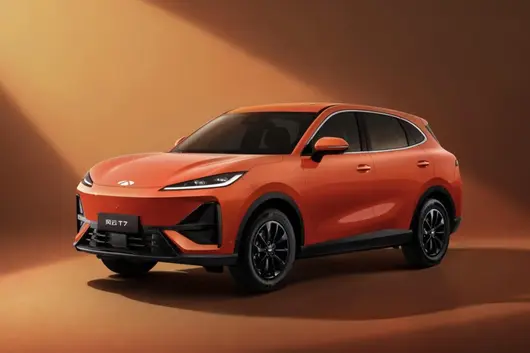
On August 12, Chery Fengyun T7 officially launched pre-sale. Offering three configurations, the pre-sale price ranges from 109,900 to 129,900 RMB, simultaneously releasing seven sets of purchase benefits. As a pure electric SUV focusing on family use, it integrates looks, space, range, safety, and later vehicle usage costs together, raising the competition threshold of the 100,000 RMB class market at the start.

The design of this car was not decided on a whim. Chery brought in 10 major design centers globally, and over 5,000 domestic and overseas users co-created together. The Lepas L6 on the same platform previously showed up at the Milan Design Week and received considerable international recognition. Applied to the Fengyun T7, it hides a touch of oriental elegance within simple lines. There are no exaggerated grilles or aggressive lines. The wind-tuned front face, smooth body curves, and through-type tailgate make it look good over time, suitable for family use without being conspicuous, and detailed upon closer inspection.


Paint standards directly benchmark strict overseas weather resistance requirements, resistant to fading and discoloration even under sun exposure and high humidity. Six color options are provided: Blazing Orange, Mountain Smoke Purple, Cloud Pink Beige, Flowing Light Silver, Bamboo Green Grey, and Ink Stone Black, covering everything from steady family use to youthful personality.

The interior follows a warm and practical route, offering Warm Black-Brown and Polar Night Obsidian two styles. The wraparound cockpit features large-area soft-touch covering. Details include pebble-shaped floating speakers and diamond quilting decoration, with no lack of refinement. More practically, the official says the interior leather, sealing strips, and plastic parts have been treated for anti-aging. Long-term use won't easily harden or fade, so it won't look old after two or three years of driving.

Body dimensions are 4570x1852x1694mm, wheelbase 2700mm. The data is average for a compact SUV, but the cabin utilization rate reaches 84%. Actual space performance is more striking than the numbers suggest. The rear floor is fully flat, legroom is 911mm, sitting three people won't be cramped; after folding the rear seats flat, it forms a 1955mm pure flat space. Temporarily used as a bed or carrying large luggage is no problem. Regular trunk capacity is 450L, expanding to 1550L after folding. Sufficient for daily commuting, weekend camping, and family travel.

Details also understand life well: 38 storage compartments all around, places for phones, water cups, and sundries; the trunk is equipped with 4 rivet rings with 300kg load capacity and 2 hooks. Camping equipment and large luggage can be firmly fixed, won't swing around while driving.
Seats feature a 9-layer cloud feeling design, soft but not sagging, not easily tired after long sitting, also with ventilation and heating. Heating has 3 adjustable levels. In a minus 20°C environment, reaches 30°C in 5 minutes. No need to freeze for half an hour when getting into the car in winter. Ventilation uses suction design, summer back won't get stuffy with sweat, taking care of North and South user needs.

For intelligence, Fengyun T7 uses the Cockpit-Driving Integrated 8775 chip, 4nm process, 72 TOPS computing power, response speed 80ms. Boot speed is 33% faster than regular models. Actual experience shows sliding the screen and switching apps are quite smooth. No awkwardness of long pressing with no response.
15.6-inch 2.5K central control screen, fine display, also made with anti-glare, anti-reflective, anti-fingerprint treatment. Can be seen clearly even in bright sun, won't leave fingerprints after touch. Wireless CarPlay, HUAWEI HiCar, CarLink all supported, covering most phones on the market. Auto connect on entry, no need to plug wires and fuss.

Vehicle system is Lingxi Smart Cockpit 2.0. Besides conventional voice control, also made with 6 types of human-like companion personas, Northeast Auntie, Debate Master, Spoken Language Teacher etc., can relieve boredom when driving long distances. Built-in Nap, Camping, Pet, Wake-up etc. 6 scenario modes. One-key to switch corresponding AC, seat, ambient light settings. No need to adjust manually one by one.
Driving assistance is equipped with Falcon 500 System. 22 high-precision sensors all around: 3 mmWave radars, 7 high-performance cameras, 12 ultrasonic radars. Sensing ability maxed out. Most practical is automatic parking. Covers over 300 scenarios. Dead-end road parking, one-key trace reverse, multi-floor parking can be realized. Very friendly to users not skilled in parking.

Range is the core pain point for pure electric family cars. Fengyun T7 directly achieved full standard equity. Three models all standard equipped with 65.05kWh Rhino Battery. CLTC range 600km, official actual test can reach above 667km. Typical of "honestly under-marked", daily commuting one week one charge completely sufficient, long distance travel also more grounded. Fast charge from 30% to 80% takes only 20 minutes. During rest stop drink coffee time, can recharge much range.

For extreme weather, it equipped with Full-domain Integrated Thermal Management System. Dual-source wide heat pump AC plus high-voltage PTC. Minus 30°C to plus 55°C can work stably. North winter heating more power saving, South summer heat dissipation more efficient. Plus AGS intelligent grille and 14 low wind resistance optimizations. High and low speed energy consumption are relatively stable. Won't cut range in half just because winter comes.
Safety level is also fully loaded. Vehicle body designed according to 2026 version E-NCAP five-star standard. Functional safety reaches ASILD highest level. R&D stage invested 81 exclusive durability cars. Cumulative test mileage over 6 million km. Durability special actual test 1.45 million km. Also in Southeast Asia rainy season, Middle East high temperature, Indonesia high humidity etc. extreme environments did actual car trials. Global various working conditions all ran.

Body is nine cross and five longitudinal cage structure. 80% high-strength steel, 18.84% hot-formed steel. Matching shotgun structure, double frame subframe and Pack anti-collision beam. During collision can disperse energy through multiple force transmission paths. Protect cabin space. 9 airbags all around, also with 48L dual-chamber far-end airbag and rear side airbag. Front and rear passengers all taken care of.
Battery safety also no slacking. Rhino Battery has 6D protection system. Can withstand compression, puncture, impact. IP68 waterproof rating is 96 times national standard. Rainy day pass water, rough road wading, no need to worry about battery water ingress short circuit.

Chassis tuning completed by international team led by former Maserati chassis tuning expert. 50.8:49.2 approaching golden axle load ratio. In corners can suppress push over and tail slide. Driving more stable. Highway cruising tracking also better. Chery has 20 years foundation in chassis. As early as 2009 independently made China's first ground mobile two-axle K&C test bench. Tuning experience and hardware foundation are online.

What makes family users most worry-free is still pre-sale benefit policy. Besides conventional welfare, core is two major safeguards and two lifetime rights. Directly plugging up later use car concerns.
Two major safeguards: One is power battery safety safeguard. If caused by battery itself reason leading to thermal runaway whole vehicle damage, directly compensate same model or higher configuration new car; Two is assisted driving safeguard. Within one year of purchase, parking and Intelligent Pilot scenarios, if judged caused by intelligent driving system reasons, occupants and third-party losses compensated up to 5 million.
Two lifetime rights: Whole vehicle lifetime warranty (including three-electric systems, consumables excepted); 666 RMB can buy value 3999 RMB lifetime basic maintenance package. One time a year. Long term driving saves a lot of car maintenance money.

From design R&D to testing verification, Fengyun T7 full process done according to global standards. Finally landing on 109,900 starting price. Cost performance indeed outstanding. It has no one-sided skills. Looks, space, range, intelligence, safety, later costs all taken care of. Exactly stepped on family pure electric SUV user's core needs. Currently pre-sale already launched. Plan to buy 100,000 RMB class pure electric SUV. Can completely put it into reserved list.

喺馬來西亞嘅 SUV 市場,好多買家喺揀車嘅時候都會用 Proton X70 同 MG MG HS 嚟做比較。呢兩款車喺價位同定位上都幾接近,今日我哋就由多個方面做一次詳細嘅對比,幫你省咗做功課嘅時間。
Proton X70 喺馬來西亞嘅 OTR 售價係 RM 106,800 - 122,300,一共有 3 個版本,包括 1.5L Standard 2WD(RM 106,800)、1.5L Executive 2WD(RM 115,800)、1.5L Premium 2WD(RM 122,300) 等。
MG MG HS 喺馬來西亞嘅 OTR 售價係 RM 130,450 - 146,450,一共有 2 個版本,包括 1.5L Standard(RM 105,000)、1.5L Executive(RM 115,000) 等。
從價錢嚟睇,Proton X70 嘅起步價確實比 MG MG HS 平咗 RM 23,650。如果你預算有限,Proton 嘅入門版已經可以滿足日常需求。但都要注意,平嘅嗰幾千蚊,可能在配備上會有取舍,具體要睇你嘅需求。
Proton X70 搭載 1.5L Turbo,馬力 140 hp。官方油耗 7.0 L/100km。
MG MG HS 搭載 1.5L Turbo,馬力 140 hp。官方油耗 7.0 L/100km。
兩款車用嘅係同一套動力系統,日常開起嚟嘅感受基本上冇分別。油耗方面都差唔多,唔使太糾結這一點。
Proton X70 車身長 4400 mm,後備箱 400 L。
MG MG HS 車身長 4400 mm,後備箱 400 L。
兩款車嘅尺寸幾乎一樣,車內空間差別唔大。呢個級別嘅車,日常使用完全夠用。
Proton X70 採用 FWD 驅動方式。
MG MG HS 採用 FWD 驅動方式。
兩款車嘅驅動方式一樣,都係 FWD,日常駕駛感受唔會有多大區別。
總嘅嚟講,Proton X70 同 MG MG HS 都係馬來西亞市場幾唔錯嘅車型。揀邊輛,關鍵仲係要睇你嘅個人需求同預算。建議大家做好功課,多比較幾間車行嘅報價,再去試車做最後決定。買車係件大事,花少少時間做功課絕對唔會錯。

喺馬來西亞嘅 SUV 市場,好多買家喺揀車嘅時候都會拿 Proton X70 同 Mazda CX-30 做比較。呢兩款車喺價錢同定位上都幾接近,今日我哋就由多個方面做一個詳細比較,幫你省返做功課嘅時間。
Proton X70 喺馬來西亞嘅 OTR 售價係 RM 106,800 - 122,300,合共 3 個版本,包括 1.5L Standard 2WD(RM 106,800)、1.5L Executive 2WD(RM 115,800)、1.5L Premium 2WD(RM 122,300)等等。
Mazda CX-30 喺馬來西亞嘅 OTR 售價係 RM 122,409 - 146,409,合共 4 個版本,包括 2025 2.0L High+ Premium(RM 146,409)、2025 2.0L High+(RM 138,409)、2025 2.0L High(RM 130,409)等等。
由價錢睇,Proton X70 嘅起步價確實比 Mazda CX-30 平咗 RM 15,609。如果你預算有限,Proton 嘅入門版已經可以滿足日常需要。不過都要注意,平嗰幾千蚊,可能喺配備上會有取捨,具體睇下你嘅需要。

Proton X70 配備 1.5L Turbo,馬力 140 hp。官方油耗 7.0 L/100km。
Mazda CX-30 配備 1.5L Turbo,馬力 140 hp。官方油耗 7.0 L/100km。
兩部車用緊同一套動力系統,日常開起嚟嘅感覺基本冇分別。油耗方面都幾接近,唔使太糾結呢一點。
Proton X70 車身長 4400 mm,尾箱 400 L。
Mazda CX-30 車身長 4500 mm,尾箱 450 L。
空間方面,Mazda CX-30 嘅車身比 Proton X70 長咗 100 mm,乘坐空間更有優勢。不過 Proton X70 喺城市入面停車會靈活啲,各有取捨。
Proton X70 採用 FWD 驅動方式。
Mazda CX-30 採用 FWD 驅動方式。
兩部車嘅驅動方式一樣,都係 FWD,日常駕駛感覺唔會有太大分別。
Proton X70 同 Mazda CX-30 都係馬來西亞市場嘅主流選擇,適合家庭使用、日常通勤。如果你更睇重品牌口碑同二手價,可以優先考慮口碑更好嗰款;如果你更在意性價比同配備,就揀配置更豐富嗰款。最終都係建議兩部都去試駕,親身體驗先至係最重要。
總體嚟講,Proton X70 同 Mazda CX-30 都係馬來西亞市場幾唔錯嘅車型。揀邊一部,關鍵始終都要睇你嘅個人需求同預算。建議大家做足功課,多比較幾間車行嘅報價,再去試駕先至做最終決定。買車係件大事,花啲時間做功課絕對唔會錯。

In Malaysia's SUV market, many buyers compare Perodua Aruz and Honda WR-V when choosing a car. These two cars are quite close in price and positioning, so today we will conduct a detailed comparison from multiple aspects to save you the time of doing research.
The OTR price of Perodua Aruz in Malaysia is RM 72,900 - 77,900, with a total of 2 versions, including 1.5L X (RM 72,900), 1.5L AV (RM 77,900), etc.
The OTR price of Honda WR-V in Malaysia is RM 89,900 - 107,900, with a total of 4 versions, including 2023 1.5L V (RM 99,900), 2023 1.5L E (RM 95,900), 2023 1.5L S (RM 89,900), etc.
From a price perspective, the starting price of Perodua Aruz is indeed RM 17,000 cheaper than Honda WR-V. If your budget is limited, Perodua's entry-level version can already meet daily needs. But be aware, the few thousand cheaper might involve trade-offs in features, depending on your specific needs.

Perodua Aruz body length is 4400 mm, trunk 400 L.
Honda WR-V body length is 4400 mm, trunk 400 L.
The dimensions of both cars are almost the same, and the interior space difference is not significant. For cars in this class, it is completely sufficient for daily use.

Perodua Aruz warranty 5 years / 150,000km, maintenance interval every 10,000km or 6 months.
Honda WR-V warranty 5 years / unlimited mileage, maintenance interval every 10,000km or 6 months.

Perodua Aruz and Honda WR-V are both mainstream choices in the Malaysian market, suitable for family use and daily commuting. If you value brand reputation and resale price more, you can prioritize the one with a better reputation; if you care more about cost-effectiveness and features, then choose the one with more configurations. Ultimately, it is recommended to test drive both, and the personal experience is the most important.

Overall, Perodua Aruz and Honda WR-V are both very good models in the Malaysian market. Which one to choose mainly depends on your personal needs and budget. It is recommended that you do your research, compare quotes from several car dealerships, and then test drive to make a final decision. Buying a car is a big deal, spending some time doing research will never be wrong.


喺馬來西亞嘅 SUV 市場,好多買家喺揀車嗰陣都會拿 Perodua Ativa 同 寶騰 X70 做比較。呢兩部車喺價位同定位上都好接近,今日我哋就從多個方面做個詳細比較,幫你省返做功課嘅時間。
Perodua Ativa 喺馬來西亞嘅 OTR 售價係 RM 62,500 - 73,400,一共有 3 個版本,包括 1.0L Turbo X(RM 62,500)、1.0L Turbo H(RM 67,300)、1.0L Turbo AV(RM 73,400) 等。
寶騰 X70 喺馬來西亞嘅 OTR 售價係 RM 106,800 - 122,300,一共有 3 個版本,包括 1.5L Standard 2WD(RM 106,800)、1.5L Executive 2WD(RM 115,800)、1.5L Premium 2WD(RM 122,300) 等。
從價錢睇,Perodua Ativa 嘅起價確實比 寶騰 X70 平咗 RM 44,300。如果你預算有限,Perodua 嘅入門版已經可以應付日常需要。但都要留意,平嗰幾千蚊,可能喺配備上有取舍,具體要睇你嘅需要。

Perodua Ativa 搭載 1.5L 4-cyl,馬力 105 hp。官方油耗 6.0 L/100km。
寶騰 X70 搭載 1.5L Turbo,馬力 140 hp。官方油耗 7.0 L/100km。
動力方面,寶騰 X70 嘅 1.5L Turbo 比 Perodua Ativa 嘅 1.5L 4-cyl 多咗 35 匹馬力。不過日常喺市區行,兩部車嘅動力都夠用,唔會覺得唔夠力。

Perodua Ativa 車身長 4400 mm,後尾箱 400 L。
寶騰 X70 車身長 4400 mm,後尾箱 400 L。
兩部車嘅尺寸差唔多,車內空間差別唔大。呢個級別嘅車,日常使用完全夠用。
Perodua Ativa 採用 FWD 驅動方式。
寶騰 X70 採用 FWD 驅動方式。
兩部車嘅驅動方式一樣,都係 FWD,日常駕駛感受唔會有太大分別。
Perodua Ativa 保養 5 年/150,000km,保養間隔 每 10,000km 或 6 個月。
寶騰 X70 保養 5 年/150,000km,保養間隔 每 10,000km 或 6 個月。
兩部車嘅保養條件一樣,呢方面唔使糾結。實際保養成本仲要睇品牌嘅服務網絡同零件價格,建議去車友群問下真實車主嘅經驗。
總嘅嚟講,Perodua Ativa 同 寶騰 X70 都係馬來西亞市場幾好嘅車型。揀邊一部,關鍵仲要睇你個人需要同預算。建議大家做好功課,多比較幾間車行嘅報價,再去試駕先做最後決定。買車係件大嚟事,花點時間做功課絕對無錯。


喺馬來西亞嘅皮卡市場,好多買家喺揀車嗰陣都會拿豐田 Hilux 同馬自達 BT-50 嚟做比較。呢兩款車喺價位同定位上都幾接近,今日我哋就由多個方面做一個詳細比較,幫你慳返做功課嘅時間。
豐田 Hilux 喺馬來西亞嘅 OTR 售價係 RM 104,880 - 173,280,一共有 6 個版本,包括 2025 2.8T AT Double Cab GR Sport(RM 173,280)、2025 2.8T AT Double Cab Rogue(RM 163,080)、2025 2.4T AT Double Cab V(RM 149,580) 等。
馬自達 BT-50 喺馬來西亞嘅 OTR 售價係 RM 140,418 - 140,418,一共有 1 個版本,包括 2025 3.0T High Plus(RM 140,418) 等。
由價錢嚟睇,豐田 Hilux 嘅起步價真係比馬自達 BT-50 平咗 RM 35,538。如果你預算有限,豐田嘅入門版已經可以滿足日常需要。但都要留意,平嗰啲幾千蚊,可能喺配備上會有取捨,具體睇你嘅需要。

豐田 Hilux 配備 2.5L Diesel,馬力 187 hp。廠方油耗 8.5 L/100km。
馬自達 BT-50 配備 2.5L Diesel,馬力 187 hp。廠方油耗 8.5 L/100km。
兩款車用緊同一套動力系統,日常開落去嘅感覺基本冇分別。油耗方面都差唔多,唔使太糾結呢一點。

豐田 Hilux 嘅安全評級係 5★ (ASEAN NCAP),主動安全系統包括 Brand ADAS。
馬自達 BT-50 嘅安全評級係 5★ (ASEAN NCAP),主動安全系統包括 Brand ADAS。
兩款車嘅安全評級一樣,喺呢個級別入面安全配備都算好齊全。而家嘅新車安全性都唔差,唔使太擔心呢一點。

豐田 Hilux 車身長 5300 mm,尾箱 0 L。
馬自達 BT-50 車身長 4400 mm,尾箱 400 L。
空間方面,豐田 Hilux 嘅車身比馬自達 BT-50 長咗 900 mm,車內乘坐空間會稍為寬裕啲,尤其係後座腿部空間。如果你經常載家人或者需要放嬰兒車,大一點嘅車身真係更實用。

豐田 Hilux 同馬自達 BT-50 都係馬來西亞市場嘅主流選擇,適合家庭使用、日常通勤。如果你更睇重品牌口碑同二手價,可以優先考慮口碑更好嗰款;如果你更在意性價比同配備,那就揀配備更豐富嗰款。最後都建議兩款都去試駕,親身體驗先係最緊要。

總括嚟講,豐田 Hilux 同馬自達 BT-50 都係馬來西亞市場幾不錯嘅車型。揀邊一輛,關鍵都係睇你個人需要同預算。大家做好功課,多比較幾間車行嘅報價,再去試駕做最終決定。買車係件大事,花啲時間做功課絕對唔會錯。


