


首頁銅鑼灣

搜尋歷史
熱門搜尋
經銷商登入 / 註冊

In August 2026, Deepal Automobile global sales reached 28,659 units. The brand's cumulative sales have reached 947,600 units, getting closer to the one million sales target. Among them, Deepal S05 monthly global sales reached 17,474 units, up 43.42% year-on-year and 24.29% month-on-month. Since its launch, this car's monthly average sales have remained stable above 10,000, with cumulative global sales breaking 260,000 units, placing it in the top tier of 150,000 compact new energy SUVs. Achieving such market performance mainly stems from its downgrading of hardware configurations previously found only on high-end models to the 150,000 mainstream family price segment.

In terms of intelligent driving, Deepal S05 is equipped with a set of 27 perception hardware components including 1 LiDAR, paired with Dual Horizon J6M chips and a one-step end-to-end algorithm. It boasts over 90 advanced driving assistance features, supporting urban, highway, parking, and map-less full-scenario roaming assistance. The cockpit is equipped with a 3nm automotive chip, paired with a 15.6-inch 2.5K Sunflower Screen, 18-speaker audio, and AI voice interaction. On the chassis, the vehicle comes standard across all trims with FSD+HRS variable adaptive suspension, which can adjust damping in real-time according to road conditions to suppress cornering roll and filter out bumps and vibrations. Power options provide 520km and 620km CLTC pure electric range versions, with 0-100 km/h acceleration in 6.28 seconds. All trims come standard with 3C ultra-fast charging, and there is a corresponding thermal management system in low-temperature environments to improve charging and range performance.

In terms of exterior and interior design, the car adopts the Interstellar Flying Wing 2.0 design language, featuring frameless doors, semi-hidden door handles, and 18-inch sport wheels. The interior offers three color options: Nebula Purple, Hot Wave Orange, and Star Rock Grey, with large areas of leather covering, matched with wood grain trim and multi-color ambient lighting. Besides the domestic market, Deepal S05 is also advancing its overseas business, having already entered 73 countries and regions, with overseas monthly sales stable over 6,000 units. It has won awards such as the iF Design Award, Thailand Car of the Year, and J.D.Power new vehicle quality related awards. Olympic champion He Kexin also became an owner of this car.

Comprehensive hardware, sales, and domestic and overseas feedback show that the product strategy of Deepal S05 is relatively clear. In the 150,000 price segment, configurations like LiDAR, end-to-end intelligent driving, and variable damping suspension have been downgraded to the mainstream. It targets family users who value intelligent driving and ride comfort. However, hardware is just the foundation. Whether actual daily use is good depends on the continuous refinement of algorithms and systems. This car being able to establish a foothold in the niche market is also the result of high configurations matching real market demand.

Deepal S05 can also continuously update the driving experience through OTA iterations. The new version DEEPAL OS 3.2.0 mainly optimizes parking capabilities, adding functions such as nose-in parking, perpendicular parking exit, custom parking, low-speed emergency braking, etc. Remote parking operation logic has also been simplified; simultaneously upgraded voice navigation, screen casting, third-party applications. Amap adds green light countdown and blind spot oncoming vehicle warning, the mobile APP expands capabilities like remote keyless driving and Bluetooth diagnostics. It also optimized fatigue reminders and privacy security. The overall upgrade covers intelligent driving, cockpit, and mobile connectivity multiple sectors.
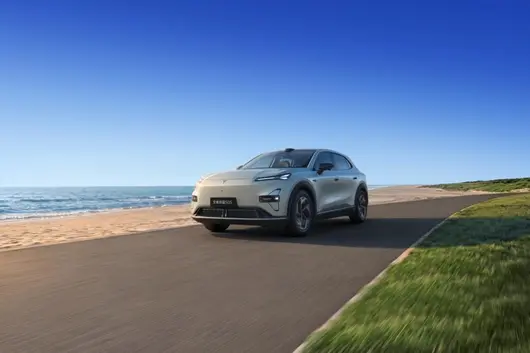

喺馬來西亞嘅 SUV 市場,好多買家喺揀車嗰陣都會拿 Honda HR-V 同 Mazda CX-5 嚟做比較。這兩款車喺價位同定位上都相當接近,今日我哋就從多個方面做一個詳細嘅比較,幫你節省咗做功課嘅時間。
Honda HR-V 喺馬來西亞嘅 OTR 售價係 RM 115,900 - 143,900,總共有 4 個版本,包括 2026 e:HEV 1.5L RS(RM 143,900)、2026 1.5T V(RM 137,900)、2026 1.5T E(RM 130,900) 等。
Mazda CX-5 喺馬來西亞嘅 OTR 售價係 RM 135,469 - 166,760,總共有 3 個版本,包括 2025 2.0L AT 35th Anniversary(RM 316,154)、2025 2.0L AT(RM 296,154)、2025 2.0L MT(RM 294,154) 等。
由價錢嚟睇,Honda HR-V 嘅起步價的確比 Mazda CX-5 平咗 RM 19,569。如果你預算有限,Honda 嘅入門版已經可以滿足日常需要。但都要留意,便宜嗰幾千蚊,可能喺配備上面會有取捨,具體要睇你嘅需要。

Honda HR-V 嘅安全評級係 5★ (ASEAN NCAP),主動安全系統包括 Honda SENSING (ACC, CMBS, LKAS, RDM)。
Mazda CX-5 嘅安全評級係 5★ (ASEAN NCAP),主動安全系統包括。
兩款車嘅安全評級一樣,喺呢個級別入面安全配備都算好齊全。而家嘅新車安全性都唔錯,唔使太擔心呢一點。

Honda HR-V 車身長 4500 mm,后备廂 450 L。
Mazda CX-5 車身長 4500 mm,后备廂 450 L。
兩款車嘅尺寸幾乎一樣,車內空間分別唔大。呢個級別嘅車,日常使用完全夠用。

Honda HR-V 同 Mazda CX-5 都係馬來西亞市場嘅主流選擇,適合家庭使用、日常通勤。如果你更睇重品牌口碑同二手價,可以優先考慮口碑更好嗰款;如果你更在意性價比同配備,嗰就揀配置更豐富嗰款。最終仲係建議兩款都去試駕,親身體驗先係最重要嘅。

總括嚟講,Honda HR-V 同 Mazda CX-5 都係馬來西亞市場嘅車型。揀邊一輛,關鍵都要睇你嘅個人需求同預算。建議大家做好功課,多比較幾間車行嘅報價,再試駕做最終決定。買車係件大事,花啲時間做功課絕對無錯。


8% is like a door; most people cannot push it open, but among every 100 people, there are always 8 who can push it open.
How big is the 8% probability?
If the probability of rain tomorrow is 8%, I believe most people would not bring an umbrella. But if the probability of winning a prize is 8%, I believe many would participate. After all, compared to the probability of less than 1% for Pop Mart blind box hidden figures, 8% is still worth participating in.
The current domestic automotive market is also like this. Countless car manufacturers seek to break through in the market, only to compete for this 8% success probability.

According to incomplete statistics, there are currently about 700 models of new energy vehicles on sale in the domestic market, but only 56 products have a monthly sales volume of over 5,000 units, and the overall product success rate of the industry is only 8%.
Creating a hot-selling product is already the top priority for car manufacturers. After creating a hit, how to continuously maintain high sales has become the focus. Bloom for a night is the fate of most new cars. Once the three-month flowering period is over, they become nothing special.
Faced with the pressure of market competition, the transformation difficulty for traditional car manufacturers is harder than for the well-funded new forces. In the sales month approaching "Golden September and Silver October", the mid-year financial reports of car manufacturers have also been released. The answer to transformation is written in the reports.
Exports and Going Upmarket
First is BYD's semi-annual report. Cumulative sales of new energy vehicles in the first half of the year were about 1.8085 million units, down 15.72% year-on-year. Revenue from the automotive business was about 275.341 billion yuan, down 8.98% year-on-year.
At first glance, many people only see the decline in revenue and net profit attributable to the parent company, and then directly label this top dog of the new energy industry as "declining".
But if you carefully analyze BYD's financial report, you can understand the changes of this industry leader.
In the semi-annual report, BYD showed unprecedented supply chain strength, with a gross margin of 18.85%, and the gross margin in the second quarter even rose to 18.88%, up 2.61% year-on-year.
It is worth knowing that in the first half of 2026, the domestic automotive industry faced triple pressure of raw material price hikes, exchange rate fluctuations, and price wars. The average profit margin in the vehicle manufacturing link dropped to 1.5%, setting a new low in nearly ten years. However, BYD presented an upward mid-term answer.

Behind this lies BYD's transformation. According to sales data, Fang Cheng Bao, Denza, and Yangwang brands combined sales of 228,000 units, up 61% year-on-year. Their share of total sales rose to 12.6%. Moreover, the domestic full brand ASP (Average Selling Price per vehicle) rose from 133,100 yuan in March to 148,700 yuan in June.
In the domestic market, wanting to raise the price per vehicle basically means providing users with more configurations. BYD relies on technology to make consumers pay for this value add.
Only in the first half of the year, BYD showcased multiple new technologies. From the 2nd gen Blade Battery and Megawatt Supercharge at the beginning of the year to the self-developed 4nm smart driving chip Xuanji A3 and the Sky-Eye 5.0 ADAS system support, BYD demonstrated the R&D confidence and technical support capability a big factory should have.
Especially the 2nd gen Blade Battery and Megawatt Supercharge allowed BYD to achieve an upward price adjustment per vehicle. At the previous financial report meeting, Chairman Wang Chuanfu stated that currently the 2nd gen Blade Battery is in short supply, and this year's sales are fully limited by battery capacity.

On the other hand, the construction of BYD's Supercharge stations is extremely rapid. On August 28, they completed the construction of the 10,000th Supercharge station. Although compared to the 20,000 stations target set at the beginning of the year, it looks slightly slow in time, BYD guarantees to definitely complete the target this year.
From batteries to energy storage, BYD relied on lithium battery technology to achieve breakthroughs in new energy vehicles. Relying on self-developed and self-produced batteries, BYD achieved a gross margin rise despite the negative impact of upstream raw material price hikes. Furthermore, BYD's self-production covers not only batteries but a series of components like chips that are also rising in price. The core component self-supply rate exceeds 80%, which is difficult for general car manufacturers to learn quickly.
Behind these technologies, there are no other shortcuts. They are all investments BYD made with real money. Financial reports show that BYD invested 28.9 billion yuan in R&D in the first half of the year, and cumulative R&D investment exceeded 270 billion yuan. They earn 1 yuan and spend more than 2 yuan on R&D.

Of course, this is not a muddled account. Behind this is BYD's long-term investment, and now these investments have achieved returns.
Besides being firmly the champion of domestic new energy retail sales with 21.1% market share, BYD also took the first position in new energy exports with an export scale of 792,000 units.
Export growth is the main contributor to BYD's sales this year. Export sales share exceeds 40%, with a growth rate exceeding 60%. Meanwhile, revenue share exceeded half, reaching 52.7%. It can be said that more than half of the money BYD earns comes from overseas markets.
According to data, BYD's overseas vehicle profit is three times that of domestic, meaning 2 yuan of R&D earns back 3 yuan overseas.

As for BYD's overseas scale, the growth speed is as fast as the Supercharge stations. The business covers over 120 countries and regions. It topped the new energy brand sales champion in markets like the UK, Brazil, and Thailand. Inside BYD, there is even a plan to build stores in the Atlantic island nation Cape Verde this year which became popular due to the World Cup.
However, the overseas market also carries risks. In the semi-annual report, BYD attributed the main reason for profit decline to exchange losses generated by exchange rate fluctuations, losing about 4.7 billion yuan in profits. Such risks are an adjustment for global car manufacturers. Some lose on exchange rates, some profit. Japanese brands in recent years have achieved profit rises relying on exchange rates.
As a representative of domestic new energy vehicles, BYD proved with time and actions that domestic new energy can still profit in the market without price wars, whether domestic or overseas.
Pressure and Growing Pains
Changan Automobile's semi-annual report is more about changes. In the first half of 2026, the company achieved operating revenue of 65.634 billion yuan, down 9.71% year-on-year; net profit attributable to the parent company was 0.817 billion yuan, down 64.32% year-on-year, with a gross margin of 14.50%.
Different from BYD, Changan Automobile's financial report better represents the status quo of domestic car manufacturers' transformation. In the process of shifting from fuel cars to new energy, Changan Automobile faces far more difficulties than BYD. BYD can build its own new energy supply chain from scratch, but Changan Automobile needs to consider the transformation of the supply chain from the fuel car era with hundreds of upstream suppliers.
If excluding the fuel car sector, Changan Automobile's performance in new energy is still quite good. In the first half of 2026, new energy vehicle sales reached 414,000 units, down 8.3% year-on-year. However, after excluding entry-level models like Lumin, the total new energy sales in the first half of 2026 grew 11% year-on-year. Among which, new energy vehicle sales in the second quarter were 245,600 units, up 45.64% quarter-on-quarter.

Changan Qiyuan Q05 ranked number 1 in compact pure electric SUV sales for consecutive 3 months. Deepal S05 ranked champion in the niche field (120,000-180,000 pure electric compact SUV) for consecutive 4 months. Behind this is Changan's breakthrough in niche models. Rather than grandly covering all models, it is better to focus efforts at a point and find your own track.
Changan Qiyuan is exactly like this. Not exchanging price for volume, Qiyuan average price per vehicle rose 12,000 yuan year-on-year. Cumulative sales in the first 7 months of this year exceeded 210,000 units, and July single month sales also exceeded 30,000 units. And it achieved single quarter profit in Q2, taking the first step of new energy startup.
Besides the domestic market, overseas business is also Changan's main profit source. Deliveries in overseas markets in the first half were 402,000 units, up 35.1% year-on-year. Overseas business revenue was 21.942 billion yuan, up 78.77% year-on-year. Overseas gross margin remained above 20%.
Behind this is Changan Automobile adopting the "Local production + Systematic operation" strategy in overseas markets. Its Thailand Rayong factory has started production and operation, achieving localization production of hot-selling models like Deepal S05 and Changan Qiyuan Q05.

While playing well the new energy card, Changan also used "Blue Whale Super Hybrid" to provide a new solution for the fuel car market, especially to cope with lithium battery raw material price hikes and charging facility construction weak areas' vehicle usage demand.
But these advantages still cannot cover the difficulties Changan Automobile faces in transformation. Significant profit decline and negative operating cash flow all indicate that transformation costs are high and have not yet been converted into profit.
Now Changan Automobile's hopes are all bet on overseas business. 51.9% export growth and 78.8% overseas revenue growth became the only highlight in business difficulties.
Rely on Yourself
Different from BYD and Changan, GAC Group represents the transformation of more automotive SOEs. In 2025 sales, GAC was the SOE with the highest proportion of joint venture sales. 64.4% of sales were contributed by GAC Toyota and GAC Honda, with a reliance on joint ventures far higher than other SOEs.
But after fuel car sales continued to decline and the independent brand sales share broke 70%, GAC Group's situation became very subtle.
Financial reports show that GAC Group revenue grew 9.38% year-on-year to 46.121 billion yuan, but the gross margin was -2.51%, negative for two consecutive years. Among them, investment income from joint venture enterprises decreased by about 6 billion yuan year-on-year, becoming the biggest drag on performance.
From the sales data perspective, GAC's performance is not as poor as the financial report suggests. New energy vehicle sales were 260,200 units, up 68.80% year-on-year, with a growth rate significantly higher than the industry. Among which, the independent brand new energy sales share reached 62.82%, up about 14 percentage points year-on-year.

GAC Toyota sales grew 3.29%. The Zhizhi series monthly sales continuously broke 10,000. Zhizhi 3X ranked joint venture new energy sales champion for consecutive 10 months.
However, GAC Honda sales plummeted 55.82% to 68,300 units. New energy vehicle sales were only 3,276 units, becoming the biggest drag on GAC Group performance.
When joint venture brands lost combat power, GAC needs to fill the gap with independent brands. The cost of catching up is not small. Money is needed in all aspects. Expenses like R&D and marketing need to increase. R&D expense up 39%, financial expense up 243%, sales expense up 17%. Overall, this led to a situation of revenue growth but profit loss increase.
Especially the R&D investment. The 4.8 billion investment in the second quarter kept the gross margin still maintained at negative 1.28%. As for channel construction, GAC chose to sink and focus on the county economy, planning to complete 1,000 county authorized stores this year.

At the same time to achieve efficient transformation, GAC Group introduced IPD process reform. Officially stated independent brand R&D, production, supply, sales, finance integrated control, making product planning efficiency up 30%, project approval efficiency up 67%, demand decision efficiency up 85%. New car development cycle shortened to 18-21 months, and R&D cost reduced by over 10%.
But these are hard to show in financial reports in the short term. Currently the only thing visible is still export growth.
Semi-annual report shows, GAC independent brand exported 121,500 units in the first half of the year, a surge of 132% year-on-year, close to the 2025 full year export volume. Overseas business revenue was 14.013 billion yuan, up 109.27% year-on-year.

In the global layout, 7 KD factories were built, adding two factories in Cambodia and Kazakhstan. At the same time, the first overseas independent battery PACK factory is being built in Thailand, perfecting overseas power battery localization supply, achieving supply chain synchronous overseas go.
Like BYD, GAC's layout in new energy also first focuses on the power battery which has the largest cost share. Ensuring supply chain autonomy and control, no longer working for battery manufacturers, makes it possible to achieve a positive gross margin.
As a representative of transitioning from relying on joint ventures to relying on independents, GAC Group is still in the transformation difficulty period. Transformation investment surged, leading to expanded losses, and it will still be difficult to achieve change in the short term.

Overall, under the background of the domestic market first half year-on-year decline over 20%, it can better see the urgency of traditional car manufacturers' transformation. On one hand, the battlefield has already spread from domestic to overseas. Overseas markets have become the core of car manufacturers' profit, but at the same time exchange rate fluctuations have also brought uncertainty.
On the other hand, R&D investment is becoming the core to measure car manufacturers' long-term profit. BYD relies on years accumulated R&D investment, now has already formed technical advantages and converted them into profitability. Like Changan and GAC need to catch up in R&D, investing greater costs to achieve self-research.
Overall, under the first half domestic car market "cool inside hot outside" pattern, whoever can more quickly shift growth focus to overseas and premiumization can walk out of the profit valley earlier. BYD has already verified the effectiveness of this path first. Changan and GAC are still in the transformation climbing phase.
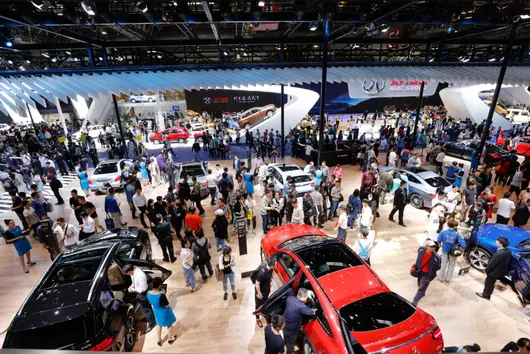

喺馬來西亞嘅 SUV 市場,好多買家喺揀車嗰陣都會拿 Proton X70 同 Volkswagen Tiguan 來比較。這兩款車喺價位同定位上都好接近,而家我哋就由多個方面做一次詳細比較,幫到你省咗做功課嘅時間。
Proton X70 喺馬來西亞嘅 OTR 售價係 RM 106,800 - 122,300,合共 3 個版本,包括 1.5L Standard 2WD(RM 106,800)、1.5L Executive 2WD(RM 115,800)、1.5L Premium 2WD(RM 122,300) 等。
Volkswagen Tiguan 喺馬來西亞嘅 OTR 售價係 RM 206,540 - 260,024,合共 2 個版本,包括 2025 Allspace 2.0T R-Line(RM 260,024)、2025 Allspace 1.4T Elegance(RM 206,540) 等。
由價錢睇,Proton X70 嘅起步價確實比 Volkswagen Tiguan 平咗 RM 99,740。如果你預算有限,Proton 嘅入門版已經可以滿足日常需要。不過都要注意,平嗰幾千蚊,可能喺配備上會有取舍,具體要看你嘅需要。

Proton X70 嘅安全評級係 5★ (ASEAN NCAP),主動安全系統包括 ADAS (ACC, AEB, LKA, LDA, BSM, RCTA)。
Volkswagen Tiguan 嘅安全評級係 5★ (Euro NCAP),主動安全系統包括 IQ.Drive。
安全配備方面,兩款車都拿到唔錯嘅評級。不過 Proton X70 嘅 ADAS (ACC, AEB, LKA, LDA, BSM, RCTA) 同 Volkswagen Tiguan 嘅 IQ.Drive 喺功能上有少少分別,如果你好重視主動安全嘅話,可以仔細對比下兩者嘅功能列表。

Proton X70 採用 FWD 驅動方式。
Volkswagen Tiguan 採用 FWD 驅動方式。
兩款車嘅驅動方式一樣,都係 FWD,日常駕駛感覺唔會有太大分別。

Proton X70 保用 5 年/150,000km,保養間隔 每 10,000km 或 6 個月。
Volkswagen Tiguan 保用 3 年/100,000km,保養間隔 每 10,000km 或 6 個月。
總體嚟講,Proton X70 同 Volkswagen Tiguan 都係馬來西亞市場好幾唔錯嘅車款。揀邊輛,關鍵都要睇你嘅個人需要同預算。建議大家做足功課,多比較幾間車行嘅報價,再去試駕先決定。買車係件大事情,花少少時間做功課絕對唔錯。


