首頁辽河

搜尋歷史
熱門搜尋
經銷商登入 / 註冊

If you only have 100,000 to 130,000 RMB and want to buy a pure electric SUV that handles daily commuting, long-distance self-driving, and camping perfectly, what are your bottom-line requirements? Long range without reduction, solid vehicle body safety, smooth and user-friendly infotainment system, spacious enough to lie down, and affordable low-maintenance after-sales service, these five points are indispensable. The recently pre-sold Chery Fengyun T7 just maximizes these essential needs, and even adds dual million RMB protection benefits for the battery and intelligent driving.

On August 12, the Fengyun T7 officially started pre-sale. The new car launches in three versions: 600km Comfort Version 109,900, 600km Enjoy Version 119,900, 600km Smart Version 129,900. Pay a 1,000 RMB deposit now to directly enjoy 7 layers of car purchase benefits, including 6,000 RMB exclusive paint, 2,000 RMB trade-in subsidy, two major protection guarantees, two lifetime car use benefits, and priority delivery rights. Car purchase benefits cover the entire cycle of buying and using, which is rare in vehicles at the same price point.

Many people will wonder, on what basis does a family electric car worth over 100,000 RMB dare to claim itself as "Global Quality"? This point should be viewed in conjunction with Chery's 23 years of globalized technology accumulation. The Fengyun T7 did not take the shortcut of rapid vehicle manufacturing in the industry, adopting a reverse overseas trial mode; whole vehicle R&D and testing all benchmark against global strict standards. During the R&D phase, 81 dedicated endurance vehicles were invested for synchronous road testing. The total accumulated testing mileage of the whole vehicle exceeded 6 million kilometers, and the endurance special test alone ran 1.45 million kilometers. It also conducted field tests specifically for multiple global extreme environments such as Southeast Asian rainy seasons, Middle East high-temperature sun exposure, and Indonesian high humidity, avoiding vehicle fault issues prone to occur under different climates at the source. The whole vehicle is built around the six core essential needs that ordinary car owners care about most, covering daily commuting, long-distance self-driving, outdoor camping, and entire family multi-person travel scenarios, with no obvious shortcomings.

First essential need: Good-looking appearance, maintaining texture over long-term use.
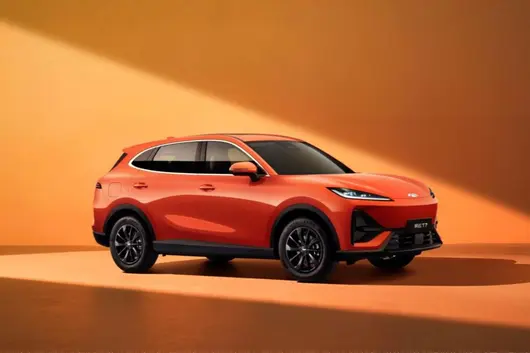
The Fengyun T7 was designed with the participation of Chery's 10 global design centers and more than 5,000 domestic and overseas users. The same-source model has also appeared at Milan Design Week, blending international minimalist style and soft eastern lines. The front grille features a wind-riding shape, the streamlined body is paired with through-type sky glow taillights, the lines are not exaggerated, and it is not conspicuous in daily family use. The body offers 6 color schemes including Flame Orange, Mountain Smoke Purple, Cloud Pink Beige, etc. The paint process synchronizes with overseas weatherability standards, making it less likely to fade or lose luster after long-term sun and rain exposure.
The interior offers two color schemes: Warm Black-Brown and Polar Night Black Obsidian. The Cloud Wing Wraparound Cockpit features large-area soft material wrapping. Diamond quilting, pebble-shaped speaker details, etc., are visible on the doors and center console everywhere. The official interior materials have all been subjected to anti-aging treatment. Leather and plastic seals will not harden and turn white after two or three years of use, balancing current aesthetics and long-term durability, solving the worry of many car owners "looks good new, worn out after three years".

Second essential need: Safety guarantee, all-around protection from the body to the battery for the whole vehicle.
Safety is the bottom line that cannot be compromised for family cars. The Fengyun T7 is built directly benchmarking against the 2026 Edition E-NCAP 5-star safety standard, and functional safety reaches the highest level of ASILD. The body adopts a nine-horizontal-five-vertical cage structure, 80% high-strength steel + 18.84% hot-formed steel, paired with dual-frame subframes and dedicated battery crash beams. Multiple collision force transmission channels are designed on the front, rear, and sides. When a collision occurs, it maximizes the dispersion of impact force to maintain the integrity of the passenger compartment space. The whole vehicle comes standard with 9 airbags, including large-volume dual-chamber far-end airbags and rear-side airbags, protecting both front and rear passengers.
The power battery uses the Rhino Battery, with a 6-layer 3D protective structure, resisting extrusion, penetration, and impact; the battery waterproof grade is IP68, with waterproof capability 96 times the national standard requirement. During summer heavy rain and water accumulation, or wading in suburban shallow waters, there is no need to worry about battery water ingress and short circuits. At the same time, the official provides two major protection benefits: if the battery's own fault causes whole vehicle thermal runaway, directly compensate with a new car of the same model; if the intelligent assisted driving system fault causes an accident within one year, compensate up to 5 million, undertaking the two types of risks that car owners worry about most.

Third essential need: Range without compromise, realizing equal rights for the entire series with 600km range.
Many electric cars at the same price point on the market cut the range in half for low configurations, and only high configurations have long range. The Fengyun T7 achieves range equality for the entire series. The three car models are all equipped with the 65.05kWh Rhino Battery. The CLTC standard range is 600km, and actual road test range can reach above 667km. This belongs to the industry's rare "reverse false labeling", and charging once a week is completely sufficient for daily commuting.
Charging efficiency also fits the daily travel rhythm. Charging from 30% to 80% takes only 20 minutes. A coffee break on the way is enough to make up for long-distance mileage. The vehicle is equipped with an all-domain integrated dual-source wide heat pump air conditioning system, supporting stable operation from -30°C to 55°C. Heating saves electricity in the north in winter, heat dissipation is stable in the south in summer. Additionally, with intelligent intake grilles and 14 items of low drag body optimization, energy consumption fluctuations at high and low speeds are smaller, and the range will not shrink significantly throughout the four seasons.

Fourth essential need: Smart and easy to use, high computing power chip balancing the cockpit and driving assistance.
The whole vehicle is equipped with a 4nm process 8775 cockpit-integrated chip. Computing power is 72 TOPS, system response is only 80 milliseconds, boot speed increases by 33%. Screen sliding and voice command operations will not lag. The central control is equipped with a 15.6-inch 2.5K HD large screen, treated with anti-glare and anti-fingerprint processing, and the screen can be seen clearly even under strong light. It supports wireless CarPlay, Huawei HiCar, and other mainstream mobile phone connectivity, almost compatible with all smartphones on the market.
The car computer has the Lingxi Smart Cockpit 2.0 voice system built-in. In addition to conventional navigation and temperature control, there are 6 different persona voice assistants. It also has exclusive scene modes such as nap, camping, pet, and wake-up built-in, switching with one click to adapt to different travel needs. Driving assistance uses the Falcon 500 system. The whole vehicle has 22 high-precision sensors, supporting more than 300 scenarios of automatic parking. Difficult parking scenarios like dead-end roads, multi-floor parking, and tracing reverse parking can be automatically completed, and new drivers no longer need to adjust repeatedly when parking.

Fifth essential need: Large space and high comfort, ensuring both family travel and camping loading are not affected.
The Fengyun T7 body size is 4570×1852×1694mm, wheelbase 2700mm, interior space utilization rate 84%, pure flat rear floor, rear legroom 911mm, three adults sitting in the rear will not be crowded. Conventional trunk volume is 450L, expanding to 1550L after folding down the rear seats, forming a 1955mm pure flat space inside the car. It can be directly used as a large bed for resting during outdoor camping.
The seats use 9-layer cloud-feel filling material. Support is sufficient, no collapsing after long sitting. Front row comes standard with ventilation and heating dual functions. Heating can raise the temperature to 30°C in 5 minutes. You don't have to endure icy seats when getting in during winter, and ventilation removes back sweat in summer. The whole vehicle is designed with 38 storage compartments, small items can be neatly stored. 4 load-bearing 300kg rivet rings and 2 hooks are reserved inside the car, camping equipment and large luggage can be firmly fixed. The chassis is tuned by a former Maserati chassis expert team, axle load ratio 50.8:49.2, less body roll during cornering, stable high-speed driving, less likely to get carsick during long-distance travel.

Sixth essential need: Low cost for long-term use, lifetime benefits reduce car maintenance pressure.
Many car owners only look at the drive-away price when buying a car, ignoring subsequent maintenance and repair costs. The Fengyun T7 directly provides two lifetime benefits, covering the full lifecycle of the vehicle. The first is a lifetime warranty for the whole vehicle, including the three-electric system, worth tens of thousands of RMB, only excluding wear-and-tear parts and special accessories. The second is a lifetime basic maintenance package, which can be purchased for only 666 RMB, with one basic maintenance per year, saving a large amount of maintenance costs for long-term use. Combined with trade-in subsidies, paint gift packs, and priority delivery rights, the overall car use cost control is very low from ordering to ten years of use.
Overall, the pricing starting from 109,900 RMB can achieve 600km range for the whole series, globally standard safety body, complete intelligent assistance, ultra-large family space, plus battery and intelligent driving dual accident protection, lifetime warranty maintenance. In the 100,000 to 130,000 RMB pure electric SUV market, competitiveness is very outstanding. It does not pile up flashy but impractical configurations. All product points are built around the daily car use needs of ordinary families, commuting, self-driving, camping, picking up and dropping off children are all adapted. For families with limited budgets, pursuing balance and practicality, worrying about range and safety, it is a model that can be considered as a priority.
Currently, the Fengyun T7 has officially started pre-sale. Paying a 1,000 RMB deposit at the store unlocks all 7 layers of car purchase benefits. Interested friends can visit offline stores to experience the space on site and test drive to feel the chassis and range performance.

喺馬來西亞嘅 SUV 市場,好多買家喺揀車嘅時候都會拿 寶騰 X90 同 奇瑞 Tiggo 7 Pro 嚟做比較。這兩款車喺價位同定位上都幾接近,今日我哋就從多個方面做一個詳細嘅比較,幫你省下做功課嘅時間。
寶騰 X90 喺馬來西亞嘅 OTR 售價係 RM 106,800 - 122,800,一共有 4 個版本,包括 2026 1.5T Prime X(RM 122,800)、2026 1.5T Prime(RM 116,800)、2026 1.5T Lite(RM 106,800) 等。
奇瑞 Tiggo 7 Pro 喺馬來西亞嘅 OTR 售價係 RM 123,750 - 123,750,一共有 2 個版本,包括 1.6L Turbo Standard(RM 125,000)、1.6L Turbo Premium(RM 140,000) 等。
由價錢來看,寶騰 X90 嘅起步價確實比 奇瑞 Tiggo 7 Pro 平咗 RM 16,950。如果你預算有限,寶騰嘅入門版已經可以滿足日常需要。但都要注意,便宜嘅嗰幾千塊,喺配備上會有取舍,具體睇你嘅需要。

寶騰 X90 嘅安全評級係 5★ (ASEAN NCAP),主動安全系統包括 ADAS (ACC, AEB, LKA, LDA, BSM, RCTA)。
奇瑞 Tiggo 7 Pro 嘅安全評級係 TBD,主動安全系統包括 Basic。
安全配備方面,兩款車都拿到唔錯嘅評級。不過 寶騰 X90 嘅 ADAS (ACC, AEB, LKA, LDA, BSM, RCTA) 同 奇瑞 Tiggo 7 Pro 嘅 Basic 喺功能上有啲差異,如果你比較重視主動安全嘅話,可以仔細比較一下兩者嘅功能列表。

寶騰 X90 保修 5 年/150,000km,保養間隔 每 10,000km 或 6 個月。
奇瑞 Tiggo 7 Pro 保修 3 年/100,000km,保養間隔 每 10,000km 或 6 個月。

寶騰 X90 同 奇瑞 Tiggo 7 Pro 都係馬來西亞市場嘅主流選擇,適合家庭使用、日常通勤。如果你更重視品牌口碑同二手價,可以優先考慮口碑更好嗰一款;如果你更在意性價比同配備,就揀配置更豐富嗰款。最後始終建議兩款都去試駕,親身體驗先至係最重要。
總體嚟講,寶騰 X90 同 奇瑞 Tiggo 7 Pro 都係馬來西亞市場幾唔錯嘅車款。揀邊一輛,關鍵都要睇你嘅個人需要同預算。建議大家做好功課,多比較幾間車行嘅報價,再去試駕做最終決定。買車係件大事,花啲時間做功課絕對唔會錯。


In the Malaysian SUV market, many buyers compare Proton X70 and Chery Tiggo 7 PHEV when choosing a car. Both cars are quite close in price and positioning. Today, we will make a detailed comparison from multiple aspects to help you save time on research.
Proton X70 OTR price in Malaysia is RM 106,800 - 122,300, with 3 versions in total, including 1.5L Standard 2WD (RM 106,800), 1.5L Executive 2WD (RM 115,800), 1.5L Premium 2WD (RM 122,300), etc.
Chery Tiggo 7 PHEV OTR price in Malaysia is RM 129,750 - 129,750, with a total of 2 versions, including 2025 1.5T 90km CSH (RM 129,750), What charging methods does the Tiggo 7 PHEV support? Can it be charged using a home power socket? (RM 117,478), etc.
From a pricing perspective, the Proton X70's starting price is indeed RM 22,950 cheaper than the Chery Tiggo 7 PHEV. If you have a limited budget, the Proton's entry-level version already meets daily needs. However, be aware that the lower cost might mean compromises in equipment, depending on your specific requirements.

Proton X70 equipped with 1.5L Turbo, 140 hp. Official fuel consumption 7.0 L/100km.
Chery Tiggo 7 PHEV equipped with Hybrid, 170 hp. Official fuel consumption 4.5 L/100km.
Regarding power, the Chery Tiggo 7 PHEV's Hybrid has 30 more horsepower than the Proton X70's 1.5L Turbo. However, for daily city driving, both cars have sufficient power, and you won't feel underpowered.

Proton X70 body length 4400 mm, trunk 400 L.
Chery Tiggo 7 PHEV body length 4400 mm, trunk 400 L.
The dimensions of both cars are almost the same, with little difference in interior space. For this class of cars, daily use is completely sufficient.

Proton X70 uses FWD drive method.
Chery Tiggo 7 PHEV uses FWD drive method.
Both cars use the same drive method, FWD, so the daily driving experience will not differ much.
Proton X70 warranty 5 years/150,000km, service interval every 10,000km or 6 months.
Chery Tiggo 7 PHEV warranty 3 years/100,000km, service interval every 10,000km or 6 months.
Overall, both Proton X70 and Chery Tiggo 7 PHEV are very good models in the Malaysian market. Choosing which one depends mainly on your personal needs and budget. We suggest doing research, comparing quotes from multiple dealers, and then test driving to make a final decision. Buying a car is a big matter, spending some time on research will certainly not be wrong.


喺馬來西亞嘅 SUV 市場,好多買家喺揀車嗰陣都會拿 Proton X50 同 Honda HR-V 嚟做比較。呢兩款車喺價位同定位上都差唔多,我地而家就從多個方面做一次詳細嘅對比,幫你省返做功課嘅時間。
Proton X50 喺馬來西亞嘅 OTR 售價係 RM 89,800 - 113,300,一共有 4 個版本,包括 1.5T Executive(RM 89,800)、1.5T Premium(RM 101,800)、1.5T Flagship(RM 113,300) 等。
Honda HR-V 喺馬來西亞嘅 OTR 售價係 RM 115,900 - 143,900,一共有 4 個版本,包括 2026 e:HEV 1.5L RS(RM 143,900)、2026 1.5T V(RM 137,900)、2026 1.5T E(RM 130,900) 等。
從價錢睇,Proton X50 嘅起步價確實比 Honda HR-V 平咗 RM 26,100。如果你預算有限,Proton 嘅入門版已經可以滿足日常需求。但都係要留意,平嗰幾千蚊,可能喺配備上面會有取舍,具體要看你嘅需求。

Proton X50 裝載 1.5L 4-cyl,馬力 105 hp。官方油耗 6.0 L/100km。
Honda HR-V 裝載 1.5L Turbo,馬力 140 hp。官方油耗 7.0 L/100km。
動力方面,Honda HR-V 嘅 1.5L Turbo 比 Proton X50 嘅 1.5L 4-cyl 多咗 35 匹馬力。不過日常喺市區開,兩款車嘅動力都夠用,唔會覺得唔夠力。

Proton X50 嘅安全評級係 5★ (ASEAN NCAP),主動安全系統包括 ADAS (ACC, AEB, LKA, LDA, BSM, RCTA)。
Honda HR-V 嘅安全評級係 5★ (ASEAN NCAP),主動安全系統包括 Honda SENSING (ACC, CMBS, LKAS, RDM)。
兩款車嘅安全評級一樣,喺呢個級別入面安全配備都算給得好齊全。而家嘅新車安全性都唔差,唔使太驚呢一點。

Proton X50 採用 4WD 驅動方式。
Honda HR-V 採用 FWD 驅動方式。
Proton 嘅 4WD 同 Honda 嘅 FWD 喺操控上面會有唔同感受,建議試駕比較。

Proton X50 同 Honda HR-V 都係馬來西亞市場嘅主流選擇,適合家庭使用、日常通勤。如果你更睇重品牌口碑同二手價,可以優先考慮口碑更好嗰款;如果你更在意性價比同配備,那就揀配置更豐富嗰款。最終都係建議兩款都去試駕,親身體驗先係最重要嘅。
總嘅嚟講,Proton X50 同 Honda HR-V 都係馬來西亞市場好唔錯嘅車型。揀邊一輛,關鍵都要睇你嘅個人需求同預算。建議大家做好功課,多比較幾間車行嘅報價,再去試駕做最終決定。買車係件大事,花少少時間做功課絕對唔會錯。


In Malaysia's SUV market, many buyers compare Perodua Aruz and Subaru Crosstrek when choosing a car. These two cars are quite close in price and positioning. Today, we will make a detailed comparison from multiple aspects to help you save time doing research.
Perodua Aruz OTR price in Malaysia is RM 72,900 - 77,900, with a total of 2 versions, including 1.5L X (RM 72,900), 1.5L AV (RM 77,900), etc.
Subaru Crosstrek OTR price in Malaysia is RM 145,000 - 160,000, with a total of 1 version, including 2.0L e-Boxer (RM 150,000), etc.
In terms of price, the starting price of Perodua Aruz is indeed RM 72,100 cheaper than Subaru Crosstrek. If your budget is limited, Perodua's entry-level version can already meet daily needs. However, also note that saving the few thousand ringgit might involve compromises on features, depending on your specific needs.

Perodua Aruz features a 1.5L 4-cyl, horsepower 105 hp. Official fuel consumption 6.0 L/100km.
Subaru Crosstrek features a 1.5L Turbo, horsepower 140 hp. Official fuel consumption 7.0 L/100km.
Regarding power, Subaru Crosstrek's 1.5L Turbo has 35 more horsepower than Perodua Aruz's 1.5L 4-cyl. However, for daily driving in the city, both cars have sufficient power, you won't feel like they lack power.
Perodua Aruz body length 4400 mm, trunk 400 L.
Subaru Crosstrek body length 4400 mm, trunk 400 L.
The dimensions of both cars are almost the same, interior space difference is not significant. For this level of car, daily use is fully sufficient.

Perodua Aruz and Subaru Crosstrek are both mainstream choices in the Malaysian market, suitable for family use and daily commuting. If you value brand reputation and resale value more, you can prioritize the one with better reputation; if you care more about value for money and features, choose the one with richer configuration. Ultimately, it is recommended to test drive both models, personal experience is the most important.

Overall, Perodua Aruz and Subaru Crosstrek are both very good car models in the Malaysian market. Which one to choose depends mainly on your personal needs and budget. It is recommended to do your research, compare quotes from several car dealers, and then test drive to make a final decision. Buying a car is a big matter, spending some time researching will definitely not be wrong.


In Malaysia's SUV market, many buyers compare Perodua Ativa and Proton X50 when choosing a car. These two models are quite close in price and positioning. Today, we will make a detailed comparison from multiple aspects to help you save time on research.
Perodua Ativa's OTR price in Malaysia is RM 62,500 - 73,400, with a total of 3 versions, including 1.0L Turbo X (RM 62,500), 1.0L Turbo H (RM 67,300), 1.0L Turbo AV (RM 73,400), etc.
Proton X50's OTR price in Malaysia is RM 89,800 - 113,300, with a total of 4 versions, including 1.5T Executive (RM 89,800), 1.5T Premium (RM 101,800), 1.5T Flagship (RM 113,300), etc.
In terms of price, Perodua Ativa's starting price is indeed RM 27,300 cheaper than Proton X50. If your budget is limited, Perodua's entry-level version can already meet daily needs. But also note, that few thousand dollars savings might involve trade-offs in features, depending on your specific requirements.

Perodua Ativa body length is 4400 mm, trunk 400 L.
Proton X50 body length is 4400 mm, trunk 400 L.
The dimensions of both cars are almost identical, and the interior space difference is not significant. For cars in this class, daily use is more than enough.
Perodua Ativa warranty is 5 years/150,000km, maintenance interval every 10,000km or 6 months.
Proton X50 warranty is 5 years/150,000km, maintenance interval every 10,000km or 6 months.
Both cars have the same warranty conditions, no need to worry about this. Actual maintenance costs also depend on the brand's service network and parts prices. It is recommended to ask real owners in car owner groups for their experience.
Perodua Ativa and Proton X50 are both mainstream choices in the Malaysian market, suitable for family use and daily commuting. If you value brand reputation and resale value more, consider the one with better reputation first; if you care more about price-performance ratio and features, choose the one with richer configuration. In the end, it is recommended to test drive both. Personal experience is the most important.
Overall, Perodua Ativa and Proton X50 are both very good models in the Malaysian market. Which one to choose depends mainly on your personal needs and budget. It is recommended that everyone do their homework, compare quotes from several dealerships, and then go for a test drive to make the final decision. Buying a car is a big matter, spending some time on research will never be wrong.


喺馬來西亞嘅汽車市場,好多買家在揀車嘅時候都會拿馬自達 CX-80 同寶馬 X1 嚟做比較。今日我哋從多個方面做一個詳細嘅比較,幫你省下做功課嘅時間。


馬自達 CX-80 喺馬來西亞嘅 OTR 售價係 RM 296,610 - 296,610,一共有 1 個版本,包括 2025 2.5L 65km High Plus(RM 296,610)等。
寶馬 X1 喺馬來西亞嘅 OTR 售價係 RM 252,800 - 252,800,一共有 2 個版本,包括 sDrive18i(RM 220,000)、sDrive20i(RM 250,000)等。
從價錢睇落,寶馬 X1 嘅起步價比馬自達 CX-80 平咗 RM 43,810。老實講,喺呢個價位段,幾千蚊嘅差距其實唔算大,關鍵仲係睇整體嘅性價比同長期使用成本。

馬自達 CX-80 車身長 4500 mm,尾箱 450 L。
寶馬 X1 車身長 4400 mm,尾箱 400 L。
空間方面,馬自達 CX-80 嘅車身比寶馬 X1 長咗 100 mm,車內坐位空間會稍微寬啲,尤其係後座腿部空間。如果你經常載家人或者要放嬰兒車,大啲嘅車身確實更實用。

馬自達 CX-80 保修 5 年/150,000km,保養間隔 每 10,000km 或 6 個月。
寶馬 X1 保修 5 年/無限里程,保養間隔 每 10,000km 或 6 個月。

馬自達 CX-80 同寶馬 X1 都係馬來西亞市場嘅主流選擇,適合家庭使用、日常通勤。如果你更睇重品牌口碑同二手價,可以優先考慮口碑更好嗰一款;如果你更在意性價比同配備,那就揀配備更豐富嗰款。最終都係建議兩款都去試駕,親身體驗先至最重要。

總體嚟講,馬自達 CX-80 同寶馬 X1 都係馬來西亞市場幾唔錯嘅車款。揀邊一部,關鍵仲係睇你嘅個人需求同預算。建議大家做好功課,多比較幾間車行嘅報價,先去試駕先做最終決定。買車係件大事,花少少時間做功課絕對唔會錯。


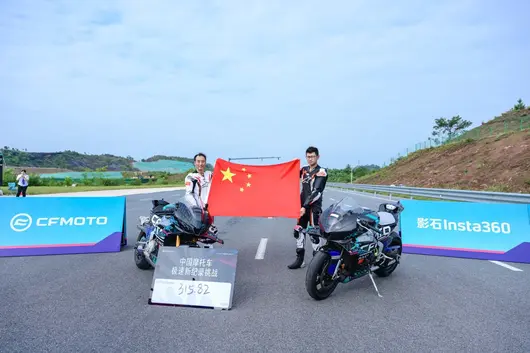
[June 15, 2026, Shangrao, Jiangxi News] Today, CFMOTO achieved a historic top speed breakthrough in China's motorcycles at the CCCC Automotive Comprehensive Test Site in Shangrao, Jiangxi. Its 1000cc superbike, CFMOTO V4 SR-RR, equipped with a fully self-developed V4 core power platform, challenged by two generations of top Chinese riders, Dupont and Huang Shizhao, achieved a measured top speed of 315.82 km/h*, successfully breaking the top speed record for domestic motorcycles. With this extreme performance, CFMOTO has helped China become the fourth country globally to break the 300 km/h+ threshold, declaring that Chinese brands have officially entered the ranks of global motorcycle top performance.
300 km/h+ is a major technical efficiency watershed in the global high-performance motorcycle field. Liter-class superbikes have historically been the track with the highest technical barriers and strictest R&D thresholds in the global motorcycle industry. CFMOTO's V4 SR-RR broke this monopoly this time, marking that China's motorcycle self-developed power technology has crossed the world-class threshold, refreshed the performance boundaries of the Chinese motorcycle industry, and established new industry benchmarks for Chinese brands to participate in global high-end competition. This challenge was monitored and recorded by the National Motorcycle Quality Inspection and Testing Center (Chongqing) and the National Notary Office of Hangzhou City, Zhejiang Province throughout, ensuring the authenticity and validity of the measured data.
CFMOTO Vice President Chen Zhiyong stated on site: "This top speed breakthrough of the V4 SR-RR stems from CFMOTO's long-term persistence in self-development and refining technology through global top-level events. Today's success means that Chinese motorcycles have officially realized a role shift from technical catch-up to leadership. Now, our self-developed liter-class models have successfully joined the ranks of world-class top performance technology, representing that Chinese strength is beginning to deeply participate in and reshape the global high-performance motorcycle industry landscape. For this, CFMOTO feels deeply honored and proud."


CFMOTO V4 SR-RR Measured Top Speed 315.82 km/h*, Successfully Breaks Top Speed Record for Domestic Motorcycles

This challenge was monitored and recorded by the National Motorcycle Quality Inspection and Testing Center (Chongqing),
Hangzhou City, Zhejiang Province
National Notary Office throughout, ensuring the authenticity and validity of the measured data
From "Manufacturing" to "Innovation", Hardcore Self-Development Breaks Core Technical Barriers
This top speed breakthrough broke the long-term technical monopoly of Japan and Europe's high-end brands, reflecting a systematic leap in the Chinese motorcycle industry in core technology areas. For a long time, liter-class motorcycles have been considered the "peak of the pyramid" technology area of the global power industry, involving complex system engineering capabilities such as engine thermal management, high-rpm stability, aerodynamics, and electronic control coordination, long dominated by a few overseas brands. The CFMOTO V4 SR-RR that created this record, as an engineering prototype before formal mass production, is neither a special edition nor a race-spec version; it represents the pinnacle of Chinese fuel power technology. And its realized 300 km/h+ top speed breakthrough means that Chinese motorcycle brands have truly mastered the core password of world-class top performance power platforms.
As the core of the vehicle, the V4 SR-RR is equipped with CFMOTO's self-developed 997cc 90-degree V4 water-cooled four-cylinder engine, MotoGP racing-sourced technology, with a maximum RPM of 15,000. Maximum power is 157 kW (over 210 hp), vehicle dry weight controlled at around 180 kg, dry weight to horsepower ratio of only 0.86, matching global top superbikes in key indicators such as power output, weight reduction control, and high-speed stability. Related patents for this engine have exceeded 40, with core components to system integration all being forward self-developed.
More importantly, the breakthrough represented by the V4 SR-RR this time is by no means a single-point display of skills, but is based on a complete independent technology system: The V4 SR-RR is equipped with MotoGP World Motorcycle Championship sourced counter-rotating crankshaft technology, the first application of this technology on a domestic model, effectively suppressing wheelies at start, greatly improving agility in corners. At the same time, the V4 SR-RR is also equipped with an active electronic control adaptive wing system. As one of the first global mass-produced active aerodynamic kits, this system can automatically adjust angle according to vehicle speed, reducing 12% aerodynamic drag during acceleration, and increasing 45% downforce on the front wheel at high speeds.
In addition, the vehicle is equipped with a full-dimensional electronic safety system e-CBS (combined front and rear braking), bi-directional quickshifter, hill start (VHC), 6-axis IMU sensor, cornering ABS (cornering anti-lock braking system), full-function TCS (full-function traction control system), cruise control, and other multiple intelligent protection functions, achieving comprehensive safety backup while unlocking extreme performance, providing multiple safeguards for Chinese riders to create this top speed achievement.


Chinese riders Dupont and Huang Shizhao drove CFMOTO V4 SR-RR to break China's Top Speed Record
Promote Research Through Racing, Tempering Chinese Technology from World-Class Tracks
Top speed breakthrough was not accomplished overnight, but is a concentrated result of CFMOTO's long-term persistence in the strategy of "promoting research through racing and combining research and use". Continuous high-intensity R&D investment is the fundamental guarantee to break technical barriers. In 2025, CFMOTO's R&D investment was 1.22 billion yuan, accounting for 6.18% of operating revenue. As of the end of 2025, the enterprise has cumulatively obtained 2,119 authorized valid patents, including 242 invention patents, and participated in formulating 71 national, industry, and group standards.
At the same time, for many years, CFMOTO has continued to work hard, through deep participation in global top-level events such as MotoGP, W2RC, tempering core technologies such as power platforms, chassis control, and aerodynamics in extreme conditions, verifying product reliability, gradually building an "racing verification—technology iteration—mass production landing" R&D closed loop. In the 2024 season, the CFMOTO Aspar team won the MotoGP Rider/Team/Manufacturer Triple Crown, becoming the first Chinese manufacturer champion in MotoGP history. At the same time, CFMOTO, by acquiring equity in the Moto2 chassis king Kalex engineering company, directly gained globally leading chassis engineering technology, massive racing R&D data, and top-tier manufacturing processes, achieving a leapfrog improvement in technical capabilities. Distinguishing from international brands "track technology slowly transferred down", CFMOTO realized synchronous iteration of racing R&D and civil mass production: MotoGP-verified power curves, chassis rigidity, and electronic control algorithms were quickly applied to CFMOTO's V4 SR-RR and 500SR models.

2026 Brazil Round CFMOTO Aspar Team Swept Moto3 1st and 2nd Place
Also relying on rich technical engineering and service experience accumulated from global top-level events, CFMOTO continues to rapidly integrate globally top-level track technology and experience into mass-produced civil high-performance product capabilities, and through years of continuous unremitting efforts, continuously refine its own technical R&D strength, while also constantly promoting supporting parts enterprises to synchronously share track-level manufacturing processes, upgrading precision machining capabilities, thereby helping the industry chain change the past reverse engineering Japanese style old path, vehicle manufacturers and parts manufacturers synchronously start forward development, pushing the entire industry's technical ceiling to lift. Finally, through the systematic support of China's intelligent manufacturing system and supply chain capabilities, it successfully stably landed "track-level performance" into the achievement of "mass-producible liter-class superbike".

CFMOTO V4 SR-RR Core Team Representatives
From Technical Pursuit to Global Competition, Chinese High-end Motorcycle Industry Chain Collaborative Upgrade
The V4 SR-RR's historic breakthrough is not only a technical milestone event for CFMOTO, but also a concentrated embodiment of Chinese motorcycle industry chain collaborative upgrade. From core engine precision components, lightweight forged kits, to high-end electronic control systems, aerodynamic supporting components, and intelligent hardware and software, many domestic "Specialized and Innovative Enterprises" collaborated to tackle difficulties, relying on China's complete industrial manufacturing system and rapid iteration capabilities, jointly promoting domestic motorcycles to reach international leading levels.
Behind this breakthrough is reflected the development trend of Chinese manufacturing continuously leaping towards high-end, intelligent, and globalized. In the past, liter-class motorcycles were long seen as the "crown jewel" of global industrial manufacturing capability and power technology levels. Now, Chinese enterprises are achieving breakthroughs in this high-technology, high-threshold field, and gradually building increasingly solid global competitiveness. CFMOTO's technical upgrade and capacity expansion are now becoming a key force to drive regional industry chain aggregation, achieving "One move of the leader activates the whole board". Such as relying on the Zhejiang Wen-Tai Auto-Motorcycle Parts Industry Belt (Ruian, Yuhuan, Jinhua) and the local industry foundation of Chongqing Motorcycle Capital, the enterprise has built a 100-kilometer supply chain circle, achieving high precision, low-cost manufacturing: Hangzhou headquarters connects closely with many local supporting enterprises; while Chongqing production base pulls Sichuan-Chongqing local parts manufacturers to expand production and upgrade, helping them turn to medium-to-large displacement precision parts supporting to realize industrial upgrade. In terms of intelligent experience improvement, deepening application with official partners Insta360 and Amap Open Platform, joined forces in scenarios such as smart image recording, smart navigation, achieving deep empowerment of smart riding.
At the same time, as an internationally leading power sports brand, from "product output" to "brand output + technology output + local manufacturing" systematic success, CFMOTO's global development strategy pace is clear. As the global leader in ATVs, the enterprise possesses both two-wheel high-end breakthrough and JINCHI Electric rapid growth. And overseas R&D production channel full coverage, racing-driven brand premium, etc., prove that CFMOTO has become a global benchmark for Chinese power equipment.
Upholding global development concepts, CFMOTO continues to layout global R&D, manufacturing, and marketing systems. Currently, the enterprise has built three major manufacturing bases in Hangzhou, Chongqing, and Zhuzhou domestically, and laid out production bases in Thailand and Mexico, business covering over 100 countries and regions, owning more than 9,000 distributor networks, and constantly bringing more and more "China Smart Manufacturing" boutique products to users around the world, creating a brighter, high-end Chinese brand business card.

CFMOTO Successfully Opened Global Market (Picture shows 2025 CFMOTO MT Challenge Global Finals)
From technical pursuit to independent innovation, from product going global to brand going global, CFMOTO is pushing the Chinese motorcycle to complete the leap from "capable of manufacturing" to "capable of optimizing", from "participating in competition" to "defining standards" with the V4 SR-RR's historic top speed breakthrough. The V4 SR-RR is not only a Chinese liter-class superbike, but also the epitome of CFMOTO's "Racing Driven, Technology Self-Developed, Global Layout" strategy, marking that the Chinese motorcycle has officially joined the world high-performance first tier. In the future, CFMOTO will continue to deeply cultivate high-performance power core technologies, help the Chinese motorcycle industry move towards high-end, intelligent, and internationalized directions, injecting more Chinese power into cultivating new quality productive forces and building a manufacturing powerhouse.
*This record is a GPS top speed achievement realized by professional riders driving Chinese fuel motorcycles in a closed test site, officially certified by the National Motorcycle Quality Inspection and Testing Center (Chongqing) and the National Notary Office of Hangzhou City, Zhejiang Province