


首頁諮詢

搜尋歷史
熱門搜尋
經銷商登入 / 註冊

喺馬來西亞嘅 SUV 市場,好多買家喺揀車嘅時候都會拎 Mazda CX-30 同 Chery Tiggo 8 PHEV 嚟做比較。呢兩款車喺價位同定位上都好接近,而家我哋就從多個方面做一個詳細嘅比較,幫你節省咗做功課嘅時間。
Mazda CX-30 喺馬來西亞嘅 OTR 售價係 RM 122,409 - 146,409,一共有 4 個版本,包括 2025 2.0L High+ Premium(RM 146,409)、2025 2.0L High+(RM 138,409)、2025 2.0L High(RM 130,409)等。
Chery Tiggo 8 PHEV 喺馬來西亞嘅 OTR 售價係 RM 159,750 - 159,750,一共有 2 個版本,包括 1.6L Turbo Standard(RM 130,000)、1.6L Turbo Premium(RM 145,000)等。
從價錢嚟睇,Mazda CX-30 嘅起步價確實比 Chery Tiggo 8 PHEV 平咗 RM 37,341。如果你預算有限,Mazda 嘅入門版已經可以滿足日常需求。但都要注意,平嗰幾千蚊,可能喺配備上會有取捨,具體要看你嘅需求。

Mazda CX-30 嘅安全評級係 5★ (ASEAN NCAP),主動安全系統包括 i-Activsense。
Chery Tiggo 8 PHEV 嘅安全評級係 TBD,主動安全系統包括 Basic。
安全配備方面,兩款車都拿到唔錯嘅評級。不過 Mazda CX-30 嘅 i-Activsense 同 Chery Tiggo 8 PHEV 嘅 Basic 喺功能上有些差異,如果你比較看重主動安全嘅話,可以仔細對比一下兩者嘅功能列表。

Mazda CX-30 車身長 4500 mm,尾箱 450 L。
Chery Tiggo 8 PHEV 車身長 4400 mm,尾箱 400 L。
空間方面,Mazda CX-30 嘅車身比 Chery Tiggo 8 PHEV 長咗 100 mm,車內乘坐空間會稍微寬裕啲,尤其係後座腿部空間。如果你經常載家人或者需要放嬰兒車,大啲嘅車身確實更實用。

Mazda CX-30 採用 FWD 驅動方式。
Chery Tiggo 8 PHEV 採用 FWD 驅動方式。
兩款車嘅驅動方式一樣,都係 FWD,日常駕駛感受唔會有太大區別。
總嘅嚟講,Mazda CX-30 同 Chery Tiggo 8 PHEV 都係馬來西亞市場好唔錯嘅車型。揀邊輛,關鍵都要睇你嘅個人需求同預算。建议大家做好功課,多比較幾間車行嘅報價,再去試駕做最終決定。買車係件大事,花啲時間做功課絕對唔會錯。


After the implementation of the China-Europe understanding on hybrid vehicles, Europe provided an upward export space for Chinese hybrids. However, an easily overlooked issue is that even adding a bit to last year's 302,000 vehicles, the share per manufacturer won't be much. Media reports suggest that recently several automakers have been going to Beijing to negotiate with competent authorities on how to distribute export quotas.
"Fighting for quotas" superficially reflects the enthusiasm of automakers going global, but upon deeper thought, it is worth pondering. In the past, Chinese automakers competing overseas focused on lower prices and faster market penetration. Now the European market is shrinking, with limited entry tickets. Whether one can secure them and sustain after securing them is no longer just a sales volume issue, but about having technical cards up your sleeve, whether you can flexibly adjust products and rapidly adapt to regulations within rules set by others. In other words, Chinese car exports are moving from "selling cars abroad" to a much more hardcore stage.
This judgment becomes more concrete when looking at the sales data from October. For instance, BYD sold 490,168 units in October, becoming the sales leader again, which is no surprise. Among them, its overseas sales reached 169,564 units, accounting for nearly 35% of its total sales, a year-on-year increase of 103%. A few years ago, this overseas proportion and growth rate would have been almost unimaginable.

Moreover, BYD does not simply transplant domestic models to Europe. Instead, it modifies products and adjusts strategies based on the regulations, road conditions, and consumer habits of different markets. This highlights a fact about BYD that hasn't been fully discussed: its R&D depth goes far beyond just the "Hybrid + Blade Battery" layer.

In most people's impressions, BYD's strengths lie in batteries and hybrid technology. That's correct, but this is just part of the "big fish" harvested from its "technology pond". Its motors, electronic control systems, power semiconductors, and automotive-grade chips have all been developed in-house. It can independently produce blade batteries, permanent magnet synchronous motors, electronic controls, and IGBT/silicon carbide power modules, etc., with a very high self-sufficiency rate in core areas.
More worth mentioning is its chip technology. BYD established its own IC design department and was the first domestic automaker to mass-produce automotive-grade IGBT and SiC power chips. At the intelligence level, the 4nm automotive-grade intelligent driving chip "Xuanji A3" has achieved mass production. Single chip computing power exceeds 700 TOPS, and three chips working together exceed 2100 TOPS, supporting L3 and L4 autonomous driving assistance. More importantly, its chips and self-developed algorithms are designed collaboratively, unlike many automakers who buy chips and then adapt them later.

Summed up, these capabilities are no longer just leading in a single technology, but a structural leadership. From power semiconductors to the "Three Electric" systems, from hybrid systems to intelligent driving chips, key links do not rely on external procurement, and most parts of the vehicle can be manufactured in-house. UBS (UBS) previously calculated when tearing down a BYD Seal, over 70% of the parts were produced by BYD itself, a ratio more than twice that of Tesla. To put it plainly, many automakers follow the path of "design the car, procure parts, assemble for delivery", whereas BYD has installed a significant portion of its supply chain within itself.
This structure manifests as cost and rhythm advantages during normal times, and flexibility in modifying strategies in overseas markets. If Europe suddenly changes emission standards for a certain category, or imposes requirements on the localization ratio of power devices, if electronic control and power chips are externally purchased, changing a parameter requires going through another cycle with the supplier; whereas if the parts involved are self-developed and self-produced, the adjustment chain is naturally much shorter. Building factories overseas follows the same logic. BYD's factories in Thailand, Brazil, and Uzbekistan are already operational, and the Hungary factory is also being advanced. Localized production is not just about circumventing tariffs, but also about moving the controllable supply chain directly to locations closer to the market.
Of course, this doesn't mean vertical self-research is the only path. The external procurement model has its own flexibility, short R&D cycles, quick model launches, and is effective for rapid iteration in the domestic market. But global market rules are changing. Variables like quotas, regulations, patent reviews, and localization ratios are beyond the control of automakers. Without core technology in hand, encountering rule adjustments means relying on suppliers; but if one has it in hand, one can independently modify and adjust.

In fact, due to reasons like technical routes and market performance, BYD naturally becomes a sample worth and convenient to observe. Among Chinese automakers, multiple are walking the self-research path, just with different depths and focuses. However, the fact that going overseas reaches a point where quotas require "going to Beijing to fight for" indicates that competition is no longer in the showroom, but about who can use their own technical systems to grasp a constantly changing global market. Short-term looks at sales volume, but long-term looks at whether you still have cards in hand to play when domestic and international rules change.
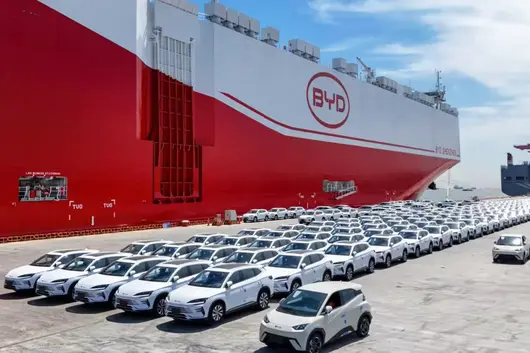

In the Malaysian SUV market, many buyers compare the Mazda CX-3 and Chery Tiggo 7 PHEV when choosing a car. These two cars are quite close in price and positioning. Today, we will make a detailed comparison from multiple aspects to save you time on research.
The OTR price for Mazda CX-3 in Malaysia is RM 126,159 - 139,159, with a total of 2 variants, including 2023 2.0L High (RM 139,159), 2023 2.0L Plus (RM 126,159), etc.
The OTR price for Chery Tiggo 7 PHEV in Malaysia is RM 129,750 - 129,750, with a total of 2 variants, including 2025 1.5T 90km CSH (RM 129,750), What charging methods does the Tiggo 7 PHEV support? Can it be charged using a home power socket? (RM 117,478), etc.
In terms of price, the starting price of Mazda CX-3 is indeed RM 3,591 cheaper than Chery Tiggo 7 PHEV. If your budget is limited, Mazda's entry-level version is sufficient for daily needs. However, be aware that the few thousand ringgit cheaper might involve trade-offs in equipment, it depends on your specific needs.

Mazda CX-3 safety rating is 5★ (ASEAN NCAP), active safety system includes i-Activsense.
Chery Tiggo 7 PHEV safety rating is TBD, active safety system includes Basic.
Regarding safety features, both cars have received good ratings. However, there are some differences in functionality between Mazda CX-3's i-Activsense and Chery Tiggo 7 PHEV's Basic. If you value active safety, you can compare the feature lists of both in detail.
Mazda CX-3 body length is 4500 mm, trunk is 450 L.
Chery Tiggo 7 PHEV body length is 4400 mm, trunk is 400 L.
In terms of space, Mazda CX-3's body is 100 mm longer than Chery Tiggo 7 PHEV, the interior seating space is slightly more spacious, especially the rear legroom. If you often carry family members or need to place a stroller, a larger body is indeed more practical.

Mazda CX-3 warranty is 5 years/150,000km, maintenance interval is every 10,000km or 6 months.
Chery Tiggo 7 PHEV warranty is 3 years/100,000km, maintenance interval is every 10,000km or 6 months.

Overall, both Mazda CX-3 and Chery Tiggo 7 PHEV are very good models in the Malaysian market. Which one to choose depends mainly on your personal needs and budget. We recommend doing your research, compare quotes from several car dealers, and then test drive to make a final decision. Buying a car is a big decision, taking time to do research will never be wrong.


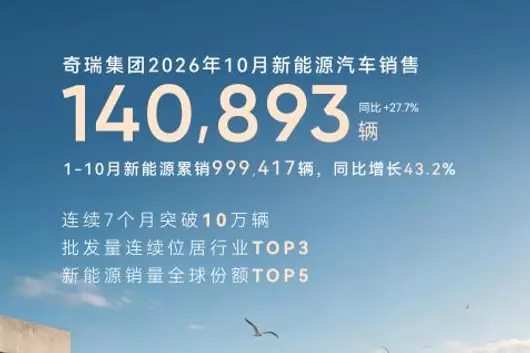
With the release of the October sales brief, Chery Group's new energy monthly sales hit a new high: single-month sales of 140,893 units, a year-on-year increase of 27.7%, breaking 100,000 units in a single month for 7 consecutive months; cumulative sales from January to October reached 999,417 units, a year-on-year increase of 43.2%, having surpassed last year's total new energy sales volume, ranking in the Top 3 in China and Top 5 globally.
Another number worth placing in a global context compared to the new monthly sales high is: According to data from CPCA and others, from January to August, Chery Group's new energy sales global market share reached 5.5%, firmly maintaining the Top 5 among global automotive groups. When the outside world is used to viewing Chery from the perspective of exports, Chery revealed another identity — Chery is already a top-tier global new energy vehicle enterprise.

The Foundation of Global Number 5: New Energy "Black Technology" That Amazes Overseas Users
Hardcore technology is the underlying support for Chery New Energy reaching the global Top 5.
On November 1 local time, the official account of China's Permanent Mission to the United Nations released a video of an EXEED new energy vehicle on overseas social platforms, with a caption exclaiming: "This Chinese car can move sideways like a crab!" sparking hot discussion among overseas netizens.

Figure: Chery New Energy Vehicle Technology Video Released by China's Permanent Mission to the United Nations
The "sideways walking" black technology is just a corner of Chery New Energy's technology matrix. The Rhino Battery covers three major series: pure electric, hybrid, and solid-state, using 360° protection and six-scenario whole vehicle validation, 12C peak ultra-fast charging, 15000 cycles, and 1500km ultra-long range to directly address industry anxiety; The Rhino solid-state battery can still work normally after baking at 200°C, and according to plans, a pilot production line will be built in 2027 to start vehicle assembly verification.
The much-anticipated Xunlong second-charging technology has made "charging for 5 minutes, 500 kilometers range" a reality. V2G technology turns cars into "mobile power banks", participating in grid regulation, charging during low peaks and selling during high peaks, turning recharging from "spending money" to "making money". According to plans, Chery will build 20,000 "Xunlong Second-Charging + V2G" stations globally by 2029, with the first batch landing in Shanghai, Guangzhou, Hefei, Wuhu, etc.
From chassis control to the core of three-electric systems, Chery has built a fully dimensional electrification and intelligence technology system. Top 3 in China, Top 5 globally, is not an accidental result brought by single-point products, but the inevitability of the continuous release of the technology base.

Figure: Chery Rhino Battery

Figure: Chery Xunlong Second-Charging Demonstration Station
Products Loved by Global Users: Flowering in Multiple Points Domestically, Breaking Through Overseas Segments
Leading technology is ultimately realized through products. Chery New Energy is, through precise product definition, transforming technical advantages into a blockbuster matrix of multi-categories and multi-price bands, accelerating penetration into domestic and overseas market segments.
Domestically, the new QQ3 has sold over 10,000 units for 7 consecutive months, firmly staying in the top tier of national pure electric small cars; Fengyun A9 won the sales No. 1 in the 100,000-150,000 yuan pure electric mid-size car segment; the new Traveler 7 broke 10,000 orders within 30 minutes of launch; iCAR V23 global sales have exceeded 100,000 units; Zhijie V9 welcomed the 30,000th delivery, refreshing the fastest delivery record for 500,000-level MPVs, further consolidating its status as a high-end luxury benchmark.

Figure: The New QQ3 with Monthly Sales Breaking 10,000 Consecutively
Overseas, Chery New Energy continues to break through in niche tracks. OMODA & JAECOO enter a new market every 16 days on average and have entered 79 global markets; JAECOO 7, JAECOO 5, and OMODA 5 have entered the UK Top 10 best-selling car list, JAECOO 5 won the Australian segment champion; iCAUR V23 ranks No. 1 in the segment in Thailand, Malaysia, Nepal, South Africa, etc.; Zongheng G700 global sales exceeded 30,000 units 11 months after launch, ranking No. 1 in Chinese luxury SUV sales in 8 countries including Saudi Arabia, UAE, Mexico; LEPAS new energy models have been launched and delivered in the UK, Italy, Thailand, Indonesia, South Africa, etc., and preheating or presales have been started in Europe, Australia, the Middle East, etc.

Figure: UK Monthly Sales Champion Model JAECOO 7
New Energy Export Doubles: 1 in 7 New Energy Vehicles Exported from China is "Made by Chery"
The upgrade of the product matrix also drives the global market layout to advance synchronously. The overseas market has become an important engine for Chery New Energy's high-quality development.
In October, Chery Group exported 84,728 new energy vehicles, a year-on-year increase of 108.6%, reaching 4 times the new energy growth rate of the same period; From January to October, new energy cumulative exports reached 614,065 units, a year-on-year increase of 130.4%, exceeding the total export growth rate of the same period by two times.
In Europe, Chery is reshaping user perception of Chinese cars in high-regulation markets with leading new energy technology and products. From January to September, Chery sold a cumulative 292,000 vehicles in 24 European countries, a year-on-year increase of 182%; among them, new energy vehicles exceeded 146,000 units, an increase of 251%. This means that for every 2 cars Chery sells in Europe, 1 is new energy. At the October Paris Motor Show, Chery showcased multiple new energy models from the two brands OMODA & JAECOO and CHERY, clearly showing the determination to deepen the European local market.
Currently, Chery has firmly established itself in the first tier of Chinese new energy exports. According to CPCA statistical data, 1 out of every 7 new energy vehicles exported from China comes from Chery.

Figure: OMODA 5 NEXT Makes European Debut at Paris Motor Show
Single-month sales breaking 140,000 is a new coordinate for Chery New Energy; 100,000+ for 7 consecutive months is the touchstone for system maturity gradually ripening. From solidifying the technology base to the formation of a blockbuster matrix, to a comprehensive breakthrough in the global market, Chery New Energy has walked a growth path driven by technology and systems, continuously releasing strong development potential, better meeting the global users' green, intelligent, and diversified travel needs.
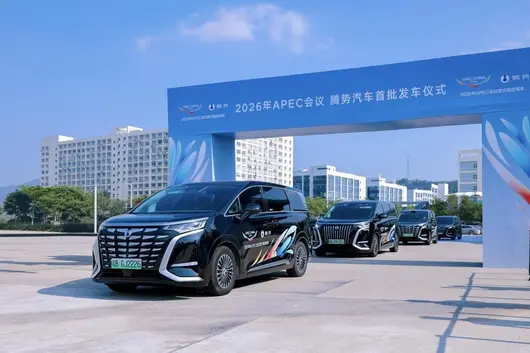
10月22日,深圳腾势总部礼宾楼外场,“深圳腾飞 中国腾势”主题背景下的首批发车仪式完成全部议程。APEC官方指定用车整装出发,这场仪式也被外界视为中国豪华新能源品牌走向世界舞台的一次正式亮相。车队驶离的画面,成为当天传播最广的镜头之一。
APEC会议选址深圳,会期2026年11月。城市与盛会的关系由此确立:深圳首次承办,中国第三次担任东道主。官方指定用车的角色被明确为“第一窗口”——展示东道国汽车工业智造水准与科技实力,对产品与品牌都是全面考量。东道主的准备清单上,出行服务排在靠前的位置。
APEC会议的出行保障体系已经成形:比亚迪担任2026年会议官方合作伙伴,腾势汽车提供近700台车,其中腾势D9达600多台,为21个经济体的高官、代表团及海内外主流媒体服务。首批发车仪式之后,车队将按计划进入执行节奏。从机场到会场,每段路程都在保障范围之内。
世界级政商会议的用车选择,不仅看产品,也看品牌的国际会议服务经验。仅在2026年,腾势D9就服务了博鳌亚洲论坛的贵宾接待、中国—东盟博览会的商务通勤、夏季达沃斯的思想碰撞、APEC林业部长级会议的绿色出行,堪称顶级外事活动的“常驻嘉宾”。发车仪式现场,腾势汽车总经理李慧的表态再度响起:世界大事有腾势。外事服务的经验,靠一场一场活动积累而来。
销冠三连(2023、2024、2025)加上累计35万台的销量,让腾势D9成为中国MPV市场的标杆车型;全球首款达成这一里程碑的新能源MPV,又把标杆的范围扩展到世界。《2026胡润中国新能源MPV品牌TOP10》的TOP1,是第三方对这份成绩的再确认。冠军车型的称号,需要连续多年的市场投票。

高净值人群的用车决策最挑剔,也最有说服力。腾势D9赢得的正是这群人:香港财政司司长、信和集团主席黄永光、王力宏、潘晓婷……超过35万名的车主中,高净值用户占比可观,许多人的日常座驾原本是百万级豪车。二代D9服务APEC,是水到渠成的实力兑现。名人车主的示范效应,会放大产品的可信度。
一台服务国际盛会的车,要经得起三类考验:出勤率、安全性、舒适度。第二代腾势D9的答卷依次是——第二代刀片电池与闪充(5分钟充好、9分钟充饱、零下30℃仅多3分钟)保证出勤;75%高强度钢车身、9气囊、iCWC横风稳定、高速爆胎稳定控制保证安全;迪迪虾智能交互、云绒座椅16点按摩、双阀云辇-C路面预瞄2.0保证舒适。这些配置组合起来,构成完整的贵宾体验。
2026年APEC会议落地深圳,意义特殊:这里是改革开放的重要窗口,也是全球新能源汽车产业链与科技创新的重镇。第二代腾势D9以APEC官方指定用车身份亮相世界级会议,对腾势品牌是高端化、全球化形象的重要跃迁;对中国汽车产业,则意味着新能源与智能化成果进入国际礼宾场景,以国宾座驾之名被世界看见——更高端、更智能、更有品牌价值,聚力打造豪华标杆。品牌的全球化,需要这样的高光时刻来催化。


喺馬來西亞嘅 SUV 市場,好多買家喺揀車嘅時候都會拿 Toyota Fortuner 同 Audi Q5 來做比較。這兩款車喺價位同定位上都幾接近,今日我哋就從多個方面做一個詳細嘅比較,幫你慳晒做功課嘅時間。
Toyota Fortuner 喺馬來西亞嘅 OTR 售價係 RM 195,880 - 241,880,一共有 3 個版本,包括 2024 2.8T VRZ Diesel(RM 241,880)、2024 2.7L SRZ Petrol(RM 202,880)、2024 2.4L Standard Diesel(RM 195,880) 等。
Audi Q5 喺馬來西亞嘅 OTR 售價係 RM 354,174 - 423,174,一共有 2 個版本,包括 40 TDI(RM 320,000)、45 TFSI(RM 350,000) 等。
由價錢睇嚟,Toyota Fortuner 嘅起步價真係比 Audi Q5 平咗 RM 158,294。如果你預算有限,Toyota 嘅入門版已經可以滿足日常需要。但都要注意,平嘅嗰幾千蚊,可能喺配備上有取舍,具體要睇你嘅需要。

Toyota Fortuner 裝載 2.5L Diesel,馬力 187 hp。官方油耗 8.5 L/100km。
Audi Q5 裝載 2.0L Turbo,馬力 220 hp。官方油耗 9.5 L/100km。
動力方面,Audi Q5 嘅 2.0L Turbo 比 Toyota Fortuner 嘅 2.5L Diesel 多咗 33 匹馬力。不過日常喺市區開,兩款車嘅動力都夠用,唔會覺得唔夠力。

Toyota Fortuner 嘅安全評級係 5★ (ASEAN NCAP),主動安全系統包括。
Audi Q5 嘅安全評級係 5★ (Euro NCAP),主動安全系統包括 Pre Sense + ACC。

Toyota Fortuner 保用 5 年/無限里程,保養間隔 每 10,000km 或 6 個月。
Audi Q5 保用 5 年/150,000km,保養間隔 每 10,000km 或 6 個月。

總體嚟講,Toyota Fortuner 同 Audi Q5 都係馬來西亞市場好唔錯嘅車型。揀邊一部,關鍵都要睇你嘅個人需要同預算。建議大家做足功課,多比較幾間車行嘅報價,再去做試駕做最終決定。買車係件大事,花費少少時間做功課絕對唔會錯。


In the Malaysian SUV market, many buyers compare Toyota Fortuner and BMW X1 when choosing a car.
Toyota Fortuner's OTR price in Malaysia is RM 195,880 - 241,880, with 3 versions in total, including 2024 2.8T VRZ Diesel (RM 241,880), 2024 2.7L SRZ Petrol (RM 202,880), 2024 2.4L Standard Diesel (RM 195,880), etc.
BMW X1's OTR price in Malaysia is RM 252,800 - 252,800, with 2 versions in total, including sDrive18i (RM 220,000), sDrive20i (RM 250,000), etc.
In terms of price, Toyota Fortuner's starting price is indeed RM 56,920 cheaper than BMW X1. If your budget is limited, Toyota's entry-level version can already meet daily needs. But also note, the few thousand cheaper might have trade-offs in features, depending on your specific needs.
Toyota Fortuner's safety rating is 5★ (ASEAN NCAP), active safety systems include .
BMW X1's safety rating is 5★ (Euro NCAP), active safety systems include Premium ADAS.
Toyota Fortuner body length is 4400 mm, trunk 400 L.
BMW X1 body length is 4400 mm, trunk 400 L.
The dimensions of both cars are almost the same, and the interior space is not much different. For cars in this class, it is fully sufficient for daily use.
Toyota Fortuner and BMW X1 are both mainstream choices in the Malaysian market, suitable for family use and daily commuting. If you value brand reputation and resale value more, you can prioritize the one with better reputation; if you care more about value for money and features, choose the one with richer configurations. In the end, it is suggested to test drive both, experiencing it personally is the most important.

In general, Toyota Fortuner and BMW X1 are both very good models in the Malaysian market. Which one to choose depends mainly on your personal needs and budget. It is recommended to do your homework, compare quotes from several dealerships, and then go for a test drive to make a final decision. Buying a car is a big matter, spending some time doing homework will never be wrong.
In Malaysia's SUV market, many buyers compare Toyota Fortuner and BMW X1 when choosing a car. The two cars are quite close in terms of price and positioning. Today we will make a detailed comparison from multiple aspects to help you save time on research.
Toyota Fortuner OTR price in Malaysia is RM 195,880 - 241,880, with a total of 3 versions, including 2024 2.8T VRZ Diesel (RM 241,880), 2024 2.7L SRZ Petrol (RM 202,880), 2024 2.4L Standard Diesel (RM 195,880) , etc.
BMW X1 OTR price in Malaysia is RM 252,800 - 252,800, with a total of 2 versions, including sDrive18i (RM 220,000), sDrive20i (RM 250,000) , etc.
In terms of price, the starting price of Toyota Fortuner is indeed RM 56,920 cheaper than BMW X1. If your budget is limited, Toyota's entry-level version can already meet daily needs. However, keep in mind that saving a few thousand ringgit might mean compromising on features, depending on your specific requirements.
Toyota Fortuner is equipped with 2.5L Diesel, 187 hp. Official fuel consumption 8.5 L/100km.
BMW X1 is equipped with 2.0L Turbo, 220 hp. Official fuel consumption 9.5 L/100km.
In terms of power, the 2.0L Turbo of BMW X1 has 33 more horsepower than the 2.5L Diesel of Toyota Fortuner. However, for daily city driving, the power of both cars is sufficient, and you won't feel underpowered.
Toyota Fortuner body length 4400 mm, trunk 400 L.
BMW X1 body length 4400 mm, trunk 400 L.
The dimensions of the two cars are almost the same, and the interior space difference is not significant. Cars at this level are fully sufficient for daily use.
Toyota Fortuner and BMW X1 are both mainstream choices in the Malaysia market, suitable for family use and daily commuting. If you value brand reputation and resale value more, you can prioritize the one with better reputation; if you care more about cost-performance ratio and features, then choose the one with richer configurations. In the end, it is recommended to test drive both, personal experience is the most important.
Overall, Toyota Fortuner and BMW X1 are both very good models in the Malaysia market. Which one to choose depends mainly on your personal needs and budget. It is recommended that everyone do their research, compare quotes from a few dealerships, and then go for a test drive to make the final decision. Buying a car is a major matter, spending some time doing research will definitely not be wrong.
In the Malaysian SUV market, many buyers tend to compare Toyota Fortuner and Chery Tiggo 7 PHEV when choosing a car. These two cars are quite close in price and positioning. Today we will make a detailed comparison from multiple aspects to help you save time doing research.
The OTR price for Toyota Fortuner in Malaysia is RM 195,880 - 241,880. There are a total of 3 versions, including 2024 2.8T VRZ Diesel (RM 241,880), 2024 2.7L SRZ Petrol (RM 202,880), 2024 2.4L Standard Diesel (RM 195,880), etc.
The OTR price for Chery Tiggo 7 PHEV in Malaysia is RM 129,750 - 129,750. There are a total of 2 versions, including 2025 1.5T 90km CSH (RM 129,750), What charging methods does the Tiggo 7 PHEV support? Can it be charged using a home power socket? (RM 117,478), etc.
From a price perspective, the starting price of Chery Tiggo 7 PHEV is RM 66,130 cheaper than Toyota Fortuner. Honestly speaking, in this price range, a difference of a few thousand is not significant. The key is to look at the overall value for money and long-term usage costs.
Toyota Fortuner is equipped with 2.5L Diesel, Horsepower 187 hp. Official fuel consumption 8.5 L/100km.
Chery Tiggo 7 PHEV is equipped with Hybrid, Horsepower 170 hp. Official fuel consumption 4.5 L/100km.
Regarding power, Toyota Fortuner's 2.5L Diesel has 17 more horsepower compared to Chery Tiggo 7 PHEV's Hybrid. It offers more confidence in mid-range acceleration, especially when overtaking on the highway. However, Chery Tiggo 7 PHEV's fuel economy might be better. The difference in daily urban commuting will not be too large.
Toyota Fortuner body length 4400 mm, trunk 400 L.
Chery Tiggo 7 PHEV body length 4400 mm, trunk 400 L.
The dimensions of both cars are almost the same, with not much difference in interior space. Vehicles at this level are fully sufficient for daily use.
Toyota Fortuner adopts FWD drive method.
Chery Tiggo 7 PHEV adopts FWD drive method.
Both cars use the same drive method, both are FWD. The daily driving experience will not be too different.
Overall, Toyota Fortuner and Chery Tiggo 7 PHEV are both very good models in the Malaysian market. Which one to choose mainly depends on your personal needs and budget. We suggest doing your research, comparing quotes from multiple dealers, and then test driving to make the final decision. Buying a car is a major matter. Spending time researching is never wrong.

喺馬來西亞嘅 SUV 市場,好多買家喺揀車嗰陣都會用 Toyota Fortuner 同 Chery Tiggo 7 Pro 嚟比較。呢兩款車喺價位同定位上都幾接近,今日我哋就由多個方面做個詳細比較,幫你省番做功課嘅時間。
Toyota Fortuner 喺馬來西亞嘅 OTR 售價係 RM 195,880 - 241,880,總共有 3 個版本,包括 2024 2.8T VRZ Diesel(RM 241,880)、2024 2.7L SRZ Petrol(RM 202,880)、2024 2.4L Standard Diesel(RM 195,880)等。
Chery Tiggo 7 Pro 喺馬來西亞嘅 OTR 售價係 RM 123,750 - 123,750,總共有 2 個版本,包括 1.6L Turbo Standard(RM 125,000)、1.6L Turbo Premium(RM 140,000)等。
睇返個價,Chery Tiggo 7 Pro 嘅起步價比 Toyota Fortuner 平咗 RM 72,130。老實講,喺呢個價位段,幾千蚊嘅差異其實唔算大,最緊要係睇整體嘅性價比同長期使用成本。
Toyota Fortuner 嘅安全評級係 5★ (ASEAN NCAP),主動安全系統包括。
Chery Tiggo 7 Pro 嘅安全評級係 TBD,主動安全系統包括 Basic。
Toyota Fortuner 車身長 4400 mm,後尾箱 400 L。
Chery Tiggo 7 Pro 車身長 4400 mm,後尾箱 400 L。
兩款車嘅尺寸幾乎一樣,車內空間差別唔大。呢個級別嘅車,日常使用完全够用。
Toyota Fortuner 保養 5 年/無限制里程,保養間隔 每 10,000km 或 6 個月。
Chery Tiggo 7 Pro 保養 3 年/100,000km,保養間隔 每 10,000km 或 6 個月。
Toyota Fortuner 同 Chery Tiggo 7 Pro 都係馬來西亞市場嘅主流選擇,適合家用、日常通勤。如果你更看重品牌口碑同二手價,可以優先考慮口碑更好嗰一款;如果你更在意性價比同配備,就揀配置更豐富嗰款。最後都建議兩款都去試駕,親身體驗先係最緊要嘅。
總括嚟講,Toyota Fortuner 同 Chery Tiggo 7 Pro 都係馬來西亞市場幾唔錯嘅車型。揀邊一輛,關鍵仲係要睇你嘅個人需求同預算。建議大家做好功課,多比較幾間車行嘅報價,再去試駕做最終決定。買車係件大件事,花少少時間做功課絕對唔會錯。

喺馬來西亞嘅 SUV 市場,好多買家揀車嘅時候都會拎 豐田卡羅拉 Cross 同 梅賽德斯 - 奔馳 GLA 嚟做比較。
豐田卡羅拉 Cross 喺馬來西亞嘅 OTR 售價係 RM 133,800 - 148,800,合共 3 個版本,包括 2026 HEV 1.8L GR Sport(RM 148,800)、2026 HEV 1.8L Standard(RM 140,800)、2026 1.8L Standard(RM 133,800) 等。
梅賽德斯 - 奔馳 GLA 喺馬來西亞嘅 OTR 售價係 RM 258,888 - 295,888,合共 1 個版本,包括 Standard(RM 258,888) 等。
睇返價錢,豐田卡羅拉 Cross 嘅起步價確實比 梅賽德斯 - 奔馳 GLA 平咗 RM 125,088。如果你預算有限,豐田嘅入門版已經可以滿足日常需要。但都要注意,平嘅幾千塊,喺配備上可能會有所取捨,具體就要睇你嘅需求。

豐田卡羅拉 Cross 車身長 4400 mm,行李箱 400 L。
梅賽德斯 - 奔馳 GLA 車身長 4400 mm,行李箱 400 L。
兩部車嘅尺寸差唔多一樣,車內空間分別唔大。呢個級別嘅車,日常使用完全夠用。
豐田卡羅拉 Cross 保養 5 年/無限里程,保養間隔 每 10,000km 或 6 個月。
梅賽德斯 - 奔馳 GLA 保養 3 年/100,000km,保養間隔 每 10,000km 或 6 個月。
豐田卡羅拉 Cross 同 梅賽德斯 - 奔馳 GLA 都係馬來西亞市場嘅主流選擇,適合家庭使用、日常通勤。如果你更睇重品牌口碑同二手價,可以優先考慮口碑好嗰款;如果你更在意性價比同配備,就揀配置更豐富嗰款。最後始終建議兩部車都去試駕,親身經歷先至最重要。

總體嚟講,豐田卡羅拉 Cross 同 梅賽德斯 - 奔馳 GLA 都係馬來西亞市場幾唔錯嘅車款。揀邊一部,關鍵都係睇你嘅個人需求同預算。建議大家做好功課,多比較幾間車行嘅報價,先去試駕先至做最終決定。買車係件大事,花少少時間做功課絕對唔會錯。


In the Malaysian SUV market, many buyers compare the Toyota Corolla Cross and Hyundai Santa Fe when choosing a car. These two models are quite close in price and positioning. Today, we will make a detailed comparison from multiple aspects to help you save time on research.
The Toyota Corolla Cross OTR price in Malaysia is RM 133,800 - 148,800, with 3 versions available, including 2026 HEV 1.8L GR Sport (RM 148,800), 2026 HEV 1.8L Standard (RM 140,800), 2026 1.8L Standard (RM 133,800), etc.
The Hyundai Santa Fe OTR price in Malaysia is RM 225,000 - 270,000, with 3 versions available, including 2025 2.5T DCT 4WD Calligraphy 6 Seats (RM 270,000), 2025 HEV 1.6T AT 2WD Prestige 7 Seats (RM 245,000), 2025 HEV 1.6T AT 2WD Prime 7 Seats (RM 225,000), etc.
From a price perspective, the Toyota Corolla Cross starting price is indeed RM 91,200 cheaper than the Hyundai Santa Fe. If your budget is limited, the Toyota entry-level version is already sufficient for daily needs. But keep in mind, the savings of a few thousand RM might involve compromises on features, depending on your specific needs.
The Toyota Corolla Cross uses FWD drive configuration.
The Hyundai Santa Fe uses FWD drive configuration.
Both cars use the same drive configuration, both are FWD, so there won't be a significant difference in daily driving feel.
Toyota Corolla Cross warranty is 5 years/unlimited mileage, maintenance interval is every 10,000 km or 6 months.
Hyundai Santa Fe warranty is 5 years/300,000 km, maintenance interval is every 10,000 km or 6 months.
Both Toyota Corolla Cross and Hyundai Santa Fe are mainstream choices in the Malaysian market, suitable for family use and daily commuting. If you value brand reputation and resale value more, prioritize the one with better reputation; if you care more about cost-performance ratio and features, choose the one with richer configuration. Ultimately, it is recommended to test drive both models, as personal experience is most important.

Overall, both Toyota Corolla Cross and Hyundai Santa Fe are very good models in the Malaysian market. Which one to choose mainly depends on your personal needs and budget. We recommend doing your research, comparing quotes from several dealerships, and then test driving to make the final decision. Buying a car is a big deal, spending time researching will never be wrong.

In the Malaysian SUV market, many buyers compare the Honda CR-V and BMW X3 when choosing a car. These two cars are quite close in price and positioning. Today we will do a detailed comparison from multiple aspects to help you save time on research.
The OTR price of the Honda CR-V in Malaysia is RM 178,200 - 195,900, with a total of 4 versions, including 2026 e:HEV 2.0L 2WD RS (RM 195,900), 2026 1.5T 4WD V (RM 181,900), 2026 e:HEV 2.0L 2WD E (RM 178,200), etc.
The OTR price of the BMW X3 in Malaysia is RM 325,800 - 358,800, with a total of 2 versions, including xDrive20i (RM 320,000), xDrive30e (RM 360,000), etc.
In terms of price, the Honda CR-V's starting price is indeed RM 147,600 cheaper than the BMW X3. If your budget is limited, Honda's entry-level version can meet daily needs. But also note, the few thousand difference might involve trade-offs in features, it depends on your specific needs.

The Honda CR-V is equipped with a 2.0L 4-cyl, 170 hp. Official fuel consumption 8.0 L/100km.
The BMW X3 is equipped with a 2.0L Turbo, 220 hp. Official fuel consumption 9.5 L/100km.
In terms of power, the BMW X3's 2.0L Turbo has 50 horsepower more than the Honda CR-V's 2.0L 4-cyl. However, for daily city driving, the power of both cars is sufficient and you won't feel underpowered.

The Honda CR-V's safety rating is 5★ (ASEAN NCAP), active safety systems include Honda SENSING (ACC, CMBS, LKAS, RDM).
The BMW X3's safety rating is 5★ (Euro NCAP), active safety systems include Premium ADAS.
Regarding safety features, both cars have received good ratings. However, there are some differences in the functions of Honda CR-V's Honda SENSING (ACC, CMBS, LKAS, RDM) and BMW X3's Premium ADAS. If you value active safety, you can compare their feature lists carefully.

Honda CR-V vehicle length 4500 mm, trunk 450 L.
BMW X3 vehicle length 4400 mm, trunk 400 L.
In terms of space, the Honda CR-V is 100 mm longer than the BMW X3, so the interior passenger space is slightly more spacious, especially rear legroom. If you frequently carry family or need to put in a stroller, a larger vehicle body is indeed more practical.

Honda CR-V warranty 5 years/unlimited mileage, service interval every 10,000km or 6 months.
BMW X3 warranty 5 years/unlimited mileage, service interval every 10,000km or 6 months.

Overall, both the Honda CR-V and BMW X3 are very good models in the Malaysian market. Which one to choose depends mainly on your personal needs and budget. We suggest doing your research, comparing quotes from multiple dealerships, and then going for a test drive to make a final decision. Buying a car is a major matter, spending some time on research will never be wrong.


