首頁耳機

搜尋歷史
熱門搜尋
經銷商登入 / 註冊
In the Malaysian SUV market, many buyers compare the Toyota Harrier and Mazda CX-60 when choosing a car. These two cars are quite close in price and positioning. Today, we will make a detailed comparison from multiple aspects to help you save time on research.
The OTR price of Toyota Harrier in Malaysia is RM 289,000 - 289,000, with a total of 1 version, including 2026 HEV 2.5L Standard (RM 289,000) etc.
The OTR price of Mazda CX-60 in Malaysia is RM 200,510 - 252,873, with a total of 2 versions, including 2026 3.3T 4WD High Plus (RM 252,873), 2025 2.5L 2WD High (RM 200,510) etc.
From a price perspective, the starting price of Mazda CX-60 is RM 88,490 cheaper than Toyota Harrier. To be honest, in this price range, the difference of a few thousand is actually not significant. The key lies in overall cost-effectiveness and long-term usage costs.

Toyota Harrier body length is 4400 mm, trunk 400 L.
Mazda CX-60 body length is 4500 mm, trunk 450 L.
In terms of space, the Mazda CX-60 body is 100 mm longer than the Toyota Harrier, offering an advantage in seating space. However, the Toyota Harrier is slightly more flexible for parking in the city, each has its trade-offs.

Toyota Harrier uses FWD drivetrain.
Mazda CX-60 uses FWD drivetrain.
The drivetrain of both cars is the same, both are FWD, there won't be a big difference in daily driving experience.

Toyota Harrier and Mazda CX-60 are both mainstream choices in the Malaysian market, suitable for family use and daily commuting. If you value brand reputation and resale value more, you can prioritize the one with better reputation; if you care more about cost-effectiveness and equipment, then choose the one with richer configuration. In the end, it is recommended to test drive both models, experiencing it firsthand is the most important.

Overall, Toyota Harrier and Mazda CX-60 are both very good car models in the Malaysian market. Which one to choose, depends mainly on your personal needs and budget. We suggest doing your research, compare quotes from several dealerships, and then go test drive to make the final decision. Buying a car is a big matter, spending some time doing research will never be wrong.


近日,停更数月的威马汽车官微突然更新,一条发文将威马再度推上前台。文中写道:“B能汽车,请发我们工资”,并配上了高层办公室向下俯瞰的照片。但不久后,该帖子就被删除。
事实上,欠薪问题早已在新威马内部发酵。自2025年9月开始,员工薪资就出现打折发放的情况,今年春节发放完1月份工资之后,薪资便彻底停发,欠薪时间已经超过半年。

而针对文中提及的“B能汽车”,外界猜测都指向了宝能汽车。这一关联可以追溯至2025年9月。那时,威马汽车突然官宣了自己的复活计划,发布了《关于“新威马汽车”重组情况的说明》,宣告深圳翔飞汽车销售有限公司已成为威马汽车四家核心公司的重整投资人和新股东。
规划提到,计划在温州基地复产EX5与E5车型,实现2025年产销1万台,2026年冲击10万台,2030年目标年产100万台,同时宣布初期投入10亿元用于复产升级。
方案公布之后,新威马同步开启招聘,放出70多个岗位,覆盖工程师、经理、总监等不同层级,岗位方向包含生产制造、工艺、研发等,对外释放团队重建的信号。
供应链方面也在重新接线。威马方面表示已联络215家历史供应商,超80%愿意继续合作。
然而,重整白皮书发布仅十天,有记者实地探访温州基地,表示未见工厂复产后的繁忙景象。基地保安也直言工厂尚未复产。但重整投资方对外的说法却不一样,称车间已有百余名工人进场,正在调试产线。
据悉,威马复产时说下线了十余台车铺市场,此后却再没公布过产销数据,而业内说市场上并未见到批量交付。

2025年11月3日,威马汽车通过微信、微博发文称,“好事将近,敬请期待”,并配图文“念念不忘,必有回响”。不久,威马汽车官方又宣布,小威随行APP即日起重新上线,手机APP的蓝牙车控、远程车控、蓝牙钥匙等功能恢复使用,但仅支持威马EX5、EX6车型,其他车型的适配工作还在推进。
这一系列的操作,让外界一度以为威马真的要“复活”了。

然而,威马宣传中的复产,现实里并没有落地。此前“好事将近”、温州基地即将复产的消息全部落空,总装产线也一直停滞不前,没有一台全新整车下线。官方微博和公众号从2026年2月11日之后也停更。
整车复产毫无进展,威马和重整投资人的股权层面,却接连发生变动。公开信息显示,今年2月,威马智慧出行科技(上海)股份有限公司发生工商变更,所有监事全部退出。另外,翔飞的原始股东全部退出,香港威马汽车有限公司成为唯一股东。

今年4月,翔飞更名为深圳翔飞汽车集团有限公司。同月,威马开启资产大甩卖模式。据淘宝阿里拍卖平台信息,威马旗下两家公司威马采购、威马销售账面价值分别达1.28亿元、1.4亿元的对外应收款项,均以100元的起拍价对外拍卖。威马采购所持有的恒加威40%股权,同样以100元的起拍价被拍卖。
拍卖管理人表示,不提供对外债权真实性或可收回性的保证或承诺。真金白银没人敢接,这家公司值多少钱,市场已经给出了答案。

其实,威马的复活之路走得如此艰难,倒也在情理之中。
要知道,威马汽车如今所面对的市场,早已不是它当年入场时的那个市场。中汽协历年公布的数据显示,2021年,中国新能源汽车年销量为352万辆,到2025年冲到1649万辆,市场规模在四年间扩张近五倍。蛋糕越做越大,但分蛋糕的人也换了一拨。
2025年,比亚迪一家就卖了460多万辆,吉利、长安、奇瑞和长城跟在后面,五家自主车企全年合计1464万辆,差不多拿下国内乘用车的一半。曾经和威马并称"四小龙"的蔚来、小鹏、理想,如今在市场上纷纷站稳脚跟,零跑、小米、鸿蒙智行等新玩家也都闯出了自己的一席之地。此外,“冰箱、彩电、大沙发”成为智能座舱标配,产品内卷也在加剧。

相比之下,威马计划率先复产的EX5与E5,分别为2018年与2022年推出的车型,在电子电气架构、续航里程、智能驾驶与座舱体验等方面,与当前市场主流产品存在明显代差。
除了产品老化,威马复产还有很多硬性障碍。其中,车联网系统无法恢复,达不到新能源车监管的安全数据上报要求。威马售后体系也近乎瘫痪,"小威随行"App故障频发,今年5月起,有大量威马车主反映小威随行APP无法下载、登录等问题,而且其售后、客服人员大幅缩减,有内部人士无奈建议车主自行网购配件维修。
在行业高速迭代的背景下,其产品竞争力存疑。

雪上加霜的是,投资方宝能系自身也深陷债务泥潭。近期,宝能投资集团、姚振华新增20.5亿元被执行人记录。宝能投资、宝能汽车以及姚振华累计被执行总金额接近583.5亿元,相关主体被限制高消费,两家企业已是失信被执行人。
截至目前,国内尚未出现新能源车企在破产后成功“复活”的先例。此前高合汽车虽因中东资本介入一度宣布复产,但后续进展再度陷入沉寂。当年国内车企“市值一哥”恒大汽车,已彻底退出造车,改卖电池。哪吒汽车的母公司合众新能源虽已进入破产重整程序,但尚未最终完成法院裁定。威马同样要面对重重考验,想要复刻一个成功的复活故事,难度极高。

In the Malaysian SUV market, many buyers compare Toyota Fortuner and Chery Tiggo 8 PHEV when choosing a car.
The OTR price of Toyota Fortuner in Malaysia is RM 195,880 - 241,880, with a total of 3 versions, including 2024 2.8T VRZ Diesel (RM 241,880), 2024 2.7L SRZ Petrol (RM 202,880), 2024 2.4L Standard Diesel (RM 195,880), etc.
The OTR price of Chery Tiggo 8 PHEV in Malaysia is RM 159,750 - 159,750, with a total of 2 versions, including 1.6L Turbo Standard (RM 130,000), 1.6L Turbo Premium (RM 145,000), etc.
From a price perspective, the starting price of Chery Tiggo 8 PHEV is RM 36,130 cheaper than Toyota Fortuner. Honestly, in this price range, the difference of a few thousand is not actually that big, the key is to look at overall value for money and long-term usage costs.

The safety rating of Toyota Fortuner is 5★ (ASEAN NCAP), and the active safety systems include .
The safety rating of Chery Tiggo 8 PHEV is TBD, and the active safety systems include Basic.

The Toyota Fortuner body length is 4400 mm, with a trunk capacity of 400 L.
The Chery Tiggo 8 PHEV body length is 4400 mm, with a trunk capacity of 400 L.
The dimensions of both cars are almost the same, and the interior space difference is not significant. For this class of cars, they are fully sufficient for daily use.

The Toyota Fortuner adopts FWD drive type.
The Chery Tiggo 8 PHEV adopts FWD drive type.
Both cars have the same drive type, both are FWD, and there won't be much difference in the daily driving experience.
Overall, Toyota Fortuner and Chery Tiggo 8 PHEV are both very good car models in the Malaysian market. Which one to choose ultimately depends on your personal needs and budget. It is recommended to do your homework, compare quotes from a few more dealerships, and then test drive to make a final decision. Buying a car is a big matter, spending some time doing homework will definitely not be wrong.

In the Malaysia SUV market, many buyers compare the Toyota Yaris Cross and Mazda CX-30 when choosing a car.
The Toyota Yaris Cross OTR price in Malaysia is RM 99,900 - 109,900, with a total of 2 versions, including 2026 1.5L Standard (RM 99,900), 2026 HEV 1.5L Standard (RM 109,900), etc.
The Mazda CX-30 OTR price in Malaysia is RM 122,409 - 146,409, with a total of 4 versions, including 2025 2.0L High+ Premium (RM 146,409), 2025 2.0L High+ (RM 138,409), 2025 2.0L High (RM 130,409), etc.
In terms of price, the Toyota Yaris Cross entry price is indeed RM 22,509 cheaper than the Mazda CX-30. If your budget is limited, the Toyota entry-level version can meet daily needs. However, be aware that the savings might come with trade-offs in equipment, depending on your needs.

The Toyota Yaris Cross safety rating is 5★ (ASEAN NCAP), active safety systems include TSS.
The Mazda CX-30 safety rating is 5★ (ASEAN NCAP), active safety systems include i-Activsense.
Both cars have the same safety rating, safety features are quite comprehensive at this level. New cars nowadays are not lacking in safety, no need to worry too much about this.

The Toyota Yaris Cross body length is 4400 mm, trunk 400 L.
The Mazda CX-30 body length is 4500 mm, trunk 450 L.
Regarding space, the Mazda CX-30 body is 100 mm longer than the Toyota Yaris Cross, having an advantage in passenger space. However, the Toyota Yaris Cross is more flexible for parking in the city, each has its trade-offs.

The Toyota Yaris Cross uses FWD drive mode.
The Mazda CX-30 uses FWD drive mode.
Both cars have the same drive mode, both are FWD, daily driving experience will not have much difference.

In general, both the Toyota Yaris Cross and Mazda CX-30 are quite good models in the Malaysia market. Which one to choose depends mainly on your personal needs and budget. It is recommended to do your homework, compare quotes from several car dealerships, and go for a test drive before making the final decision. Buying a car is a big matter, spending some time doing homework will definitely not be wrong.


In the Malaysian SUV market, many buyers compare Honda CR-V and Audi Q5 when choosing a car. These two cars are quite close in price and positioning. Today, we will make a detailed comparison from multiple aspects to help you save time on research.
The OTR price of Honda CR-V in Malaysia is RM 178,200 - 195,900, with a total of 4 versions, including 2026 e:HEV 2.0L 2WD RS (RM 195,900), 2026 1.5T 4WD V (RM 181,900), 2026 e:HEV 2.0L 2WD E (RM 178,200), etc.
The OTR price of Audi Q5 in Malaysia is RM 354,174 - 423,174, with a total of 2 versions, including 40 TDI (RM 320,000), 45 TFSI (RM 350,000), etc.
In terms of price, the starting price of Honda CR-V is indeed RM 175,974 cheaper than Audi Q5. If your budget is limited, Honda's entry-level version can already meet daily needs. However, also note that the price difference of a few thousand may involve trade-offs in features, depending on your specific needs.

Honda CR-V is equipped with 2.0L 4-cyl, 170 hp. Official fuel consumption 8.0 L/100km.
Audi Q5 is equipped with 2.0L Turbo, 220 hp. Official fuel consumption 9.5 L/100km.
In terms of power, Audi Q5's 2.0L Turbo has 50 hp more than Honda CR-V's 2.0L 4-cyl. However, for daily city driving, the power of both cars is sufficient, you won't feel it lacks power.

Honda CR-V's safety rating is 5★ (ASEAN NCAP), active safety systems include Honda SENSING (ACC, CMBS, LKAS, RDM).
Audi Q5's safety rating is 5★ (Euro NCAP), active safety systems include Pre Sense + ACC.
Regarding safety equipment, both cars received good ratings. However, Honda CR-V's Honda SENSING (ACC, CMBS, LKAS, RDM) and Audi Q5's Pre Sense + ACC have some differences in functionality. If you value active safety, you can compare their feature lists carefully.

Honda CR-V uses FWD drive mode.
Audi Q5 uses FWD drive mode.
Both cars use the same drive mode, both are FWD, there won't be much difference in daily driving experience.

Overall, Honda CR-V and Audi Q5 are both very good models in the Malaysian market. Which one to choose depends on your personal needs and budget. It is recommended to do your research, compare quotes from several dealerships, and then take a test drive for the final decision. Buying a car is a big matter, spending time doing research will never be wrong.


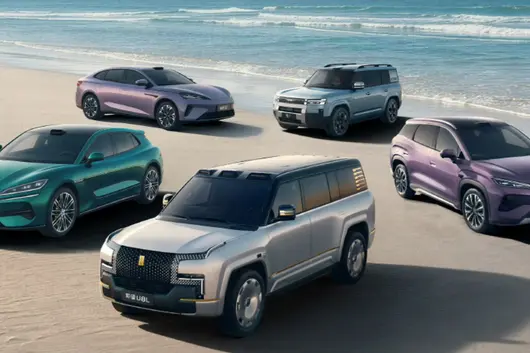
比亞迪正式發布 2026 年 5 月產銷快報,全品牌新能源汽車單月銷量 383453 輛,同比微增 0.26%,時隔十個月實現單月銷量同比轉正;其中乘用車交付 376990 輛,環比大漲 19.4%,一掃前期車型換代陣痛,呈現國內基本盤穩固、海外銷量狂飆、高端品牌全線放量的全新格局,在國內新能源內捲加劇、特斯拉 FSD 入華、自主新品密集上市的市場環境中,走出獨有的結構性增長路線。

王朝 + 海洋兩大主力品牌 5 月合計售出 330215 輛,佔據集團總銷量超八成,仍是比亞迪銷量壓艙石,全系列共 8 款車型單月銷量突破 2 萬台,產品從 5 萬入門代步到 20 萬家用 SUV 實現全覆蓋。

王朝網內部,元家族 56691 輛、宋家族 51370 輛。雙雙跨過五萬門檻,成為品牌兩大銷量支柱,兼顧家用代步與城鄉出行需求;秦家族緊隨其後交出 28360 台穩定表現,漢、唐系列月銷維持六千級體量,深耕中大型家用轎車、SUV 細分市場;全新車型夏處於市場培育期,單月交付 1810 台,後續隨渠道鋪開有望穩步上量。
海洋網增長勢頭更為迅猛,全系五款車型跨入兩萬俱樂部:海獅 42615 台、海豹 34117 台、海鷗 39919 台、海豚 22260 台、宋 PLUS 27755 台。其中海鷗憑藉 6-8 萬親民定價穩居入門代步銷冠,海獅作為全新走量車型上市即站穩四萬量級,補齊海洋網中型 SUV 產品空白,完善海洋產品梯隊佈局。從代步小車到緊湊 SUV,兩大主品牌依托 DM-i 混動與純電雙線技術,牢牢鎖住 15 萬以內國內主流家用市場份額。
方程豹同比暴漲 139.7% 品牌向上落地見效騰勢、方程豹、仰望組成的高端矩陣 5 月合計銷售 46489 輛,正式擺脫小眾定位,成為比亞迪品牌溢價與利潤增長新支點,打破自主品牌高端化難破局的行業魔咒。

越野品牌方程豹單月 30186 輛,同比暴漲 139.7%,創下品牌上市以來月度銷量新高,旗下鎦 7 單月 18280 台,豹 5、豹 8 穩定輸出,在 25-40 萬硬派越野細分市場持續擠壓合資、進口車型生存空間。

騰勢 5 月交付 16303 台,MPV 標桿 D9 售出 6721 台,Z9 系列近 6000 台,MPV、中大型轎車雙線發力,站穩豪華新能源賽道;百萬元級超豪華品牌仰望穩步爬坡,當月交付 286 台,同比增幅 105.8%,完成自主品牌天花板產品的市場驗證,形成從十幾萬家用、三四十萬越野、五十萬豪華 MPV 到百萬元級旗艦的全價格帶產品佈局。

5 月比亞迪乘用車和皮卡海外銷量 160177 輛,同比大漲 80.7%,出口佔全系總銷量突破 42%,創下品牌出海歷史新高,成為穩住 5 月整體銷量、實現同比轉正的核心驅動力。
東南亞、歐洲、拉美成為主力增量市場,海鷗、宋 PLUS、元系列持續登頂多國新能源熱銷榜單,SHARK 皮卡連續兩月單月出口突破 4000 台;依托泰國、巴西、匈牙利、烏茲別克斯坦四大海外整車工廠落地投產,本地化生產持續落地,規避關稅同時快速下沉終端渠道。在國內車市存量競爭、價格戰常態化背景下,高速擴容的海外市場有效對沖國內車型換代帶來的銷量波動,正式從補充市場升級為比亞迪核心增長引擎。截至當前,比亞迪新能源汽車全球累計銷量已經突破 1650 萬輛,全球化版圖持續拓寬。
智駕賦能產品迭代 下半年新品蓄力衝量5 月比亞迪智能化落地迎來關鍵節點,天神之眼智駕系統成為車型核心加分項:全品牌搭載高級智駕車型保有量突破 315 萬輛,日均路測數據超 2 億公里;當月比亞迪落地城市領航、智能泊車雙安全兜底服務,成為全球首家實現兩項智駕兜底的車企,政策落地三天後,搭載天神之眼系統車型的城市 NOA 激活率暴漲 50%,智能化體驗升級直接拉動終端到店訂單轉化,為後續車型持續走量築牢產品競爭力,直面 FSD 入華帶來的智駕市場衝擊。
從數據細節來看,2026 年 1-5 月比亞迪累計銷量 1405039 輛,同比下滑 20.32%,核心誘因是全系主力車型集中換代、第二代閃充刀片電池產能爬坡受限。新款閃充電池升級快充與低溫性能,全系換代車型優先換裝新電池,但產線改造拖累產能釋放,熱門車型訂單積壓、交付延後,一定程度壓縮 5 月交付體量。
隨著二季度末二代刀片電池產能持續釋放,疊加騰勢 N8L、方程豹鎦 7 純電版、海獅 05、夏 L 等多款新車陸續登陸市場,業內普遍預判比亞迪 6 月全品牌銷量有望突破 40 萬輛。依托低端走量鎖份額、高端提利潤、海外衝增量、智能化提產品力的四維發展邏輯,在國內新能源淘汰賽加劇的當下,比亞迪全品類佈局優勢持續放大,坐穩國內新能源龍頭,加速向著全球頭部車企穩步邁進。