


首頁窗簾

搜尋歷史
熱門搜尋
經銷商登入 / 註冊

喺馬來西亞嘅 SUV 市場,好多買家喺揀車嘅時候都會拿豐田 Harrier 同 寶馬 X5 PHEV 嚟做比較。這兩款車喺價位同定位上都好接近,今日我哋就從多個方面做一個詳細嘅比較,幫你節省做功課嘅時間。
豐田 Harrier 喺馬來西亞嘅 OTR 售價係 RM 289,000 - 289,000,一共有 1 個版本,包括 2026 HEV 2.5L Standard(RM 289,000) 等。
寶馬 X5 PHEV 喺馬來西亞嘅 OTR 售價係 RM 486,800 - 494,800,一共有 2 個版本,包括 xDrive20i(RM 420,000)、xDrive30e(RM 480,000) 等。
從價錢來看,豐田 Harrier 嘅起步價確實比 寶馬 X5 PHEV 平咗 RM 197,800。如果你預算有限,豐田嘅入門版已經可以滿足日常需求。但都要注意,平嗰幾千蚊,可能喺配備上會有所取捨,具體要睇你嘅需求。

豐田 Harrier 搭載 2.0L Turbo,馬力 220 hp。官方油耗 9.5 L/100km。
寶馬 X5 PHEV 搭載 Hybrid,馬力 170 hp。官方油耗 4.5 L/100km。
動力方面,豐田 Harrier 嘅 2.0L Turbo 比 寶馬 X5 PHEV 嘅 Hybrid 多咗 50 匹馬力,中段加速更有信心,尤其係跑高速公路超車嘅時候。不過 寶馬 X5 PHEV 嘅油耗可能更友好,日常市區通勤差別唔會太大。

豐田 Harrier 嘅安全評級係 5★ (ASEAN NCAP),主動安全系統包括 Brand ADAS。
寶馬 X5 PHEV 嘅安全評級係 5★ (Euro NCAP),主動安全系統包括 Premium ADAS。
安全配備方面,兩款車都拿到唔錯嘅評級。不過 豐田 Harrier 嘅 Brand ADAS 同 寶馬 X5 PHEV 嘅 Premium ADAS 喺功能上有啲差異,如果你比較重視主動安全嘅話,可以仔細對比一下佢哋嘅功能列表。

豐田 Harrier 車身長 4400 mm,後備箱 400 L。
寶馬 X5 PHEV 車身長 4400 mm,後備箱 400 L。
兩款車嘅尺寸幾乎一樣,車內空間差別唔大。呢個級別嘅車,日常使用完全夠用。

豐田 Harrier 保修 5 年/無限里程,保養間隔 每 10,000km 或 6 個月。
寶馬 X5 PHEV 保修 5 年/無限里程,保養間隔 每 10,000km 或 6 個月。

總嚟講,豐田 Harrier 同 寶馬 X5 PHEV 都係馬來西亞市場好唔錯嘅車型。揀邊一部,關鍵都要睇你嘅個人需求同預算。建議大家做足功課,多比較幾間車行嘅報價,再去試駕做最終決定。買車係件大事,花少少時間做功課絕對唔會錯。


馬自達接下來嘅新車攻勢,將由入門 SUV 同自家油電科技領軍。根據馬自達廠方日前公開嘅《2026 整合報告書》披露嘅產品規劃,廠方預計於 2027 年喺日本及東協市場引入下一代 CX-3,並明確將佢定位為接替 Mazda2 嘅新時代入門車款;同年,新一代 CX-5 亦會追加配備 Skyactiv-Z 汽油引擎同馬自達自主開發油電系統嘅 Hybrid 車型。配合擴大至 4 款嘅 HEV 陣容,以及持續發展嘅電動車計劃,馬自達未來嘅產品佈局,將同步涵蓋入門級別、主力 SUV 同電動化市場。

其中,下一代 CX-3 嘅角色轉變,堪稱這份報告最值得關注嘅訊息之一。馬自達技術長梅下隆一指出,新車將由泰國工廠生產,計劃於 2027 年導入日本與東協市場,並承接 Mazda2 嘅入門產品定位。這也意味著,CX-3 嘅任務將唔止係既有小型 SUV 嘅世代更新,更肩負吸引首次購車族群、擴大品牌客群嘅重要責任。

從產品佈局來看,馬自達將透過小型 SUV 承接品牌入門需求,讓 SUV 車喺銷售陣容中扮演更吃重嘅角色。不過,報告目前尚未公布下一代 CX-3 嘅車身尺碼、動力規格與售價,亦未交代 Mazda2 喺各市場嘅後續安排,因此仍不能直接解讀為 Mazda2 將於 2027 年喺全球同步退場,包括喺歐洲市場以 Toyota OEM 導入,作為 Yaris 雙生車嘅歐規 Mazda2。

另一項重頭戲,則係預計於 2027 年加入新一代 CX-5 車系嘅 Hybrid 車型。廠方確認,新車將搭載開發中嘅 Skyactiv-Z 汽油引擎,並結合馬自達自家油電系統。相比 CX-50 已採用嘅豐田油電系統,CX-5 Hybrid 將成為馬自達展現自主油電技術嘅重要產品,讓品牌主力 SUV 喺節能同駕馭表現上,開啟下一階段嘅競爭。
馬自達對呢套系統嘅期望,亦唔止於降低油耗。廠方以具有駕馭樂趣嘅 HEV 作為開發方向,強調都會行駛時嘅安靜同順暢、高速行駛時嘅充沛動力,以及蜿蜒道路上嘅節奏感。Skyactiv-Z 則將透過燃燒技術提升效率,同時兼顧歐美市場嚴格嘅排放要求同行駛性能。不過,排氣量、綜合輸出、電池配置同油耗數據,目前尚未喺報告中披露。

CX-5 Hybrid 都只係油電攻勢之一環。馬自達進一步提出,未來將把 HEV 產品陣容擴大至 4 款,同時強化大型車系嘅競爭力。值得留意係,廠方並未完整公布呢 4 款車嘅名單同上市時程,因此仍無法直接認定下一代 CX-3,或 CX-60、CX-70、CX-80、CX-90 中嘅特定車款,已確定列入呢波 HEV 計劃。

至於既有大型 SUV 同內燃機技術,馬自達亦冇停下進化腳步。報告中嘅技術路線圖指出,Skyactiv-Z 嘅燃燒改善技術將延伸至直列 6 缸引擎,並評估應用於轉子引擎;自家油電系統嘅相關技術,亦喺評估向大型車系延伸。換言之,CX-5 導入嘅新技術,未來有機會成為其他產品升級嘅基礎。不過,轉子引擎相關內容仍屬技術應用評估,尚不能據此推論特定轉子跑車嘅量產時程。
純電同其他電動化產品方面,馬自達則持續採取自主開發同對外合作並進嘅方式。與長安汽車合作嘅電動車計劃,將以包含已推出產品在內嘅 4 款車為佈局方向,陸續投入中國、歐洲等電動化發展較快嘅市場。目前已知嘅產品包括 EZ-6/馬自達 6e,以及 EZ-60/CX-6e,後續第 3、第 4 款產品仍在規劃之中,報告尚未披露其車型定位同推出時間。

另一方面,馬自達仍持續投入自家 BEV 專用平台同純電車開發,並透過合作同技術共享提高開發效率。廠方預估,相對於傳統開發方式,可減少 50% 開發工時同 40% 開發投資。支援電動化佈局嘅日本岩國車用電池工廠,則以 2027 會計年度開始營運為目標,但報告並未同步公布自家專用平台純電新車嘅確切上市日期。

從此次披露嘅規劃來看,2027 年將成為馬自達產品轉型嘅重要節點。一端係承接入門任務嘅下一代 CX-3,另一端則係將 Skyactiv-Z 同自家油電技術帶入主力市場嘅 CX-5 Hybrid;再向外延伸,仲有擴充中嘅 HEV 陣容、大型 SUV 技術升級,同合作開發嘅電動車。對馬自達而言,接下來嘅挑戰將係讓呢啲新技術同新產品,喺油耗、價格、實用性同駕馭樂趣之間,交出更能吸引消費者嘅答案。


喺馬來西亞嘅 SUV 市場,好多買家喺揀車嗰陣都會拿豐田 Fortuner 同速霸陸 Forester 嚟做比較。呢兩款車喺價位同定位上都幾接近,今日我哋就從多個方面做一個詳細嘅比較,幫你慳做功課嘅時間。
豐田 Fortuner 喺馬來西亞嘅 OTR 售價係 RM 195,880 - 241,880,一共 有 3 個版本,包括 2024 2.8T VRZ Diesel(RM 241,880)、2024 2.7L SRZ Petrol(RM 202,880)、2024 2.4L Standard Diesel(RM 195,880) 等。
速霸陸 Forester 喺馬來西亞嘅 OTR 售價係 RM 174,000 - 197,000,一共 有 3 個版本,包括 2024 2.0L S EyeSight GT Edition(RM 189,538)、2024 2.0L S EyeSight(RM 177,538)、2024 2.0L L EyeSight(RM 167,538) 等。
從價錢睇,速霸陸 Forester 嘅起步價比豐田 Fortuner 慳咗 RM 21,880。老實講,喺呢個價位段,幾千蚊嘅差距其實唔算大,關鍵仲係要看整體嘅性價比同長期使用成本。

豐田 Fortuner 搭載 2.5L Diesel,馬力 187 hp。官方油耗 8.5 L/100km。
速霸陸 Forester 搭載 2.0L 4-cyl,馬力 170 hp。官方油耗 8.0 L/100km。
動力方面,豐田 Fortuner 嘅 2.5L Diesel 比速霸陸 Forester 嘅 2.0L 4-cyl 多咗 17 匹馬力,中段加速更有信心,尤其係跑高速公路超車嗰陣。不過速霸陸 Forester 嘅油耗可能更友好,日常市區通勤差別唔會太大。

豐田 Fortuner 車身長 4400 mm,尾箱 400 L。
速霸陸 Forester 車身長 4400 mm,尾箱 400 L。
兩款車嘅尺寸幾近一樣,車內空間分別唔大。呢個級別嘅車,日常使用完全夠用。

豐田 Fortuner 保修 5 年/無限制里程,保養間隔 每 10,000km 或 6 個月。
速霸陸 Forester 保修 3 年/100,000km,保養間隔 每 10,000km 或 6 個月。

總括嚟講,豐田 Fortuner 同速霸陸 Forester 都係馬來西亞市場幾唔錯嘅車型。揀邊一輛,關鍵仲係要看你嘅個人需求同預算。建议大家做好功課,多比較幾間車行嘅報價,先去試駕做最終決定。買車係件大事,花啲時間做功課絕對唔會錯。


The growth of a tire enterprise can be measured by production capacity; the competitiveness of a globalized enterprise also depends on how production capacity is connected with the market.
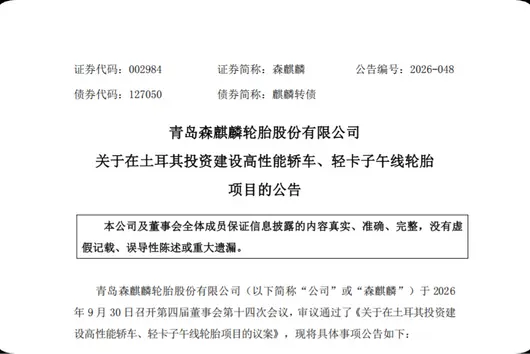
SenQilin is promoting a new overseas layout. China Tire Business Network (tirechina.net) learned that Qingdao SenQilin Tire Co., Ltd. held the 14th meeting of the 4th Board of Directors on September 30, 2026, and approved the "Proposal on Investing in and Constructing High-Performance Passenger Car and Light Truck Radial Tire Projects in Turkey". SenQilin plans to jointly invest $272.82 million with Turkish tire distribution enterprise TATKO Group to build a project with an annual production capacity of 7 million high-performance passenger car and light truck radial tires. Among them, SenQilin and its wholly-owned subsidiary account for 90.1% of the investment, TATKO accounts for 9.9%, and the planned construction period is 18 months.

From Thailand and Morocco to Turkey, SenQilin's overseas layout continues to extend. This time, why choose Turkey, and how will it leverage local industrial and channel resources to better connect the additional production capacity to the market?
Choosing Turkey to Bring Manufacturing Closer to the Market
The tire business is sensitive to production efficiency and also sensitive to delivery efficiency. Cost advantages in the factory need to go through transportation, warehousing, and channel links to be transformed into competitiveness actually felt by customers. Delivery cycles, replenishment efficiency, and service response also affect customer choices.
Turkey's value is first reflected in its location. Situated at the intersection of Europe and Asia, connecting European, Middle Eastern, and Central Asian markets, Turkey provides conditions for enterprises to layout regional production and sales. The EU-Turkey Industrial Goods Customs Union also provides an institutional basis for relevant trade exchanges. What treatment specific products enjoy still needs to meet applicable rules and market access requirements.
More worthy of attention is the local automotive industry. According to project materials, automakers such as Ford, Toyota, Hyundai, and Renault all have production layouts in Turkey. For SenQilin, this means the new factory can not only face the replacement tire market but also have the opportunity to develop vehicle original equipment business nearby.
Vehicle original equipment needs to pass certification and continuous supply capability tests; geographical proximity cannot be directly equated with obtaining orders. But deploying production capacity in automotive industry clusters helps shorten the distance of technical communication and delivery response – from this perspective, the value of the Turkey project lies in adding a manufacturing pivot for SenQilin to connect with regional customers.
9.9% Cooperative Share Connects Local Channels
An arrangement in the project worth reading closely is the participation of the TATKO Group. It is understood that TATKO possesses a sales and distribution network covering Turkey and has export channels and warehousing logistics capabilities facing surrounding markets such as the Balkans and Central Asia.
For manufacturing enterprises newly entering a market, the value of channels is far more than the number of sales outlets. Which specifications are more popular, how customers arrange replenishment, and what requirements there are for terminal services all require long-term business accumulation. Production lines can be built, but local market cognition takes time to form.
SenQilin and TATKO investing together provide a closer foundation for manufacturing and channel collaboration: the former contributes products, manufacturing and operational capabilities, while the latter brings local customer connections and market experience. This arrangement helps market development intervene earlier in capacity construction, reducing the cost of re-exploring channels after the factory is put into production.
Of course, the channel network still needs to be converted into actual sales through product adaptation, service, and execution. But incorporating local partners into the project reflects SenQilin's emphasis on "how to sell after production".
After Thailand and Morocco, Overseas Experience Has New Application Scenarios
Whether overseas factories can operate smoothly tests not only equipment and capital. Cross-cultural management, personnel training, quality control, supply chain organization, and understanding of local rules will all affect project operations. For manufacturing enterprises, these capabilities are often gradually accumulated in actual business.
It is understood that SenQilin has already built and operated production bases in Thailand and Morocco, forming overseas project management experience and talent reserves. This provides an important foundation for the Turkey project. Production management methods, quality systems, and talent training experience accumulated by existing bases can provide reference for new projects; smart manufacturing systems and refined operational capabilities will help the enterprise maintain production consistency and efficiency in different regions.
Operating conditions in different countries have their own characteristics, and experience replication still needs to be combined with local realities, but compared to going abroad for the first time, SenQilin has more abundant organizational capabilities and practical experience to call upon. As production layout increases, the company is also expected to gain more choices to serve customers in different regions. The synergistic effect ultimately depends on product arrangements, customer needs, and operational efficiency at each base.
Look at 7 Million Pieces of Capacity, But More at Global Operational Capability
Forecast data disclosed by SenQilin in the project announcement shows that the project can achieve operating revenue of $204.62 million, net profit of $42.11 million, and net sales margin of 20.58% in a normal operating year.
These are forecast data based on certain business and tax assumptions, not performance commitments. As of the stage described in the materials, the project still needs shareholder meeting approval and relevant domestic and foreign approvals or filings, and subsequent returns will also be affected by factors such as construction progress, market demand, and cost changes.
But this does not hinder our understanding of the project's industrial significance. In the view of China Tire Business Network, what is worth attention in SenQilin's layout this time is its attempt to combine overseas manufacturing experience, regional location conditions, and local channel resources.
For customers and distributors, the actual value of this layout will ultimately be reflected in more stable supply, more timely response, and products and services closer to the market.
The globalization of Chinese tire enterprises is extending to deeper operational links. SenQilin's planned layout in Turkey provides a specific sample for observing this process: a new factory carries additional production capacity, while the collaboration of manufacturing, channels, and services determines how far these capacities can go.

2026 年 8 月 26 日,奇瑞風雲 T7 正式上市,官方指導體價 9.79‑11.89 萬,換購優先價 9.49 萬起,上市即交車。喺國內新能源市場「快速迭代、注重堆料、入門減配」嘅內捲浪潮之下,風雲 T7 走出一條與眾不 同嘅路線:原生全球車,先出海驗證,再回歸國內市場,用三年研發週期、全球嚴苛驗證,主打家用家庭用戶嘅真實用車訴求,試圖重塑十萬級純電 SUV 嘅價值標尺。
反向出海:一台為全世界造嘅家用純電 SUV
當前絕大多數中國新能源車型嘅邏輯係:國內完成研發上市,市場驗證之後,再做局部修改適應海外法規,實現出口。風雲 T7 則選擇反向路徑:同源車型 Lepas L6 已經率先登陸南非、泰國,後續將進入歐盟、英國、澳大利亞、以色列等市場,先經受全球市場檢驗,再面向國內消費者開售。

風雲 T7 依托奇瑞全球 1+7+N 研發體系打造,研發週期長達三年,對標 2026 版 E‑NCAP 五星安全標準,適應全球 210 個國家地區用車環境。研發階段投入 81 臺耐久試驗車,累計完成 145 萬公里耐久驗證、600 萬公里全球路試,足跡遍佈 21 個國家,覆蓋全球絕大多數典型路況;同時邀請 5000 多名海内外用戶參與共創,兼顧不同地區嘅審美與用車習慣。

奇瑞提出嘅「全球車,快唔到一點」,正係風雲 T7 嘅產品底色。佢唔追求快速上新,而係把安全、耐久、可靠性放在首位,把海外嚴苛標準直接平移去國內版本,亦都係佢區別於同價位好多車型嘅核心差異點。
產品力解析:續航平權,把核心硬件俾到每一位用戶
風雲 T7 定位緊湊型純電 SUV,車身尺寸 4570×1852×1694mm,軸距 2700mm,五座佈局,車身尺寸兼顧城市好開好停,同時滿足三口之家日常出行空間需求。
三電系統:全系 600km,拒絕入門版續航縮水
十萬級純電市場一個普遍現象:入門版本縮減電池、降低續航,用低價吸引用戶,長續航版本需要大幅加價。風雲 T7 直接實現續航平權:三款配置全部搭載 65.05kWh 犀牛磷酸鋰鐵電池,CLTC 續航統一 600km,百公里電耗 12.9 度,30%‑80% 直流快充只需 20 分鐘,支援 6.6kW 對外放電,滿足露營戶外場景。

動力採用 12 合 1 鯤鵬超能電驅,前置單電機最大功率 178kW,峰值扭矩 275N·m,最高車速 180km/h,兼顧城市通勤與高速超車能力。底盤為前麥花臣 + 後多連桿獨立懸掛,由海外底盤專家團隊調校,560mm 低重心設計,帶來唔錯嘅行駛穩定性;整車擁有 500mm 涉水深度,電池包具備完善嘅液冷、PTC 預加熱、寬溫域熱泵空調,兼顧低溫環境續航表現。
外觀與座艙:家用取向,實用配置唔係吝嗇
風雲 T7 採用東方馭風美學家族設計,封閉式前臉搭配 L 型日行燈,整車線條簡潔穩重,兼顧全球市場審美。全系標準配備 AGS 智能主動進氣格柵,全車 14 項低風阻優化,有效降低風噪、提升續航表現;車尾貫穿式尾燈,全系標準配備電動尾門,喺同價位屬於非常實在嘅配置。

市場格局:十萬級純電 SUV,務實路線嘅新挑戰者
當前 10‑12 萬純電 SUV 賽道競爭白熱化,埃安、零跑、名爵等多款產品同台競技。呢個細分市場嘅用戶,大多數係家庭第一台車,訴求好現實:穩定續航、可靠安全、夠用嘅配置、低用車成本,對於花巧嘅噱頭配置並唔鍾意。

風雲 T7 同風雲 T9L 定位形成區隔:T7 係城市家用純電 SUV,適合日常通勤為主,充電方便嘅家庭;T9L 係插混大五座,適合經常長途出行、冇固定充電條件嘅用戶,兩者互補,完善風雲品牌嘅家用新能源矩陣。

風雲 T7 嘅上市,代表奇瑞風雲品牌嘅一種產品思路:唔盲目堆砌參數,唔做入門減配,將全球標準落地去家用車型,用保養同安全兜底,服務普通家庭真實用車場景。
喺好多車型一味追求加速、大屏幕、花巧功能嘅時候,風雲 T7 回歸家用本質:續航夠用、安全可靠、底盤扎實、售後省心。「先出海再回家」嘅開發模式,亦畀國內新能源行業提供一個參考:好車唔止服務國內市場,更經得住全球市場檢驗。
對於普通消費者嚟講,如果預算喺 9‑12 萬,想要一台 600km 續航、有終身保養、兼顧城市通勤同短途出遊嘅純電 SUV,風雲 T7 係值得重點考慮嘅務實選擇。


In Malaysia's SUV market, many buyers compare Proton X90 and Chery Tiggo 8 PHEV when choosing a car. These two cars are quite close in price and positioning. Today we will do a detailed comparison from multiple aspects to help you save time on research.
Proton X90's OTR price in Malaysia is RM 106,800 - 122,800, with a total of 4 versions, including 2026 1.5T Prime X (RM 122,800), 2026 1.5T Prime (RM 116,800), 2026 1.5T Lite (RM 106,800), etc.
Chery Tiggo 8 PHEV's OTR price in Malaysia is RM 159,750 - 159,750, with a total of 2 versions, including 1.6L Turbo Standard (RM 130,000), 1.6L Turbo Premium (RM 145,000), etc.
From a pricing perspective, the starting price of Proton X90 is indeed RM 52,950 cheaper than Chery Tiggo 8 PHEV. If your budget is limited, Proton's entry-level version can already meet daily needs. However, note that the few thousand cheaper cost might involve trade-offs in features, depending on your specific needs.

Proton X90 is equipped with 1.5L Turbo, 140 hp. Official fuel consumption 7.0 L/100km.
Chery Tiggo 8 PHEV is equipped with Hybrid, 170 hp. Official fuel consumption 4.5 L/100km.
Regarding power, the Hybrid of Chery Tiggo 8 PHEV has 30 more horsepower than the 1.5L Turbo of Proton X90. However, for daily city driving, both cars have sufficient power and won't feel underpowered.

Proton X90 safety rating is 5★ (ASEAN NCAP), active safety systems include ADAS (ACC, AEB, LKA, LDA, BSM, RCTA).
Chery Tiggo 8 PHEV safety rating is TBD, active safety systems include Basic.
In terms of safety features, both cars have achieved good ratings. However, there are some differences in functionality between Proton X90's ADAS (ACC, AEB, LKA, LDA, BSM, RCTA) and Chery Tiggo 8 PHEV's Basic. If you value active safety highly, you can compare the feature lists of both carefully.

Proton X90 warranty 5 years/150,000km, service interval every 10,000km or 6 months.
Chery Tiggo 8 PHEV warranty 3 years/100,000km, service interval every 10,000km or 6 months.
Overall, Proton X90 and Chery Tiggo 8 PHEV are both very good models in the Malaysian market. Which one to choose ultimately depends on your personal needs and budget. We recommend doing your homework, comparing quotes from several dealerships, and then test driving to make a final decision. Buying a car is a big matter, spending some time doing homework is never wrong.


In the Malaysia SUV market, many buyers compare Proton X50 and GWM Haval H6 when choosing a car. The price and positioning of these two cars are quite close. Today we will make a detailed comparison from multiple aspects to help you save time on research.
The OTR price of Proton X50 in Malaysia is RM 89,800 - 113,300, with a total of 4 versions, including 1.5T Executive (RM 89,800), 1.5T Premium (RM 101,800), 1.5T Flagship (RM 113,300) etc.
The OTR price of GWM Haval H6 in Malaysia is RM 139,750 - 139,750, with a total of 2 versions, including 1.5L Turbo Standard (RM 140,000), 1.5L Turbo Premium (RM 155,000) etc.
From the price perspective, the starting price of Proton X50 is indeed RM 49,950 cheaper than GWM Haval H6. If your budget is limited, Proton's entry-level version can already meet daily needs. But also note that the few thousand yuan difference might involve trade-offs in features, depending on your needs.

Proton X50 is equipped with 1.5L 4-cyl, power 105 hp. Official fuel consumption 6.0 L/100km.
GWM Haval H6 is equipped with Hybrid, power 170 hp. Official fuel consumption 4.5 L/100km.
Regarding power, the Hybrid of GWM Haval H6 has 65 more horsepower than the 1.5L 4-cyl of Proton X50. However, for daily city driving, the power of both cars is sufficient, you won't feel it lacks power.

Proton X50 body length 4400 mm, trunk 400 L.
GWM Haval H6 body length 4400 mm, trunk 400 L.
The dimensions of the two cars are almost the same, interior space difference is not significant. For this class of cars, daily use is fully sufficient.

Proton X50 warranty 5 years/150,000km, maintenance interval every 10,000km or 6 months.
GWM Haval H6 warranty 7 years/150,000km, maintenance interval every 10,000km or 6 months.
Overall, Proton X50 and GWM Haval H6 are both very good car models in the Malaysia market. Which one to choose depends mainly on your personal needs and budget. It is recommended to do your research, compare quotes from several dealerships, and then test drive to make a final decision. Buying a car is a big matter, spending some time on research will never go wrong.


