
首頁甜品

搜尋歷史
熱門搜尋
經銷商登入 / 註冊

"In the first 5 months of this year, hundreds of new car models launched, but sales contracted. The combination of declining sales, revenue, and profits is unprecedented." At the just-concluded 2026 China Automotive Chongqing Forum, Wang Xia, President of the Automotive Division of the China Council for the Promotion of International Trade and President of the Automotive Chamber of the China Chamber of Commerce, pinpointed the chronic involution in the current auto market.

The first half of this year has not ended yet, with 544 new car models launched domestically, including 71 brand new and facelifted models. However, national passenger car retail sales dropped nearly 20% year-on-year in the first 5 months. If exports are excluded, this figure is 23.8%. Not only fuel vehicles, but new energy vehicles also declined over 15% year-on-year. The auto market has fallen into 'false diligence' where the more effort one puts in, the more poignant it becomes.
The most terrifying aspect is that the automotive industry's profit margin was only 3.2% in Q1, a historical low. Regarding this, President Wang Xia stated: "Sales without profit support are just empty number games; profits maintained by subsidies are ultimately a castle in the sand."

As top new force players, Li Auto and Xpeng reported revenue growth rates of -11.4% and -17.6% respectively in Q1 2026. NIO benefited significantly from high-end models like the new ES8 launched in Q4 last year, with a growth rate of 112.2% in Q1, but still reported a net loss of 330 million yuan. Leapmotor, ranked first in deliveries, had a growth rate of 8%, with revenue hitting a record high for the same period last year. Why was Leapmotor able to achieve a 'double kill' of sales and revenue during the Q1 downturn in the auto market? Will the newly launched C Series help Leapmotor achieve its annual million sales target?
C Series sales share decline 'reasonable'? Will it definitely return to 50% after new launch!
Leapmotor was the new force sales champion of 2025. Following a full-domain self-research route, over 65% of core components are self-produced, resulting in lower manufacturing costs than competitors. The product matrix simultaneously covers the 100,000-200,000 yuan market segment. Pure electric + extended range dual lines have no shortcomings. Coupled with sufficient capacity support for continuous delivery, the pragmatic industrialized car manufacturing route and the 'half-price home SUV' label perfectly fit current mainstream consumer demands. This is the reason for its counter-trend growth.

In the past two years, C10/C11/C16, C Series models contributed massively to Leapmotor's sales. Sales share was 77% in 2024, 55% in 2025, but only 36% in Q1 2026. Why do the sales pillars fail? Because Leapmotor knows that to achieve the million sales target, C Series alone cannot support it; they must optimize product structure and bloom at multiple points.

So at the end of last year we saw the volume-driving A Series, profit-guaranteeing B Series, foundation C Series, and premium D Series. These four pillars support Leapmotor's sales. This year Q1 was also the C Series gap period, old models clearing stock, users waiting for facelifts, demand will concentrate on the second half.

The recently launched Leapmotor C Series focuses on unchanged prices with upgraded configurations. The whole range gets 8295 chips, LiDAR is moved down, and range is improved. This product structure repair was very timely, filling all pain points, so C Series sales share will significantly recover in the second half. Bold prediction: it will return to 50%.
Can the million sales target still be achieved? Where is the bottleneck? How to win?
Conclusion first: The 1 million annual sales target is challenging to reach, but likely achievable. Leapmotor's annual sales target composition is 900,000 domestically, 100,000-150,000 overseas.

Bottlenecks remain, a well-worn topic being slow capacity ramp-up. The Jinhua, Zhejiang factory producing the 100,000 yuan main model A10 started two-shift production in April, aiming for 30,000+ capacity in June. It still has distance from the 100,000 per month target. The Hefei factory just started production in May, with two-shift annual output 200,000-400,000, but capacity release is late, contributing limitedly in the short term. Plus battery cells, chips, and automotive-grade storage are still tight and prices are rising, restricting full production progress.

However, Leapmotor is very confident in the Jinhua, Hangzhou, Hefei golden triangle capacity layout, with a total annual planned capacity of 1.46 to 1.51 million units, nearly 1.5 times the million sales target. There is determination that as long as orders continue to pour in, they can handle this tremendous fortune.

Back to products, A10 first month firm orders broke 40,000 units, D19 broke 15,000 firm orders in 15 days. Plus this month's facelifted C Series, sales will likely hit new highs in the second half. Also, there is an ace card positioning the 50,000-70,000 yuan range, targeting the sinking market—A05 launching soon. This small car can add L2-level driving assistance systems, crushing competitors at the same level.

As long as Leapmotor can take a huge market share in this price range, other competitors will have no chance to turn the tables. Consumers at this price point are usually very price-sensitive. Either first-time buyers with budget constraints, or second family cars with limited demand, so price will be the biggest factor in decision-making. A05 will likely become a rocket accelerator on Leapmotor's million sales journey.

Except for the domestic market, Leapmotor Q1 overseas exports were about 40,000 units, exports skyrocketed 442% year-on-year, ranking first in export volume and export share among new forces. This benefits from Stellantis Group's 40 countries, 800+ store resources. Leapmotor doesn't need to build global channels itself, which is unique among all new forces. In the second half, with factories in Spain, Malaysia, etc., going into production, Leapmotor's overseas sales might have even bigger surprises.

In the road to smashing the million sales target, Leapmotor has one last trick: trade price for volume. Compared to competitors, Leapmotor still has room for price cuts in the 100,000 yuan range, but Leapmotor leading sales won't take risks desperately. After all, once prices drop, it's hard to recover.

Another reason for confidence in Leapmotor's second half sales is market laws. Looking at the past 5 years, the auto market shows a pattern of slow first half, busy second half. Usually, the second half accounts for 55%–60% of the full year. As Leapmotor Vice President Li Tengfei said: "Annual sales will show a trend of first suppress then rise. We are very confident in the goal of hitting 1 million units."
Can selling at low prices break the predicament where bigger scale means weaker profitability?
From annual loss of 5.1 billion to profit of 540 million, Leapmotor interpreted a textbook loss reduction curve in just three years. But Q1 2026 Leapmotor welcomed new challenges. Gross margin 9.4%, less than the 14.9% of the same period last year. Net loss 390 million yuan. Last year same period lost only 130 million yuan. And last year Q4 still made 360 million.

Leapmotor car profit in 2025 was 903 yuan per unit, less than one-tenth of BYD, one thirty-fifth of Li Auto. Selling the most, but earning the least. And B10 new model R&D, overseas channel deployment, Malaysia and Spain factory production, all require continuous investment.

Although Leapmotor has run through the economies of scale loop through extreme cost control and high sales turnover, the profit ceiling under the low-price strategy is gradually becoming clear. Leapmotor sales are still new highs, scale is still growing. By 2028 economies of scale will be fully released, fixed cost per unit significantly diluted.

Additionally, Leapmotor's LEAP 3.5 architecture, C/B Series model component commonality rate reached 88%, amplifying 'reuse effect' not only shortened new model development cycle by 25% compared to previous generation, whole vehicle R&D investment will also reduce by 40%. It also improved procurement bargaining power by sharing core parts like chassis, lights, seats. Only then will economies of scale welcome the true inflection point on profits. At the same time, Leapmotor also announced plans to launch its own second high-end independent brand in 2027. New product pricing will target the 300,000 yuan+ high-end market, opening price ceiling, boosting brand premium.

Domestically using high specs low prices to seize market, overseas Leapmotor actively borships seeking premium space. Global fourth largest carmaker Stellantis Group, after announcing deepening strategic cooperation with Leapmotor on May 8 this year, decided to hand over operation rights even ownership of its European flagship factory to Leapmotor. In the near future the Spain Zaragoza Plant that once produced Opel, Peugeot will produce Leapmotor's B10. And the Madrid Villaverde Plant that once produced Citroën will also start producing Leapmotor in 2028.

Besides this, based on Stellantis Group's advantage of over 30% market share in South America, Leapmotor's Brazil Plant is also progressing in an organized manner. And with South East Asia market performance year-on-year improvement this year, Leapmotor is also actively advancing Indonesia, Malaysia, Thailand plant plans. In the future high gross margin overseas business share will rise, balancing Leapmotor's domestic low-price involution losses.
Conclusion
Leapmotor founder Zhu Jiangming once said: "Only by surviving can we develop. Making scale bigger is a goal more important than profitability." So at this stage after Leapmotor completes the million sales target, it will smoothly pass through the cycle. But profitability yields to scale expansion, annual 5 billion net profit goal will be missed.

Just as President Wang Xia said at the beginning, scale without profit is poison. In this final elimination race of global new energy giants, million sales were never the goal. To get the ticket to the future, either run through unmanned driving, get the next baton of technical revolution, or run through overseas markets, become the 'Toyota' of the new energy era.
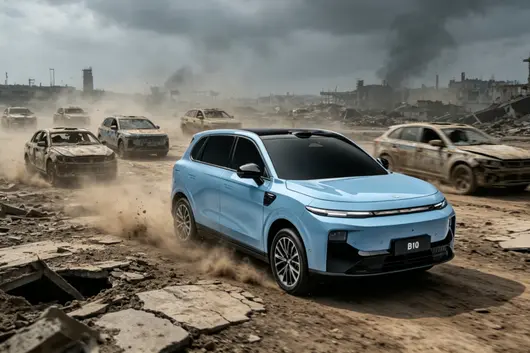

Folks, today let's talk about big news on going global—not selling cars, but selling "drivers". On June 2, WeRide and Uber jointly announced a plan: to launch the country's first commercial Robotaxi pilot service in Madrid, Spain. In other words: Spanish residents will soon be able to hail a driverless taxi via Uber. This is the first time WeRide and Uber are partnering to enter the European market. Madrid also becomes the 12th city globally where WeRide's Robotaxi arrives.
According to official news, with the support of the Madrid regional government, this service will officially launch within this year. At that time, friends in Madrid can open the Uber App and call WeRide's Robotaxi with one click. It's just like calling an ordinary ride-hailing service, the difference is the arriving car has no driver—at least initially, there is still a difference. In the initial operation phase, a professionally trained safety monitor will be on board, as it's just launched, safety comes first.
This company, WeRide, you might have heard of it, or you might not. A brief introduction: Established in 2017, it has been dedicated to Robotaxi technology R&D and commercialization. Currently, its Robotaxis cover Guangzhou, Beijing, Singapore, Abu Dhabi, Dubai, Riyadh, Zurich... plus Madrid now, totaling 12 cities. Spain is also the 5th European market WeRide has entered—previously entered Switzerland, France, Belgium, Slovakia. According to the plan agreed by WeRide and Uber in May 2025, they plan to deploy Robotaxi services in 15 new international cities within five years, deploying tens of thousands of Robotaxis globally. With the Madrid launch, the deployment in 4 cities has been completed, and 11 more will be covered successively before 2030.
To be honest, it's not the first time Chinese autonomous driving companies are going global, but the combination of Chinese technology + global mobility platform + European market is quite interesting. Madrid is one of the European Robotaxi markets with the most commercial potential, with a large population, high travel demand, and friendly local policies. Being able to take root in this market is a significant milestone for WeRide. For Uber, introducing Robotaxis is also a way to reduce costs—after all, drivers don't need salaries. For Madrid residents, hailing a taxi might be cheaper in the future.


Have you ever seen the roads in India?
I've seen them online.
The scene is usually like this: a sedan blocked behind a cow, motorcycles running wild nearby, even milk tea vendors nearby, so "clean and hygienic".

However, in a place where many feel physically uncomfortable after watching, Toyota, Suzuki, Honda and other Japanese car companies decided to bet on India.
According to the Indian "Brand Quality Foundation" website, the three car companies will invest nearly $11 billion to build factories, increase capacity, and develop exports in India.
Some netizens commented: Did the three Japanese car companies have too much money?
In fact, they didn't have endless money to spend, nor were they bewildered by Indian curry. These Japanese car executives are much clearer than us.
Current Japanese car revenue and market share are declining. Raw material costs are soaring. Looking at the world map, finding a market that can accommodate capacity, expand share, and has gentle competition is not easy.
So, it wasn't that Japanese car companies chose India, but because they had no choice.
The Pain of Japanese Car Companies
Past Japanese cars were truly the envy of others.
Ask old drivers who drove Japanese cars over ten years ago, talking about Japanese cars, almost no one doesn't give a thumbs up, cheap price, fuel saving, durable...
Even many Japanese cars needed to be bought at a markup, but who would think this iron fortress would be beaten out of sight in a few short years.
With the wave of new energy vehicles coming, electrification and intelligence became the goal for many domestic car companies to "leapfrog". Relying on China's strong new energy vehicle industry chain advantages and car companies' own persistence on R&D and technology, Chinese independent brands quickly achieved "leapfrogging".
Domestic cars once criticized are now becoming more and more common on the roads, even surpassing joint ventures in share.
According to CPCA data, in April 2026, the share of independent brands reached as high as 62.5%, far exceeding Japan's 13.1%.

You need to know, the Chinese car market is the largest car market in the world. Losing speed in the Chinese market is like losing a huge piece of cake.
Meanwhile, the main theme of the Chinese market in recent years is still price wars. Racing on configuration, price, and service has become a normal state, which also had a huge impact on Japanese cars' profits.
Apart from China, Japanese cars are also not doing well in the US.
On January 20, 2025, Trump swore in as the 47th US President, starting a series of chaotic operations, including imposing additional car tariffs in the name of national security, causing the tariff rate for imported Japanese cars to reach as high as 27.5% at one point. Although it decreased later, it was still far higher than the initial tax rate.
This operation directly led to a tariff loss of over 2 trillion yen for seven Japanese car companies in fiscal year 2025.
Looking at Japan itself, it is actually not easy either.
Middle East geopolitical conflicts blocked shipping in the Strait of Hormuz, transportation costs and raw material costs soared, Japanese car companies also had to suffer in silence.

Executives looking at the reports, their backs went cold, only to find a new growth curve.
So, Japanese car companies didn't fall in love with India, there was nowhere else to go.
Deep Thought on Choosing India
So, what magic does India have, to make Japanese car companies invest heavily?
The first advantage is big. In 2025, the Indian car market achieved 5.517 million new car sales, up 6% year-on-year, breaking the historical record, ranking as the third largest car market in the world, exceeding Japan for four consecutive years, second only to China and the United States.
The value of this doesn't need me to say much. India achieved this result mainly because India has been promoting tax reduction policies to promote consumption, which led to a significant increase in domestic consumption willingness.
The second advantage is close, meaning it is close to places where Japanese cars sell well, such as Africa.
So, India for Japanese car companies is more like a convenience store built in the center of a crossroad. You don't need to ship cars to eight countries separately, just build well at this stop in India, then unload ship by ship, and you can save a lot of costs.

The Nikkei also believes that India is expected to become its global car supply center.
The third advantage is stability. You know, Japanese cars' advantage is fuel cars, after all, the three major components of engines, gearboxes, and chassis, they have played for many years, technology accumulation is number one in the world.
But the Chinese car market has fully promoted electrification and intelligence development, leading to Japanese cars' advantage becoming weaker and weaker, impossible to play out. But India is different, it has the characteristics of few charging piles and slow electrification process. Indian old people buying cars still look for cheap, fuel saving, easy to fix, and these three points are exactly Japanese cars' old trade.
Especially Suzuki, always been India's car market evergreen, almost always sitting on the best-selling model throne, reputation of being worry-free, better than any advertisement.
So, Japanese car companies' vigorous layout of the Indian market is obviously carefully considered.
But, is the Indian market really that easy to mix?
The Hard-to-Bite Indian Market
Of course, India is not perfect like a hot commodity, its disadvantages are as obvious as its advantages, and every one is enough for Japanese car companies to face a hard time.
First talk about electrification. Yes, right now India has few charging piles and electric cars don't sell well, it is indeed a shelter for Japanese fuel cars. But you have to think, how long can this "shelter" avoid?
India previously shouted the slogan of 30% of new cars being electric vehicles by 2030. Although it sounds like bragging, but can't help but they really give subsidies, really build charging stations.
Imagine, what if one day India suddenly wakes up, starts vigorously promoting electrification, doing infrastructure, charging piles popping out like mushrooms after rain, then Japanese cars will be dumbfounded?
Isn't this a version of the Thai market?
Back then Japanese cars in Thailand won easily. The entire Southeast Asian market was called Japanese cars' backyard. Result Thailand took the lead in promoting electrification. Chinese electric vehicles came in, directly became a hot commodity. Look at Japanese cars again, share in Thailand falling down rapidly.

If India accelerates electrification, history will likely repeat, and this time, Japanese cars don't even have a place to flee, how to prevent will become the first problem for Japanese car companies.
Next talk about policy. India's policy is like a pot of curry, you never know if you will eat chicken or potato next time.
This magical country, today low tariff encourages building factories, tomorrow may fine you a huge amount. What's more annoying is mandatory joint venture. Foreign car companies want to sell cars in India, have to find local partners to partner up. When your factory is built, supply chain is done, India directly backstabs you. At that time whether adding money or withdrawing capital, what you get is heartache.
So you see, this market like India is like a mango that looks very sweet, bite the first mouth it's okay, chew two more mouths hit the hard core.
Japanese cars now is calculating, while the core hasn't bit the tooth, hurry up to nibble a few more mouths, but the core will bite sooner or later, just don't know which day.
Epilogue
Japanese cars this trip to India, not go for tourism, is go to make a living.
Chinese and Southeast Asian dining tables are more crowded, production and transportation costs have risen. Looking around the world, only this pot in India is still steaming, even if what is boiling inside is curry-flavored stones, have to bite hard and chew down.
Japanese car companies want to expand market, India wants to pull economy, solve employment, both sides have their own thoughts.
As for the ending is Japanese cars in India regain their glory, or like past competitors shamefully walk away, then is not known.
But no matter how, this play just started, we slowly watch is okay.
Anyway India's story, never bored.

Have you ever seen the roads in India?
I've seen them online.
The scene is usually like this: a sedan blocked behind a cow, motorcycles running wild nearby, even milk tea vendors nearby, so "clean and hygienic".
However, in a place where many feel physically uncomfortable after watching, Toyota, Suzuki, Honda and other Japanese car companies decided to bet on India.
According to the Indian "Brand Quality Foundation" website, the three car companies will invest nearly $11 billion to build factories, increase capacity, and develop exports in India.
Some netizens commented: Did the three Japanese car companies have too much money?
In fact, they didn't have endless money to spend, nor were they bewildered by Indian curry. These Japanese car executives are much clearer than us.
Current Japanese car revenue and market share are declining. Raw material costs are soaring. Looking at the world map, finding a market that can accommodate capacity, expand share, and has gentle competition is not easy.
So, it wasn't that Japanese car companies chose India, but because they had no choice.
The Pain of Japanese Car Companies
Past Japanese cars were truly the envy of others.
Ask old drivers who drove Japanese cars over ten years ago, talking about Japanese cars, almost no one doesn't give a thumbs up, cheap price, fuel saving, durable...
Even many Japanese cars needed to be bought at a markup, but who would think this iron fortress would be beaten out of sight in a few short years.
With the wave of new energy vehicles coming, electrification and intelligence became the goal for many domestic car companies to "leapfrog". Relying on China's strong new energy vehicle industry chain advantages and car companies' own persistence on R&D and technology, Chinese independent brands quickly achieved "leapfrogging".
Domestic cars once criticized are now becoming more and more common on the roads, even surpassing joint ventures in share.
According to CPCA data, in April 2026, the share of independent brands reached as high as 62.5%, far exceeding Japan's 13.1%.
You need to know, the Chinese car market is the largest car market in the world. Losing speed in the Chinese market is like losing a huge piece of cake.
Meanwhile, the main theme of the Chinese market in recent years is still price wars. Racing on configuration, price, and service has become a normal state, which also had a huge impact on Japanese cars' profits.
Apart from China, Japanese cars are also not doing well in the US.
On January 20, 2025, Trump swore in as the 47th US President, starting a series of chaotic operations, including imposing additional car tariffs in the name of national security, causing the tariff rate for imported Japanese cars to reach as high as 27.5% at one point. Although it decreased later, it was still far higher than the initial tax rate.
This operation directly led to a tariff loss of over 2 trillion yen for seven Japanese car companies in fiscal year 2025.
Looking at Japan itself, it is actually not easy either.
Middle East geopolitical conflicts blocked shipping in the Strait of Hormuz, transportation costs and raw material costs soared, Japanese car companies also had to suffer in silence.
Executives looking at the reports, their backs went cold, only to find a new growth curve.
So, Japanese car companies didn't fall in love with India, there was nowhere else to go.
Deep Thought on Choosing India
So, what magic does India have, to make Japanese car companies invest heavily?
The first advantage is big. In 2025, the Indian car market achieved 5.517 million new car sales, up 6% year-on-year, breaking the historical record, ranking as the third largest car market in the world, exceeding Japan for four consecutive years, second only to China and the United States.
The value of this doesn't need me to say much. India achieved this result mainly because India has been promoting tax reduction policies to promote consumption, which led to a significant increase in domestic consumption willingness.
The second advantage is close, meaning it is close to places where Japanese cars sell well, such as Africa.
So, India for Japanese car companies is more like a convenience store built in the center of a crossroad. You don't need to ship cars to eight countries separately, just build well at this stop in India, then unload ship by ship, and you can save a lot of costs.
The Nikkei also believes that India is expected to become its global car supply center.
The third advantage is stability. You know, Japanese cars' advantage is fuel cars, after all, the three major components of engines, gearboxes, and chassis, they have played for many years, technology accumulation is number one in the world.
But the Chinese car market has fully promoted electrification and intelligence development, leading to Japanese cars' advantage becoming weaker and weaker, impossible to play out. But India is different, it has the characteristics of few charging piles and slow electrification process. Indian old people buying cars still look for cheap, fuel saving, easy to fix, and these three points are exactly Japanese cars' old trade.
Especially Suzuki, always been India's car market evergreen, almost always sitting on the best-selling model throne, reputation of being worry-free, better than any advertisement.
So, Japanese car companies' vigorous layout of the Indian market is obviously carefully considered.
But, is the Indian market really that easy to mix?
The Hard-to-Bite Indian Market
Of course, India is not perfect like a hot commodity, its disadvantages are as obvious as its advantages, and every one is enough for Japanese car companies to face a hard time.
First talk about electrification. Yes, right now India has few charging piles and electric cars don't sell well, it is indeed a shelter for Japanese fuel cars. But you have to think, how long can this "shelter" avoid?
India previously shouted the slogan of 30% of new cars being electric vehicles by 2030. Although it sounds like bragging, but can't help but they really give subsidies, really build charging stations.
Imagine, what if one day India suddenly wakes up, starts vigorously promoting electrification, doing infrastructure, charging piles popping out like mushrooms after rain, then Japanese cars will be dumbfounded?
Isn't this a version of the Thai market?
Back then Japanese cars in Thailand won easily. The entire Southeast Asian market was called Japanese cars' backyard. Result Thailand took the lead in promoting electrification. Chinese electric vehicles came in, directly became a hot commodity. Look at Japanese cars again, share in Thailand falling down rapidly.
If India accelerates electrification, history will likely repeat, and this time, Japanese cars don't even have a place to flee, how to prevent will become the first problem for Japanese car companies.
Next talk about policy. India's policy is like a pot of curry, you never know if you will eat chicken or potato next time.
This magical country, today low tariff encourages building factories, tomorrow may fine you a huge amount. What's more annoying is mandatory joint venture. Foreign car companies want to sell cars in India, have to find local partners to partner up. When your factory is built, supply chain is done, India directly backstabs you. At that time whether adding money or withdrawing capital, what you get is heartache.
So you see, this market like India is like a mango that looks very sweet, bite the first mouth it's okay, chew two more mouths hit the hard core.
Japanese cars now is calculating, while the core hasn't bit the tooth, hurry up to nibble a few more mouths, but the core will bite sooner or later, just don't know which day.
Epilogue
Japanese cars this trip to India, not go for tourism, is go to make a living.
Chinese and Southeast Asian dining tables are more crowded, production and transportation costs have risen. Looking around the world, only this pot in India is still steaming, even if what is boiling inside is curry-flavored stones, have to bite hard and chew down.
Japanese car companies want to expand market, India wants to pull economy, solve employment, both sides have their own thoughts.
As for the ending is Japanese cars in India regain their glory, or like past competitors shamefully walk away, then is not known.
But no matter how, this play just started, we slowly watch is okay.
Anyway India's story, never bored.


