首頁瑤柱鮮香

搜尋歷史
熱門搜尋
經銷商登入 / 註冊

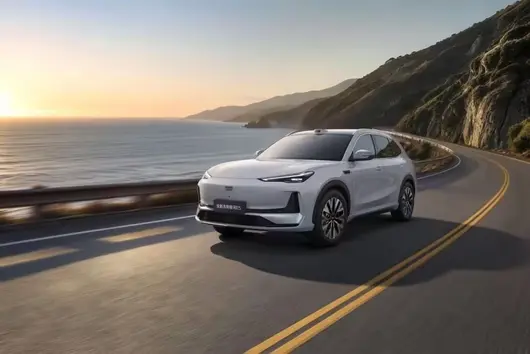
Recently, the 2027 model Qiyuan Q05 went on sale. Three trims, official guide price 89,900 RMB to 101,900 RMB, limited-time subsidy price 79,900 RMB to 95,900 RMB. This car has just ranked as the sales champion of domestic compact SUVs for six consecutive months, cumulative deliveries have exceeded 100,000 units, September global monthly sales directly hit 30,000 units. In Changan's entire new energy portfolio, it is the most capable vehicle at the moment.

Looking back at the data, when it launched in 2025, monthly sales hovered between 1,000 and 2,000 units, having almost no presence in the compact SUV market. The turning point appeared in March this year, when monthly retail sales suddenly jumped to 12,000, then continued climbing: April 15,800, May 16,000, June 18,900, July approaching 19,000. From over 1,000 monthly sales to nearly 20,000, it multiplied more than ten times in half a year.
This growth cannot be explained by price cuts. Price cuts can pull a wave, but not this consistent climbing slope. Behind this is Changan's redefinition of this car.
So what is it based on? In one sentence, it is not an explosion sold out from a price war, but a hit forged in a specification battle.
In the 100,000 RMB segment, full series standard CATL LFP battery, full series supports 3C fast charging, 15 minutes from 30% to 80%. High trim version comes directly with LiDAR, equipped with NOA pilot assist for highways and urban viaducts. This combination, before Q05 appeared, was usually seen only on cars above 200,000 RMB. 2,735 mm wheelbase, 540 L trunk, folding rear seats up to 1,380 L, these numbers put in the 100,000 RMB segment are all over-class existence.
In plain language, this car did something very hard, forcibly stuffing configurations others dare not release into the 100,000 RMB segment, yet making users believe this brand is worth paying for. So Q05 did not win on price, it won by turning the four words "Technology Democratization" from marketing jargon into something tangible and usable for users. When LiDAR is no longer a symbol of high-end, when 3C fast charging becomes standard for 100,000 RMB segment, users naturally vote with their feet.
This 2027 model update, upgrades are also very targeted. Full series range unified to 506 km, cut original 405 version, entry-level is long range; full series standard heat pump AC, directly solving the old problem of pure electric car range shrinking in winter; run-flat tire stability also made full series standard. You see, the facelift has no gimmicks, every cut targets user hard needs.
But for Changan, the significance of Q05 is far more than just a hit.

Looking at Changan Auto's moves this year together, Q05's position is particularly key. First half of this year, Changan actively cut low-profit micro EV Lumin, this cut down is about 70,000 units sales gap. Who fills this gap? Avatr goes high-end, Deepal goes mid-end overseas, the one that can really move volume, can shoulder sales, is Qiyuan. And whether Qiyuan can shoulder it, key depends on Q05.
July data gave the answer. Changan Qiyuan single month global delivery nearly 40,000 units, among which Q05 contributed nearly half. In Changan New Energy's three brands — Avatr, Deepal, Qiyuan — portfolio, Qiyuan has surpassed Deepal, becoming Changan New Energy's top sales pillar.
This significance is big. It indicates Changan, in the adjustment period of cutting low-end products and integrating brands, found a clear, replicable, and already market-verified path — using self-developed intelligence and electrification capabilities, to create differentiation in the mass market.
Going one level higher. Qiyuan established barely three years ago, cumulative sales have broken 1 million units, and achieved profitability. In today's universally pressured new energy market, this is not an easy thing. Supporting this strategy is exactly Q05, this hardest prototype.
Here must mention Changan's layout. As early as 2017, Changan proposed "Third Entrepreneurship", successively established Avatr and Deepal two new energy brands, stepped in pits, also accumulated methodology. By 2023 Qiyuan born, the tuition fees of the previous two brands, all fed back to this new brand positioning mainstream family use. So Qiyuan these three years rhythm very clear: first use A07 to stand brand, then use E07 to show SDA architecture technical foundation, then unfold product line, finally use Q05 such hit to rush volume. One year one step, almost no detours.
More worth mentioning is, this road is already going outwards. This year Q05 first launched in Thailand, less than half month orders broke 3,000, then entered Uzbekistan, also plans to do CKD localization production locally; this Paris Motor Show, Qiyuan again followed Changan three brands together to place in Europe. A car killing out from 100,000 RMB segment market, now becomes Changan globalization vanguard.

Auto Review: So back to the 79,900 RMB car at the beginning. It looks cheap, but cheap is just the result. The real reason is Changan took three years tech accumulation, self-developed Tianshu Intelligent Driving, Jinzongzhao Battery, SDA Architecture, one by one downgraded to mass market, let most ordinary family, use most affordable money, drive decent car. This is where Qiyuan Q05 is most worth discussing. It is not only Changan New Energy's first pillar, it proves one thing: Changan's new energy transformation path, has been completed.
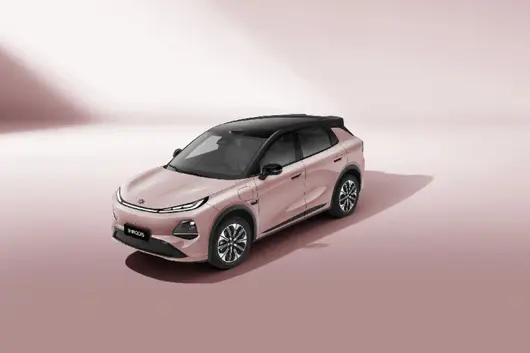

2026 has already passed the halfway mark, and the bell for the commercial vehicle industry's mid-year assessment has officially rung. In this complex stage where industry sales volatility is intensifying and structural differentiation is deepening, Foton Motor has concluded the first half with a resounding report card that broke through against the trend. Latest data shows Foton Motor sales from January to June exceeded 360,000 units, a year-on-year increase of 10.1%. Not only completing the half-year closure in a leading posture, it also demonstrated the dual advantages of strategic resolve and tactical breakthroughs for leading enterprises during cycle traversal.
Analyzing this report card in detail, sales growth is by no means extensive scale stacking, but the result of three forces: technological innovation, structural optimization, and global layout resonating in sync. January to June, Foton new energy sales were 59,000 units, up 17.9% year-on-year; heavy-duty truck sector sales exceeded 90,000 units, up 35.3% year-on-year, outperforming the industry average; overseas exports continued to surge, with 109,000 units sold in the first half, a significant 38.9% increase year-on-year. New energy, heavy-duty trucks, and overseas markets—the 'three major drivers'—advanced together, not only forming the core engine for Foton's first-half sprint, but also reflecting the deeper logic of this enterprise transitioning from traditional manufacturing to tech-driven, from domestic market to global footprint, and from product competition to value competition.

See Through Cyclical Haze, Reshaping the Commercial Vehicle Value Benchmark
The electrification of commercial vehicles is a long journey from policy guidance to market-driven. When the pain of subsidy withdrawal has not completely faded and charging infrastructure is still in the deployment phase, many enterprises chose to watch and slow down. However, Foton Motor's June new energy sales near 13,500 units, a year-on-year figure of 62.5%, delivered a clear signal to the industry: the surge of new energy commercial vehicles is not 'waited for', but 'fought for'.
The source of this confidence is Foton's nearly 20 years of strategic resolve in the new energy field. On the technical route, Foton long ago escaped the speculative thinking of 'betting on a single technology', building a complete technology matrix with pure electric, hybrid, and hydrogen fuel cell lines running in parallel. In June, on the urban logistics track, Foton Aumark Z, leveraging the Morning Star pure electric light truck exclusive platform and energy efficiency breakthroughs from the EASYCO Three-Electric system, reshaped user cognition boundaries of new energy light trucks with long range and low energy consumption; in the public service sector, Foton Ousheng new energy buses were batch delivered in places like Tianjin and Shenyang, providing stable and reliable transport capacity guarantee for zero-carbon travel under high-temperature weather; in core sub-segments like long-distance trunk lines and cold chain transport, Foton Heavy Trucks continuously realized the development philosophy of scenario-based product definition, answering the industry question of 'Can new energy handle extreme working conditions' with actual performance.
More importantly, Foton's new energy sales leadership has gradually shifted from policy dividends to value-driven. Relying on deep technical foundation accumulated in fields such as vehicle integration, electric drive, electronic control, power battery, and hydrogen fuel cells, Foton independently developed and firmly grasped 'Three-Electric' core technologies. Foton is pulling the competitive advantage of new energy commercial vehicles from 'purchase subsidies' back to the commercial essence of 'Total Cost of Ownership (TCO)'. When TCO advantages begin to appear, new energy commercial vehicles are no longer just an environmental mandatory question, but become the optimal solution after users calculate carefully. The sales breakthrough in June is the clear testament that this inflection point is near.
Accelerating Heavy Truck Structure Upgrade, Defining New Rules for Existing Market Competition
The heavy-duty truck market, a sub-sector with the highest technical content and fiercest competition in the commercial vehicle industry. In June, against the backdrop of industry overall demand tending towards rationality, Foton Heavy Trucks achieved a 25.9% year-on-year growth with a monthly sales volume of 14,300 units. Supporting this result was not the short-term stimulation of a price war, but a deep revolution surrounding product structure, power routes, and user value.

In the first half of the year, Foton's gas traction vehicle market performance was particularly outstanding. Facing the market opportunity of the widening oil-gas price spread, Foton Auman completed product layout and capacity ramp-up with extremely fast response speed. The strategic logic behind this is clear and pragmatic: When freight rates are low and diesel costs are high, squeezing profit margins, the natural gas route, with tangible fuel cost advantages, becomes the rational choice for users to reduce costs and increase efficiency. What Foton did is to use reliable products to turn this economic accounting into redeemable revenue.
In the high-end heavy-duty truck sector, Foton Auman is redefining the industry's value benchmark with an ultimate challenge. In the recently concluded 'Auman Galaxy 9 Global All-Around Fuel Efficiency Challenge', Auman Galaxy 9, driven by frontline users under strict operating conditions of real cargo, real roads, real scenarios, achieved a standout fuel consumption result of 30.3L per 100km. Achieving this result was a systemic achievement of precise powertrain matching, whole-vehicle aerodynamic optimization, and lightweight design synergistic effort, reflecting Foton Auman's capability leap in transforming years of technical accumulation into users' real returns. In the current moment when the heavy-duty truck industry shifts from price competition to value competition, true high-endization is not the stacking of configurations, not the packaging of concepts, but rather, in the operating scenarios users care about most, fulfilling the promise of extreme efficiency with hard-hitting data. Foton Auman is proving with action: The value of high-end heavy trucks is ultimately defined by the user's operational ledger.
From Export Trade to Systematic Leap of Deep Global Cultivation
Chinese commercial vehicle going overseas is shifting from scattered product output to systematic global layout, while Foton Motor is the most representative practitioner in this trend. January to June, Foton overseas export sales exceeded 109,000 units, up 38.9% year-on-year. But more worthy of attention than numbers is the new paradigm of globalization demonstrated by export structure optimization and localized deep cultivation.
Since the beginning of this year, Foton's overseas layout has continued to welcome the harvest period. In Southeast Asia, achieving localized manufacturing through local factories in Thailand etc., deeply integrating 'Made in China' with 'Made in ASEAN', effectively avoiding trade barriers and shortening delivery lead times; in South Asia, over 100 buses were batch delivered, pushing Chinese bus brands to achieve scaled implementation in local public transport markets. In Africa, Foton completed batch delivery of 1,000 heavy-duty truck orders, providing reliable transport support for local infrastructure construction and livelihood security; on this basis, Foton's heavy commercial product system conducted comprehensive custom tuning for complex African road conditions, balancing power performance and operating costs, accurately adapting to high-intensity operation scenarios such as cross-border logistics and mine transport. Meanwhile, new energy products are accelerating to become Foton's new business card for going overseas: Foton Kaven Automotive has successfully penetrated European 15 countries and high-potential markets like Australia and New Zealand... Foton is transforming the technical first-mover advantage of the domestic new energy industry into the output capability of global green transportation solutions.

Supporting the continuous leading of overseas performance is a full-value network ranging from manufacturing to service, from parts to finance. 32 overseas local factories, over 1,200 overseas sales networks, over 1,500 overseas service networks — the existence of this network makes Foton's globalization no longer just a one-time transaction of 'selling cars out', but 'getting the cars running, and keeping users staying' deep operation. When the industry is still competing on export volume, Foton has entered the system competition of the globalization 3.0 stage, and continuously leading export data is the most direct projection of system capability.
Start with the End in Mind, Foton's Half-Year Report and Full-Year Strategy
The reverse-leading January to June sales volume has drawn a powerful period for Foton Motor's first half. But the significance of this report card far exceeds the numbers themselves. In the new energy field, it verifies that the paradigm shift from policy-driven to value-driven is accelerating fulfillment; in the heavy truck market, it demonstrated the decisive role of structure upgrade and product definition ability in existing market competition; in the overseas map, it marks that Chinese commercial vehicle globalization is moving from product output to the deep water of system deep cultivation.
Mid-year has passed, the full-year schedule enters the second half. With the continuous release of the effect of national policies for stabilizing growth, infrastructure investment warming up, and overseas market demand expanding steadily, Foton Motor is standing at the starting point of a new round of growth cycle. New energy breakthrough, heavy truck breakout, overseas voyage — the strategic pattern of three arrows firing together is clearly visible.
What is more important than completing goals is the verification of direction. When a company continuously proves the accuracy of its strategic judgments with performance, the market should give not only attention, but also a re-examination of its industry leading value. Foton Motor, with every sales breakthrough, is writing its own survival rules and growth philosophy for the commercial vehicle industry crossing cycles.
(This article is provided by the enterprise).
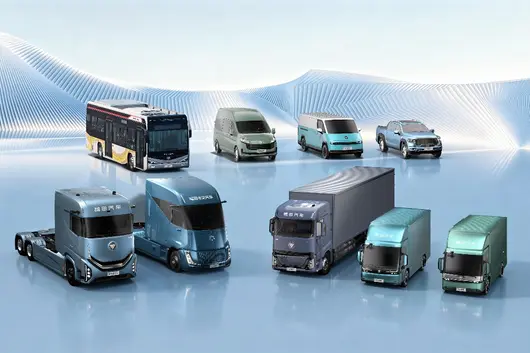

If there is anything in the September car market that keeps competitors awake at night, Geely's report card certainly counts as one: 292,168 units in a single month, new energy vehicles account for 65%, and overseas exports surged 162% year-on-year. What is even tougher is that it is not one car fighting alone—Zeekr, Lynk & Co, Galaxy, and China Star are advancing on four fronts, recording double increases in both year-on-year and month-on-month figures for 7 consecutive months. BYD competitors should be careful; Geely is broadening the frontline with One Geely. Next, from three dimensions of brand, overseas, and technology, we will see how it invades deep waters.

1. 290,000 units is just the opening; Geely invades deep waters
September sales were 292,168 units, up 7% year-on-year, up 8% month-on-month. At first glance, numbers are peaking; in detail, it is a structural shift. January–September cumulative 2,235,481 units, setting a historic high for the same period, up 3% year-on-year; new energy cumulative 1,326,364 units, up 14% year-on-year. September new energy 190,868 units, up 16% year-on-year, accounting for 65%, setting a historic single-month new energy sales record. This means Geely no longer relies solely on fuel vehicles, but fuel, hybrid, pure electric, and high-end pure electric are all firing together. China Star sold 105,980 units in September, holding the base; Geely Galaxy sold 130,479 units, carrying mainstream new energy; Lynk & Co and Zeekr attack upwards, raising price bands and brand momentum together. My judgment is that scale is the moat, structure is the siege hammer. More noteworthy is overseas: September exports 106,685 units, new energy exports account for 69%. Domestic market competes on configurations, overseas market competes on systems; Geely advances on both fronts simultaneously. 290,000 units is not the climax, more like a starting whistle.


2. Three brands rise together, who is carrying the growth banner?
Zeekr carries the premium flag. September deliveries were 37,216 units, up 104% year-on-year; January to September deliveries totaled 288,404 units, up 101% year-on-year. Zeekr 9X firmly holds first place in sales, reputation, and resale value in the 500,000+ large SUV market; Zeekr 7X delivered over 10,000 units for 3 consecutive months, with global cumulative sales exceeding 200,000 units. The 2027 model Zeekr 7X will launch in Q4 this year, adding an 85kWh Gold Brick battery version. Lynk & Co carries the flag for personality and sportiness. September sales were 18,493 units, up 9% month-on-month, with 17,039 new energy units; January to September cumulative sales were 196,117 units, with 140,209 new energy units. Lynk & Co 08 EM-P cumulative global deliveries near 200,000 units, Lynk & Co 06 global sales exceed 300,000 units, Lynk & Co 07GT deliveries broke 10,000 units, taking the first place in the Chinese station wagon market share in 26 provinces/cities in August. The all-new Lynk & Co 20 had 14,633 major orders within 1 hour of launch. Geely Galaxy carries the flag for mainstream volume. September 130,479 units, Xingyuan 60,871 units, Xingjian 7 22,059 units, E5 12,695 units. Galaxy Battleship 700 pre-sale broke 10,000 units in 9 minutes, broke 43,900 units in 60 minutes. China Star holds the top spot in fuel vehicles. Luxury, premium, mainstream, and base; four cards played separately, yet forming one Geely.


3. Going overseas is not just selling cars, it is opening factories there
September overseas exports were 106,685 units, up 162% year-on-year, exceeding 100,000 units for 4 consecutive months; January to September exports were 797,670 units, up 169% year-on-year. New energy exports were 73,664 units, surging 403% year-on-year, accounting for 69%; January to September 484,086 units, surging 531% year-on-year, accounting for 61%. Behind this data is an upgrade in Geely's overseas logic: not just selling products, but building channels, manufacturing, and building brands. Zeekr 9X shipped to the UAE, with a local price exceeding 800,000 RMB; Zeekr 009 retained the pure electric MPV championship title in Thailand and Malaysia. Lynk & Co secured front positions in premium niche markets in Ecuador, Tunisia, and Mexico. Geely brand continues to penetrate Australia, Panama, Brazil, and the UK. On September 15, the first Brazil-localized manufactured Geely Galaxy Xingjian 7 went off the line, and the local ecosystem system started to operate. Geely also signed with KKS Mobility in Cyprus and reached a Lynk & Co European commercial cooperation agreement with Volvo, from January 2027 Volvo will become the exclusive distributor for Lynk & Co in Europe. At the technology level, Qianli Haohan ADAS is carried by a million units, with an activation rate of 93.8%; Geely Smart Charging single gun peak 2250 kW, battery cycle life improved by 20%. Chinese car companies going overseas fight not for tickets, but for the ability to take root in the map.
Conclusion: Geely in September was not a one-time surge, but a centralized release of system capabilities. Three-brand synergy, new energy growth, global rooting, and AI technology implementation give it the qualification to set higher targets. For competitors like BYD, the real pressure is not 290,000 units, but that Geely has already found a methodology for sustainable growth. The next breakout point may still be overseas.