


首頁照護

搜尋歷史
熱門搜尋
經銷商登入 / 註冊

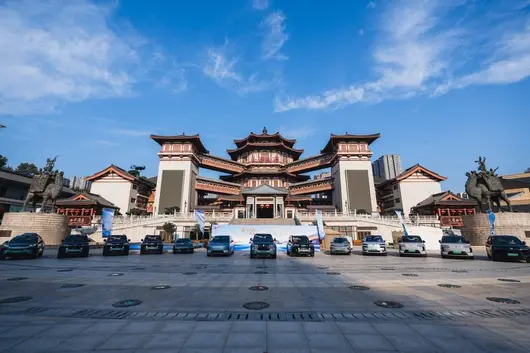
Recently, BYD launched the "Fast Charging Silk Road Smart Journey 10,000 Li" major theme event. The convoy officially departed from the starting point of the ancient Silk Road, Xi'an Great Tang West Market, passing through Bozhou, Jingdezhen, Hangzhou, and Wuyishan, four major Silk Road intangible cultural heritage nodes, finally arriving in Shenzhen to complete the going global ceremony. The event covered 7 major fast-charging experience stations and 2 professional race tracks, taking the millennium-old Silk Road civilization as the narrative background to verify core technologies such as BYD Fast Charging and Divine Eye Intelligent Driving on-site, and centrally showcase its whole industry chain global expansion layout.
Double Silk Road Narrative: From Product Export to Technology Export
The route design of this event is full of meaning. The ancient Silk Road is divided into two channels: the overland Silk Road and the Maritime Silk Road. The overland Silk Road started from Xi'an and went straight west to Rome. The Maritime Silk Road set sail from Quanzhou and arrived in Rome. Four types of Chinese scenery and goods—Bozhou aromatic medicine, Jingdezhen porcelain, Hangzhou silk, and Wuyishan tea—were continuously sold overseas through these two channels, forging the Chinese product card that was renowned worldwide a thousand years ago.
This time, the BYD convoy departed from Xi'an, visiting the four major intangible cultural heritage lines along the way, protecting traditional Chinese culture with the power of the brand. After the convoy arrived at Shenzhen Port, a going global ceremony was held, symbolizing the batch export of new energy vehicles, fast-charging technology, and whole vehicle manufacturing systems overseas. The two Silk Roads echoed each other from head to tail, completing the era upgrade from "commodity export" to "whole industry chain technology export".
BYD stated that current "going global" has been upgraded from single product export to a systematic output of "technology + infrastructure + industry". It is reported that BYD has established its first fast-charging station in Europe, built exclusive recharging networks in Uzbekistan, localized production bases in Thailand and Brazil, and brought the "PV-Storage-Charging" integrated power station solution to Central Asia. This "systematic going global" model makes Chinese new energy technology no longer isolated products, but solutions integrated into local energy structures and industrial upgrades, achieving a qualitative change from "selling products" to "co-building ecosystems".
Technical Testing: Hard-core Verification at 7 Major Fast-Charging Stations and 2 Race Tracks
The event set up 7 major fast-charging check-in points throughout, including Xi'an Lintong Service Area, Bozhou Yingquan Service Area, Hefei Grand Theatre, Shengzhou BYD Race Track, Wuyishan Highway Exit Station, Longkangwei Service Area, etc., covering multiple scenarios such as expressway trunks, city business districts, professional venues, mountain expressways, and coastal expressways.
Test data shows that with the support of the 2nd Generation Blade Battery, BYD Fast Charging standard charges to 70% in 5 minutes and to 97% in 9 minutes; in a low-temperature environment of -30°C, recharging time increases by only 3 minutes. The convoy completed low-temperature fast charging tests in the Wuyishan mountain area, conducted continuous recharging process verification at highway service areas, and performed fast recharging tests after intense driving at 2 major professional race tracks, with fast charging efficiency remaining stable.
As of now, BYD has laid out 7,018 fast-charging stations nationwide, covering 325 cities, with coverage in highway service areas, city business districts, and race tracks. "Follow Fast Charging to Tour China" is gradually being implemented.
Regarding intelligent driving, the Divine Eye system underwent long-distance actual tests on both highway sections and Wuyishan mountain roads. Following cars, lane changing, entering/exiting ramps performed stably. Mountain road curve speed control and lane keeping were relatively smooth, effectively reducing long-distance driving fatigue.
From Products to Technology: A New Silk Road Narrative for Chinese Intelligence
Industry analysis believes that BYD's Silk Road theme event this time is essentially recounting China's global story through industrial practice. Bozhou aromatic medicine, Jingdezhen porcelain, Hangzhou silk, and Wuyishan tea correspond to today's batteries, new energy vehicles, PV-storage-charging, etc., the "New Three Items", with completely different connotations: previously it was product export, today it is technology export and industrial chain export.
From Xi'an to Shenzhen and then to South Asia, this route spans tens of thousands of miles across mountains and rivers. It is both a return to civilization and a declaration of strength for China's new energy industry going global. When ancient Silk Road aromatic medicine, porcelain, silk, tea meet the "New Three Items" going global, China is reshaping a new global sustainable development order with green technology as the link.
It can be said that BYD's excellence lies not only in product sales and technical parameters, but also in its systematic capability to drive Chinese manufacturing intelligence globally. From "product export" to "technology export", BYD is walking a longer and more solid new era Silk Road.

喺馬來西亞嘅 SUV 市場,好多買家喺揀車嘅時候都會拿本田 WR-V 同豐田 Corolla Cross 做比較。呢兩款車喺價位同定位上都幾接近嘅,今日我哋就從多個方面做一個詳細嘅比較,幫你節省做功課嘅時間。
本田 WR-V 喺馬來西亞嘅 OTR 售價係 RM 89,900 - 107,900,合共 4 個版本,包括 2023 1.5L V(RM 99,900)、2023 1.5L E(RM 95,900)、2023 1.5L S(RM 89,900) 等。
豐田 Corolla Cross 喺馬來西亞嘅 OTR 售價係 RM 133,800 - 148,800,合共 3 個版本,包括 2026 HEV 1.8L GR Sport(RM 148,800)、2026 HEV 1.8L Standard(RM 140,800)、2026 1.8L Standard(RM 133,800) 等。
睇下價錢,本田 WR-V 嘅起步價確實比豐田 Corolla Cross 平咗 RM 43,900。如果你預算有限,本田嘅入門版已經可以滿足日常需要。但都要留意,平嘅嗰幾千蚊,可能喺配備上會有取舍,具體要睇你嘅需要。

本田 WR-V 搭載 1.5L 4-cyl,馬力 105 hp。官方油耗 6.0 L/100km。
豐田 Corolla Cross 搭載 1.5L Turbo,馬力 140 hp。官方油耗 7.0 L/100km。
动力方面,豐田 Corolla Cross 嘅 1.5L Turbo 比本田 WR-V 嘅 1.5L 4-cyl 多咗 35 匹馬力。不過日常喺市區開,兩款車嘅動力都夠用,唔會覺得唔夠力。

本田 WR-V 採用 FWD 驅動方式。
豐田 Corolla Cross 採用 FWD 驅動方式。
兩款車嘅驅動方式一樣,都係 FWD,日常駕駛感受唔會有太大區別。

本田 WR-V 保修 5 年/無限制里程,保養間隔 每 10,000km 或 6 個月。
豐田 Corolla Cross 保修 5 年/無限制里程,保養間隔 每 10,000km 或 6 個月。
兩款車嘅保修條件一樣,呢方面唔使糾結。實際保養成本仲要睇品牌嘅服務網絡同零件價格,建議去車友群問下真正車主嘅經驗。

本田 WR-V 同豐田 Corolla Cross 都係馬來西亞市場嘅主流揀法,適合家庭使用、日常通勤。如果你更睇重品牌口碑同二手價,可以優先考慮口碑更好嗰一款;如果你更在意性價比同配備,就揀配置更豐富嗰款。最終都係建議兩款都去試駕,親身體驗先係最緊要。

總括嚟講,本田 WR-V 同豐田 Corolla Cross 都係馬來西亞市場幾好嘅車型。揀邊一輛,關鍵仲要睇你嘅個人需求同預算。建議大家做好功課,多比較幾間車行嘅報價,再去試駕先做最終決定。買車係件大事,花少少時間做功課絕對唔會錯。


