首頁烏江

搜尋歷史
熱門搜尋
經銷商登入 / 註冊

喺馬來西亞嘅 SUV 市場,好多買家喺揀車嘅時候都會拎豐田 Corolla Cross 同福特 Everest 嚟做比較。呢兩款車喺價位同定位上都幾接近,今日我哋就從多個方面做個詳細比較,幫你省咗做功課嘅時間。
豐田 Corolla Cross 喺馬來西亞嘅 OTR 售價係 RM 133,800 - 148,800,一共有 3 個版本,包括 2026 HEV 1.8L GR Sport(RM 148,800)、2026 HEV 1.8L Standard(RM 140,800)、2026 1.8L Standard(RM 133,800) 等。
福特 Everest 喺馬來西亞嘅 OTR 售價係 RM 266,338 - 430,838,一共有 6 個版本,包括 2026 3.0T 4WD Platinum(RM 430,838)、2026 2.0T 4WD Platinum(RM 348,838)、2026 2.0T 4WD Sport(RM 316,838) 等。
從價錢嚟睇,豐田 Corolla Cross 嘅起步價確實比福特 Everest 平咗 RM 132,538。如果你預算有限,豐田嘅入門版已經可以滿足日常需求。但都要留意,平嗰幾千蚊,可能喺配備上會有取舍,具體要睇你嘅需求。

豐田 Corolla Cross 搭載 1.5L Turbo,馬力 140 hp。官方油耗 7.0 L/100km。
福特 Everest 搭載 2.5L Diesel,馬力 187 hp。官方油耗 8.5 L/100km。
動力方面,福特 Everest 嘅 2.5L Diesel 比豐田 Corolla Cross 嘅 1.5L Turbo 多咗 47 匹馬力。不過日常喺市區開,兩款車嘅動力都夠用,唔會覺得唔夠力。

豐田 Corolla Cross 車身長 4400 mm,後備箱 400 L。
福特 Everest 車身長 4400 mm,後備箱 400 L。
兩款車嘅尺寸幾乎一樣,車內空間分別唔大。呢個級別嘅車,日常使用完全夠用。

豐田 Corolla Cross 保修 5 年/無限里程,保養間隔 每 10,000km 或 6 個月。
福特 Everest 保修 3 年/100,000km,保養間隔 每 10,000km 或 6 個月。

總括嚟講,豐田 Corolla Cross 同福特 Everest 都係馬來西亞市場幾唔錯嘅車型。揀邊一輛,關鍵都要睇你個人需求同預算。建議大家做好功課,多比較幾間車行嘅報價,再去試駕做最終決定。買車係件大事,花少少時間做功課絕對唔會錯。


In the Malaysian SUV market, many buyers often compare Honda CR-V and Mazda CX-9 when choosing a car.
The Honda CR-V OTR price in Malaysia is RM 178,200 - 195,900. There are a total of 4 versions, including 2026 e:HEV 2.0L 2WD RS (RM 195,900), 2026 1.5T 4WD V (RM 181,900), 2026 e:HEV 2.0L 2WD E (RM 178,200), etc.
The Mazda CX-9 OTR price in Malaysia is RM 328,810 - 345,810. There are a total of 2 versions, including 2023 2.5T 4WD (RM 345,810), 2023 2.5T 2WD (RM 328,810), etc.
From a price perspective, the Honda CR-V starting price is indeed RM 150,610 cheaper than the Mazda CX-9. If your budget is limited, Honda's entry-level version can already meet daily needs. But you should also note that the few thousand cheaper price might involve trade-offs in features, depending on your specific needs.

Honda CR-V Body length 4500 mm, Trunk 450 L.
Mazda CX-9 Body length 4500 mm, Trunk 450 L.
The dimensions of both cars are almost the same, and the interior space does not differ much. Cars in this class are completely sufficient for daily use.

Honda CR-V uses FWD drive mode.
Mazda CX-9 uses FWD drive mode.
Both cars have the same drive mode, both are FWD, driving experience will not differ too much in daily use.

Both Honda CR-V and Mazda CX-9 are mainstream choices in the Malaysian market, suitable for family use and daily commuting. If you value brand reputation and resale value more, you can prioritize the one with better reputation; if you care more about value for money and features, then choose the one with richer configuration. Ultimately, we suggest test driving both, personal experience is the most important.

In general, both Honda CR-V and Mazda CX-9 are quite good models in the Malaysian market. Choosing which one depends mainly on your personal needs and budget. We suggest doing your homework, comparing quotes from multiple car dealerships, and then test driving to make the final decision. Buying a car is a big matter, spending some time on research will never be wrong.


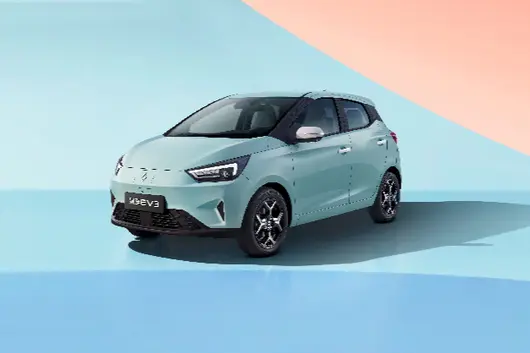
May 26, 2026, Jiangling Group New Energy's brand new Ezhi EV3 officially launched globally. "We keep the complexity to ourselves and give the Easy to users." Wang Jinhua from Jiangling Group New Energy Marketing Department, the main speaker of the launch event, began in the identity of an ordinary mother, narrating the daily troubles of five real users—difficulty parking, small space, safety anxiety. This pragmatic thinking responds to a core industry proposition: What is true globalization? Jiangling Group New Energy gave a clear answer with the new Ezhi EV3—deep localization is globalization.

I. Left and Right Driving Together: Globalization Does Not Require Choosing Sides
The most strategically valuable signal from this launch event is that the new Ezhi EV3 achieved simultaneous development, launch, and delivery of left-hand drive and right-hand drive versions, directly adapting to traffic regulations in the vast majority of countries and regions worldwide, becoming the core support for Jiangling New Energy's globalization.
This is not common in same-class models. Most car companies first launch left-hand drive, then spend months or even a year adapting to right-hand drive markets. Jiangling Group New Energy chose simultaneous development and production of left and right-hand drive models, meaning its product platform had a global underlying architecture from the very beginning of the project.
The right-hand drive market is precisely the important incremental space for Chinese new energy vehicles going global. Taking Southeast Asia as an example, new energy policies in countries such as Thailand and Malaysia continue to increase, and right-hand drive is the legal traffic standard. The new Ezhi EV3 achieved simultaneous native development and mass production launch of left and right-hand drive models, designed according to global regulations at the platform architecture stage. Dealers can sell directly upon receiving the cars, greatly improving delivery efficiency and market competitiveness. As Nie Xiaoyong, General Manager of the Overseas Business Division, said: "JMEV is not about short-term trend following, but about determining to do long-term business." Simultaneous left and right-hand drive is not just a technical action, but a strategic declaration. New Ezhi EV3 global simultaneous launch: both left and right-hand drive models launched together, breaking the global market with "Easy".
The new Ezhi EV3 claims "over 100 real upgrades". Disassembling its product definition, all revolve around five "Easy"s: Easy Joy, Easy Drive, Easy Park, Easy Use, Easy Fun. These five dimensions correspond to five types of real users—Xiaojuan who pursues fashion, Lao Chen who values durability, Lily who fears parking, Frank who needs large space, Emily, a working mom seeking relaxation. This is exactly the truest summary of global small EV demand.

Taking Easy Park as an example. The new car is equipped with 540° panoramic image, automatic emergency braking in reverse, and a turning radius of only 4.9 meters, solving parking pain points in old residential communities, school gates, and narrow European alleys. It is the only in its class equipped with the 3rd Gen WCBS Brake-by-Wire System, with a 100km/h braking distance of 39 meters and a response speed at 150 milliseconds level. This configuration usually appears in models in the 150,000 yuan class, while the new Ezhi EV3 downsizes it to this level. The logic is simple: Safety shouldn't be tiered.

Another highlight is "Space Utilization Rate". 5-door 5-seater layout, 21 storage spaces in the whole car, maximum 1000L capacity after rear seats folded—86.59% space utilization rate means this car can not only commute but also undertake weekend trips, picking up/dropping off children, and even small hauling. For many overseas families who have only one car, this point is crucial.
Other core configurations: 30.24kWh LFP battery, CLTC range 330km; 50kW liquid-cooled permanent magnet synchronous motor, 0-50km/h acceleration 4.5 seconds; Lifetime warranty on three major components for first owners. Regarding intelligence, standard 5-inch LCD instrument cluster and 10.1-inch central control screen across all models, access to Doubao AI Voice Large Model, support for CarPlay, online navigation, and audio/video entertainment. Mobile app remote vehicle control supports one-click unlock, air conditioning on/off, battery pack heating and other functions, global standard.

III. Deep Localization is Globalization: From Going Out to Rooting In
Flipping through Jiangling Group New Energy's strategic materials, you will find it rarely shouts "disrupt the industry". Instead, Nie Xiaoyong repeatedly emphasized three "localizations" on the launch event: Product localization, Manufacturing localization, Team localization. European users value range and charging convenience, Southeast Asian users care about air conditioning cooling speed and ground clearance, Middle Eastern users need stronger high-temperature resistance performance. The new Ezhi EV3 will be tuned with exclusive chassis and performance adapted according to different regions. This "menu-based" development is the necessary path from "Going Out" to "Going In".

Nie Xiaoyong, General Manager of Jiangling Group New Energy Overseas Business Division
Data also confirms the effectiveness of this strategy. As of May 2026, Jiangling Group New Energy's overseas business has expanded to over 40 countries and regions, covering five continents. Exports grew positively for three consecutive years, with a year-over-year growth of 203% in 2025. Overseas orders from January to May this year already exceeded the full year sales of 2024.
More noteworthy is the channel and manufacturing strategy. Jiangling Group New Energy did not blindly pursue direct sales, but deeply cooperated with local dealers, building relatively complete sales and after-sales networks in Southeast Asia, the Middle East, and Africa. Core parts suppliers have already laid out factories overseas, and will promote KD localization production in the future. This means the global expansion of the new Ezhi EV3 is not "whole vehicle trade", but taking the supply chain, service standards, and even manufacturing capabilities out together. This model has high short-term investment but strong long-term risk resistance.
Conclusion:
China's new energy vehicle exports have been global No. 1 for three consecutive years, with an export volume reaching 2.615 million in 2025. Behind the brilliant data, the industry's true test has already arrived: How to truly move from "selling globally" to "integrating globally"?
The global simultaneous launch of the new Ezhi EV3 gave a resounding answer: Deep localization is globalization. Not relying on gimmicks, relying on reliability; not comparing specs, comparing experience; not betting on explosive growth, betting on durability. Left and right-hand drive synchronization breaking through global access, 100+ upgrades solving real pain points, deep localization achieving long-term symbiosis—this is Jiangling Group New Energy's best interpretation of "Globalization". For Jiangling Group New Energy, the new Ezhi EV3 is not just a car launched globally simultaneously, but a key: it opens not just the market doors of over 40 countries, but also the key door for Chinese car companies moving from "Product Output" to "Value Output".
True globalization is never about selling the same car to the whole world, but about putting every local user in mind. Achieving a global landscape through deep localization—this is the answer Jiangling Group New Energy gave to the world with an Ezhi EV3.