首頁柠乐煲姜是香港独有

搜尋歷史
熱門搜尋
經銷商登入 / 註冊

今年 1 至 5 月國內汽車市場累計上市嘅全新車型數量達到咗 542 款,折算落來,平均每日就有 3.6 款新車官宣發佈。
奇瑞汽車執行副總裁李學用直言:「汽車唔係快消品,佢關係到係千萬家庭嘅安全,擔住係全球唔同路況、氣候、習慣嘅考驗。有啲時間,我哋真係唔敢省。」嵐圖董事長盧放公開表示:「速成車」係一個被「嚴重誤讀」嘅概念,開發時間短,唔等於速成車。評判「速成車」嘅分水嶺,喺驗證係咪完整。

當行業焦慮喺「速成車」三個字上搵到出口,奇瑞同嵐圖關係到造車速度嘅討論就咁有咗另一番意義。車越造越快,驗證嘅時間越壓越短,這係擺喺檯面上嘅事實。我哋更想知嘅係,「快」入面藏緊幾多做唔足嘅功課,「慢」入面又係咪真係有真功夫。講到底,這場爭議更值得追問嘅,唔係快與慢邊對邊錯,而係車海戰術之下,速度同質量,究竟有冇兼得嘅問題。
速度同質量,冇咁好平衡
有些事情,理論上成立,現實入面總係避唔開要打少少折扣,這亦係整個行業對「速成車」焦慮嘅原因之一。過去一台車從立項到上市,普遍要三至四年,這幾年被一路壓到十八個月,甚至更短。時間從邊度省出嚟?平台化、模塊化能省掉一部分重複開發,仿真測試成熟咗,能省掉一部分純物理試驗。這些係技術進步,看上去係非常合理。但問題係,省時間嘅底線好難去驗證。
2026 中國汽車論壇上,北京現代總經理李鳳剛就講過,有啲品牌為咗搶上市,直接刪減整车開發入面必須嘅設計驗證(DV)同量產驗證(PV)兩個環節,未驗證完就推上市。兩個環節,一個查方案行唔行,一個查量產穩唔穩,缺一不可。可一旦只做一步,生產一致性就差咗,質量就極唔穩定。後果就係,客戶從消費者變成咗試車員。

嵐圖盧放認為「速成車」被誤讀咗,開發時間短唔等於速成車,真正嘅標尺係驗證完唔完整。這個觀點本身係冇問題,確實有些車週期雖短,把該做嘅驗證也都做足。可現實入面,恰恰係「驗證完唔完整」呢件事最容易被糊弄。當整個行業都係喺度拿速度當成績,仲有幾個能老老實實把每一步驗證跑完?盧放講嘅「高效車」,理論上成立,但一步唔少嘅去驗證,考驗嘅係車廠嘅底線。而底線兩個字,恰恰係車海戰術之下,最難堅守嘅嘢。
喺理論可能同現實存在一定割裂嘅情況下,奇瑞「唔敢省時間」嘅態度無疑更令人踏實。這一點,我哋看奇瑞風雲 T7 這款車嘅研發流程就能驗證。2 年策劃,3 年正向研發,這款車前後用咗 5 年時間先走向市場。前兩年全球調研覆蓋 15 個典型國家,完成 5000 多份用戶問卷,把唔同市場嘅用車習慣拆解成 80 多項適應細節。

後頭 3 年,81 台車喺全球同步跑,從西伯利亞 -40℃嘅極寒到中東 55℃嘅暴曬,從印尼嘅高濕酸雨到墨西哥嘅鵝卵石顛簸路面,全部跑完。車累計測試里程超 600 萬公里,僅耐久專項實測就達 145 萬公里。這唔係喺實驗室入面跑,係喺全球各地真實嘅路況上跑。
目前來看,技術的確可以縮減造車週期,但用時間換可靠性,用全球驗證換用戶信任,眼家還係更令人放心嘅條路。
快與慢,唔係「單選題」
國內車市入面,幾乎有邊個敢真係慢落嚟。價格戰一輪接一輪,新車一波接一波,慢一步,可能連賽道都入唔去。所以「提速」對大多數車廠嚟講,係唯一選擇。而事實上,喺呢個技術快速發展,講底線同講效率嘅時代入面,快與慢本身就唔應該係「單選題」。講得直白少少,技術嘅系統性躍升,讓造車嘅效率提升咗,這係唔可否認嘅事實。但喺車廠而言,快同慢嘅分寸點樣把握,係更值得思考嘅問題。
李學用講「有啲時間唔敢省」,呢句話其實好有意思。這係一句留有「餘地」嘅說話,我哋看奇瑞嘅產品煥新策略,可以發現,佢既不執著於「快」,亦冇完全死磕「慢」。客觀嚟講,這係一種「雙軌」思路,風雲 T7 呢種要扛品牌、要打全球市場嘅車,慢慢做;艾瑞澤 8 PRO 呢種年度改款、QQ3 呢種經典 IP 嘅電動化煥新,快速做。

點解呢?後一類車,平台早就成熟,三電系統跨車型複用,核心零部件跑過多輪市場,驗證嘅重點就從「從零驗證」變成咗「變化點驗證」。這裡省掉嘅係重複勞動,唔係底線。換句話講,奇瑞唔係唔追求快,佢只係把「快」放喺已經跑通嘅地方,把「慢」留俾真正唔可以省嘅地方。所以,奇瑞可以喺 2026 全年規劃 17 款,亦能沉住氣花 5 年時間,就係為咗驗證風雲 T7 嘅可靠性。
當然,想把握好快與慢嘅分寸,車廠是否具備一定嘅底氣非常關鍵。等於既要扛得住慢帶來嘅節奏壓力,唔被價格戰拖垮;又要有成熟平台、複用能力,喺快嘅同時,質量唔打折扣。正如奇瑞,佢喺全球化市場上已經拿到咗比較唔錯嘅成績。海外賺到嘅錢反哺國內研發,再用全球嘅路況同氣候去驗證車。唔使靠砍研發時間保利潤,自然也就敢喺唔該省嘅地方,把時間花足。

講到底,快與慢唔應該係一道非要二揀一嘅題,真正嘅難點係分寸。喺呢個方面,嵐圖盧放嘅技術帶動速度嘅觀點無錯,但奇瑞嘅「雙軌制」策略,更值得行業借鑑。
爭議之後,行業焦慮點樣解?
對於整個行業嚟講,「速成車」確實令人焦慮。講白啲,「速成車」爭議嘅本質,唔係快慢,係資訊不對稱。北京現代總經理李鳳剛所講有人「刪減 DV(設計驗證)同 PV(量產驗證)關鍵環節,把消費者變成道路測試員」「只驗證一個階段,導致生產一致性差、質量波動大」,戳中嘅正係「速成車」背後嘅焦慮。而近期國內多家車廠產品爆出質量問題,不得不召回數萬輛到數十萬輛車嘅現狀,亦讓消費者對於「速成車」質量問題嘅擔憂達致頂點。
喺一天 3.6 款新車、誰都喺度喊「快」嘅環境入面,到底拿乜嘢,先至分辨出邊個係認真造車、邊個係偷工減料?這場關係到「速成車」爭議嘅背後,大家所焦慮嘅定係底線會否因此模糊嘅問題。畢竟,一旦底線模糊,最後係全行業一齊為少數人嘅偷懶買單。所以,爭議本身唔重要,重要嘅係,點樣解行業焦慮嘅問題。

目前來看,奇瑞嘅做法係比較有參考意義。這裡我哋可以看到三層比較核心嘅嘢,一係外部標準,奇瑞有 IATF 董事會成員身份,能直接參與全球汽車質量標準制定。這唔係花錢能買到嘅認證,需要企業喺技術體系、品控能力、全球化程度上達到國際一線水平先至可以進入。
二係可量化嘅結果,71 款車型全球五星、J.D. Power 四項自主第一,這些都係奇瑞「驗證冇白做」嘅硬證據。另外奇瑞仲有兜底機制,比如風雲 T7 承諾電池熱失控賠新車、智駕責任事故最高賠 500 萬,本質上係把「驗證唔到位」嘅風險,從消費者身上,轉回車廠自己頭上。呢種機制如果行業都能卷起嚟,「偷懶」嘅代價就被拉高咗。

三係虛實結合嘅驗證閉環,奇瑞嘅驗證體系唔係「用虛擬替代真實」,而係「用虛擬提高真實效率」。佢用仿真測試喺海量工況中篩掉絕大多數問題,實車路測做最終確認,路測采集嘅真實數據再反哺優化數字孿生模型,形成虛實互相校準嘅閉環。技術提高效率,但該花时间驗證嘅部分一點都唔省,這係值得行業學嘅嘢。
據悉,2027 年,純電車型可靠性路試要從 1.5 萬公里統一提到 3 萬公里。這個信息說明,時間依舊會成為驗證車輛可靠性嘅一個關鍵指標。行業嘅底線唔可以靠「自覺」去守,建立应有嘅「標準」,先至讓效率同質量真正得到平衡。呢場「速成車」嘅爭議,真正嘅價值,或許就係逼住整個行業,從前者,往後者挪一擰。
結語
呢場關係到「速成車」爭議入面,「快」或「慢」唔係關鍵,我哋最終都係要把關注點落喺效率同質量嘅平衡上。技術可以喺造車嘅某些環節入面提升效率,但有些時間唔可以因此被完全省略。汽車產業嘅終極命題,從來唔係越快越好,都唔係越慢越好,而係喺確保安全嘅前提下,讓消費者唔使為「信任」買單。

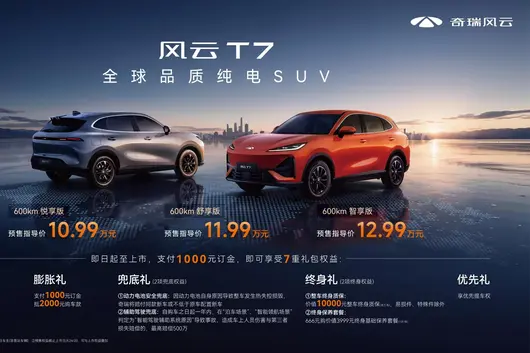
8 月 12 日,全球品質純電 SUV 風雲 T7 正式開啟預售,本次預售發布會以“慢工造好車,久等了”為主題,傳遞風雲 T7 秉持長期主義的造車理念,以全球標準打磨產品、紮實造品質全球車的堅守,也道出品牌對用戶長久期待的誠摯感恩。新車共推出 3 款版型,預售指導價格為 10.99 萬元至 12.99 萬元,且享受 7 重購車權益。


顏值剛需丨全球審美融合東方雅韻,長效質感在線
倚靠奇瑞 10 大全球設計中心,5000 餘名海內外用戶全程共創,同源車型 Lepas L6 亮相米蘭設計週收穫國際認可,風雲 T7 融匯全球審美,顏值持久在線。馭風前臉、風塑蠶綢車身、天際霞光尾門,平衡國際簡約審美與東方雅致氣韻。整車漆面標準同步海外嚴苛耐候要求,提供熾焰橙、山煙紫、雲粉米、流光銀、青竹灰、墨石黑 6 款配色。

內飾分溫暖黑棕、極夜黑曜兩種風格,雲翼環抱座艙搭配大面積軟包覆,鵝卵石懸浮揚聲器、菱格绗縫細節精緻;所有內飾皮革、密封條、塑料件不易硬化褪色,常年使用依舊整新耐看,兼顧顏值和質感。

風雲 T7 對標 2026 版 E-NCAP 五星安全標準設計、功能安全 ASILD 最高等級。2 年策劃,3 年研發,共投入 81 台專屬耐久車同步路試,整車累計測試里程超 600 萬公里,耐久專項實測 145 萬公里,同時針對東南亞雨季、中東高溫暴曬、印尼高濕等多種全球多地域進行極限實車試煉。
車身採用 80% 高強度鋼、18.84% 熱成型鋼打造九橫五縱籠式車身,採用 shotgun 結構、雙框副車架+Pack 防撞梁,鋼筋鐵骨保障乘員艙安全,前面 9 條 + 側面 6 條碰撞傳力路徑最大化分散碰撞能量,留存乘員生存空間;除此之外,還搭載了 9 個安全氣囊,包含 48L 雙腔遠端氣囊和後排側氣囊,360°全方位保護乘員安全。風雲 T7 全系搭載犀牛電池,超强 6D 防護構筑電池安全堡壘全方位抵禦擠壓、穿刺、衝擊,為動力電池構建多層立體安全屏障。面對夏季暴雨頻發,犀牛電池 IP68 防水為國標 96 倍,無懼雨季內澇、路面積水、戶外涉水,有效防止電池進水短路隱患。
基於全球多地域能源與氣候需求,風雲 T7 實現續航配置全系平權,全系標配大容量犀牛電池 65.05kWh,CLTC 600km 續航,實測續航 667+km,“反向虛標”解決焦慮。電池 30% 充到 80% 只需 20 分鐘,一杯咖啡時間即可再次出發。

風雲 T7 搭載全域一體化熱管理雙源寬熱泵空調 + 高壓 PTC,北方用戶冬季也能放心開。-30°C-55°C 超寬溫域穩定運轉,低溫環境制熱更省電、高溫環境散熱更高效。配合全系標配的 AGS 智能進氣格柵與 14 項低風阻優化,高低速能耗更穩定。
新能源時代,無智能不品質。風雲 T7 搭載艙駕一體 8775 芯片,做到艙駕雙優,兩大域無縫協同,一半懂你,一半護你。該芯片具備 4nm 製程,72TOPS 高算力,響應僅需 80ms,開機提速 33%,開機速度更快、屏幕操作更絲滑,智能交互響應更迅捷。
智能座艙方面,15.6 英寸 2.5K 高清大螢幕畫面細膩真實,防眩光、抗反射、抗指紋,CarPlay、HUAWEI HiCar、CarLink 無線連接,覆蓋市面 99% 以上手機投屏,上車即可實現無縫互聯。靈犀智艙 2.0 帶來全能陪伴的夥伴,擁有小奇同學、東北老姨、抬杠大師、口語老師、故事大王、職業辯手六大真人感陪伴體驗。內置小憩、露營、寵物、醒神等六大場景模式,讓車真正成為懂你的移動空間。

風雲 T7 搭載獵鷹 500 駕駛輔助系統,集成 3 顆毫米波雷達、7 個高性能攝像頭、12 個超聲波雷達,總計 22 顆高精度傳感器(3R7V12U),看得遠、看得清、測得準。能夠 300+ 全場景自動泊車,行業覆蓋最全。斷頭路泊車、一鍵循跡倒車、跨樓層泊車等都能實現,從此告別“停車難”,實現泊車自由。
整車尺寸 4570×1852×1694mm,軸距 2700mm,車內得房率 84%,後排純平地台,同級領先的 911mm 腿部空間,後排放倒拓展 1955mm 純平大床,常規後備箱 450L、拓展至 1550L,充足裝載空間適配戶外穿越、多人結伴出行。

9 層雲感座椅,軟而不塌,久坐不累,另外座椅還有通風加熱功能。加熱方面,實現 3 檔溫控調節,-20℃環境下,5 分鐘速加熱至 30℃,快速溫暖全身;座椅通風採用吸風設計,夏天後背不悶汗,滿足用戶的舒適需求。細節方面,風雲 T7 同樣可圈可點。全車 38 處巧思儲物空間,收納有序,盡享精緻生活。四個最大承重 300kg 的鉚環和兩個最大承重 3kg 的掛鉤,露營裝備、大件貨物都能牢牢固定。

舒適駕乘,離不開出色底盤的加持。風雲 T7 底盤採自由瑪莎拉蒂前底盤調校專家領銜的國際化底盤團隊傾力打磨,50.8:49.2 黃金軸荷比能夠有效抑制轉向推頭、甩尾現象,提升過彎穩定性與直線行駛循跡性。早在 2009 年,奇瑞就自主設計了中國第一台地面移動型雙軸 K&C 試驗台。26 年的設計功底賦能底盤性能,帶來更卓越的駕乘質感體驗。
從全球標準研發、全球審美設計、全球工藝製造,到全球路況驗證,風雲 T7 以全鏈路全球品質,樹立起純電 SUV 的價值標杆。它歷經世界淬煉,最終奔赴中國用戶,以顏值、出行、安全、智能、舒享、安心六大剛需的全方位滿足,回應品質家庭的所有期待。風雲 T7,不僅是一台凝結全球技術與品質的座駕,更是全球標準與中國家庭需求深度共鳴的時代之選。現已就位,靜候每一位熱愛生活的你。

喺馬來西亞嘅 SUV 市場,好多買家喺揀車嗰陣都會拎 Proton X50 同 Mazda CX-5 嚟比較。呢兩部車喺價位同定位上都幾接近,今日我哋就從多個方面做一個詳細嘅比較,幫大家省咗做功課嘅時間。
Proton X50 喺馬來西亞嘅 OTR 售價係 RM 89,800 - 113,300,一共有 4 個版本,包括 1.5T Executive(RM 89,800)、1.5T Premium(RM 101,800)、1.5T Flagship(RM 113,300) 等等。
Mazda CX-5 喺馬來西亞嘅 OTR 售價係 RM 135,469 - 166,760,一共有 3 個版本,包括 2025 2.0L AT 35 周年紀念(RM 316,154)、2025 2.0L AT(RM 296,154)、2025 2.0L MT(RM 294,154) 等等。
從價錢睇返,Proton X50 嘅起步價確實比 Mazda CX-5 平咗 RM 45,669。如果你預算有限,Proton 嘅入門版已經可以滿足日常需要。但都要小心,平嗰幾千蚊,喺配備上可能要有取舍,具體睇返你嘅需要。

Proton X50 嘅安全評級係 5★ (ASEAN NCAP),主動安全系統包括 ADAS (ACC, AEB, LKA, LDA, BSM, RCTA)。
Mazda CX-5 嘅安全評級係 5★ (ASEAN NCAP),主動安全系統包括 。
兩部車嘅安全評級一樣,喺呢個級別裡面安全配備都算畀得好齊全。而家嘅新車安全性唔差,唔使太擔心呢一點。

Proton X50 車身長 4400 mm,行李廂 400 L。
Mazda CX-5 車身長 4500 mm,行李廂 450 L。
空間方面,Mazda CX-5 嘅車身比 Proton X50 長咗 100 mm,乘坐空間更有優勢。不過 Proton X50 喺城市入面泊車會靈活啲,各有取捨。

Proton X50 採用作 4WD 驅動方式。
Mazda CX-5 採用作 FWD 驅動方式。
Proton 嘅 4WD 同 Mazda 嘅 FWD 喺操控上會有唔同感受,建議試駕比較。

總括嚟講,Proton X50 同 Mazda CX-5 都係馬來西亞市場幾唔錯嘅車型。揀邊架,關鍵都要睇返你嘅個人需要同預算。建議大家做好功課,多比較幾間車行嘅報價,再去試駕先做最後決定。買車係件大件事,花少少時間做功課絕對唔會錯。



Original | Li Jun
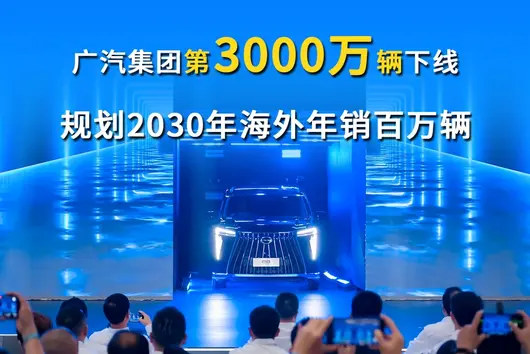
On July 16, GAC Group's 30 millionth vehicle officially rolled off the production line at the Trumpchi factory in Panyu, Guangzhou. The model is the right-hand drive version of the Trumpchi M8 PHEV. Thus, GAC has become the fifth automotive group in the country to achieve 30 million vehicles rolling off the production line, following FAW, SAIC, Dongfeng, and Changan.

This roll-off ceremony adopted a form of synchronized connection across global production bases. GAC Honda P7, GAC Toyota bZ7, Qijing GT7, GAC Aion N60, and GAC Hyper S600 served as the 29,999,995th to 29,999,999th vehicles respectively, completing the roll-off sequentially at factories in various locations. The four product lines of Joint Venture, Independent, High-end New Energy, and Smart Selection Cooperation appeared simultaneously at this milestone node, intuitively presenting the results of GAC's current electrification and intelligence transformation. As the milestone vehicle for the 30 millionth unit, this right-hand drive Trumpchi M8 PHEV was delivered to Thai kung fu actor Tony Jaa on-site, sending a clear signal that GAC will make the overseas market the growth focus of the next stage.

GAC Group was established in 1997. It took 20 years from the first vehicle rolling off the line to the cumulative 10 millionth. It took only 9 years from 10 million to 30 million. Its development path can be roughly divided into four stages: Early on, Honda and Toyota systems were introduced through joint ventures to establish an industrial foundation; In 2010, the Trumpchi brand was launched, officially beginning the independent vehicle building journey; Around 2020, Aion and Hyper entered the new energy track; In 2024, joined with Huawei to create the Qijing brand, gradually forming a "Joint Venture—Independent—Intelligent—Ecosystem" business landscape.

From the perspective of operational data, in the first half of 2026, GAC Group's cumulative sales reached 773,100 units, a year-on-year increase of 2.35%. Energy-saving and new energy vehicles accounted for 62.82%. The independent segment sales were 346,000 units, a year-on-year increase of 35.69%; independent brand exports reached 121,500 units, a year-on-year growth of 132%, approaching the full-year export scale of 2025. Behind this growth is the gradual release of the effectiveness of the "Panyu Action" reform. After launching this reform at the end of 2024, GAC promoted the integrated operation of its independent brands, shifting product development thinking from engineer-oriented to user-oriented, and product iteration efficiency has been significantly improved.

Supporting the 30 million user base is GAC's systematic capability covering the entire chain of R&D, production, safety, and service. According to GAC, on the development end, every new car must go through a complete verification cycle of "Two Winters and One Summer", with the shortest being 18 months and the conventional 21 months. At the same time, it passes the "Five Highs, One Mountain, One Dust" extreme environment assessment, covering 60°C Turpan high temperatures, -40°C Hulunbuir extreme cold, high altitude, high humidity, high salt mist, mountainous complex road conditions, and desert sand environments. The cumulative equivalent test mileage per vehicle exceeds 13 million kilometers. The Aion Intelligent Ecosystem Factory, known as the "World's First New Energy Lighthouse Factory", equips its welding workshop with over 600 industrial robots and an AI vision detection system, achieving millisecond-level response and millimeter-level precision, with production data for key fastening points of the whole vehicle supporting lifetime traceability.

At the safety technology level, the Clip Battery has cumulatively equipped 1.5 million vehicles, and vehicles equipped with this battery have cumulatively traveled safely over 160 billion kilometers. The Star Guard Safety System has served nearly 2 million users, cumulatively preventing potential accidents 6.28 million times. In December 2025, the three major independent brands under GAC, Trumpchi, Aion, and Hyper, launched the "Three Responsibility" service commitment. Three scenarios—powertrain spontaneous combustion, battery degradation exceeding limits, and smart parking accidents—were included in the manufacturer's coverage scope, extending quality assurance from delivery to the full usage cycle.

Regarding R&D investment, as of the end of 2025, GAC's cumulative independent R&D investment exceeded 62 billion yuan, with a global R&D team exceeding 6,800 people, cumulative patent applications over 24,900, including over 11,200 invention patents. The Southern Test Center officially launched in March this year is the first large-scale comprehensive test center approved for airspace usage in the country, capable of meeting testing needs for intelligent connected new energy vehicles and low-altitude aircraft across multiple fields.

In terms of channel construction, as of the end of June 2026, GAC has completed the certification of 600 county-level outlets and plans to build 1,000 county-level authorized stores within the year. The "9 Verticals 10 Horizontals" charging network covers 213 cities across the country, with over 27,000 self-operated charging piles, achieving a guarantee of "a station within a 1km straight line in core urban areas."

At the level of overseas layout, GAC is promoting the "OneGAC 2.0" strategy, pushing overseas business from a single product export model to full value chain localization operation covering R&D, production, supply chain, and sales. Its international business has already covered 110 countries and regions in five major sectors: Asia-Pacific, Middle East, Americas, Europe, etc. It has built over 746 sales service outlets, 7 overseas production factories, and 9 overseas parts warehouses.
According to the 2030 development goals announced by GAC Group, at that time its business will enter 120 countries and regions globally, build over 2,000 overseas outlets, and achieve overseas annual sales of 1 million vehicles.
—END—

喺馬來西亞嘅 SUV 市場,好多買家喺揀車嘅時候都會拿 Perodua Ativa 同 Proton X90 嚟做比較。呢兩款車喺價位同定位上都幾接近嘅,今日我哋就從多個方面做一次詳細嘅比較,幫你攞返做功課嘅時間。
Perodua Ativa 喺馬來西亞嘅 OTR 售價係 RM 62,500 - 73,400,一共有 3 個版本,包括 1.0L Turbo X(RM 62,500)、1.0L Turbo H(RM 67,300)、1.0L Turbo AV(RM 73,400) 等。
Proton X90 喺馬來西亞嘅 OTR 售價係 RM 106,800 - 122,800,一共有 4 個版本,包括 2026 1.5T Prime X(RM 122,800)、2026 1.5T Prime(RM 116,800)、2026 1.5T Lite(RM 106,800) 等。
從價錢嚟睇,Perodua Ativa 嘅起價確實比 Proton X90 平咗 RM 44,300。如果你預算有限,Perodua 嘅入門版已經可以滿足日常需要。但都要留意,平嗰幾千蚊,可能喺配備上會有取捨,具體要睇你嘅需要。

Perodua Ativa 嘅安全評級係 5★ (ASEAN NCAP),主動安全系統包括 ASA 3.0 + ACC + LDA + LKA + BSM + RCTA。
Proton X90 嘅安全評級係 5★ (ASEAN NCAP),主動安全系統包括 ADAS (ACC, AEB, LKA, LDA, BSM, RCTA)。
兩款車嘅安全評級一樣,喺呢個級別入面安全配備都算好齊全嘅。而家嘅新車安全性都唔差,唔使太擔心呢一點。
Perodua Ativa 車身長 4400 mm,尾箱 400 公升。
Proton X90 車身長 4400 mm,尾箱 400 公升。
兩款車嘅尺寸差唔多,車內空間差別唔大。呢個級別嘅車,日常使用完全夠用。

Perodua Ativa 保修 5 年/150,000km,保養間隔 每 10,000km 或 6 個月。
Proton X90 保修 5 年/150,000km,保養間隔 每 10,000km 或 6 個月。
兩款車嘅保修條件一樣,呢方面唔使糾結。實際保養成本仲要睇品牌嘅服務網絡同零件價格,建議去車友群問下真實車主嘅經驗。

總嚟講,Perodua Ativa 同 Proton X90 都係馬來西亞市場好唔錯嘅車型。揀邊部車,關鍵都係要睇你嘅個人需要同預算。建議大家做好功課,多比較幾間車行嘅報價,再去做試駕做最後決定。買車係件大事,花點時間做功課絕對唔會錯。

喺馬來西亞嘅轎車市場,好多買家喺揀車嘅時候都會拿本田思域同豐田卡羅拉來比較。這兩款車喺價位同定位上都相當接近,今日我哋就從多個方面做一个詳細嘅比較,幫你省返做功課嘅時間。
本田思域喺馬來西亞嘅 OTR 售價係 RM 133,900 - 167,900,一共有 5 個版本,包括 2025 e:HEV 2.0L RS(RM 167,900)、2025 1.5T RS(RM 149,900)、2025 1.5T V(RM 144,900)等。
豐田卡羅拉喺馬來西亞嘅 OTR 售價係 RM 144,800 - 149,800,一共有 2 個版本,包括 2026 1.8L GR Sport(RM 149,800)、2026 1.8L G(RM 144,800)等。
從價錢嚟睇,本田思域嘅起步價確實比豐田卡羅拉便宜咗 RM 10,900。如果你預算有限,本田嘅入門版已經可以滿足日常需要。但都要注意,便宜嗰幾千塊,可能喺配備上會有取捨,具體睇你嘅需要。

本田思域嘅安全評級係 5★ (ASEAN NCAP),主動安全系統包括本田 SENSING (ACC, CMBS, LKAS, RDM)。
豐田卡羅拉嘅安全評級係 5★ (ASEAN NCAP),主動安全系統包括 TSS (PCS, LDA, ACC, LTA)。
兩款車嘅安全評級一樣,喺呢個級別裡面安全配備都算好齊全。而家嘅新車安全性都唔差,唔使太擔心呢一點。

本田思域車身長 4450 mm,車尾箱 470 L。
豐田卡羅拉車身長 4400 mm,車尾箱 400 L。
空間方面,本田思域嘅車身比豐田卡羅拉長咗 50 mm,車內乘坐空間會稍微寬鬆少少,尤其是後排腿部空間。如果你經常載家人或者需要放嬰兒車,大少少嘅車身確實更實用。

本田思域同豐田卡羅拉都係馬來西亞市場嘅主流選擇,適合家庭使用、日常通勤。如果你更睇重品牌口碑同二手價,可以優先考慮口碑更好嗰一款;如果你更在意性價比同配備,嗰就揀配置更豐富嗰款。始終都建議兩款都去試駕,親身試下先最重要。

總體嚟講,本田思域同豐田卡羅拉都係馬來西亞市場好唔錯嘅車型。揀邊一輛,關鍵仲睇你嘅個人需求同預算。建議大家做好功課,多比較間車行嘅報價,再去試駕做最終決定。買車係件大事,花少少時間做功課絕對唔會錯。


In May, China's automotive market overall presented a gentle recovery trend, with domestic brands still being the sales backbone of the market. Recently, BYD, Geely, Chery, Changan, and Great Wall, the top 5 domestic automakers, successively released their monthly performance reports. From the data, these five companies show a general characteristic of "stable total growth, divergence between domestic and international markets, and accelerated new energy penetration". Overseas exports and new energy vehicles have become the most core growth engines; export business has evolved from a "bonus item" to the "core foundation" for some companies. BYD's "dominant leader" status is further consolidated, Chery achieved high growth via exports, Geely's new energy penetration rate broke 56%, Changan focused steadily on balanced development, while Great Wall appeared slightly under pressure during structural transformation.
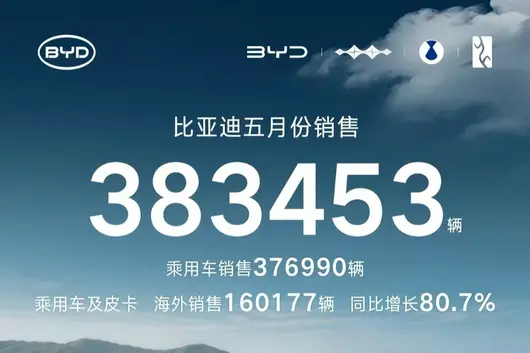
BYD: Export Hits New High Becomes Biggest HighlightIn May, BYD stood firmly at the top of domestic brands with a monthly sales volume of 383,500 vehicles, maintaining positive growth both year-on-year and month-over-month under a large base. Its two main brands, Dynasty and Ocean, sold a combined 330,200 vehicles, contributing 86.1% of total sales; Fangchengbao's monthly sales broke 30,000 units to reach 30,200, a year-on-year increase of 139.7%, setting a new high for the year; Denza sold 16,300 vehicles, and Yangwang delivered 286 vehicles. From a model perspective, BYD had eight models in May with monthly sales exceeding 20,000 vehicles. The Song Family and Yuan Family both broke 50,000 units, selling 51,370 and 56,691 vehicles respectively. The Sea Lion Family followed closely with 42,615 vehicles, and Seagull sales were also close to 40,000 vehicles.

BYD's biggest highlight in May was exports. Overseas new energy vehicle sales reached 160,600 units, an 80.4% year-on-year increase, accounting for about 42%. The sharp expansion of export scale effectively countered the phased weakness in domestic demand. Cumulative exports from January to May exceeded 620,000 vehicles. High export growth mainly benefited from continued ramping up of overseas factory capacity, improved ocean shipping capacity, and accelerated channel network expansion. In the domestic market, BYD promoted Megawatt Super Charging and intelligent strategies simultaneously—Megawatt charging achieved about 90% charge in 9 minutes; 20,000 super charging stations are planned to be built by 2026; all series models are available with Sky Eye B intelligent driving solutions and city navigation safety fallback plans, accelerating the popularization of high-level intelligent driving. As Gen 2 Blade Battery capacity gradually releases, the company's orders are expected to continue rising.
Chery: Sales Growth Leads the Top 5Chery Group's total sales volume in May was 247,800 vehicles, a significant year-on-year increase of 20.5%, ranking first in growth speed among the top 5. Exports remained its most core growth engine—May exports reached 181,900 vehicles, an 80.5% year-on-year increase, accounting for 73.4% of total sales that month, continuously breaking the single-month export record for Chinese brands for three months. In terms of new energy, Chery New Energy sold 100,300 vehicles, a 58.8% year-on-year increase. April and May consecutively saw monthly new energy sales breaking 100,000 vehicles.

The strong performance in exports benefited from Chery's long-term deep cultivation of overseas channel advantages and localized operation capabilities. While overseas orders continued to rise, high export growth formed a sharp contrast with domestic sales—Chery's domestic sales in May were only 60,000 vehicles, accounting for one-quarter of total sales. From cumulative data, Chery Group accumulated 1.101 million sales from January to May, but against the annual goal of 3.2 million vehicles, monthly averages need to reach about 420,000 vehicles later, and pressure remains significant.
Geely: New Energy Penetration Rate Breaks 56%Geely Auto's total sales volume in May was 237,600 vehicles, a 1% year-on-year increase, achieving month-over-month double growth for three consecutive months. In terms of structure, Geely's "New Four Transformations" transformation showed significant results: new energy vehicle sales reached 133,400 units, accounting for 56% of total sales, with new energy share exceeding 50% for four consecutive months.

From sub-brands, performance was significantly divergent. Zeekr brand sales in May reached 34,400 vehicles, a 82% year-on-year increase; Zeekr 9 Series and 8 Series models combined sales approached 50% of total sales, showing bright performance in the high-end market; Galaxy brand sales were 81,700 vehicles; Geely brand sales were 182,500 vehicles, among which China Star Series sales reached 100,800 vehicles; Lynk & Co brand sales were 20,700 vehicles, with new energy vehicle sales share rising to 71%.
In terms of exports, Geely's overseas vehicle exports in May reached 85,100 vehicles, a explosive 184% year-on-year increase, setting a brand single-month export record high. Among exported products, new energy vehicles reached 40,800 units, accounting for nearly half; hybrid and pure electric products have successively landed in Southeast Asia, Middle East, Latin America, and other markets, highlighting the results of global strategy implementation.
Changan: Multi-brand Matrix Balanced EffortChangan Auto's delivery volume in May was 209,100 vehicles, among which new energy deliveries were 92,400 vehicles, a 5.8% year-on-year increase, with new energy share about 44%. In terms of exports, overseas deliveries reached 70,700 vehicles, a 38% year-on-year increase, becoming another major growth highlight for Changan in May.
In the sub-brand matrix, Changan Qiyuan delivered 34,500 vehicles in May; All-New Q05 delivered 15,800 units, with orders breaking 3,000 units within three days of listing in Thailand; Deepal sales in May were 33,200 vehicles, a 30% year-on-year increase; January to May overseas cumulative sales were 28,700 vehicles, a significant 167% year-on-year increase; Avatr delivered 7,336 vehicles in May; Changan Auto (Gravity) delivered nearly 49,000 vehicles in May.

Changan Auto's balanced layout was fully reflected in May: the fuel car base remained stable, new energy brands Deepal and Qiyuan accelerated volume growth, high-end brand Avatr continued to break through in technical cooperation, and overseas markets simultaneously achieved breakthrough growth. The pattern of five brands working together, driven by both new energy and exports, is initially taking shape.
Great Wall: Overseas Sales Growth Year-on-Year 46.75%Great Wall Motor's sales in May were 100,400 vehicles, slightly down compared to last May's 102,200 vehicles, making it the only company among the top 5 to show a year-on-year negative growth. From sub-brands, Haval brand sales in May were 55,500 vehicles, remaining Great Wall's most important sales pillar; Tank brand sales were 17,100 vehicles; both Haval and Tank brand sales showed year-on-year declines; Wey brand sold 8,119 vehicles, a 31.78% year-on-year increase, achieving growth against the trend; Ora brand performance was most stunning, with sales of 6,018 vehicles, a significant 206.88% year-on-year increase. In terms of new energy, Great Wall sold 30,400 new energy vehicles in May, with new energy vehicle transformation gradually accelerating.

The overseas market became Great Wall's biggest highlight in May, with overseas sales growing 46.75% year-on-year. Against the background of pressure on the domestic market, strong growth in overseas business effectively made up for the decline in the domestic market. Great Wall Motor's current core contradiction lies in: Haval and Tank, the two traditional main-selling brands, face weak growth, while Wey and Ora brands, although growing notably, have relatively small volume and are not yet enough to support overall growth. How to complete the "relay" between old and new brands is the key issue Great Wall must solve subsequently.
Final ThoughtsFrom May data, the growth pattern of the top 5 domestic brands has clearly diverged, but there are three common trends worth noting: First, exports have become a key engine for domestic brands to seek stability and growth. Second, new energy transformation is still accelerating, but paths differ among enterprises. Third, technological innovation continues to deepen brand moats. Looking ahead to the second half of the year, competition in the automotive industry will continue to upgrade around these three trends. Although everyone has a common direction, these three trends are all competing for the entire enterprise's industrial chain strength, and the strong will remain strong, which has almost become an inevitable outcome.