首頁攻略

搜尋歷史
熱門搜尋
經銷商登入 / 註冊

喺馬來西亞嘅 SUV 市場,好多買家喺揀車嗰陣都會拿 Honda CR-V 同 BMW X3 嚟做比較。呢兩款車喺價位同定位上都幾近,今日我哋就由多個方面做個詳細對比,幫你節省做功課嘅時間。
Honda CR-V 喺馬來西亞嘅 OTR 售價係 RM 178,200 - 195,900,合共有 4 個版本,包括 2026 e:HEV 2.0L 2WD RS(RM 195,900)、2026 1.5T 4WD V(RM 181,900)、2026 e:HEV 2.0L 2WD E(RM 178,200) 等。
BMW X3 喺馬來西亞嘅 OTR 售價係 RM 325,800 - 358,800,合共有 2 個版本,包括 xDrive20i(RM 320,000)、xDrive30e(RM 360,000) 等。
由價錢睇落去,Honda CR-V 嘅起價確實係比 BMW X3 平咗 RM 147,600。如果你預算有限,Honda 嘅入門版已經可以滿足日常需要。但要留意,平嗰啲幾千蚊,可能會喺配備上有取舍,具體要看你嘅需求。

Honda CR-V 搭載 2.0L 4-cyl,馬力 170 hp。官方油耗 8.0 L/100km。
BMW X3 搭載 2.0L Turbo,馬力 220 hp。官方油耗 9.5 L/100km。
動力方面,BMW X3 嘅 2.0L Turbo 比 Honda CR-V 嘅 2.0L 4-cyl 多咗 50 匹馬力。不過日常喺市區開,兩款車嘅動力都夠用,唔會覺得唔夠力。

Honda CR-V 嘅安全評級係 5★ (ASEAN NCAP),主動安全系統包括 Honda SENSING (ACC, CMBS, LKAS, RDM)。
BMW X3 嘅安全評級係 5★ (Euro NCAP),主動安全系統包括 Premium ADAS。
安全配備方面,兩款車都拿到唔錯嘅評級。不過 Honda CR-V 嘅 Honda SENSING (ACC, CMBS, LKAS, RDM) 同 BMW X3 嘅 Premium ADAS 喺功能上有啲差異,如果你比較睇重主動安全嘅話,可以仔細對比一吓兩者嘅功能列表。

Honda CR-V 採用 FWD 驅動方式。
BMW X3 採用 FWD 驅動方式。
兩款車嘅驅動方式一樣,都係 FWD,日常駕駛感覺唔會有太大分別。

總體嚟講,Honda CR-V 同 BMW X3 都係馬來西亞市場好唔錯嘅車款。揀邊一輛,關鍵仲係要看你嘅個人需求同預算。建議大家做好功課,多比較幾間車行嘅報價,再去試駕做最終決定。買車係件大事,花啲時間做功課絕對唔錯。


8月21日,第二十九届成都国际车展正式开幕。小鹏集团携物理AI全品类产品亮相,带来了小鹏G9L、GX、X9、MONA M03等多款车型,以及新一代人形机器人IRON、汇天“陆地航母”分体式飞行汽车等前沿产品,展示小鹏在AI汽车、具身智能以及未来出行领域的探索成果。

车展首日,小鹏举办“AI改变世界”主题发布会,并正式推出小鹏G9L、X9以及MONA M03三款车型全新套件。其中,小鹏G9L黑金套件官方指导价15000元,限时优惠价10000元;小鹏X9黑武士套件售价8800元,星舰尾翼支持单独选装,售价1298元;MONA M03推出罗兰紫、牛油果绿主题套装,限时优惠价5499元。
同时,小鹏G9L全国展车已陆续抵达220家门店,消费者可以前往体验这款全新旗舰SUV。
从年轻爆款到旗舰产品,小鹏完善AI汽车矩阵
近年来,小鹏持续推进AI技术与汽车产品融合,并围绕不同用户需求打造覆盖多个细分市场的产品矩阵。

其中,定位物理AI时代科技旗舰的小鹏GX上市两个月累计交付突破15000台。新车融合汇天飞行汽车安全冗余技术、Robotaxi智能驾驶技术以及具身智能相关芯片和架构技术,进一步拓展了AI汽车的应用边界。
除了国内市场,小鹏GX也开始加速海外布局。在阿联酋等市场,小鹏GX在尚未正式公布售价前已经获得超过2000台订单,首批车辆也已发往海外市场。
作为小鹏面向家庭用户打造的旗舰车型,小鹏G9L自开启预售以来持续受到关注。
新车定位“黄金大五座科技旗舰”,围绕空间、舒适、安全和智能体验展开升级。在成都车展现场,小鹏方面表示,小鹏G9L在西南地区订单表现突出,其中超级增程版本选择比例超过82%。


针对用户个性化需求,小鹏G9L此次推出黑金套件。该套件采用双24K金标设计,前标以太空陶瓷为基底,搭配24K真金镀层和抗指纹纳米涂层,后标同样采用24K真金镀层,同时配备专属22英寸黑金轮毂和极夜黑车漆,进一步提升整车质感。
X9、MONA M03推出新套件,满足更多个性化需求
作为小鹏旗下旗舰MPV,小鹏X9全球累计交付已超过60000台。今年7月,小鹏X9在泰国及香港市场获得豪华纯电MPV销量领先表现。

此次成都车展,小鹏X9推出黑武士套件,包括星刃运动轮毂、极夜黑车漆以及星舰尾翼等设计元素,让传统MPV拥有更强的运动感。
对于家庭用户而言,小鹏X9依然保持大空间和舒适属性,同时通过个性化设计满足年轻用户对于车辆外观表达的需求。
另一边,面向年轻用户的MONA系列也持续保持市场热度。

截至目前,MONA系列累计交付达到31万台,其中MONA M03连续23个月保持10-20万元纯电轿车销量领先。
此次推出的罗兰紫和牛油果绿主题套装,从外观、内饰到车机主题进行整体设计。套装包含专属车漆、19英寸同色五辐轮毂、气宇灰内饰以及定制“拾光漫游”车机主题,为年轻用户提供更加完整的个性化选择。
从产品出海到技术出海,小鹏加速全球化布局
随着产品矩阵逐步完善,小鹏全球化布局也在持续推进。
目前,小鹏全球累计销量已突破120万台,销售网络覆盖68个国家和地区,全球门店数量超过1200家。同时,小鹏超快充网络已经覆盖31个国家和地区,累计接入超过290万桩充电资源。
在技术领域,小鹏也正在推动智能驾驶、Robotaxi、人形机器人等相关技术走向海外。第二代VLA智能驾驶技术已在欧洲开展测试,未来将进一步探索更多海外应用场景。

从AI汽车到具身智能,从产品出口到技术体系输出,小鹏正在围绕物理AI构建更加完整的未来出行生态。
此次成都车展,小鹏通过多款车型以及前沿产品展示,进一步呈现了其在智能汽车领域的技术布局。随着AI技术持续落地,小鹏也希望通过自主研发能力,为用户带来更加智能、安全和便捷的出行体验。
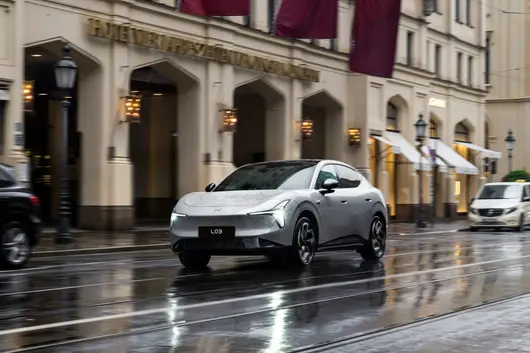

喺馬來西亞嘅 SUV 市場,好多買家喺揀車嘅時候都會拿 Proton X70 同 Volkswagen Tiguan 嚟做比較。呢兩款車喺價位同定位上都幾接近嘅,今日我哋就從多個方面做一個詳細嘅對比,幫你省返做功課嘅時間。
Proton X70 喺馬來西亞嘅 OTR 售價係 RM 106,800 - 122,300,一共有 3 個版本,包括 1.5L Standard 2WD(RM 106,800)、1.5L Executive 2WD(RM 115,800)、1.5L Premium 2WD(RM 122,300)等。
Volkswagen Tiguan 喺馬來西亞嘅 OTR 售價係 RM 206,540 - 260,024,一共有 2 個版本,包括 2025 Allspace 2.0T R-Line(RM 260,024)、2025 Allspace 1.4T Elegance(RM 206,540)等。
從價錢嚟睇,Proton X70 嘅起步價確實比 Volkswagen Tiguan 平咗 RM 99,740。如果你預算有限,Proton 嘅入門版已經可以滿足日常需求。但都要留意,平嗰幾千塊,可能喺配備上面會有取捨,具體要看你嘅需求。

Proton X70 嘅安全評級係 5★ (ASEAN NCAP),主動安全系統包括 ADAS (ACC, AEB, LKA, LDA, BSM, RCTA)。
Volkswagen Tiguan 嘅安全評級係 5★ (Euro NCAP),主動安全系統包括 IQ.Drive。
安全配備方面,兩款車都拿到咗唔錯嘅評級。不過 Proton X70 嘅 ADAS (ACC, AEB, LKA, LDA, BSM, RCTA) 同 Volkswagen Tiguan 嘅 IQ.Drive 喺功能上有些差異,如果你比較看重主動安全嘅話,可以仔細對比吓兩者嘅功能列表。

Proton X70 採用 FWD 驅動方式。
Volkswagen Tiguan 採用 FWD 驅動方式。
兩款車嘅驅動方式一樣,都係 FWD,日常駕駛感受唔會有太大區別。

Proton X70 同 Volkswagen Tiguan 都係馬來西亞市場嘅主流選擇,適合家庭使用、日常通勤。如果你更看重品牌口碑同二手價,可以優先考慮口碑更好嗰一款;如果你更在意性價比同配備,那就揀配置更豐富嗰款。最終都係建議兩款都去試駕,親身體驗先係最重要嘅。
總嘅嚟講,Proton X70 同 Volkswagen Tiguan 都係馬來西亞市場好唔錯嘅車型。揀邊輛,關鍵都係要看你嘅個人需求同預算。建議大家做好功課,多比較幾間車行嘅報價,再去試駕做最終決定。買車係件大事,花費啲時間做功課絕對唔會錯。


In Malaysia's SUV market, many buyers compare Proton X50 and Hyundai Tucson when choosing a car. These two cars are quite close in price and positioning. Today, we will make a detailed comparison from multiple aspects to help you save time doing research.
The OTR price of Proton X50 in Malaysia is RM 89,800 - 113,300, with a total of 4 versions, including 1.5T Executive (RM 89,800), 1.5T Premium (RM 101,800), 1.5T Flagship (RM 113,300) etc.
The OTR price of Hyundai Tucson in Malaysia is RM 143,888 - 197,888, with a total of 5 versions, including 2025 HEV 1.6T AT 2WD Prestige (RM 197,888), 2025 1.6T DCT 4WD Prestige (RM 186,888), 2025 1.6T DCT 2WD Prime (RM 164,888) etc.
Looking at the price, Proton X50's starting price is indeed RM 54,088 cheaper than Hyundai Tucson. If your budget is limited, Proton's entry-level version can already meet daily needs. But also note, the few thousand Ringgit difference might involve compromises in features, depending on your specific needs.

Proton X50 body length 4400 mm, trunk 400 L.
Hyundai Tucson body length 4400 mm, trunk 400 L.
The dimensions of both cars are almost identical, with little difference in interior space. Cars in this class are more than sufficient for daily use.

Proton X50 warranty 5 years/150,000km, maintenance interval every 10,000km or 6 months.
Hyundai Tucson warranty 5 years/300,000km, maintenance interval every 10,000km or 6 months.

Proton X50 and Hyundai Tucson are both mainstream choices in the Malaysian market, suitable for family use and daily commuting. If you value brand reputation and resale value more, you can prioritize the one with better reputation; if you care more about value for money and features, then choose the model with richer configuration. In the end, it is recommended to test drive both models, experiencing it personally is the most important.

Overall, Proton X50 and Hyundai Tucson are both very good models in the Malaysian market. Which one to choose depends on your personal needs and budget. It is recommended to do your research, compare quotes from several car dealerships, and then test drive to make the final decision. Buying a car is a big matter, spending time doing research will never be wrong.

In Malaysia's SUV market, many buyers compare Perodua Ativa and Proton X90 when choosing a car. These two models are quite close in price and positioning. Today, we will make a detailed comparison from multiple aspects to help you save time on research.
Perodua Ativa OTR price in Malaysia is RM 62,500 - 73,400, totaling 3 versions, including 1.0L Turbo X (RM 62,500), 1.0L Turbo H (RM 67,300), 1.0L Turbo AV (RM 73,400), etc.
Proton X90 OTR price in Malaysia is RM 106,800 - 122,800, totaling 4 versions, including 2026 1.5T Prime X (RM 122,800), 2026 1.5T Prime (RM 116,800), 2026 1.5T Lite (RM 106,800), etc.
In terms of price, Perodua Ativa's starting price is indeed RM 44,300 cheaper than Proton X90. If your budget is limited, Perodua's entry-level version can already meet daily needs. However, note that the few thousand ringgit saved might involve compromises on features, depending on your needs.

Perodua Ativa safety rating is 5★ (ASEAN NCAP), active safety systems include ASA 3.0 + ACC + LDA + LKA + BSM + RCTA.
Proton X90 safety rating is 5★ (ASEAN NCAP), active safety systems include ADAS (ACC, AEB, LKA, LDA, BSM, RCTA).
Both cars have the same safety rating, and safety features are quite comprehensive in this class. New cars nowadays generally have good safety, so don't worry too much about this.
Perodua Ativa body length 4400 mm, trunk 400 L.
Proton X90 body length 4400 mm, trunk 400 L.
Both cars have almost the same dimensions, interior space difference is small. Cars in this class are fully sufficient for daily use.

Perodua Ativa and Proton X90 are both mainstream choices in the Malaysian market, suitable for family use and daily commuting. If you value brand reputation and resale price more, you can prioritize the one with better reputation; if you care more about cost-performance ratio and features, choose the one with richer configurations. Ultimately, it is recommended to test drive both models, as personal experience is the most important.

Overall, Perodua Ativa and Proton X90 are both quite good models in the Malaysian market. Which one to choose depends on your personal needs and budget. It is recommended to do your research, compare quotes from several dealerships, and then test drive to make the final decision. Buying a car is a big decision, spending some time researching will never be wrong.


喺馬來西亞嘅 SUV 市場,好多次買車人揀車嗰陣都會拿 Toyota Harrier 同 BMW X3 嚟比較。这两款车在价位和定位上都蛮接近的,今天我们就从多个方面做一个详细的对比,帮你省下做功课的时间。
Toyota Harrier 在马来西亚的 OTR 售价是 RM 289,000 - 289,000,一共有 1 个版本,包括 2026 HEV 2.5L Standard(RM 289,000) 等。
BMW X3 在马来西亚的 OTR 售价是 RM 325,800 - 358,800,一共有 2 个版本,包括 xDrive20i(RM 320,000)、xDrive30e(RM 360,000) 等。
从价钱来看,Toyota Harrier 的起步价确实比 BMW X3 便宜了 RM 36,800。如果你预算有限,Toyota 的入门版已经可以满足日常需求。但也要注意,便宜的那几千块,可能在配备上会有取舍,具体要看你的需求。

Toyota Harrier 搭载 2.0L Turbo,马力 220 hp。官方油耗 9.5 L/100km。
BMW X3 搭载 2.0L Turbo,马力 220 hp。官方油耗 9.5 L/100km。
两款车用的是同一套动力系统,日常开起来的感受基本没有差别。油耗方面也差不多,不用太纠结这一点。

Toyota Harrier 车身长 4400 mm,后备箱 400 L。
BMW X3 车身长 4400 mm,后备箱 400 L。
两款车的尺寸几乎一样,车内空间差别不大。这个级别的车,日常使用完全够用。

Toyota Harrier 采用 FWD 驱动方式。
BMW X3 采用 FWD 驱动方式。
两款车的驱动方式一样,都是 FWD,日常驾驶感受不会有太大区别。
总的来说,Toyota Harrier 和 BMW X3 都是马来西亚市场很不错的车型。选择哪一辆,关键还是要看你的个人需求和预算。建议大家做好功课,多比较几间车行的报价,再去试驾做最终决定。买车是件大事,花点时间做功课绝对不会错。


In May, China's automotive market overall presented a gentle recovery trend, with domestic brands still being the sales backbone of the market. Recently, BYD, Geely, Chery, Changan, and Great Wall, the top 5 domestic automakers, successively released their monthly performance reports. From the data, these five companies show a general characteristic of "stable total growth, divergence between domestic and international markets, and accelerated new energy penetration". Overseas exports and new energy vehicles have become the most core growth engines; export business has evolved from a "bonus item" to the "core foundation" for some companies. BYD's "dominant leader" status is further consolidated, Chery achieved high growth via exports, Geely's new energy penetration rate broke 56%, Changan focused steadily on balanced development, while Great Wall appeared slightly under pressure during structural transformation.
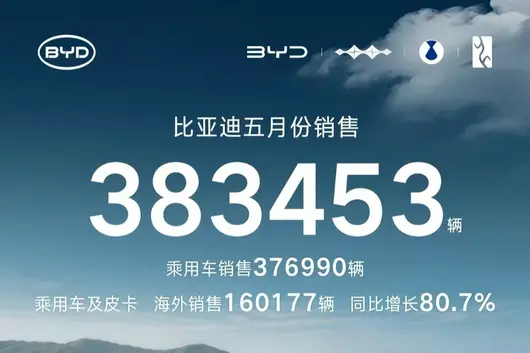
BYD: Export Hits New High Becomes Biggest HighlightIn May, BYD stood firmly at the top of domestic brands with a monthly sales volume of 383,500 vehicles, maintaining positive growth both year-on-year and month-over-month under a large base. Its two main brands, Dynasty and Ocean, sold a combined 330,200 vehicles, contributing 86.1% of total sales; Fangchengbao's monthly sales broke 30,000 units to reach 30,200, a year-on-year increase of 139.7%, setting a new high for the year; Denza sold 16,300 vehicles, and Yangwang delivered 286 vehicles. From a model perspective, BYD had eight models in May with monthly sales exceeding 20,000 vehicles. The Song Family and Yuan Family both broke 50,000 units, selling 51,370 and 56,691 vehicles respectively. The Sea Lion Family followed closely with 42,615 vehicles, and Seagull sales were also close to 40,000 vehicles.

BYD's biggest highlight in May was exports. Overseas new energy vehicle sales reached 160,600 units, an 80.4% year-on-year increase, accounting for about 42%. The sharp expansion of export scale effectively countered the phased weakness in domestic demand. Cumulative exports from January to May exceeded 620,000 vehicles. High export growth mainly benefited from continued ramping up of overseas factory capacity, improved ocean shipping capacity, and accelerated channel network expansion. In the domestic market, BYD promoted Megawatt Super Charging and intelligent strategies simultaneously—Megawatt charging achieved about 90% charge in 9 minutes; 20,000 super charging stations are planned to be built by 2026; all series models are available with Sky Eye B intelligent driving solutions and city navigation safety fallback plans, accelerating the popularization of high-level intelligent driving. As Gen 2 Blade Battery capacity gradually releases, the company's orders are expected to continue rising.
Chery: Sales Growth Leads the Top 5Chery Group's total sales volume in May was 247,800 vehicles, a significant year-on-year increase of 20.5%, ranking first in growth speed among the top 5. Exports remained its most core growth engine—May exports reached 181,900 vehicles, an 80.5% year-on-year increase, accounting for 73.4% of total sales that month, continuously breaking the single-month export record for Chinese brands for three months. In terms of new energy, Chery New Energy sold 100,300 vehicles, a 58.8% year-on-year increase. April and May consecutively saw monthly new energy sales breaking 100,000 vehicles.

The strong performance in exports benefited from Chery's long-term deep cultivation of overseas channel advantages and localized operation capabilities. While overseas orders continued to rise, high export growth formed a sharp contrast with domestic sales—Chery's domestic sales in May were only 60,000 vehicles, accounting for one-quarter of total sales. From cumulative data, Chery Group accumulated 1.101 million sales from January to May, but against the annual goal of 3.2 million vehicles, monthly averages need to reach about 420,000 vehicles later, and pressure remains significant.
Geely: New Energy Penetration Rate Breaks 56%Geely Auto's total sales volume in May was 237,600 vehicles, a 1% year-on-year increase, achieving month-over-month double growth for three consecutive months. In terms of structure, Geely's "New Four Transformations" transformation showed significant results: new energy vehicle sales reached 133,400 units, accounting for 56% of total sales, with new energy share exceeding 50% for four consecutive months.

From sub-brands, performance was significantly divergent. Zeekr brand sales in May reached 34,400 vehicles, a 82% year-on-year increase; Zeekr 9 Series and 8 Series models combined sales approached 50% of total sales, showing bright performance in the high-end market; Galaxy brand sales were 81,700 vehicles; Geely brand sales were 182,500 vehicles, among which China Star Series sales reached 100,800 vehicles; Lynk & Co brand sales were 20,700 vehicles, with new energy vehicle sales share rising to 71%.
In terms of exports, Geely's overseas vehicle exports in May reached 85,100 vehicles, a explosive 184% year-on-year increase, setting a brand single-month export record high. Among exported products, new energy vehicles reached 40,800 units, accounting for nearly half; hybrid and pure electric products have successively landed in Southeast Asia, Middle East, Latin America, and other markets, highlighting the results of global strategy implementation.
Changan: Multi-brand Matrix Balanced EffortChangan Auto's delivery volume in May was 209,100 vehicles, among which new energy deliveries were 92,400 vehicles, a 5.8% year-on-year increase, with new energy share about 44%. In terms of exports, overseas deliveries reached 70,700 vehicles, a 38% year-on-year increase, becoming another major growth highlight for Changan in May.
In the sub-brand matrix, Changan Qiyuan delivered 34,500 vehicles in May; All-New Q05 delivered 15,800 units, with orders breaking 3,000 units within three days of listing in Thailand; Deepal sales in May were 33,200 vehicles, a 30% year-on-year increase; January to May overseas cumulative sales were 28,700 vehicles, a significant 167% year-on-year increase; Avatr delivered 7,336 vehicles in May; Changan Auto (Gravity) delivered nearly 49,000 vehicles in May.

Changan Auto's balanced layout was fully reflected in May: the fuel car base remained stable, new energy brands Deepal and Qiyuan accelerated volume growth, high-end brand Avatr continued to break through in technical cooperation, and overseas markets simultaneously achieved breakthrough growth. The pattern of five brands working together, driven by both new energy and exports, is initially taking shape.
Great Wall: Overseas Sales Growth Year-on-Year 46.75%Great Wall Motor's sales in May were 100,400 vehicles, slightly down compared to last May's 102,200 vehicles, making it the only company among the top 5 to show a year-on-year negative growth. From sub-brands, Haval brand sales in May were 55,500 vehicles, remaining Great Wall's most important sales pillar; Tank brand sales were 17,100 vehicles; both Haval and Tank brand sales showed year-on-year declines; Wey brand sold 8,119 vehicles, a 31.78% year-on-year increase, achieving growth against the trend; Ora brand performance was most stunning, with sales of 6,018 vehicles, a significant 206.88% year-on-year increase. In terms of new energy, Great Wall sold 30,400 new energy vehicles in May, with new energy vehicle transformation gradually accelerating.

The overseas market became Great Wall's biggest highlight in May, with overseas sales growing 46.75% year-on-year. Against the background of pressure on the domestic market, strong growth in overseas business effectively made up for the decline in the domestic market. Great Wall Motor's current core contradiction lies in: Haval and Tank, the two traditional main-selling brands, face weak growth, while Wey and Ora brands, although growing notably, have relatively small volume and are not yet enough to support overall growth. How to complete the "relay" between old and new brands is the key issue Great Wall must solve subsequently.
Final ThoughtsFrom May data, the growth pattern of the top 5 domestic brands has clearly diverged, but there are three common trends worth noting: First, exports have become a key engine for domestic brands to seek stability and growth. Second, new energy transformation is still accelerating, but paths differ among enterprises. Third, technological innovation continues to deepen brand moats. Looking ahead to the second half of the year, competition in the automotive industry will continue to upgrade around these three trends. Although everyone has a common direction, these three trends are all competing for the entire enterprise's industrial chain strength, and the strong will remain strong, which has almost become an inevitable outcome.