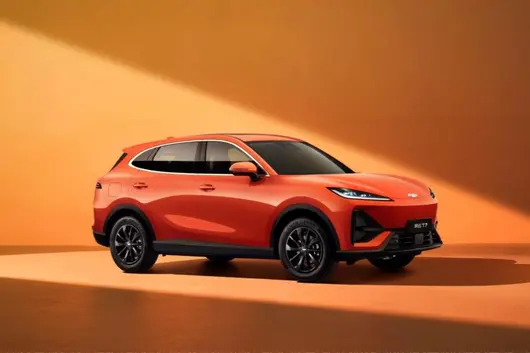
首頁探險

搜尋歷史
熱門搜尋
經銷商登入 / 註冊

The 2026 Paris Motor Show kicked off on October 12, with Chinese automakers playing a pivotal role.
According to the official website of the Paris Motor Show, 16 Chinese automakers exhibited with 25 brands, including Changan, BYD, Leapmotor, Xpeng, Dongfeng, etc. Compared to the last motor show in 2024, the number of exhibitors is double the previous count. Chinese automakers swarmed in, intending to seize the European market.

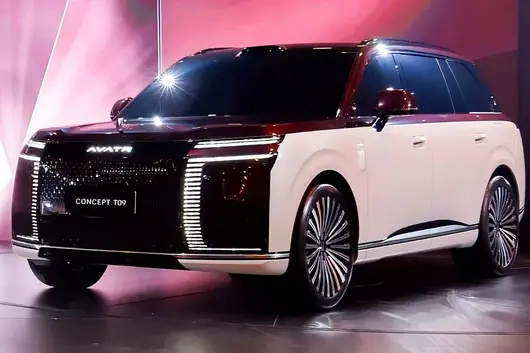
On this "home ground" for global luxury cars, as the Avatr's new "Premium Luxury Sequence"'s first representative model—the Avatr T09 Concept chose to complete its global premiere one day early, with equally clear intent: to officially break into the heartland of European luxury brands in the capacity of the flagship sequence's foundational work.

Targeting the 500,000 Range Market, Launching within 2026
At the event, Avatr Technology Chairman Chen Zhuo stated that with the launch of the T09, Avatr will form two major product sequences: Digital and Flagship.

Among them, the Carefree Luxury Sequence is represented by Avatr 11 and 12, continuing the brand's avant-garde sporty style; while the Premium Luxury Sequence where T09 resides focuses on a grand, steady luxury orientation, filling the brand's more high-end large luxury SUV market. According to official plans, the production version of Avatr T09 is planned to officially launch within 2026, with its expected price falling in the range above 500,000.

From the core product highlights, the Avatr T09 Concept adopts a new flagship design language, with a heavy and full body mass. Body dimensions 5285/2025/1810mm, wheelbase 3150mm, positioned as a six-seat large SUV. The front face is equipped with a 3D relief structured grille, crystal diamond array lamp group plus a floating badge, possessing both heritage and innovation.


During this premiere, the interior of the Avatr T09 Concept was also revealed. The core highlight of the cabin is the lift-able Vortex Emotional Vortex Interaction Mechanism, built-in with 118 RGB LED matrix light sources, with "Emotional Interaction" as the design origin. The core logic of this design language is to use differentiated "Emotional New Luxury" philosophy, distinguishing itself from the definition methods of traditional European luxury brands.

Of course, the new car is also the mass-produced model with the highest degree of technology integration at Avatr so far. For example, the new car is equipped with a "Four Engine" system composed of a 2.0T hybrid engine and a three-motor distributed electric drive, paired with 71.24kWh CATL XIAOYAO Super Hybrid Battery, CLTC pure electric range over 400km. In addition, the Huawei Qiankun ADS 5 intelligent driving system is equipped with four LiDAR sensors, and the Taihang Intelligent Control Chassis integrates closed dual-cavity air suspension, rear-wheel steering, and crab walk mode, etc.
Overseas Layout Accelerates, Break into the Heartland of European Luxury Brands
As the birthplace of luxury cars and a competitive main field, the European market is the highest standard for testing luxury quality. Avatr chose to enter Europe at this time, hitting a critical node accurately.
In May 2026, Chinese automakers' monthly sales in Europe surpassed Japanese brands for the first time. In June, the lead advantage expanded to 13,000 vehicles. In the European EV market, the market share of Chinese brands has already exceeded 15%. The core driver of this structural change is precisely the acceleration of electrification in Europe and the product iteration speed advantage of Chinese brands in pure electric and plug-in hybrid fields.

Currently, Avatr's overseas foundation has been preliminarily verified, with business covering 70 countries and regions, average product selling price over 300,000 yuan, and profitability achieved. Egypt's high-end EV market share reaches 10%, and Avatr 11 is the sales leader in the Thailand luxury pure electric SUV market. After officially entering Europe in 2027, the 06T and 07L will enter markets such as Norway and Spain as the first batch of products.

Accompanying this is the overseas service system built by Avatr based on the principles of "Unified Standards, Local Execution, System Support, Brand Supervision", making services more flexible and experiences more consistent. In the next three years, Avatr will continue to improve the European product matrix and services, accelerating towards a global New Luxury Intelligent Electric Vehicle brand.
Final Thoughts
From the Paris premiere to the Paris Motor Show, the unveiling of the Avatr T09 is another attempt by Chinese brands to break into the value highlands of the global luxury car market.
In terms of product dimensions, the Avatr T09's technical configuration already possesses the foundation for head-on competition with traditional European luxury brands; in terms of market dimensions, the overall momentum of Chinese brands in Europe provides a rare window period. The real test lies in whether the attention from the premiere can be converted into sustainable localized operation capabilities.

In Malaysia's SUV market, many buyers compare the Toyota Corolla Cross and BMW X1 when choosing a car. The prices and positioning of these two cars are quite close. Today, we will conduct a detailed comparison from multiple aspects to help you save time on research.
The OTR price of the Toyota Corolla Cross in Malaysia is RM 133,800 - 148,800. There are a total of 3 versions, including 2026 HEV 1.8L GR Sport (RM 148,800), 2026 HEV 1.8L Standard (RM 140,800), 2026 1.8L Standard (RM 133,800), etc.
The OTR price of the BMW X1 in Malaysia is RM 252,800 - 252,800. There are a total of 2 versions, including sDrive18i (RM 220,000), sDrive20i (RM 250,000), etc.
From a price perspective, the starting price of the Toyota Corolla Cross is indeed RM 119,000 cheaper than the BMW X1. If your budget is limited, Toyota's entry-level version can already meet daily needs. However, be aware that the few thousand difference might involve compromises on features; it depends on your specific requirements.

Toyota Corolla Cross is equipped with a 1.5L Turbo, 140 hp. Official fuel consumption 7.0 L/100km.
BMW X1 is equipped with a 2.0L Turbo, 220 hp. Official fuel consumption 9.5 L/100km.
In terms of power, the BMW X1's 2.0L Turbo has 80 more horsepower than the Toyota Corolla Cross's 1.5L Turbo. However, for daily city driving, both cars have sufficient power, and you won't feel underpowered.

Toyota Corolla Cross's safety rating is 5★ (ASEAN NCAP), active safety systems include TSS (PCS, LDA, ACC, LTA).
BMW X1's safety rating is 5★ (Euro NCAP), active safety systems include Premium ADAS.
Regarding safety features, both cars have received good ratings. However, the Toyota Corolla Cross's TSS (PCS, LDA, ACC, LTA) and BMW X1's Premium ADAS differ in functionality. If you value active safety, you can compare the feature lists of both closely.

Toyota Corolla Cross body length 4400 mm, trunk 400 L.
BMW X1 body length 4400 mm, trunk 400 L.
The dimensions of both cars are almost the same, and the interior space is not significantly different. For cars at this level, it is more than enough for daily use.

Toyota Corolla Cross warranty 5 years/unlimited mileage, maintenance interval every 10,000km or 6 months.
BMW X1 warranty 5 years/unlimited mileage, maintenance interval every 10,000km or 6 months.

Overall, Toyota Corolla Cross and BMW X1 are both very good models in the Malaysian market. Which one to choose depends mainly on your personal needs and budget. We recommend doing your research, comparing quotes from several dealerships, and then test driving to make a final decision. Buying a car is a big matter, spending some time doing research will never be wrong.


喺馬來西亞嘅 SUV 市場,好多買家喺揀車嗰陣都會拿豐田 Corolla Cross 同現代 Santa Fe 嚟做比較。呢兩部車喺價位同定位上都好接近,而家我哋就從多個方面做一個詳細嘅比較,幫您節省做功課嘅時間。
豐田 Corolla Cross 喺馬來西亞嘅 OTR 售價係 RM 133,800 - 148,800,一共有 3 個版本,包括 2026 HEV 1.8L GR Sport(RM 148,800)、2026 HEV 1.8L Standard(RM 140,800)、2026 1.8L Standard(RM 133,800) 等。
現代 Santa Fe 喺馬來西亞嘅 OTR 售價係 RM 225,000 - 270,000,一共有 3 個版本,包括 2025 2.5T DCT 4WD Calligraphy 6 Seats(RM 270,000)、2025 HEV 1.6T AT 2WD Prestige 7 Seats(RM 245,000)、2025 HEV 1.6T AT 2WD Prime 7 Seats(RM 225,000) 等。
從價錢睇嚟,豐田 Corolla Cross 嘅起步價確實係比現代 Santa Fe 平咗 RM 91,200。如果你預算有限,豐田嘅入門版已經可以滿足日常需要。但都要留意,平嗰幾千蚊,可能喺配備上有取捨,具體要睇返你嘅需要。
豐田 Corolla Cross 配備 1.5L Turbo,馬力 140 hp。官方油耗 7.0 L/100km。
現代 Santa Fe 配備 2.0L 4-cyl,馬力 170 hp。官方油耗 8.0 L/100km。
動力方面,現代 Santa Fe 嘅 2.0L 4-cyl 比豐田 Corolla Cross 嘅 1.5L Turbo 多咗 30 匹馬力。不過日常喺市區開,兩部車嘅動力都夠用,唔會覺得唔夠力。
豐田 Corolla Cross 車身長 4400 mm,尾箱 400 L。
現代 Santa Fe 車身長 4400 mm,尾箱 400 L。
兩部車嘅尺寸幾乎一樣,車內空間分別唔大。呢個級別嘅車,日常使用完全夠用。
豐田 Corolla Cross 採用 FWD 驅動方式。
現代 Santa Fe 採用 FWD 驅動方式。
兩部車嘅驅動方式一樣,都係 FWD,日常駕駛感覺唔會有太大分別。

總體嚟講,豐田 Corolla Cross 同現代 Santa Fe 都係馬來西亞市場好好嘅車型。揀邊一部,關鍵都係要睇返你嘅個人需要同預算。建議大家做好功課,多比較幾間車行嘅報價,再過去試駕先做最終決定。買車係件大事,花少少時間做功課絕對唔會錯。
In the SUV market in Malaysia, many buyers compare Toyota Yaris Cross and Chery Tiggo 9 when choosing a car. These two models are quite close in price and positioning. Today, we will make a detailed comparison from multiple aspects to help you save time on research.
The OTR price of Toyota Yaris Cross in Malaysia is RM 99,900 - 109,900, with a total of 2 versions, including 2026 1.5L Standard (RM 99,900), 2026 HEV 1.5L Standard (RM 109,900), etc.
The OTR price of Chery Tiggo 9 in Malaysia is RM 166,800 - 179,800, with a total of 1 version, including 2026 2.0T Standard (RM 179,750), etc.
From a price perspective, Toyota Yaris Cross's starting price is indeed RM 66,900 cheaper than Chery Tiggo 9. If your budget is limited, Toyota's entry-level version is sufficient for daily needs. However, note that the difference of a few thousand ringgit may involve trade-offs in features, depending on your specific requirements.

Toyota Yaris Cross's safety rating is 5★ (ASEAN NCAP), active safety systems include TSS.
Chery Tiggo 9's safety rating is TBD, active safety systems include Basic.
Regarding safety features, both cars received good ratings. However, there are some differences in functionality between Toyota Yaris Cross's TSS and Chery Tiggo 9's Basic. If you value active safety more, you can compare the feature lists of both in detail.

Toyota Yaris Cross body length is 4400 mm, trunk 400 L.
Chery Tiggo 9 body length is 4400 mm, trunk 400 L.
The dimensions of both cars are almost the same, with little difference in interior space. For cars in this class, they are more than sufficient for daily use.

Toyota Yaris Cross adopts FWD drive configuration.
Chery Tiggo 9 adopts FWD drive configuration.
The drive configuration for both cars is the same, both are FWD, so there won't be a huge difference in daily driving feel.

Overall, Toyota Yaris Cross and Chery Tiggo 9 are both excellent models in the Malaysian market. Which one to choose mainly depends on your personal needs and budget. We suggest doing your research, comparing quotes from several dealerships, and test driving before making a final decision. Buying a car is a big matter, spending some time on research will definitely not be wrong.



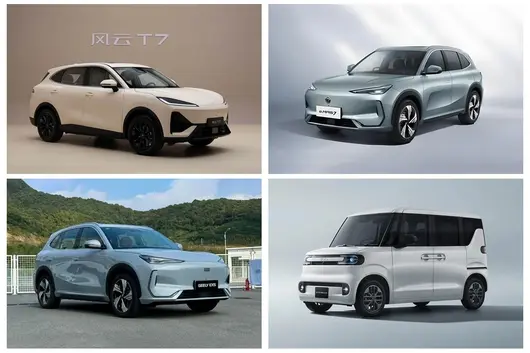
At the 2026 Chengdu Auto Show, Chery brought two special new cars -- the Fulwin T7 defined as the "first native global car of the Intelligent Electric Era", and the new Arrizo 7 "developed according to global standards from the project initiation".

Just looking at product capability, they might not be stunning, but the signal behind them is crucial -- Chinese automakers have started building cars for more than 100 countries from the very first day of R&D, instead of building for the Chinese market first and then exporting. These two cars are just an introduction. Behind them is a rapidly lengthening global model catalog and a paradigm shift across the industry.
01
Domestic Car Market: Why We Must Look Outward
To understand the rise of global models, we must first see the current situation in the domestic market: If 2025 relied on policy support to maintain "record total volume", then entering 2026, as subsidies phase out and demand overdrawn appears, the slump has spread from profitability to sales levels.
The root cause of this round of fierce competition is not complicated: structural overcapacity, high product homogeneity, and weak demand growth combined, car companies can only exchange price for volume, finally conceding profits to consumers and channels.
In 2025, Chinese automobile production and sales hit a record high of 34.4 million vehicles, but this boom relied heavily on trade-in subsidies and purchase tax exemptions. Starting 2026, new energy vehicle purchase tax changed from exemption to half collection, compounded by earlier demand overdrawn, the market clearly cooled.

According to CPCA data, narrow-sense passenger car retail in July was about 1.506 million, down 18% year-on-year; retail in August is estimated at about 1.58 million, with a year-on-year decline widening to 21.7%; 1-7 month automotive consumption fell 13.2%. The only resilient segment is new energy, August retail penetration rose to about 65%, but fuel-powered cars shrink fast -- the total pie is shrinking while competition intensity rises.
As of mid-2026, the domestic car market slump is reflected simultaneously in sales, profits, and channels, with a continuing worsening trend. Stock competition, excess capacity, and product homogeneity patterns remain unchanged. Going outward has completely changed from an optional option to a mandatory one -- overseas markets are no longer just volume exports, but also profit exports and capacity exports.
02
What is a Global Model?
Global models are not a new concept. Toyota Corolla and Volkswagen Golf, which we are familiar with, are classic global models. Compared to this, the current wave of Chinese automakers has its uniqueness -- built on the technological gap of new energy and intelligence, compounded by the capability of multiple power routes in parallel and global regulation adaptation.
Shifting from "China Defined, Global Sales" to "Global Native + Regional Customization" is the development logic behind Chinese global models. Global market demands, regulations, and usage scenarios are brought upfront to the R&D starting point, rather than adapting after product finalization.
First is platform architecture. The same platform is compatible with pure electric / plug-in hybrid / extended range / fuel, Left-hand drive / Right-hand drive, multiple climates and regulation levels, covering more markets with fewer platforms. The competition of global cars is actually competition of platform reuse efficiency.
Regarding power routes, Chinese automakers adopted a dual-line strategy of "Pure Electric for Developed Markets, Plug-in Hybrid for Emerging Markets", hedging against global charging infrastructure differences and tariff barriers for pure electric models in some markets.
Regarding industry regulations, Chinese global models need to pre-install regulations like safety, emissions, data, battery passport at the R&D stage, shifting from passive response to certification to active benchmarking against the highest global standards.

Global models transform the complexity of targeting more than 100 countries from a sales challenge into R&D capability; upgrading globalization from a sales behavior into a systematic capability.
If the 1.0 Model of Chinese automaker exports outputs "cars", then the 2.0 or 3.0 Models output the "system for building cars".
03
What is the Difference Between Global and Non-Global Models?

Currently, many Chinese automaker models are going overseas, but the truly "Global Native" representative works concentrate on a few. Their common point is prioritizing global regulations, L/R drive, multiple power upfront at the R&D starting point; the difference lies in each automaker's unique global strategy.
SAIC MG's MG4 is based on the SAIC Star Pure Electric Dedicated Platform, designed by a China-UK team, with Global R&D, Global Quality, Global Sales, debuted in Europe in 2022. In 2024, its European sales broke 80,000, becoming Europe's best-selling Chinese pure electric car for a while.

Geely Galaxy E5/EX5 is based on the GEA Global Intelligent New Energy Architecture. L/R drive was designed concurrently from the initial development (most in the industry only make L/R and then modify for export). Named "Galaxy E5" domestically and "Geely EX5" overseas, as of early 2026, it covered 35 countries, is the A-segment pure electric SUV export champion, and received dual five-star safety ratings from Euro NCAP and ANCAP. It pushed platform reuse efficiency to the extreme.

As the first global model of the LEAP3.5 Architecture, Leapmotor B10 made its global premiere at the Paris Auto Show, developed according to European leading standards, whole vehicle compliant with regulations of 53 countries and regions, and chassis jointly tuned with Maserati team under Stellantis. Overseas leverage Stellantis channels and Spanish factory for implementation.

Dolphin G is BYD's first model developed specifically for Europe, benchmarked against Toyota Yaris and Renault Clio. BYD Vice President Li Ke once stated "This car is BYD's first model truly tailored for the European market, rather than based on a Chinese market model adjusted", marking BYD upgrading from "selling domestic hits (Yuan PLUS, Song PLUS)" to "forward development for regions".

As for Chery Fulwin T7 (Lepas L6), during R&D it completed surveys of more than 5,000 users in 15 typical countries, covered 95% of global road types, designed according to 2026 version E-NCAP, whole vehicle testing over 6 million kilometers. Overseas homologous car Lepas L6 launched in South Africa and Thailand before domestic version, being the latest carrier of Chery's multi-brand + deep localization strategy.

Proton e.MAS 7, exclusive for Southeast Asian market, Geely licensed the platform and technology of Galaxy E5 to Malaysia Proton, where Proton produced and sold under local brand and local factory.
The six models mentioned above represent different strategies for global models, including Global Platform (MG4, EX5), European High Standard Premiere (B10), Regional Exclusive Forward Development (Dolphin G), and Platform Licensing (e.MAS 7). Of course, despite different strategies, the R&D starting point targets the global market.
04
Automaker Overseas Expansion, Each Showing Their Unique Skills
Doing global models is the same, but trade-offs differ.

First is the difference between heavy assets and light assets. BYD built its own factories, fleet, charging network, moving the whole industry chain overseas, pursuing long-term control; Leapmotor, Xpeng, GAC leverage Stellantis channels, Magna OEM to enter with light assets, exchanging others' systems for speed and low risk. The former has high investment but deep moat, the latter is flexible but controlled by others.
Second is the difference between single brand and multi-brand. SAIC MG bets on one century-old European brand, using MG4 to break through Europe; Chery uses Tiggo, Omoda, Jaecoo, EBRO multi-brand layered coverage for different price points and markets, deriving multiple local identities from the same platform.

Finally is the difference between global models and regional exclusive. Geely, Leapmotor tend to one global model to rule the world, such as EX5 and B10, amortizing costs via platform reuse; BYD, Chery go further, forward developing exclusive models for specific regions including Dolphin G and Lepas, achieving a finer balance between platform and localization. Strategies have no high or low, each chose the route most suitable for them.
The current status of Chinese cars going overseas is coexistence of non-global and global models -- Tiggo 8, Song PLUS DM-i, Haval H6, Changan CS55, Wuling Bingo, etc., are typical of becoming famous domestically then exporting; Geely EX5, B10, Dolphin G, Fulwin T7, etc., are representatives targeting global from project initiation.
05
Overview of Chinese Automaker Export Data
After breaking 2 million in 2021, China's auto exports entered a super high-speed growth channel: 2023 overtook Japan to top global first with 4.91 million; 2025 reached 7.098 million, holding first place for three consecutive years; first seven months of 2026 exported 6.14 million more, July alone 1.043 million, standing at 1 million for two consecutive months, industry expectation full year could attack 10 million mark.
In five years, the scale of Chinese auto exports grew nearly 2.5 times, completing the leap from "million level" to "10 million level".

Structure wise, first seven months this year, Chinese new energy vehicle exports reached 2.909 million, up 1.2 times year-on-year, accounting for nearly half of total exports, of which July alone proportion exceeded 50% for second consecutive month.

Plug-in hybrid models are the biggest variable in new energy exports: on one hand can bypass EU countervailing duties targeting pure electric, on the other hand in Middle East, Latin America, Southeast Asia with weak charging infrastructure, can balance low energy consumption and no range anxiety, triggering dual-line strategy of "Pure Electric for Developed Markets, Plug-in Hybrid for Emerging Markets".

Enterprise level, Chery led 2025 with 1.344 million, BYD jumped to second with 1.054 million, SAIC 950,000 for third. As for first half of this year, Chery, BYD continued to lead by a landslide, Geely exports already exceeded 2025 full year.
Regarding export destinations, 2025 Mexico surpassed Russia for first time to become top destination country, first half of 2026 Russia fell back, replaced by Brazil, UK, Australia. Market diversification is very key for export business risk resistance, this is also the reason global models must possess multi-market adaptation capability.
06
Model Globalization, Impact Not Just Overseas
Global models target global, but also have不可忽视 impact and significance for domestic market.
Currently Chinese top automaker export proportion generally exceeds 40%, domestic price war "blood loss" is partially offset by overseas profits, favorable for industry profit repair and anti-involution policy effectiveness; capacity and R&D costs amortized by global market, relieving domestic stock competition pressure.
And after global standards lowered to domestic, Fulwin T7 designed according to 2026 version E-NCAP standards, underwent 6 million km verification entered market at 100,000-class price, equivalent to bringing global highest safety and quality standards downgraded to most competitive market segment, Chinese consumers can buy global standard products at lower price.
And for overseas markets, Chinese automakers are positively entering high regulation markets like Europe with products meeting global strictest regulations, "Manufacturing for Market" localization strategy transforms Chinese automakers from external operators to local industry participants, this is key to gaining political legitimacy in trade protectionism era.
It can be foreseen that Chinese automaker competition in overseas markets will also upgrade from single car price-performance to logistics, charging, after-sales, finance and brand system competition.
07
Jiashi Summary
At Chengdu Auto Show, Chery launched two global models, parameters perhaps not stunning, but native global car identity itself is also a microcosm of Chinese auto industry situation and ambition.
The essence of global models is internalizing global market complexity into enterprise R&D capability. Difference from old model is not where cars sell, but for whom cars are born.
From Corolla to Golf, every generation of global car in automotive history reshaped the industry structure of an era -- this time, the row of definers appeared Chinese automakers.
(END)

In the Malaysian SUV market, many buyers compare Honda CR-V and Volkswagen Tiguan when choosing a car. These two cars are quite close in price and positioning. Today we will make a detailed comparison from multiple aspects to save you time on research.
Honda CR-V's OTR price in Malaysia is RM 178,200 - 195,900, with a total of 4 versions, including 2026 e:HEV 2.0L 2WD RS (RM 195,900), 2026 1.5T 4WD V (RM 181,900), 2026 e:HEV 2.0L 2WD E (RM 178,200), etc.
Volkswagen Tiguan's OTR price in Malaysia is RM 206,540 - 260,024, with a total of 2 versions, including 2025 Allspace 2.0T R-Line (RM 260,024), 2025 Allspace 1.4T Elegance (RM 206,540), etc.
In terms of price, the Honda CR-V's starting price is indeed RM 28,340 cheaper than the Volkswagen Tiguan. If your budget is limited, Honda's entry-level version can already meet daily needs. However, note that the lower price might mean compromises on features, depending on your specific requirements.

Honda CR-V comes with a 2.0L 4-cyl, 170 hp. Official fuel consumption 8.0 L/100km.
Volkswagen Tiguan comes with a 2.0L 4-cyl, 170 hp. Official fuel consumption 8.0 L/100km.
Both cars use the same powertrain system, the driving feel is basically the same in daily use. Fuel consumption is also similar, no need to worry too much about this.

Honda CR-V uses FWD drive type.
Volkswagen Tiguan uses FWD drive type.
Both cars have the same drive type, both are FWD, daily driving experience will not be much different.

Honda CR-V warranty 5 years/unlimited mileage, maintenance interval every 10,000km or 6 months.
Volkswagen Tiguan warranty 3 years/100,000km, maintenance interval every 10,000km or 6 months.

Honda CR-V and Volkswagen Tiguan are both mainstream choices in the Malaysian market, suitable for family use, daily commuting. If you value brand reputation and resale value more, you can prioritize the one with better reputation; if you care more about cost-performance ratio and features, choose the one with richer configurations. Ultimately, it is recommended to test drive both, personal experience is the most important.

Overall, Honda CR-V and Volkswagen Tiguan are both very good models in the Malaysian market. Which one to choose depends mainly on your personal needs and budget. We suggest doing your homework, compare quotes from several dealerships, then test drive to make the final decision. Buying a car is a big matter, spending time on research will never be wrong.


Currently, the global automotive industry is accelerating into "China Time." Chinese new energy intelligence not only leads in scale but also continues to export technical standards and quality systems overseas. Facing the frivolous trend of "fast-paced car manufacturing" in the industry, Chery uses 23 years of globalized technology accumulation as its trump card, forging a trial path of "reverse global expansion"—first refining products with global rigorous standards, then giving back to Chinese families. On August 12, the latest work under this concept, the Global Quality Pure Electric SUV Fengyun T7, officially started pre-sales, with the theme "Crafting a good car with patience, waited long enough," declaring the implementation of a long-termist car-making philosophy.

The new car offers 3 versions, with a pre-sale guide price from 109,900 Yuan to 129,900 Yuan. Meanwhile, 7 purchase rights are launched, covering the full cycle of buying, using, and maintaining a car. Fengyun T7 is positioned as a "Global Quality Pure Electric SUV," targeting six core new necessities for a quality life—Appearance, Safety, Mobility, Intelligence, Comfort, and Peace of Mind. It aims to adapt to diverse scenarios such as commuting, long-distance travel, outdoor activities, and multi-person travel, becoming the "All-around Car" for family users.

In terms of product performance, Fengyun T7 first merges global aesthetics with Eastern elegance, relying on Chery's 10 global design centers. Over 5,000 domestic and overseas users co-created throughout the process. The source model appeared at the Milan Design Week and received international recognition. The vehicle features a wind-riding front fascia, wind-sculpted satin body, and sky-hue tailgate. It offers 6 trendy color options. The interior is divided into two styles: Warm Black-Brown and Polar Night Black Obsidian. The Cloud Wing Wraparound Cockpit features large-area soft wrapping. All leather, sealing strips, and plastic parts are selected according to rigorous overseas weather-resistant standards, resisting hardening and fading after long-term use. Aesthetics and texture remain consistently high.

Safety is the core cornerstone of Fengyun T7. The new car benchmarks the 2026 E-NCAP five-star safety standard and the highest level of functional safety ASIL-D. R&D lasted 3 years, with 81 dedicated durability cars participating in simultaneous road tests. The total cumulative test mileage exceeds 6 million kilometers. It undergoes extreme real-vehicle trials in global regions such as the Southeast Asian rainy season, Middle East high-temperature sun exposure, and Indonesian high humidity. The body uses 80% high-strength steel and 18.84% hot-formed steel, building a nine-cross five-long cage structure. Paired with a dual-frame subframe, Pack crash beam, and 9 airbags (including 48L dual-chamber far-end airbags), it forms 360° all-around protection. Regarding power batteries, the entire series is equipped with Rhino Batteries. The IP68 waterproof level is 96 times the national standard, fearlessly facing summer rainstorms and wading, effectively ensuring battery safety.
Regarding mobility needs, Fengyun T7 achieves range equality across the entire series, standardizing a 65.05kWh large-capacity battery. CLTC range is 600km, actual testing reaches above 667km, known as "Honest Range Specifications". The battery charges from 30% to 80% in just 20 minutes. Paired with an all-domain integrated thermal management system (dual-source wide heat pump air conditioning + high-voltage PTC), it operates stably in a super-wide temperature range from -30°C to 55°C, safe for use in northern winters. Meanwhile, the AGS intelligent front grille and 14 low wind resistance optimizations ensure stable energy consumption at high and low speeds.

In terms of intelligence, Fengyun T7 is equipped with the Cockpit-Driving Integrated 8775 chip, 4nm process, 72 TOPS high computing power. Response time is only 80ms, boot time acceleration is 33%. The 15.6-inch 2.5K HD large screen supports wireless connections such as CarPlay, HUAWEI HiCar, covering 99% of phone screen casting on the market. LINGXI Smart Cockpit 2.0 provides six human-like companion experiences and six scenario modes, making the car a mobile space that understands users. Falcon 500 Driver Assistance System is equipped with 22 high-precision sensors, supporting 300+ full-scenario automatic parking, covering dead-end road parking, one-key trace reversing, multi-floor parking, etc., thoroughly solving the pain point of "difficult parking".

Regarding comfort experience, Fengyun T7 boasts an 84% cabin occupancy rate, a flat rear floor, legroom reaching 911mm. After folding down, it forms a 1955mm flat large bed. Trunk volume is 450L to 1550L. 9-layer Cloud-feel seats are equipped with ventilation and heating functions. Under -20°C environment, it heats up to 30°C in 5 minutes. There are 38 thoughtful storage spots throughout the car, four 300kg load-bearing rivet rings and two 3kg hooks, meeting camping loading requirements. The chassis is refined by an international team led by a Maserati former chassis calibration expert. The 50.8:49.2 golden axle load ratio ensures stable cornering and excellent driving traceability.

Finally, Chery provides "Two Major Backstops + Two Major Lifelong" peace-of-mind guarantees for Fengyun T7 users: If the power battery is damaged due to thermal runaway caused by its own reasons, a new same-model car is compensated; accidents caused by the intelligent driving assistance system are compensated up to 5 million; lifetime warranty for the whole vehicle (including Three-Electric Systems), 666 Yuan can purchase a lifetime basic maintenance package (1 time per year). From global standard R&D, global aesthetic design, global craft manufacturing to global road condition verification, Fengyun T7 sets a pure electric SUV value benchmark with full-link global quality. It has undergone world tempering and finally rushes to Chinese families, responding to all expectations of quality life with the full satisfaction of six core necessities. Fengyun T7 is now ready, waiting for every user who loves life.