首頁当归

搜尋歷史
熱門搜尋
經銷商登入 / 註冊

在馬來西亞嘅 SUV 市場,好多買家揀車嘅時候都會拿 Proton X90 同 Chery Tiggo 8 PHEV 嚟比較。兩款車喺價位同定位上都相當接近,今日我哋就從多個方面做一個詳細嘅比較,幫你節省做功課嘅時間。
Proton X90 喺馬來西亞嘅 OTR 售價係 RM 106,800 - 122,800,一共有 4 個版本,包括 2026 1.5T Prime X(RM 122,800)、2026 1.5T Prime(RM 116,800)、2026 1.5T Lite(RM 106,800) 等。
Chery Tiggo 8 PHEV 喺馬來西亞嘅 OTR 售價係 RM 159,750 - 159,750,一共有 2 個版本,包括 1.6L Turbo Standard(RM 130,000)、1.6L Turbo Premium(RM 145,000) 等。
睇返價錢,Proton X90 嘅起步價確實比 Chery Tiggo 8 PHEV 平咗 RM 52,950。如果你預算有限,Proton 嘅入門版已經可以滿足日常需求。但亦都要注意,平嘅嗰幾千塊,可能喺配備上會要做取捨,具體就要睇返你嘅需求。

Proton X90 搭載 1.5L Turbo,馬力 140 hp。官方油耗 7.0 L/100km。
Chery Tiggo 8 PHEV 搭載 Hybrid,馬力 170 hp。官方油耗 4.5 L/100km。
動力方面,Chery Tiggo 8 PHEV 嘅 Hybrid 比 Proton X90 嘅 1.5L Turbo 多咗 30 匹馬力。不過日常喺市區開,兩款車嘅動力都夠用,唔會覺得唔夠力。

Proton X90 車身長 4400 mm,行李箱 400 L。
Chery Tiggo 8 PHEV 車身長 4400 mm,行李箱 400 L。
兩款車嘅尺寸幾乎一樣,車內空間差別唔大。呢個級別嘅車,日常使用完全夠用。

Proton X90 採用 FWD 驅動方式。
Chery Tiggo 8 PHEV 採用 FWD 驅動方式。
兩款車嘅驅動方式一樣,都係 FWD,日常駕駛感受唔會有太大分別。
Proton X90 保修 5 年/150,000km,保養間隔 每 10,000km 或 6 個月。
Chery Tiggo 8 PHEV 保修 3 年/100,000km,保養間隔 每 10,000km 或 6 個月。
總而言之,Proton X90 同 Chery Tiggo 8 PHEV 都係馬來西亞市場好唔錯嘅車型。揀邊一輛,關鍵仲係要睇返你嘅個人需求同預算。建議大家做好做功課,多比較幾間車行嘅報價,再去做試駕先做最終決定。買車係件大事,花啲時間做功課絕對唔會錯。


8 月 12 日,奇瑞風雲 T7 正式開啟預售,預售價 9.98 萬 -13.98 萬元。在純電緊湊型 SUV 市場早已是"神仙打架"嘅當下,這台以"慢功造好車,久等了"為主題嘅車型,用"全系 600km 續航不分高低配"嘅激進策略,向零跑 B10、比亞迪元 PLUS、豐田鉑智 3X 等同級竞品發起了正面挑戰。那麼,奇瑞風雲 T7 如此預售價到底香唔香?未來正式上市價格還會下探嗎?

核心亮點:全球品質 + 續航平權 + 智能滿配
風雲 T7 嘅產品力,可以用"三個全系標配"來概括。首先係全系續航平權——搭載 65.05kWh 犀牛電池,CLTC 續航 600km,實測續航可達 667km,反向虛標。30%-80% 快充僅 22 分鐘,一杯咖啡補能 300km。在同級車型普遍採用"低配短續航、高配長續航"策略嘅當下,風雲 T7"一碗水端平"嘅做法,直接消解咗用戶嘅續航焦慮。

其次係全球品質背書。風雲 T7 並非國內開發再簡單改款出海,而係同步面向全球 210 個國家和地區開發嘅全球車型。同源車型 Lepas L6 已在南非、泰國上市,經海外市場真實檢驗後回歸國內。新車歷經 2 年策劃、3 年研發,按 2026 版 E-NCAP 五星安全標準打造,投入 81 台耐久車、累計測試超 600 萬公里,覆蓋 -40℃至 55℃全域環境。

第三係智能配置。風雲 T7 搭載同級首發嘅 4nm 艙駕一體 8775 芯片,72TOPS NPU 算力,系統響應低至 80ms。15.6 英寸 2.5K 大屏、靈犀智艙 2.0×豆包大模型、獵鷹 500 智駕(22 顆傳感器)、200+ 全場景自動泊車、高速領航輔助等配置一應俱全。

安全層面同樣硬核:80% 高強度鋼 +18.84% 熱成型鋼、九橫五縱籠式車身、同級最多 9 安全氣囊(含 48L 雙腔遠端氣囊)、犀牛電池 6D 鎖子甲 31 層防護,IP68 防水達國標 96 倍。
同級優勢:續航不分级,安全不縮水
相較於零跑 B10、比亞迪元 PLUS、豐田鉑智 3X 等同級竞品,風雲 T7 嘅優勢十分鮮明。首先係"續航平權"策略——9.98 萬入門版即可享受 600km 續航,而元 PLUS 入門版續航僅 430km,零跑 B10 低配續航也低於 600km。對於預算 10 萬左右嘅家庭用戶而言,無需加價就能獲得長續航,這係極具吸引力嘅賣點。

其次係全球驗證帶來嘅品質信任。在"速成造車"成為行業常態嘅當下,風雲 T7 的 600 萬公里耐久測試和全球多地域極限驗證(巴西高減速坎、墨西哥鵝卵石路、德國高速大曲率彎道等),構建起咗"可靠耐用"的品牌認知。9 安全氣囊、2026 版 E-NCAP 五星標準等安全配置全系標配,打破咗"低價=減配"嘅行業潛規則。

價格預測:正式售價或維持,權益可能加碼
關於 8 月正式上市後價格是否會低於預售價,車軲轆認為大機率維持 9.98 萬 -13.98 萬元區間,但通過增加上市權益變相讓利。參考奇瑞一貫嘅定價策略,預售價往往與正式售價基本持平,主要差異體現在置換補貼、金融政策、充電權益等方面。若市場競爭加劇,不排除入門版限時權益價下探至 9.58 萬甚至更低嘅可能,但大幅減價嘅可能性唔大——畢竟 600km 續航同全球驗證嘅成本底線擺喺度。

風雲 T7 預售價 9.98 萬起嘅定價極具衝擊力,喺 10 萬級純電 SUV 市場幾乎搵唔到"全系 600km+ 全球五星安全 +4nm 芯片"嘅竞品;奇瑞連續 23 年出口第一、2000 萬全球用戶嘅口碑背書,為品質信任提供咗基礎;"續航不分高低配"嘅策略精準擊中咗家庭用戶嘅痛點。

寫於最後
綜合來看,預計風雲 T7 正式上市後月銷有望暢銷,若產能同渠道發力,銷量突破並爆款並非唔可能。風雲 T7 嘅預售,標誌住 10 萬級純電 SUV 市場進入咗"續航平權"時代。9.98 萬元嘅價格、600km 嘅續航、全球驗證嘅品質,呢組"唔可能三 角"被奇瑞用長期主義造車理念打破咗。在"快"成為行業主旋律嘅當下,風雲 T7 選擇"慢落嚟"打磨產品,呢份堅持本身,就係對中國家庭用戶最真誠嘅致敬。


In the SUV market in Malaysia, many buyers compare Proton X90 and Mazda CX-5 when choosing a car. The price and positioning of these two cars are quite close. Today, we will make a detailed comparison from multiple aspects to save you the time of doing research.
Proton X90's OTR price in Malaysia is RM 106,800 - 122,800, with a total of 4 versions, including 2026 1.5T Prime X (RM 122,800), 2026 1.5T Prime (RM 116,800), 2026 1.5T Lite (RM 106,800), etc.
Mazda CX-5's OTR price in Malaysia is RM 135,469 - 166,760, with a total of 3 versions, including 2025 2.0L AT 35th Anniversary (RM 316,154), 2025 2.0L AT (RM 296,154), 2025 2.0L MT (RM 294,154), etc.
From the price perspective, Proton X90's starting price is indeed RM 28,669 cheaper than Mazda CX-5. If your budget is limited, Proton's entry-level version can already meet daily needs. But also note, the few thousand cheaper might involve trade-offs in features, depending on your needs.
Proton X90's safety rating is 5★ (ASEAN NCAP), active safety systems include ADAS (ACC, AEB, LKA, LDA, BSM, RCTA).
Mazda CX-5's safety rating is 5★ (ASEAN NCAP), active safety systems include .
Both cars have the same safety rating. In this class, safety features are quite comprehensive. New cars nowadays are not lacking in safety, so no need to worry too much about this.
Proton X90 body length 4400 mm, trunk 400 L.
Mazda CX-5 body length 4500 mm, trunk 450 L.
Regarding space, Mazda CX-5's body is 100 mm longer than Proton X90, giving it an advantage in seating space. However, Proton X90 is more flexible for parking in the city, each has trade-offs.
Both Proton X90 and Mazda CX-5 are mainstream choices in the Malaysian market, suitable for family use and daily commuting. If you value brand reputation and resale value more, you can prioritize the one with better reputation; if you care more about cost-performance and features, choose the one with richer configuration. Ultimately, it is recommended to test drive both, personal experience is the most important.

Overall, both Proton X90 and Mazda CX-5 are very good models in the Malaysian market. Which one to choose depends mainly on your personal needs and budget. It is suggested to do your homework, compare quotes from several dealerships, and then test drive to make the final decision. Buying a car is a big matter, spending some time doing homework will never go wrong.

【Written by/ Caiquan Circle&Dao Ge Auto Talk Ma Jianyu】In the first half of 2026, the most surreal story in the automotive industry is that Zotye Automobile, which produced no cars, achieved profitability. Referring to other automakers that continued to lose money or turned from profit to loss in the first half of 2026, if ranking automakers by profit, Zotye Automobile that produced no cars would even leave everyone far behind.
Even more surreal is that Zotye Automobile, which has paused its whole-vehicle business for a long time, is beginning to export its car-making capabilities to overseas markets. This is also a slap in the face to many domestic automakers, because Zotye Automobile proved one thing to them — exporting KD for Chinese automotive enterprises is not difficult, and automakers that have been out of production for years can also achieve it.

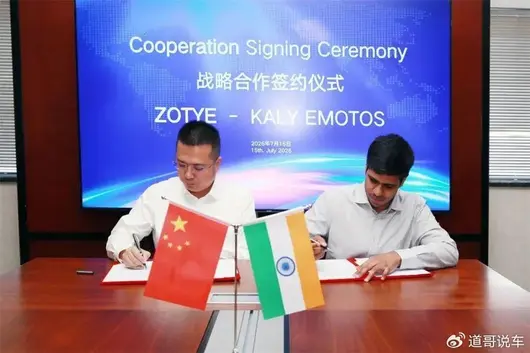
On July 16, Zotye Automobile's official public account published a post stating that Zotye Automobile and India Kaly Emotors formally signed a KD strategic cooperation master agreement, planning to jointly build an SKD construction cooperative project with an annual capacity of 30,000 sets. This means Zotye Automobile's car-making capabilities are starting to be exported to Indian local automakers.
And will this also become the beginning of Zotye Automobile transitioning from inflated profits to real profits?
Exporting Car-Making Capabilities to India, Just Connected with Indonesia Not Long Ago
As the global automotive industry enters the transformation of electrification and intelligence, China's automotive industry is rising quietly, and Chinese automobiles have gained an unprecedented status in the global automotive market with the three words "New Energy". Against this backdrop, China's automobile exports have repeatedly hit new highs, ranking first in the world for three consecutive years. Even many automakers are starting to support sales with exports.
Against this backdrop, Chinese automakers' car-making capabilities have been recognized by overseas markets, even Zotye Automobile which has been out of production for many years. According to the cooperation signed between Zotye Automobile and India Kaly Emotors, both parties will fully integrate Zotye Automobile's existing industrial resources, carry out all-around deep collaboration in the fields of production line construction, special equipment supporting, parts localization adaptation, sales channel expansion, cloud platform construction, and quickly import Zotye Automobile's A0-class models, planning to achieve the SOP mass production off the line for this model in the Indian market.

In addition, start the development of other A0-class and B-class models at an opportune time, planning to continue to expand Zotye Automobile's market share and industry influence in the Indian market. Looking at Zotye Automobile's history, it has certain experience in New Energy A0-class models, having introduced models such as Zotye E200 and Cloud 100 in the early stage, and later also introduced models such as Jiangnan U2. To a certain extent, Zotye Automobile has a foundation in A0-class new energy models.
At the same time, as communicated by both parties, India's new energy vehicle market also indeed has good growth potential. Data shows that the penetration rate of electric vehicles (EV) in India's passenger car market in 2025 was 4.0%. It is worth mentioning that deepening the overseas market layout is one of the strategic priorities of Zotye Automobile. Not long ago, Zotye Automobile also reached a consensus on strategic cooperation for the new energy vehicle whole industry chain with Indonesia BPKN.

According to official statements, both parties initially discussed the phased promotion plan of the project: Phase I plans to adopt the SKD model to explore a fast production path, gradually increasing the localization rate of parts; Phase II preliminarily plans to explore the investment and construction of an integrated smart factory with an annual production capacity of 150,000 units, supporting four major processes of whole vehicle manufacturing and power battery production lines, laying out the landing of home, logistics, and pickup series new energy models.
Zotye Restart Beginning? Can Overseas Markets Redeem its "Chaotic" Self?
According to Zotye Automobile's 2025 annual report, in 2026, Zotye Automobile will persist in the overall idea of focusing on main business, low-cost operation, rapid resumption of production, and overseas priority, with molds and stamping parts as cash flow support, and whole vehicle resumption and new energy model landing as long-term directions. From the trends within the year, Zotye Automobile is indeed moving towards this plan.
However, whether Zotye Automobile can be re-redeemed by overseas markets still faces many tests. First, Zotye Automobile in 2026 can be described as "chaotic" to a certain extent. In June this year, Zotye Automobile fell into a boardroom "internal struggle" storm, three directors jointly proposed to remove current Chairman Han Biwen, followed by shareholders stepping in to support Han Biwen, requesting the removal of the above three directors (due to one resignation canceling the removal against them), and then the three directors who originally proposed to remove the chairman were ousted.

As the saying goes, when it rains it pours. On the evening of July 10, Zotye Automobile announced in a notice that the company received the "Filing Notice" issued by the China Securities Regulatory Commission, and due to suspected information disclosure violations, the China Securities Regulatory Commission decided to file against Zotye Automobile. Of course, the more important thing is financial support, after all, Zotye Automobile has lost money for too long.
Financial data shows that since 2019, as of the end of 2025, Zotye Automobile has had annual losses for seven consecutive years, with a total net loss exceeding 25 billion yuan. At the same time, the 2025 annual report shows that the company achieved operating revenue of 521 million yuan, a year-on-year decrease of 6.66%; net loss of 367 million yuan, a year-on-year shrinkage of 63.29%; as of the end of the reporting period, the company's asset-liability ratio reached 96.54%. These directly led to Zotye Automobile's inability to restart whole vehicle manufacturing business.
Despite the fact that in the first half of 2026, Zotye Automobile achieved profitability, "far ahead" among a group of loss-making automakers. But this time the profit is quite inflated, according to the profit forecast, Zotye Automobile expects the net profit attributable to shareholders of the parent company in the first half of the year to be between 78 million and 105 million yuan. But the core reason is that the company carried out business contraction, cancelled a large number of long-term idle, no operating activities subsidiaries and production sites, obtained compensation income of about 200 million yuan. At the same time, a number of past lawsuits reached settlements, bringing additional income of about 30 million yuan. The sum of the two one-time incomes exceeds 230 million yuan.
In other words, Zotye Automobile's main business or car-making business has made no significant progress. And will the cooperation with Indian local automakers become the beginning of Zotye Automobile's restart?

喺馬來西亞嘅 SUV 市場,好多買家喺揀車嘅時候都會拿 Perodua Aruz 同 Chery Tiggo Cross 嚟做比較。呢兩款車喺價錢同定位上都幾接近,今日我就由多個角度做一個詳細嘅比較,幫你省返做功課嘅時間。
Perodua Aruz 喺馬來西亞嘅 OTR 售價係 RM 72,900 - 77,900,總共有 2 個版本,包括 1.5L X(RM 72,900)、1.5L AV(RM 77,900) 等。
Chery Tiggo Cross 喺馬來西亞嘅 OTR 售價係 RM 88,750 - 99,750,總共有 2 個版本,包括 2025 HEV 1.5L CSH(RM 99,750)、2025 1.5T Standard(RM 88,750) 等。
睇返價錢,Perodua Aruz 嘅起步價係真係比 Chery Tiggo Cross 平咗 RM 15,850。如果你預算有限,Perodua 嘅入門版已經可以滿足日常需要。但都要注意,平嗰幾千蚊,可能喺配備上面會有取捨,具體要睇你嘅需要。

Perodua Aruz 車身長 4400 mm,尾箱 400 L。
Chery Tiggo Cross 車身長 4400 mm,尾箱 400 L。
兩款車嘅尺寸幾近一樣,車內空間差別唔大。呢個級別嘅車,日常使用完全足夠。

Perodua Aruz 保用期 5 年/150,000km,保養間隔 每 10,000km 或 6 個月。
Chery Tiggo Cross 保用期 3 年/100,000km,保養間隔 每 10,000km 或 6 個月。

Perodua Aruz 同 Chery Tiggo Cross 都係馬來西亞市場嘅主流選擇,適合家庭使用、日常通勤。如果你更重視品牌口碑同二手價,可以優先考慮口碑更好嗰款;如果你更在意性價比同配備,嗰就揀配置更豐富嗰款。最後始終建議兩款都去試駕,親身經歷先至最重要。

總體嚟講,Perodua Aruz 同 Chery Tiggo Cross 都係馬來西亞市場好唔錯嘅車型。揀邊部車,關鍵都要睇你嘅個人需要同預算。建議大家做好功課,多比較幾間車行嘅報價,再試駕先做最終決定。買車係一件大件事,花少少時間做功課絕對唔會錯。


在馬來西亞嘅 SUV 市場,好多買家喺選車嗰陣都會拎 Perodua Aruz 同 豐田 Yaris Cross 嚟比較。兩款車喺價位同定位上都好接近,今日我哋就從多個方面做一個詳細嘅比較,幫你省做足功課嘅時間。
Perodua Aruz 喺馬來西亞嘅 OTR 售價係 RM 72,900 - 77,900,一共有 2 個版本,包括 1.5L X(RM 72,900)、1.5L AV(RM 77,900) 等。
豐田 Yaris Cross 喺馬來西亞嘅 OTR 售價係 RM 99,900 - 109,900,一共有 2 個版本,包括 2026 1.5L Standard(RM 99,900)、2026 HEV 1.5L Standard(RM 109,900) 等。
從價錢嚟睇,Perodua Aruz 嘅起步價確實比 豐田 Yaris Cross 平咗 RM 27,000。如果你預算有限,Perodua 嘅入門版已經可以滿足日常需求。但都要注意,平嗰幾千蚊,可能喺配備上會有取舍,具體要睇你嘅需求。
Perodua Aruz 嘅安全評級係 5★(東協 NCAP),主動安全系統包括。
豐田 Yaris Cross 嘅安全評級係 5★(東協 NCAP),主動安全系統包括 TSS。
兩款車嘅安全評級一樣,喺呢個級別裡面安全配備都算俾得好齊全。而家嘅新車安全性都唔差,唔使太擔心這一點。
Perodua Aruz 車身長 4400 mm,尾箱 400 L。
豐田 Yaris Cross 車身長 4400 mm,尾箱 400 L。
兩款車嘅尺寸幾乎一樣,車內空間差別唔大。呢個級別嘅車,日常使用完全夠用。
Perodua Aruz 保養 5 年/150,000km,保養間隔 每 10,000km 或 6 個月。
豐田 Yaris Cross 保養 5 年/無限里程,保養間隔 每 10,000km 或 6 個月。

Perodua Aruz 同 豐田 Yaris Cross 都係馬來西亞市場嘅主流選擇,適合家庭使用、日常通勤。如果你更睇重品牌口碑同二手價,可以優先考慮口碑更好嗰一款;如果你更在意性價比同配備,就揀配置更豐富嗰款。最終都係建議兩款都去試駕,親身體驗先係最重要。
總嚟講,Perodua Aruz 同 豐田 Yaris Cross 都係馬來西亞市場好唔錯嘅車型。揀邊一輛,關鍵都係要睇你嘅個人需求同預算。建議大家做好功課,多比較幾間車行嘅報價,再去試駕做最終決定。買車係件大事,花少少時間做功課絕對唔會錯。

Folks, today let's talk about big news on going global—not selling cars, but selling "drivers". On June 2, WeRide and Uber jointly announced a plan: to launch the country's first commercial Robotaxi pilot service in Madrid, Spain. In other words: Spanish residents will soon be able to hail a driverless taxi via Uber. This is the first time WeRide and Uber are partnering to enter the European market. Madrid also becomes the 12th city globally where WeRide's Robotaxi arrives.
According to official news, with the support of the Madrid regional government, this service will officially launch within this year. At that time, friends in Madrid can open the Uber App and call WeRide's Robotaxi with one click. It's just like calling an ordinary ride-hailing service, the difference is the arriving car has no driver—at least initially, there is still a difference. In the initial operation phase, a professionally trained safety monitor will be on board, as it's just launched, safety comes first.
This company, WeRide, you might have heard of it, or you might not. A brief introduction: Established in 2017, it has been dedicated to Robotaxi technology R&D and commercialization. Currently, its Robotaxis cover Guangzhou, Beijing, Singapore, Abu Dhabi, Dubai, Riyadh, Zurich... plus Madrid now, totaling 12 cities. Spain is also the 5th European market WeRide has entered—previously entered Switzerland, France, Belgium, Slovakia. According to the plan agreed by WeRide and Uber in May 2025, they plan to deploy Robotaxi services in 15 new international cities within five years, deploying tens of thousands of Robotaxis globally. With the Madrid launch, the deployment in 4 cities has been completed, and 11 more will be covered successively before 2030.
To be honest, it's not the first time Chinese autonomous driving companies are going global, but the combination of Chinese technology + global mobility platform + European market is quite interesting. Madrid is one of the European Robotaxi markets with the most commercial potential, with a large population, high travel demand, and friendly local policies. Being able to take root in this market is a significant milestone for WeRide. For Uber, introducing Robotaxis is also a way to reduce costs—after all, drivers don't need salaries. For Madrid residents, hailing a taxi might be cheaper in the future.


On May 15, Geely Automobile (00175.HK) released an announcement on the Hong Kong Stock Exchange regarding an apparently modest sum, yet carrying extremely strong signaling significance.

The announcement shows that Geely Automobile will acquire 100% equity of Radar Automotive (Shandong) Co., Ltd., Radar Automotive Sales Co., Ltd., and its Thai subsidiary Radar Thailand for a cash consideration of approximately RMB 218 million.
After the transaction, this new energy pickup brand incubated by Geely Holding Group for three years will officially transition from a "group test bed" to a core business segment of the listed company Geely Automobile, and its financial performance will also be consolidated into the listed company's financial statements.
This is not a simple internal asset transfer, but a thoughtful strategic positioning and resource reallocation by Geely Automobile after the new energy vehicle competition has entered deep waters.
Underlying this reflection is the Chinese automotive industry's collective bet and fierce competition on the next potential niche market during the electrification transformation.
Transaction Breakdown: A Cost-effective "Internal Deal"
According to the announcement, this acquisition consists of three parts: Zhejiang Jirun Automobile Co., Ltd. invests RMB 159 million to acquire 100% equity of Radar Automotive (Shandong); Zhejiang Geely Holding Group Automotive Sales Co., Ltd. acquires all equity of Radar Automotive Sales Company for RMB 59 million; and two overseas entities under Geely acquire all shares of Thai subsidiary Radar Thailand for RMB 0.49 million. The total consideration is RMB 218 million, which is basically consistent with the fair value assessment of the three companies, with no obvious premium.
Radar Automotive (Shandong) is the core operating entity, controlling all core assets and value of pickup products, covering full industry chain management from R&D, manufacturing to sales. Radar Automotive Sales Company is responsible for domestic channel operations, while the Thai subsidiary established in July 2024 is a key pivot for going overseas to Southeast Asia.
From a financial data perspective, this transaction is a cost-performance choice for Geely Automobile. Radar Automotive (Shandong) achieved a profit of RMB 67.743 million in 2024, although it turned into a loss of RMB 8.646 million in 2025, but its sales company achieved turnaround to profit in the same year, earning RMB 12.325 million.
Geely used a cost of just over RMB 200 million to include a brand that has already established a leading position in the niche market, with annual sales over 10,000 units and complete assets and technology, under its wing. This calculation is shrewd.
Radar Automotive was born in 2021, released the brand in 2022 and launched its first pure electric pickup RD6, focusing on passengerized and electrified pickup tracks. In the past three years, it has existed as an independent incubation project under Geely Holding Group, maintaining a peer-to-peer relationship with listed company Geely Automobile. This structure was conducive to rapid decision-making and flexible trial-and-error in the initial stage, with the group bearing innovation risks.
However, when the Radar brand ran through the business model in three years, sales accounted for more than 60% of the country's total new energy pickup sales in 2023, its strategic value is no longer negligible. This "incorporation" marks that Geely Automobile officially elevated new energy pickups from an "marginal innovation project" to a "core strategic category".
Geely Automobile CEO Gui Shengyue once stated that Geely's new energy vehicle development should achieve balanced development in all fields, covering luxury, mid-to-high-end, mass market and all categories such as MPV, SUV, pickup, etc. Acquiring Radar is precisely filling the last piece of the puzzle for its key niche market that combines passenger, commercial, and off-road attributes in pickups.
Looking deeper, this is the accelerated implementation of Geely's "One Geely" strategy. In recent years, Geely has continued to streamline the number of brands and subsidiaries. This time injecting the matured Radar business into the listed entity aims to open up product planning, supply chain and channel resources, and improve overall operational efficiency. The holding group is responsible for early incubation and risk isolation. After the model is run through, it is handed over to the listed entity for scale operation, becoming a typical paradigm for Geely to seek balance between risk and efficiency.
Industry Tug-of-War: Has the "Turning Point" of New Energy Pickups Arrived?
Geely's heavy bet on new energy pickups at this time is by no means accidental. The entire market is welcoming the "eve" of structural changes.
In 2025, China's new energy pickup sales soared to 73,000 units, a year-on-year surge of 243%, with growth speed far exceeding the overall level of 11.8% of the pickup market. Although its penetration rate in the entire pickup market is still only about 9.15%, the growth momentum is extremely rapid.
Currently, the new energy pickup market has formed the prototype of "one superpower and multiple strong forces". Geely Radar, relying on first-mover advantage and "pure electric + plug-in hybrid" dual-line layout, steadily sits in the top spot, with full-year insured vehicle volume reaching 13,040 units in 2025.
However, challengers are flocking in. BYD "Shark" pickup is about to land in the domestic market; Chery restarts the Rexis brand and launches pure electric pickup R08 EV; Changan enters with the extended-range technology route and launches the Hunter series; JAC, Great Wall and other traditional pickup heavyweights are also increasing investments in hybrid and pure electric products.
Another battle around pure electric, plug-in hybrid, extended-range technology routes, as well as price range and scenario definition has already begun.
Going overseas is the bigger chessboard. At the 2025 Shanghai Auto Show, GAC Group Chairman Feng Xingya also told the media: "If we want to enter the global market, we must take over the pickup market." According to his estimate, if removing China's car sales, the proportion of global pickup sales to global car sales is about 10%.
China's pickup export volume has reached 300,000 units in 2025, accounting for more than 50% of the total pickup sales. In traditional pickup strongholds such as North America, Australia, and Southeast Asia, electrification transformation is also gaining momentum.
Radar enters Southeast Asia with Thailand as a stepping stone, but fighting alone has high costs and slow network building. After being incorporated by Geely Automobile, Radar can seamlessly access Geely's mature global distribution system and expand quickly to more markets.
Geely Australia executives have revealed that they are developing a new rugged new energy pickup more tailored to the Australian market demand, planned to be listed within the next 1-3 years, directly benchmarking Ford Ranger and Toyota Hilux. This indicates that Geely's ambition is by no means just reigning in the domestic market, but intends to get a share of the pie in the new energy transformation of the global pickup market.
After the sedan and SUV markets are rolled into a "red ocean", pickup - this once niche market, is becoming a key battlefield for car companies to seek growth breakout and explore new paths for going overseas.
This acquisition is a brilliant move on Geely's chessboard, and also a microcosm of the competition dimension of China's new energy vehicle industry being widened again. When pickups meet new energy, the story has just begun.