首頁布藝

搜尋歷史
熱門搜尋
經銷商登入 / 註冊

In the Malaysia SUV market, many buyers compare the Honda HR-V and Chery Tiggo 9 when choosing a car. Both vehicles are quite similar in price and positioning. Today, we will conduct a detailed comparison from multiple aspects to save you the time spent on research.
The Honda HR-V has an OTR price in Malaysia of RM 115,900 - 143,900, with a total of 4 versions, including 2026 e:HEV 1.5L RS (RM 143,900), 2026 1.5T V (RM 137,900), 2026 1.5T E (RM 130,900), etc.
The Chery Tiggo 9 has an OTR price in Malaysia of RM 166,800 - 179,800, with a total of 1 version, including 2026 2.0T Standard (RM 179,750), etc.
From a pricing perspective, the Honda HR-V's starting price is indeed RM 50,900 cheaper than the Chery Tiggo 9. If your budget is limited, the Honda entry-level version is already sufficient for daily needs. However, keep in mind that the cheaper price difference might entail compromises in features, depending on your specific requirements.

The Honda HR-V uses FWD drive mode.
The Chery Tiggo 9 uses FWD drive mode.
Both cars share the same drive mode, which is FWD, so there will not be much difference in the daily driving experience.

The Honda HR-V comes with a 5-year/unlimited mileage warranty, with a service interval of every 10,000km or 6 months.
The Chery Tiggo 9 comes with a 3-year/100,000km warranty, with a service interval of every 10,000km or 6 months.

Both the Honda HR-V and Chery Tiggo 9 are mainstream choices in the Malaysia market, suitable for family use and daily commuting. If you value brand reputation and resale value more, you may prioritize the one with better reputation; if you care more about value for money and features, then choose the one with a richer configuration. Ultimately, it is recommended to test drive both, as personal experience is the most important.

In general, both the Honda HR-V and Chery Tiggo 9 are very good models in the Malaysia market. Choosing which one primarily depends on your personal needs and budget. It is recommended that you do your research, compare quotes from several dealerships, and then test drive before making a final decision. Buying a car is a major decision, and spending time on research will never be wrong.


2026 年 8 月 26 日,奇瑞風雲 T7 正式上市,官方指導體價 9.79‑11.89 萬,換購優先價 9.49 萬起,上市即交車。喺國內新能源市場「快速迭代、注重堆料、入門減配」嘅內捲浪潮之下,風雲 T7 走出一條與眾不 同嘅路線:原生全球車,先出海驗證,再回歸國內市場,用三年研發週期、全球嚴苛驗證,主打家用家庭用戶嘅真實用車訴求,試圖重塑十萬級純電 SUV 嘅價值標尺。
反向出海:一台為全世界造嘅家用純電 SUV
當前絕大多數中國新能源車型嘅邏輯係:國內完成研發上市,市場驗證之後,再做局部修改適應海外法規,實現出口。風雲 T7 則選擇反向路徑:同源車型 Lepas L6 已經率先登陸南非、泰國,後續將進入歐盟、英國、澳大利亞、以色列等市場,先經受全球市場檢驗,再面向國內消費者開售。

風雲 T7 依托奇瑞全球 1+7+N 研發體系打造,研發週期長達三年,對標 2026 版 E‑NCAP 五星安全標準,適應全球 210 個國家地區用車環境。研發階段投入 81 臺耐久試驗車,累計完成 145 萬公里耐久驗證、600 萬公里全球路試,足跡遍佈 21 個國家,覆蓋全球絕大多數典型路況;同時邀請 5000 多名海内外用戶參與共創,兼顧不同地區嘅審美與用車習慣。

奇瑞提出嘅「全球車,快唔到一點」,正係風雲 T7 嘅產品底色。佢唔追求快速上新,而係把安全、耐久、可靠性放在首位,把海外嚴苛標準直接平移去國內版本,亦都係佢區別於同價位好多車型嘅核心差異點。
產品力解析:續航平權,把核心硬件俾到每一位用戶
風雲 T7 定位緊湊型純電 SUV,車身尺寸 4570×1852×1694mm,軸距 2700mm,五座佈局,車身尺寸兼顧城市好開好停,同時滿足三口之家日常出行空間需求。
三電系統:全系 600km,拒絕入門版續航縮水
十萬級純電市場一個普遍現象:入門版本縮減電池、降低續航,用低價吸引用戶,長續航版本需要大幅加價。風雲 T7 直接實現續航平權:三款配置全部搭載 65.05kWh 犀牛磷酸鋰鐵電池,CLTC 續航統一 600km,百公里電耗 12.9 度,30%‑80% 直流快充只需 20 分鐘,支援 6.6kW 對外放電,滿足露營戶外場景。

動力採用 12 合 1 鯤鵬超能電驅,前置單電機最大功率 178kW,峰值扭矩 275N·m,最高車速 180km/h,兼顧城市通勤與高速超車能力。底盤為前麥花臣 + 後多連桿獨立懸掛,由海外底盤專家團隊調校,560mm 低重心設計,帶來唔錯嘅行駛穩定性;整車擁有 500mm 涉水深度,電池包具備完善嘅液冷、PTC 預加熱、寬溫域熱泵空調,兼顧低溫環境續航表現。
外觀與座艙:家用取向,實用配置唔係吝嗇
風雲 T7 採用東方馭風美學家族設計,封閉式前臉搭配 L 型日行燈,整車線條簡潔穩重,兼顧全球市場審美。全系標準配備 AGS 智能主動進氣格柵,全車 14 項低風阻優化,有效降低風噪、提升續航表現;車尾貫穿式尾燈,全系標準配備電動尾門,喺同價位屬於非常實在嘅配置。

市場格局:十萬級純電 SUV,務實路線嘅新挑戰者
當前 10‑12 萬純電 SUV 賽道競爭白熱化,埃安、零跑、名爵等多款產品同台競技。呢個細分市場嘅用戶,大多數係家庭第一台車,訴求好現實:穩定續航、可靠安全、夠用嘅配置、低用車成本,對於花巧嘅噱頭配置並唔鍾意。

風雲 T7 同風雲 T9L 定位形成區隔:T7 係城市家用純電 SUV,適合日常通勤為主,充電方便嘅家庭;T9L 係插混大五座,適合經常長途出行、冇固定充電條件嘅用戶,兩者互補,完善風雲品牌嘅家用新能源矩陣。

風雲 T7 嘅上市,代表奇瑞風雲品牌嘅一種產品思路:唔盲目堆砌參數,唔做入門減配,將全球標準落地去家用車型,用保養同安全兜底,服務普通家庭真實用車場景。
喺好多車型一味追求加速、大屏幕、花巧功能嘅時候,風雲 T7 回歸家用本質:續航夠用、安全可靠、底盤扎實、售後省心。「先出海再回家」嘅開發模式,亦畀國內新能源行業提供一個參考:好車唔止服務國內市場,更經得住全球市場檢驗。
對於普通消費者嚟講,如果預算喺 9‑12 萬,想要一台 600km 續航、有終身保養、兼顧城市通勤同短途出遊嘅純電 SUV,風雲 T7 係值得重點考慮嘅務實選擇。

In Malaysia's SUV market, many buyers compare Proton X90 and Chery Tiggo 8 PHEV when choosing a car. These two cars are quite close in price and positioning. Today we will do a detailed comparison from multiple aspects to help you save time on research.
Proton X90's OTR price in Malaysia is RM 106,800 - 122,800, with a total of 4 versions, including 2026 1.5T Prime X (RM 122,800), 2026 1.5T Prime (RM 116,800), 2026 1.5T Lite (RM 106,800), etc.
Chery Tiggo 8 PHEV's OTR price in Malaysia is RM 159,750 - 159,750, with a total of 2 versions, including 1.6L Turbo Standard (RM 130,000), 1.6L Turbo Premium (RM 145,000), etc.
From a pricing perspective, the starting price of Proton X90 is indeed RM 52,950 cheaper than Chery Tiggo 8 PHEV. If your budget is limited, Proton's entry-level version can already meet daily needs. However, note that the few thousand cheaper cost might involve trade-offs in features, depending on your specific needs.

Proton X90 is equipped with 1.5L Turbo, 140 hp. Official fuel consumption 7.0 L/100km.
Chery Tiggo 8 PHEV is equipped with Hybrid, 170 hp. Official fuel consumption 4.5 L/100km.
Regarding power, the Hybrid of Chery Tiggo 8 PHEV has 30 more horsepower than the 1.5L Turbo of Proton X90. However, for daily city driving, both cars have sufficient power and won't feel underpowered.
Proton X90 safety rating is 5★ (ASEAN NCAP), active safety systems include ADAS (ACC, AEB, LKA, LDA, BSM, RCTA).
Chery Tiggo 8 PHEV safety rating is TBD, active safety systems include Basic.
In terms of safety features, both cars have achieved good ratings. However, there are some differences in functionality between Proton X90's ADAS (ACC, AEB, LKA, LDA, BSM, RCTA) and Chery Tiggo 8 PHEV's Basic. If you value active safety highly, you can compare the feature lists of both carefully.
Proton X90 warranty 5 years/150,000km, service interval every 10,000km or 6 months.
Chery Tiggo 8 PHEV warranty 3 years/100,000km, service interval every 10,000km or 6 months.
Overall, Proton X90 and Chery Tiggo 8 PHEV are both very good models in the Malaysian market. Which one to choose ultimately depends on your personal needs and budget. We recommend doing your homework, comparing quotes from several dealerships, and then test driving to make a final decision. Buying a car is a big matter, spending some time doing homework is never wrong.


In the Malaysia SUV market, many buyers compare Proton X50 and GWM Haval H6 when choosing a car. The price and positioning of these two cars are quite close. Today we will make a detailed comparison from multiple aspects to help you save time on research.
The OTR price of Proton X50 in Malaysia is RM 89,800 - 113,300, with a total of 4 versions, including 1.5T Executive (RM 89,800), 1.5T Premium (RM 101,800), 1.5T Flagship (RM 113,300) etc.
The OTR price of GWM Haval H6 in Malaysia is RM 139,750 - 139,750, with a total of 2 versions, including 1.5L Turbo Standard (RM 140,000), 1.5L Turbo Premium (RM 155,000) etc.
From the price perspective, the starting price of Proton X50 is indeed RM 49,950 cheaper than GWM Haval H6. If your budget is limited, Proton's entry-level version can already meet daily needs. But also note that the few thousand yuan difference might involve trade-offs in features, depending on your needs.

Proton X50 is equipped with 1.5L 4-cyl, power 105 hp. Official fuel consumption 6.0 L/100km.
GWM Haval H6 is equipped with Hybrid, power 170 hp. Official fuel consumption 4.5 L/100km.
Regarding power, the Hybrid of GWM Haval H6 has 65 more horsepower than the 1.5L 4-cyl of Proton X50. However, for daily city driving, the power of both cars is sufficient, you won't feel it lacks power.

Proton X50 body length 4400 mm, trunk 400 L.
GWM Haval H6 body length 4400 mm, trunk 400 L.
The dimensions of the two cars are almost the same, interior space difference is not significant. For this class of cars, daily use is fully sufficient.

Proton X50 warranty 5 years/150,000km, maintenance interval every 10,000km or 6 months.
GWM Haval H6 warranty 7 years/150,000km, maintenance interval every 10,000km or 6 months.
Overall, Proton X50 and GWM Haval H6 are both very good car models in the Malaysia market. Which one to choose depends mainly on your personal needs and budget. It is recommended to do your research, compare quotes from several dealerships, and then test drive to make a final decision. Buying a car is a big matter, spending some time on research will never go wrong.


車型概覽

五菱凱捷 值唔值得睇,第一步唔係望牌子或者外形,而係睇佢能唔能夠配合你嘅香港日常。 呢篇會集中講同級車比較,幫你用買家角度篩走唔適合嘅選擇。
售價仍待確認,買家可以先把佢放入候選名單,等價格落實後再同同級車逐項比較。
購車價格指南
五菱凱捷 目前售價仍未清晰,較理性嘅做法係先睇版本、車身大小同動力形式,等價格落實後再決定值唔值得落訂。
如果有幾個版本可揀,可以先將 2024 1.5T CVT版(價格待確認) 放喺同一張清單。日常通勤重視舒適同易用,家庭買家就要優先睇後排、尾箱同安全配置。
核心規格重點
睇 五菱凱捷 嘅規格,重點唔係背數字,而係理解佢喺香港用車場景會帶嚟咩分別。
渦輪增壓、4 個 汽缸、1498 mL 排量 嘅動力底子,重點係市區跟車夠唔夠順、高速巡航會唔會吃力。 177 Ps / 130 kW、290 N·m 嘅輸出,對滿載、上斜同超車都比單睇馬力數字更有意思。 車長 4875 mm、車闊 1880 mm、車高 1695 mm、軸距 2800 mm 可以幫你預判商場停車場、屋苑車位同後排腿部空間。 無級變速(CVT)、前置前駆 會影響起步順滑度、濕地穩定感同長途巡航性格。
優缺點分析
五菱凱捷 嘅優點唔需要講到天花龍鳳,真正有價值係佢能唔能夠令日常用車更省心:動力輸出對高速同上斜更有底氣、空間同車身尺寸方便家庭買家預判實用性。
要留意嘅係,香港停車場同窄路使用要留意車身闊度、售價未清晰前唔應該太早用性價比落結論。呢啲唔一定係缺點,但係落訂前應該先諗清楚。
買家常見問題
買 五菱凱捷 之前,真正要問嘅唔係單一規格,而係佢可唔可以融入你每日嘅生活節奏。
常見疑問係「五菱 Wuling 凱捷 係一款咩類型嘅 MPV?」簡單講,五菱 Wuling 凱捷 係一款主打「大 4 座」理念嘅高端家庭 MPV。 放到實際用車,就係要睇佢對通勤、泊車、家庭乘坐同長期成本有幾大幫助。
同級對比內容
將 五菱凱捷 放入同級車清單時,唔建議只用外形或者品牌光環決定。比較順序可以係:先等售價落實,再決定佢應該同邊個級距比較、再睇動力係咪足夠應付高速併線同滿載、最後睇車身大小、座位同尾箱是否適合家人。
咁樣篩選會貼近香港買家真實生活:平日塞車、商場泊車、周末去新界、甚至一家人出入,先係一部車每日要面對嘅考驗。
用車全周期指南
擁有 五菱凱捷 唔係買車一刻就完結,之後仲有保險、輪胎、保養、泊車同日常能源成本要處理。
如果你主要喺市區行,視野、低速順滑度同泊車輔助會好影響心情;如果經常行高速或跨區,座椅舒適度、隔音同動力從容感會更重要。



As stated in the title, Chery (Chery) has confirmed it will enter the Japanese market through Electric Mobility Technologies (EMT), the joint venture is registered in Singapore, with participants including Chery, Jiangsu Yueda Group, Autobacs Seven, Gotion High-Tech and Anest among others.
According to media reports, the joint venture will launch a new brand named Emta in Japan. The first model is a pure electric light vehicle, commonly known as a K-Car, expected to officially launch in 2027. Product-wise, the new car will be built based on Chery's vehicle architecture, electric drive system and ADAS driving assistance technology, while the power battery will be supplied by Gotion.
In terms of production, this model is expected to be produced at Yueda's factory located in Yancheng, Jiangsu Province, China. The factory currently also undertakes production tasks for Kia and HiPhi (HiPhi). If the brand subsequently achieves scaled success in the Japanese market, the company does not exclude the possibility of establishing a production base in Japan after 2030. In terms of division of labor, Autobacs Seven will be responsible for sales network construction and channel operations, while Anest will undertake quality and after-sales support systems.

According to the plan, the Emta brand will launch a total of four models for the Japanese market before 2029, with the K-Car being the launch product. Afterwards, it will gradually expand to a series of larger-sized models, including hatchbacks, SUVs and a multi-purpose vehicle with a shape close to an MPV.
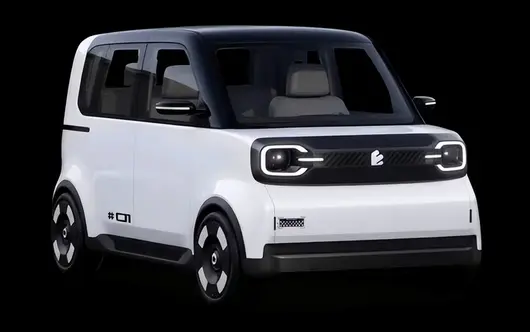
From the currently revealed teaser images, the outside world generally believes the first model may be named Emta #01. Regarding design language, the overall contour of the car has some similarity to Chery QQ Ice Cream, but it has been redesigned in details, including a more simplified front face styling, redefined headlight group structure and more miniaturized exterior mirror design, making it better comply with the strict requirements of the Japanese K-Car market for practicality and space efficiency. In terms of body dimensions, the new car is about 3400mm long and 1480mm wide, complying with the typical K-Car regulatory framework.
It is worth noting that this Emta K-Car will directly face competition from multiple local brands in the Japanese domestic market in the future, and will also welcome opponents from the Chinese camp, such as BYD Racco and other same-class small electric vehicle products planned to be launched in Japan by BYD. As multiple parties accelerate layout, the competitive landscape of the Japanese micro electric vehicle market is expected to heat up significantly.


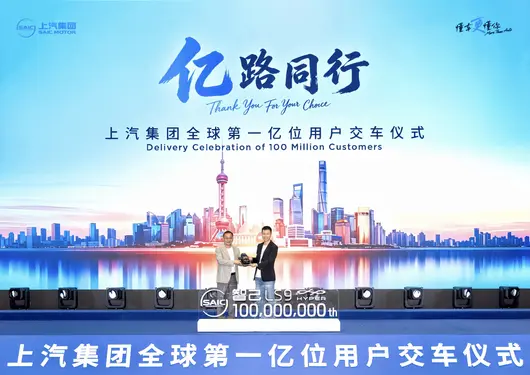
May 28, Shanghai North Bund World Living Room, SAIC Motor handed over an IM LS9 Hyper to Momenta CEO Cao Xudong. This special user is not only a core strategic partner of SAIC in the intelligent driving field but also has become SAIC's first 100 millionth global car owner. From 1958, when workers hammered out the first "Phoenix" brand sedan with hammers, to today when the 100,000,000th vehicle went off the assembly line, SAIC Motor has become the first automotive group in China to break 100 million cumulative production and sales. This is not just a leap in numbers, but also a microcosm of China's automotive industry moving from "scale expansion" to "quality leadership."
100 million vehicles is a periodic answer sheet for SAIC's 70 years of development history, and also a vivid footnote for China's automotive industry developing from nothing to something, from weak to strong. In 1955, the Shanghai Internal Combustion Engine Parts Manufacturing Company was established; in 1958, the first "Phoenix" brand sedan went off the line; in 1983, the Santana began the joint venture cooperation; in 1997, Shanghai GM created the "Shanghai Speed" of building a factory and producing vehicles in 23 months; in 2006, the independent brand Roewe was born; in 2016, the world's first Internet car was launched; in 2020, the high-end intelligent electric brand IM Motors was established. Running through this process is SAIC's role evolution from "joint venture cooperation" to "independent innovation" to "technology export". And the IM LS9 Hyper delivered as the first 100 millionth vehicle is a concentrated embodiment of this accumulated capability: full-line steer-by-wire four-wheel steering, 520-line LiDAR, NVIDIA Thor chip, all-domain 800V high-voltage platform, Gold Label Hurricane three-motor — these configurations point to the same signal: SAIC is participating in high-end market competition in a way that "technology defines luxury."
Behind 100 million vehicles is the synergistic effort of SAIC's full brand matrix. From January to April 2026, SAIC's cumulative sales reached 1.302 million units, ranking as the sales champion of Chinese car companies for four consecutive months. Among them, the sales share of independent brands was nearly 70%, new energy vehicle sales were 412,000 units, overseas market sales were 459,000 units, a year-on-year surge of 50.2%. From Shangjie Z7 to Wuling Starlight 560, from Roewe M7 to MG4 Semi-Solid State Battery version, from Hongyan Heavy Truck to Sunwin Electric Bus, independent brands cover all scenarios such as personal travel, commercial operations, and logistics transportation. The joint venture segment also revealed the periodic results of "Joint Venture 2.0": SAIC Volkswagen ID. ERA 9X delivery broke 7,000 units within one month of listing, entering the top three of large high-end SUVs over 300,000 with extended range; AUDI E7X plans to become Audi's first L3 level autonomous driving landed model worldwide; Buick Zhijing E7 delivery broke 100,000 units within one month of listing. Independent and joint ventures "flying together with two wings" is becoming SAIC's unique structural advantage distinguishing it from other car companies.
More noteworthy is SAIC's globalization rhythm. On the day of the delivery ceremony, the scene switched from the Shanghai main venue to Nanjing, Liuzhou, Taiyuan, and then to the UK, Indonesia, Singapore — this is an unprecedented narrative method for Chinese car brands. SAIC is a pioneer of Chinese car companies "going out": owning over 100 parts production bases overseas, over 3,000 dealer networks, building 3 major R&D innovation centers such as London and 4 production centers in Thailand, Indonesia, India, Pakistan; Anji Logistics owns 42 roll-on/roll-off ships, 8 international routes covering Southeast Asia, Europe, and the Americas. Products and services are distributed in over 170 countries and regions, with overseas cumulative sales breaking 7 million vehicles. MG has been the European sales champion of Chinese brands for 11 consecutive years; in 2025, European annual sales broke 300,000 units, becoming the first Chinese car brand to break 1 million cumulative sales in Europe and the UK. In 2025, SAIC released the overseas "Glocal Strategy" (Global + Local), accelerating the shift from "product going overseas" to "value chain going overseas".
100 million vehicles is a concentrated realization of 100 million users' trust. At the delivery site, Dedao APP founder Luo Zhenyu, as the first experience officer of Huajing S, went from praising Huawei Qiankun Intelligent Driving in the New Year's Eve lecture to entering the factory to witness the off-line; former German footballer Yang Chen chose ID.ERA 9X, because its golden extended range coincided with long-termism; charity blogger Liu Jia shaved the hair of left-behind children in mountain areas for five consecutive years, Buick provided assistance immediately, she was moved by Zhijing E7's "full score cockpit". These stories collectively point to SAIC's brand concept of "Understand Cars, Understand You" — understand cars is an extreme pursuit of core technology; understand you is landing technology into user-perceivable experiences.
From the first Phoenix brand in 1958 to the IM LS9 Hyper in 2026; from the first user to the first 100 millionth user; from joint venture cooperation to technology export — SAIC's 100 million vehicles is a witness of China's automotive industry from "bringing in" to "going out". When 100 million vehicles become history, the real challenge lies in: how to make the "gold content" of the next 100 million vehicles surpass the "quantity content". In the second half of smart electric vehicles, the deep construction of system capability, global layout, and user ecosystem will be the key to whether SAIC can move from "scale first" to "brand first".