首頁布艺

搜尋歷史
熱門搜尋
經銷商登入 / 註冊
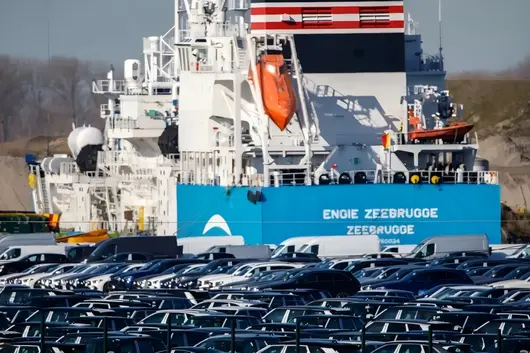
最近,中国汽车圈有个很有意思的现象:一边是国内市场价格战打得火热,一边是头部车企在海外市场悄悄“闷声发大财”。
吉利刚刚交出的 5 月成绩单,就让人嗅到了一些不寻常的信号——海外出口销量超 8.5 万辆,同比上升 184%,刷新历史纪录。更关键嘅係,呢份增长唔係靠低价走量,而係实打实地喺全球高端市场“攻城略地”。
喺迪拜,一位见惯了豪车的经销商忍不住感慨:“德国品牌已经无法与极氪这样的中国品牌竞争了。”佢甚至自己下单了两台极氪新车。
这话从豪车聚集地的经销商口中说出,分量不轻。它背后折射出嘅,係中国汽车出海一个质变的拐点:从“卖得出去”到“卖得上价”,再到“让人追着买”。
01 爆单的“甜蜜烦恼”:物流成了新战场吉利 5 月嘅销量数据有几个细节特别值得玩味。
第一,唔系某一款车火,而係“多点开花”。喺墨西哥、印尼,Geely EX2 拿下 B 级两厢新能源销冠;喺澳大利亚,极氪 7X 直接超越了长期霸榜嘅特斯拉 Model Y;极氪品牌 5 月交付 34,377 辆,单车成交价同比上升 52.4%,超过 BBA。
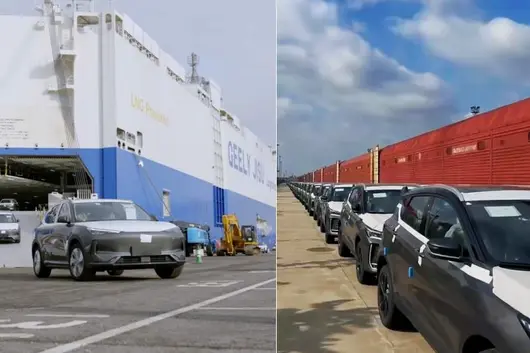
第二,“爆单”已经严重到需要紧急调动物流资源。吉利不得不启用滚装船、集装箱船和国际铁路班列,形成 4 大铁路港、6 大海运港嘅运力布局。中歐班列吉利专列常态化运行,比海运缩短 40 日。
呢其实係一个很“甜蜜”嘅烦恼。过去我哋讨论中国车出海,担心嘅係没人买;而家吉利面临嘅问题,係买嘅人太多,运唔过去。
这种供需关系嘅逆转,才係真正值得关注嘅信号。当你嘅产品喺海外需要“抢运力”嘅时候,说明品牌已经跨过咗最难嘅“信任门槛”。

好多人把极氪喺海外嘅成功简单归结为“配置高、价格低”。但如果你仔细看数据,就会发现事情冇咁简单。
喺澳大利亚,极氪 7X 卖得比特斯拉 Model Y 仲贵,销量却反超了。喺迪拜,经销商评价极氪时用嘅词係“进入咗下一个阶段”,而唔係“性价比高”。
呢背后嘅本质差异在於:极氪係用“科技定义豪华”嘅逻辑,去挑战 BBA 同特斯拉嘅“品牌溢价”。
全栈 900V 高壓平台、浩瀚-S 超级电混架构……呢啲硬核技术带来嘅体验提升,係跨市场嘅。无论係你係中东富豪定係澳洲家庭,更快嘅充电速度、更长嘅续航、更智慧嘅座舱,呢啲价值係普适嘅。
换句话说,极氪冇喺老牌车企擅长嘅游戏规则里同佢哋玩,而係直接重新定义咗一套规则。 当德国品牌仲喺纠结“豪华感”嘅时候,中国品牌已经把“科技感”变成咗新嘅豪华标准。

呢次吉利海外爆单,仲有一个容易被忽略嘅细节——它唔係靠单一品牌单打独斗,而係“一个吉利”体系下嘅多品牌协同。
吉利、领克、极氪保持各自调性,但共享研发、渠道、物流同售后体系。这意味著咩?意味著吉利喺海外唔係喺“试水”,而係喺“扎根”。
比如售后,吉利构建咗“中心库—区域仓—末端网点”三级服务体系,推出超长质保,仲建立咗 VOC 用户之声系统,全球统一响应。呢已经唔係“卖车”嘅思维,而係“用户运营”嘅思维。
再比如物流,提前布局自有滚装船、常态化中歐班列专列……呢啲基础设施嘅投入,睇落係成本,但面对而家 8.5 万辆嘅月出口量,呢啲前瞻布局成咗最硬嘅竞争壁垒。
真正嘅全球化,唔係把国内嘅车运到国外卖掉,而係喺当地建立完整嘅服务能力同品牌认知。 呢一点,吉利已经行喺好多中国车企嘅前面。

过去我哋总话“中国係汽车大国,唔係汽车强国”,因为真正嘅强国,一定係喺全球市场拥有定价权同品牌话语权嘅。
从吉利 5 月嘅海外表现来睇,呢个转折点可能比我哋想象中来得更快。当一款中国品牌嘅汽车能喺迪拜被经销商主动“求购”,能喺澳大利亚正面击败特斯拉,能喺墨西哥、巴西创下历史销量新高——呢已经唔係一个企业嘅胜利,而係整个中国汽车工业嘅里程碑。
当然,挑战仲喺后面。欧美市场嘅关税壁垒、本土品牌嘅激烈反扑、文化差异带来嘅用户习惯磨合……呢啲都係吉利乃至所有中国车企必须跨过嘅坎。
但至少有一点已经明确:中国汽车出海嘅“高端局”,唔再係愿景,而係正进行时。


On June 1, Changan Automobile announced deliveries of 209,100 units in May, including 70,700 units delivered overseas, a year-on-year increase of 38%. New energy deliveries totaled 92,400 units, a year-on-year increase of 5.8%.
Among its sub-brands, Changan Qiyuan delivered 34,528 units in May, the flagship new Q05 delivered 15,812 units, with orders in Thailand exceeding 3,000 within three days of launch; Deepal Auto sales reached 33,243 units in May, up 30% year-on-year, overseas cumulative sales from January to May totaled 28,704 units, up 167% year-on-year; Avatr delivered 7,336 units in May, the Avatr 07L appeared in the MIIT announcement, will be the first to carry Huawei Qiankun ADS 5; Changan Automobile (Gravity) delivered 48,900 units in May, CS75PLUS&Eado Blue Whale Super Engine dual-car launch delivery, launch special price starting from 79,900 yuan; Changan Kaicheng delivered 21,100 units in May, new energy sales up 21% year-on-year.
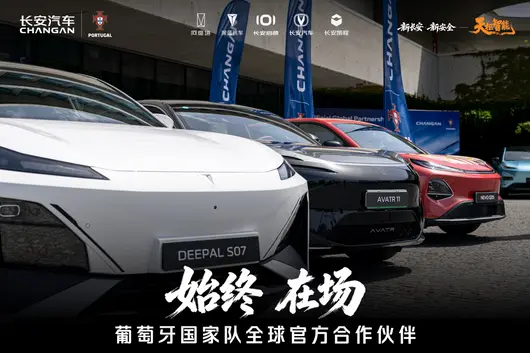
Behind the steady climb in sales is the solid advancement of Changan Automobile's three major strategies. In May, Changan Automobile officially announced becoming the Global Official Partner of the Portuguese National Football Team, another step taken in the global "Inclusive" Plan 2.0; Changan's self-developed Tianzhu Leading End-to-End Technology is about to be mass-produced on vehicles, the intelligent "Beidou Tianzhu 2.0" plan secures another victory; Changan Blue Whale Super Engine dual-car launch delivery starts in hundreds of cities and thousands of stores across the country, the new energy "Shangri-La" plan achieves a 50% reduction in fuel consumption for blue-plate vehicles.

Have you ever seen the roads in India?
I've seen them online.
The scene is usually like this: a sedan blocked behind a cow, motorcycles running wild nearby, even milk tea vendors nearby, so "clean and hygienic".

However, in a place where many feel physically uncomfortable after watching, Toyota, Suzuki, Honda and other Japanese car companies decided to bet on India.
According to the Indian "Brand Quality Foundation" website, the three car companies will invest nearly $11 billion to build factories, increase capacity, and develop exports in India.
Some netizens commented: Did the three Japanese car companies have too much money?
In fact, they didn't have endless money to spend, nor were they bewildered by Indian curry. These Japanese car executives are much clearer than us.
Current Japanese car revenue and market share are declining. Raw material costs are soaring. Looking at the world map, finding a market that can accommodate capacity, expand share, and has gentle competition is not easy.
So, it wasn't that Japanese car companies chose India, but because they had no choice.
The Pain of Japanese Car Companies
Past Japanese cars were truly the envy of others.
Ask old drivers who drove Japanese cars over ten years ago, talking about Japanese cars, almost no one doesn't give a thumbs up, cheap price, fuel saving, durable...
Even many Japanese cars needed to be bought at a markup, but who would think this iron fortress would be beaten out of sight in a few short years.
With the wave of new energy vehicles coming, electrification and intelligence became the goal for many domestic car companies to "leapfrog". Relying on China's strong new energy vehicle industry chain advantages and car companies' own persistence on R&D and technology, Chinese independent brands quickly achieved "leapfrogging".
Domestic cars once criticized are now becoming more and more common on the roads, even surpassing joint ventures in share.
According to CPCA data, in April 2026, the share of independent brands reached as high as 62.5%, far exceeding Japan's 13.1%.

You need to know, the Chinese car market is the largest car market in the world. Losing speed in the Chinese market is like losing a huge piece of cake.
Meanwhile, the main theme of the Chinese market in recent years is still price wars. Racing on configuration, price, and service has become a normal state, which also had a huge impact on Japanese cars' profits.
Apart from China, Japanese cars are also not doing well in the US.
On January 20, 2025, Trump swore in as the 47th US President, starting a series of chaotic operations, including imposing additional car tariffs in the name of national security, causing the tariff rate for imported Japanese cars to reach as high as 27.5% at one point. Although it decreased later, it was still far higher than the initial tax rate.
This operation directly led to a tariff loss of over 2 trillion yen for seven Japanese car companies in fiscal year 2025.
Looking at Japan itself, it is actually not easy either.
Middle East geopolitical conflicts blocked shipping in the Strait of Hormuz, transportation costs and raw material costs soared, Japanese car companies also had to suffer in silence.

Executives looking at the reports, their backs went cold, only to find a new growth curve.
So, Japanese car companies didn't fall in love with India, there was nowhere else to go.
Deep Thought on Choosing India
So, what magic does India have, to make Japanese car companies invest heavily?
The first advantage is big. In 2025, the Indian car market achieved 5.517 million new car sales, up 6% year-on-year, breaking the historical record, ranking as the third largest car market in the world, exceeding Japan for four consecutive years, second only to China and the United States.
The value of this doesn't need me to say much. India achieved this result mainly because India has been promoting tax reduction policies to promote consumption, which led to a significant increase in domestic consumption willingness.
The second advantage is close, meaning it is close to places where Japanese cars sell well, such as Africa.
So, India for Japanese car companies is more like a convenience store built in the center of a crossroad. You don't need to ship cars to eight countries separately, just build well at this stop in India, then unload ship by ship, and you can save a lot of costs.

The Nikkei also believes that India is expected to become its global car supply center.
The third advantage is stability. You know, Japanese cars' advantage is fuel cars, after all, the three major components of engines, gearboxes, and chassis, they have played for many years, technology accumulation is number one in the world.
But the Chinese car market has fully promoted electrification and intelligence development, leading to Japanese cars' advantage becoming weaker and weaker, impossible to play out. But India is different, it has the characteristics of few charging piles and slow electrification process. Indian old people buying cars still look for cheap, fuel saving, easy to fix, and these three points are exactly Japanese cars' old trade.
Especially Suzuki, always been India's car market evergreen, almost always sitting on the best-selling model throne, reputation of being worry-free, better than any advertisement.
So, Japanese car companies' vigorous layout of the Indian market is obviously carefully considered.
But, is the Indian market really that easy to mix?
The Hard-to-Bite Indian Market
Of course, India is not perfect like a hot commodity, its disadvantages are as obvious as its advantages, and every one is enough for Japanese car companies to face a hard time.
First talk about electrification. Yes, right now India has few charging piles and electric cars don't sell well, it is indeed a shelter for Japanese fuel cars. But you have to think, how long can this "shelter" avoid?
India previously shouted the slogan of 30% of new cars being electric vehicles by 2030. Although it sounds like bragging, but can't help but they really give subsidies, really build charging stations.
Imagine, what if one day India suddenly wakes up, starts vigorously promoting electrification, doing infrastructure, charging piles popping out like mushrooms after rain, then Japanese cars will be dumbfounded?
Isn't this a version of the Thai market?
Back then Japanese cars in Thailand won easily. The entire Southeast Asian market was called Japanese cars' backyard. Result Thailand took the lead in promoting electrification. Chinese electric vehicles came in, directly became a hot commodity. Look at Japanese cars again, share in Thailand falling down rapidly.

If India accelerates electrification, history will likely repeat, and this time, Japanese cars don't even have a place to flee, how to prevent will become the first problem for Japanese car companies.
Next talk about policy. India's policy is like a pot of curry, you never know if you will eat chicken or potato next time.
This magical country, today low tariff encourages building factories, tomorrow may fine you a huge amount. What's more annoying is mandatory joint venture. Foreign car companies want to sell cars in India, have to find local partners to partner up. When your factory is built, supply chain is done, India directly backstabs you. At that time whether adding money or withdrawing capital, what you get is heartache.
So you see, this market like India is like a mango that looks very sweet, bite the first mouth it's okay, chew two more mouths hit the hard core.
Japanese cars now is calculating, while the core hasn't bit the tooth, hurry up to nibble a few more mouths, but the core will bite sooner or later, just don't know which day.
Epilogue
Japanese cars this trip to India, not go for tourism, is go to make a living.
Chinese and Southeast Asian dining tables are more crowded, production and transportation costs have risen. Looking around the world, only this pot in India is still steaming, even if what is boiling inside is curry-flavored stones, have to bite hard and chew down.
Japanese car companies want to expand market, India wants to pull economy, solve employment, both sides have their own thoughts.
As for the ending is Japanese cars in India regain their glory, or like past competitors shamefully walk away, then is not known.
But no matter how, this play just started, we slowly watch is okay.
Anyway India's story, never bored.