


首頁大牌檔先係真正香港味

搜尋歷史
熱門搜尋
經銷商登入 / 註冊

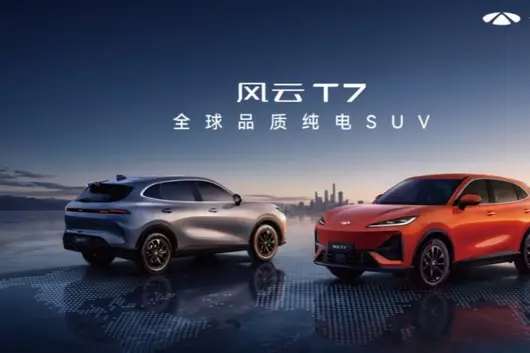
Today let us talk about a car that does not follow the ordinary path — Chery Fengyun T7. It has officially started pre-sale, the launch theme is called "Slow work builds good cars, long waited". This sounds plain, but in the current industry atmosphere of quick car production, it rather has a bit of a "going against the trend" meaning.
Why say going against the trend? Many new energy vehicles nowadays from project start to launch want to finish within a year, piling specs, competing on parameters, wanting to stuff all hardware into the car. But what users truly care about, long-term reliability, environmental adaptability, durability quality, are instead put behind. Fengyun T7 deliberately chose another path — slow down R&D, slow down verification, slow down accepting global standard tests. Where exactly is this car slow? Let's look item by item.
Such a pure electric SUV undergoing global strict verification, the pre-sale price is very sincere. Fengyun T7 price range is 109,900 to 129,900 yuan, positioned in the 100,000-level home pure electric market. This price means global quality pure electric SUVs have finally entered the reach of ordinary families.

Slow in R&D, global standards first. Fengyun T7 used 2 years planning, 3 years R&D, developed according to the 2026 version E-NCAP five-star safety standard, functional safety reached ASIL D highest level. What is ASIL D? This is the highest level of automotive functional safety, meaning from system architecture to hardware and software design, all require the strictest safety redundancy. At the same time, Chery completed 5,000+ global user research, visited 15 typical countries in depth, integrating user needs from different regions into product definition from the very beginning.
Slow in verification, global extreme environment field tests. Fengyun T7 simultaneously invested 81 exclusive durability vehicles, whole vehicle cumulative test mileage over 6 million kilometers, durability special field test 1.45 million kilometers. Covering EU, Australia/New Zealand, Middle East, South Africa, Russia, Mexico, Brazil etc. 100+ extreme road condition environments.
Tropical extreme humidity (Southeast Asia): National standard water immersion height 150mm, Fengyun T7 achieves 500mm off-road level waterproofing, coping with rainy season flood wading; air filter optimized for high humidity regions, preventing mold and odor.
Nordic extreme cold: Heat Pump + PTC dual source heating, stable operation at -30°C, heating from -20°C to 23°C in 20 minutes, winter range achievement rate improved by 30%.
Middle East dry heat: Exclusive 4.5L large capacity washer fluid tank, optimized wiper durability. Plateau strong UV: Body paint strengthened anti-aging, seals resistant to heat and cold alternation, long-term not fading. Brazil gravel road: Battery added front and rear beam protection, coping with flying stone impact.
Global environment adaptation range from -40°C to 55°C, covering 95% of global road types — Brazil high speed bumps, Mexico cobblestone road, German highway high curvature turns, South Africa unpaved mud road, all tested.
Slow in manufacturing, global unified standards. Welding automatic welding precision reaches ±0.01mm, hair level precision; Painting achieves full vehicle lifecycle zero corrosion; Assembly 60 seconds per vehicle off the line. AI+5G Hawk Eye inspection station, over 200 visual inspection points, inspection sensitivity is 100 times human eye, preventing defective vehicles from leaving the factory.
Slow in the back, Chery global hard strength support.

Behind these "slows", is Chery's 23 years export number one, 20 million global users hard strength backing. The Fengyun T7 same-source model Lepas L6 has already launched in South Africa, Thailand, received overseas user recognition, subsequently will continue to push the launch rhythm in Indonesia, EU, Australia/New Zealand, UK, Malaysia and other markets. It is not made well domestically then sold abroad, but from the very beginning built according to global car standards.
Why "cannot speed up at all"? Many cars in the industry now are "fast" out — shorten test cycle, compress verification mileage, skip extreme environments. But for a car to drive eight to ten years in user hands, to experience spring summer autumn winter, to run on highways and rough roads, to start up in a minus 30 degree morning, these are not solved by piling screens and piling chips.

Fengyun T7 does these invisible kung fu ahead. 3 years R&D, 6 million kilometers verification, 100+ extreme scene tests — it is not that it does not want to be fast, it is that for quality matters, it simply cannot be fast.
Pure electric market competition entered the second half, comparing no longer explicit parameters, but stability, reliability, durability feeling. Fengyun T7, is the response Chery submitted for this second half.

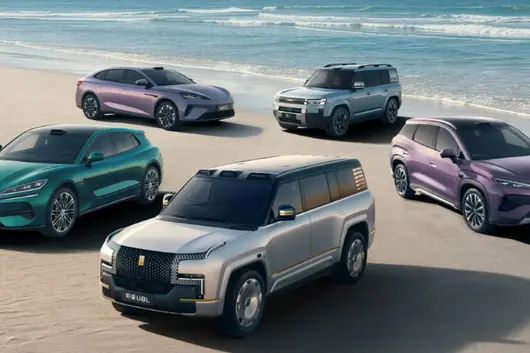
BYD officially released the May 2026 production and sales flash report, with new energy vehicles from all brands reaching a monthly sales volume of 383,453 vehicles, a slight increase of 0.26% year-on-year, achieving year-on-year positive growth in monthly sales after ten months; among them, passenger car deliveries reached 376,990 units, surging 19.4% month-on-month, wiping out the pain of previous model iterations, presenting a new pattern where the domestic base is stable, overseas sales are soaring, and high-end brands are scaling up across the board. Amidst the market environment of intensified competition in the domestic new energy sector, Tesla FSD entering China, and an intense launch of independent new products, it has forged a unique structural growth path.

The Dynasty and Ocean main brands combined sold 330,215 vehicles in May, accounting for over 80% of the group's total sales, remaining the stabilizer for BYD's sales volume. The full series had 8 models exceeding 20,000 units in monthly sales, covering products from 50,000 entry-level commuter to 200,000 home SUV.

Inside the Dynasty Network, the Yuan family sold 56,691 units, and the Song family 51,370 units. Both crossed the 50,000 threshold, becoming two major sales pillars for the brand, catering to home commuter and urban-rural travel needs; the Qin family followed closely with a stable performance of 28,360 units. The Han and Tang series maintained a volume in the six-thousand range, deeply cultivating the mid-to-large home sedan and SUV niche markets; the brand new model Xia is in the market cultivation phase, delivering 1,810 units monthly, with potential for steady volume growth as channels expand.
The Ocean Network's growth momentum is even more rapid, with 5 models entering the 20,000 club across the series: Sealion 42,615 units, Seal 34,117 units, Seagull 39,919 units, Dolphin 22,260 units, and Song PLUS 27,755 units. Among them, Seagull remains the best-selling entry-level commuter model thanks to its affordable pricing of 60,000-80,000. Sealion, as a new volume model, stands firm at the 40,000 level upon launch, filling the mid-size SUV product gap in the Ocean Network and perfecting the Ocean product tier layout. From commuter small cars to compact SUVs, the two main brands rely on DM-i hybrid and pure electric dual-line technologies to牢牢锁住 the mainstream home market share within 150,000 domestically.
Fang Cheng Bao Year-on-Year Surges 139.7%, Brand Upward Positioning Takes EffectThe high-end matrix of Denza, Fang Cheng Bao, and Yangwang sold a combined 46,489 vehicles in May, officially breaking away from the niche positioning to become a new pivot for BYD's brand premium and profit growth, breaking the industry curse of difficulty in high-end breakthrough for domestic brands.

The off-road brand Fang Cheng Bao sold 30,186 units monthly, surging 139.7% year-on-year, creating a new high in monthly sales since the brand launched. Its Titanium 7 model sold 18,280 units monthly, while Leopard 5 and Leopard 8 output remained stable, continuously squeezing the survival space for joint venture and imported models in the 250,000-400,000 hardcore off-road niche market.

Denza delivered 16,303 units in May, with the MPV benchmark D9 selling 6,721 units, and the Z9 series close to 6,000 units. MPV and mid-to-large sedan dual-line efforts helped them stand firm in the luxury new energy track; the million-level ultra-luxury brand Yangwang continued its steady climb, delivering 286 units that month, a year-on-year increase of 105.8%, completing market verification of the domestic brand ceiling product and forming a full price range product layout from 100,000+ home, 300,000-400,000 off-road, 500,000 luxury MPV to million-level flagship.

In May, BYD's overseas sales of passenger cars and pickup trucks reached 160,177 units, surging 80.7% year-on-year. Exports accounted for over 42% of the full series total sales, setting a new historical high for brand export and becoming the core driving force to stabilize May overall sales and achieve year-on-year positive growth.
Southeast Asia, Europe, and Latin America became the main incremental markets. Seagull, Song PLUS, and Yuan series continued to top new energy best-seller lists in multiple countries; the SHARK pickup truck exceeded 4,000 units in monthly exports for two consecutive months. Relying on the completion of localization production in Thailand, Brazil, Hungary, and Uzbekistan with four overseas vehicle factories, localized production continues to land, avoiding tariffs while rapidly penetrating terminal channels. Against the background of stock market competition in the domestic auto industry and normalized price wars, the rapidly expanding overseas market effectively counteracts sales volatility brought by domestic model iterations, officially upgrading from a supplementary market to BYD's core growth engine. As of now, BYD's global cumulative new energy vehicle sales have exceeded 16.5 million units, with the globalization map continuously broadening.
Intelligent Driving Empowers Product Iteration, H2 New Products Prepare to Surge VolumeMay marked a key node in BYD's intelligent driving landing, with the God's Eye intelligent driving system becoming a core bonus point for models: the number of vehicles with advanced intelligent driving across all brands exceeded 3.15 million, with daily road test data exceeding 200 million kilometers; that month, BYD implemented City Pilot and Smart Parking dual safety backup services, becoming the world's first auto manufacturer to achieve dual intelligent driving backups. Three days after policy implementation, the activation rate of models equipped with the God's Eye system in cities surged 50%. Intelligent driving experience upgrades directly drove in-store order conversion, solidifying product competitiveness for subsequent models to continue volume sales, and facing the intelligent driving market shock brought by FSD entering China.
From data details, BYD's cumulative sales from January to May 2026 were 1,405,039 units, down 20.32% year-on-year. The core reason is that the full series of main models were concentratedly iterated, and the capacity ramp-up of the 2nd Gen Fast Charge Blade Battery was restricted. The new Flash Charge Battery upgraded fast charging and low-temperature performance. Full series iteration models prioritized installing new batteries, but production line retrofitting dragged down capacity release. Order backlogs on popular models and delayed deliveries compressed the May delivery volume to a certain extent.
As the end of the second quarter approaches and the 2nd Gen Blade Battery capacity continues to release, coupled with new models such as Denza N8L, Fang Cheng Bao Titanium 7 Pure Electric Version, Sealion 05, and Xia L landing the market, the industry generally predicts that BYD's full brand sales in June are expected to exceed 400,000 vehicles. Relying on the four-dimension development logic of low-end volume locking share, high-end raising profit, overseas pushing volume, and intelligence improving product power, amidst the intensified new energy elimination round in the domestic market, BYD's full category layout advantage continues to amplify, securing its status as the domestic new energy leader, accelerating steadily towards global top auto manufacturers.

車型概覽

比亞迪Atto 2 值唔值得睇,第一步唔係望牌子或者外形,而係睇佢能唔能夠配合你嘅香港日常。 呢篇會集中講預算、月供同同級定位,幫你用買家角度篩走唔適合嘅選擇。 近期市場討論到「BYD ATTO 2登陸香港!15.5萬起有交易,刀片電池夠晒安全」,代表呢類車型仍然有一定關注度。
零售價 HK$ 155,000、完稅價 HK$ 228,300 令預算位置更清楚,買家可以先估算月供、保險、泊車同日常開支。
購車價格指南
比亞迪Atto 2 嘅購車預算可以先由 零售價 HK$ 155,000、完稅價 HK$ 228,300 開始計。香港買車唔只係睇車價,月供、保險、牌費、泊車同能源成本都會影響每月壓力。
如果有幾個版本可揀,可以先將 2025 410km 高級版(HK$ 228,300) 放喺同一張清單。日常通勤重視舒適同易用,家庭買家就要優先睇後排、尾箱同安全配置。
核心規格重點
睇 比亞迪Atto 2 嘅規格,重點唔係背數字,而係理解佢喺香港用車場景會帶嚟咩分別。
51.13 kWh 嘅電池容量,真正意義係可以幫你估算一星期通勤同周末出車要唔要中途補電。 130 kW、290 N·m 嘅輸出,令高速併線同短距離超車更有信心。 車長 4310 mm、車闊 1830 mm、車高 1675 mm、軸距 2620 mm 可以幫你預判商場停車場、屋苑車位同後排腿部空間。 固定齒比、前置前駆 會影響起步順滑度、濕地穩定感同長途巡航性格。
優缺點分析
比亞迪Atto 2 嘅優點唔需要講到天花龍鳳,真正有價值係佢能唔能夠令日常用車更省心:預算位置清楚,方便同同級車直接比較、電池同續航資訊有助安排通勤同補電、動力輸出對高速同上斜更有底氣。
要留意嘅係,要先確認屋苑、公司或常去商場嘅充電條件、香港停車場同窄路使用要留意車身闊度。呢啲唔一定係缺點,但係落訂前應該先諗清楚。
買家常見問題
買 比亞迪Atto 2 之前,真正要問嘅唔係單一規格,而係佢可唔可以融入你每日嘅生活節奏。
常見疑問係「比亞迪 Atto 2 香港落地價大約係幾多?」簡單講,比亞迪 Atto 2 香港落地價約200,000–260,000 港元,視版本而定。 放到實際用車,就係要睇佢對通勤、泊車、家庭乘坐同長期成本有幾大幫助。
同級對比內容
將 比亞迪Atto 2 放入同級車清單時,唔建議只用外形或者品牌光環決定。比較順序可以係:先用 零售價 HK$ 155,000、完稅價 HK$ 228,300 鎖定預算圈、再睇動力係咪足夠應付高速併線同滿載、再比較能源成本同補能便利、最後睇車身大小、座位同尾箱是否適合家人。
咁樣篩選會貼近香港買家真實生活:平日塞車、商場泊車、周末去新界、甚至一家人出入,先係一部車每日要面對嘅考驗。
用車全周期指南

擁有 比亞迪Atto 2 最重要係先諗清楚充電節奏。屋苑、公司或者常去商場只要有穩定充電選項,電動化用車就會容易相處好多。
如果你主要喺市區行,視野、低速順滑度同泊車輔助會好影響心情;如果經常行高速或跨區,座椅舒適度、隔音同動力從容感會更重要。


