


首頁大洋洲

搜尋歷史
熱門搜尋
經銷商登入 / 註冊

In the Malaysian SUV market, many buyers compare Toyota Yaris Cross and Chery Tiggo 7 Pro when choosing a car. These two cars are quite close in price and positioning. Today, we will do a detailed comparison from multiple aspects to help you save time on research.
The OTR price of Toyota Yaris Cross in Malaysia is RM 99,900 - 109,900, with a total of 2 versions, including 2026 1.5L Standard (RM 99,900), 2026 HEV 1.5L Standard (RM 109,900), etc.
The OTR price of Chery Tiggo 7 Pro in Malaysia is RM 123,750 - 123,750, with a total of 2 versions, including 1.6L Turbo Standard (RM 125,000), 1.6L Turbo Premium (RM 140,000), etc.
From a pricing perspective, Toyota Yaris Cross's starting price is indeed RM 23,850 cheaper than Chery Tiggo 7 Pro. If your budget is limited, Toyota's entry-level version can already meet daily needs. However, be aware that the lower price may involve compromises on features, depending on your specific requirements.

Toyota Yaris Cross safety rating is 5★ (ASEAN NCAP), active safety system includes TSS.
Chery Tiggo 7 Pro safety rating is TBD, active safety system includes Basic.
Regarding safety features, both cars received good ratings. However, there are some differences in functionality between Toyota Yaris Cross's TSS and Chery Tiggo 7 Pro's Basic. If you value active safety, you can compare the feature lists of both.

Toyota Yaris Cross adopts FWD drive mode.
Chery Tiggo 7 Pro adopts FWD drive mode.
Both cars have the same drive mode, both are FWD, daily driving experience will not be significantly different.

Toyota Yaris Cross warranty 5 years/unlimited mileage, maintenance interval every 10,000km or 6 months.
Chery Tiggo 7 Pro warranty 3 years/100,000km, maintenance interval every 10,000km or 6 months.
Both Toyota Yaris Cross and Chery Tiggo 7 Pro are mainstream choices in the Malaysian market, suitable for family use and daily commuting. If you value brand reputation and resale value more, prioritize the one with better reputation; if you care more about cost-performance and features, choose the one with richer configuration. Ultimately, it is recommended to test drive both, personal experience is the most important.
Overall, Toyota Yaris Cross and Chery Tiggo 7 Pro are both very good models in the Malaysian market. Which one to choose depends on your personal needs and budget. It is recommended to do your homework, compare quotes from several dealerships, and then test drive to make the final decision. Buying a car is a big matter, spending time researching is never wrong.


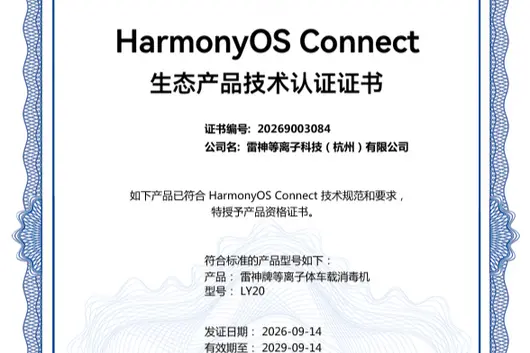
Recently, Thunder Plasma Technology (Hangzhou) Co., Ltd.'s independently developed vehicle-mounted plasma disinfection machine successfully passed the HarmonyOS Ecosystem Product Technical Certification, completing deep adaptation with the HarmonyOS full-scenario system. Domestic vehicle-mounted health protection hardware is formally included in the HarmonyOS smart ecosystem map, providing solid technical support for preventing cross-infection of viruses and bacteria inside vehicles and safeguarding the healthy travel of drivers and passengers.

A person in charge of Thunder Plasma Technology introduced that enclosed car cabins belong to typical small-space environments. When people ride together, cross-infection of viruses and bacteria is easily caused by aerosol transmission, which is a weak link in health protection under travel scenarios. Substituting mature medical-grade plasma disinfection technology into vehicle scenarios, combined with the intelligent capabilities of the HarmonyOS ecosystem, can build a perceptible, controllable, and continuously operating cabin air protection system, opening new paths for mobile space health safety.
Since 2007, the Zhejiang University research team has continued to delve deep into frontier technology research on plasma generators, tackling multiple "choke-point" technical difficulties such as atmospheric plasma discharge control and special alloy materials, and innovatively establishing a matrix technical solution for particle swarm diffusion in large spaces. The principle of this technology is that oxygen and water molecules in the air undergo ionization, generating excited state particle swarms and diffusing into the space to form particle streams, which can efficiently remove coronaviruses, influenza viruses, bacteria, and aerosols from the air, with a removal rate of up to 99%.
Relevant research results were published in the Nature sub-journal "Scientific Reports", with the paper titled "Air-fed cold atmospheric plasma device as a safe and effective anti-SARS-CoV-2 air filter", laying a solid theoretical and experimental foundation for the industrial implementation of plasma air disinfection technology.

Relying on Zhejiang University's years of technical accumulation, Thunder Plasma Technology upholds the corporate mission of "Guarding free and healthy breathing for humanity", continuously promotes the transformation of scientific research results, and has now developed and launched more than 10 air protection products, covering diverse application scenarios such as hospitals, schools, homes, and cars. Products are exported to Saudi Arabia, UAE, Italy, Singapore and other countries and regions, and have received wide recognition in public health protection and overseas markets.
The vehicle-mounted plasma disinfection machine that obtained HarmonyOS Ecosystem Product Technical Certification this time is the result of core plasma technology implementation in the intelligent vehicle field. The equipment connects to the HarmonyOS Super Terminal system, enabling real-time perception of operating status, remote start/stop, mode switching, disinfection data monitoring, and other intelligent linkages. Users can easily control the vehicle-mounted disinfection device via HarmonyOS terminals, building an integrated vehicle-machine protection hardware collaborative closed loop. The product has undergone multiple rounds of rigorous testing on compatibility, disinfection safety, and user experience, fully meeting HarmonyOS ecosystem technical specifications. It can be adapted to passenger cars, business vehicles, operating vehicles, and other travel scenarios, continuously reducing the risk of cross-infection in enclosed cabins and safeguarding the physical health of car owners and fellow passengers.

Currently, the smart in-vehicle industry is expanding from purely smart interaction to the full dimension of cabin health safety. This certification is an important practice of medical-grade health disinfection hardware deeply integrating into the domestic autonomous smart ecosystem. Next, Thunder Plasma Technology will continue to iterate vehicle-mounted health equipment, rely on the HarmonyOS ecosystem to broaden product implementation channels, promote the scaled implementation of plasma air protection technology in the automotive aftermarket and public transportation fields, and empower the high-quality development of the domestic car cabin health industry.

喺馬來西亞嘅 SUV 市場,好多買家喺揀車嘅時候都會拿本田 CR-V 同富士 Forester 嚟做比較。呢兩款車喺價位同定位上都幾接近,今日我哋就從多個方面做一次詳細嘅比較,幫你省咗做功課嘅時間。
本田 CR-V 喺馬來西亞嘅 OTR 售價係 RM 178,200 - 195,900,合共 4 個版本,包括 2026 e:HEV 2.0L 2WD RS(RM 195,900)、2026 1.5T 4WD V(RM 181,900)、2026 e:HEV 2.0L 2WD E(RM 178,200) 等。
富士 Forester 喺馬來西亞嘅 OTR 售價係 RM 174,000 - 197,000,合共 3 個版本,包括 2024 2.0L S EyeSight GT Edition(RM 189,538)、2024 2.0L S EyeSight(RM 177,538)、2024 2.0L L EyeSight(RM 167,538) 等。
從車價來看,富士 Forester 嘅起步價比本田 CR-V 平咗 RM 4,200。老實講,喺呢個價位段,幾千蚊嘅差距其實唔算大,關鍵始終係睇整體嘅性價比同長期使用成本。

本田 CR-V 嘅安全評級係 5★ (ASEAN NCAP),主動安全系統包括本田 SENSING (ACC, CMBS, LKAS, RDM)。
富士 Forester 嘅安全評級係 5★ (Euro NCAP),主動安全系統包括 EyeSight。
安全配備方面,兩款車都拿到唔錯嘅評級。不過本田 CR-V 嘅本田 SENSING (ACC, CMBS, LKAS, RDM) 同富士 Forester 嘅 EyeSight 喺功能上有啲分別,如果你比較重視主動安全嘅話,可以仔細比較一下兩者嘅功能列表。

本田 CR-V 保修 5 年/無限里程,保養間隔 每 10,000km 或 6 個月。
富士 Forester 保修 3 年/100,000km,保養間隔 每 10,000km 或 6 個月。

本田 CR-V 同富士 Forester 都係馬來西亞市場嘅主流選擇,適合家庭用車、日常通勤。如果你更重視品牌口碑同二手價,可以優先考慮口碑更好嗰一款;如果你更在意性價比同配備,那就揀配置更豐富嗰款。最後始終建議兩款都去試駕,親身體驗先係最重要嘅。

總體嚟講,本田 CR-V 同富士 Forester 都係馬來西亞市場幾唔錯嘅車型。揀邊一辆,關鍵始終係睇你嘅個人需求同預算。建議大家做好功課,多比較幾間車行嘅報價,再去試駕做最終決定。買車係件大事,花少少時間做功課絕對唔會錯。


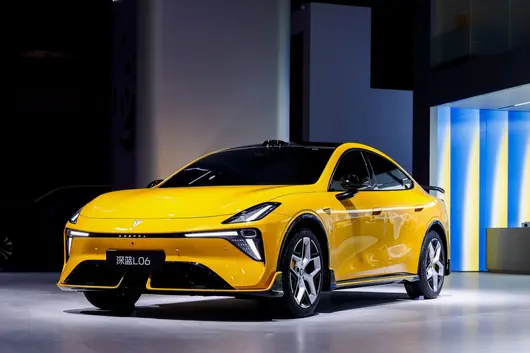
August 21, the 2026 Chengdu International Auto Show officially opened. Deepal Auto showcased its full lineup and announced the launch of the all-new Deepal G318. The new car offers Huawei ADS and Tianzhu Pilot two intelligent assisted driving systems, launching in three configurations: 4WD Comfort Tianzhu Edition, 4WD Comfort ADS Edition, 4WD Air Suspension ADS Edition. The limited-time discounted price ranges from 196,800 Yuan to 236,800 Yuan. Placing an order now enjoys eight gift packages worth up to 44,159 Yuan. On the same stage, the new special edition of Deepal L06 also made its debut, further strengthening the sports-oriented product layout.

The all-new Deepal G318 targets family users' "90% city relaxed commuting, 10% outdoor wild roaming" real travel needs, redefining box-style vehicle standards with "9 Cities 1 Wild". As the only 200,000-class box-style vehicle equipped with Huawei ADS Dual Intelligence, the new car brings Huawei ADS 5 Pro and HarmonySpace 5 cockpit to this price range for the first time, making high-end intelligent experience an everyday reality accessible to urban families.

At the intelligent driving level, the all-new Deepal G318 is equipped with Huawei ADS 5 Pro, supporting City Pilot NCA, Highway Pilot NCA, and全域 Intelligent Parking Assist. Its 27-sensor fusion perception system works in coordination with the WEWA 2.0 architecture, capable of autonomously handling complex urban high-frequency scenarios such as island passage, unprotected left turns, narrow lane anti-scratch, and anti-queue jumping during congestion. In terms of safety, the in-cabin LiDAR can maintain stable perception in environments like rain, tunnels, dim light, and backlit conditions, detecting 30cm x 30cm small obstacles up to 116 meters in advance. It is installed inside the cabin, with no wind resistance, no obstruction, and is not easily dirty. The industry-first 360-degree Anti-Collision System CAS integrates 24 active safety capabilities into every planning and decision, achieving class-leading cross-generation leadership in 4 major core safety scenarios, mitigating driving risks in advance.

For the cockpit part, the HarmonySpace 5 cockpit brings a seamless phone-vehicle interconnection experience. After users log in with the same Huawei account, the phone automatically connects when near the car system, ensuring connected handover of content across devices. The 15.6-inch Huawei Smart Screen possesses 3D real-time vehicle control capability, offering smooth operation; the voice system is based on the MoLA large model architecture, supporting mixed commands and 10 major dialects including Sichuanese and Cantonese. The Navigation Agent can understand vague expressions like "that coffee shop next to the airport" and automatically correct slips of the tongue and plan routes.

Regarding chassis and space, the all-new Deepal G318 is equipped with the only "Air Suspension + CDC + Magic Carpet" comfort three-piece set in its class. With double wishbone and multi-link independent suspension, it adapts to changing urban and suburban road conditions with millisecond-level damping adjustment. The body length exceeding 5 meters and long wheelbase bring spacious space. The rear seats can be folded completely flat to form a 1.8-meter large bed. Regarding power, the new car has a maximum horsepower of 450, peak torque of 552 Nm, and 0-100 acceleration in the 5-second class. With dual motors true 4WD, two differential locks, and ET Full Terrain System, it also possesses relaxed passing capability on unpaved roads.

The new special edition of Deepal L06 made its debut on the same stage. This version is equipped with a track-tuned racing kit, covering the three-dimensional air blade on the front of the car, integrated front splitter, side skirt air blade decorative parts, and a carbon fiber fixed large rear wing. The vehicle's maximum downforce reaches 1000N, balancing daily comfort and track posture. Deepal L06, relying on the magnetorheological suspension from a 3 million RMB Ferrari and newbie-friendly intelligent assisted driving, has already formed stable sales momentum in the 150,000-class market: July sales reached 7,267 units, breaking 5,000 units for 5 consecutive months, and ranking number one among new energy mid-size cars within 200,000 for consecutive months.


Regarding the full lineup, the all-new Deepal S05 has been fully available in stores since its refreshed launch on August 6. It brings LiDAR, one-piece end-to-end algorithm, 3nm automotive-grade cockpit chip, FSD+HRS high-end variable adaptive suspension, and other configurations to the mainstream home market. The limited-time discounted price starts from 115,900 Yuan, with a free gift package worth up to 38,360 Yuan. This car has entered 73 countries and regions globally, with cumulative users exceeding 250,000, and has won honors such as the German iF Design Award and Thailand Car of the Year. The all-new Deepal S07 achieves LiDAR intelligent assisted driving coverage with pure electric and extended range dual power, bringing 300,000-class intelligent driving capabilities down to the 150,000-class market. The Huawei ADS solution achieves full coverage of city pilot and full-dimensional protection of highway scenarios. In addition, Deepal S09 and Deepal L07 target family business and mid-size sedan sub-segments respectively.


In terms of market performance, in January-July 2026, Deepal Auto's global cumulative sales reached 193,369 units, a year-on-year increase of 13.48%; overseas cumulative sales reached 44,508 units, a year-on-year increase of 87.48%. As of July, Deepal Auto's global cumulative sales have exceeded 910,000 units, and it is expected to steadily move towards one million users this year. Currently, Deepal Auto has deployed in over 100 countries and regions globally.

Regarding core technology, Deepal Hyper Electric Drive has cumulative over one million units produced in 45 months, with system assembly operating efficiency of 94.13%; the Golden Bell Battery won the National Second Prize of Science and Technology Progress twice, achieving 600,000 kilometers of degradation-free perception, protecting over 2.1 million users; the Micro-core High-frequency Pulse Heating Technology won the China Patent Gold Award. In the second half of the year, Deepal pure electric models will successively be equipped with the 800V high-voltage platform, supporting 6C ultra-fast charging, with 10 minutes to replenish energy from 30% to 80%.

In the exhibition booth interaction session, "King of Comedy Season 2" Stand-up Champion Zhai Jianing joined hands with the car brand for the first time to serve as the all-new Deepal G318 Smart Experience Officer, presenting product highlights in the form of stand-up comedy. The Deepal exhibition booth also set up L3 autonomous driving Q&A, Honor of Kings competition, user co-creation handmade zone, blind box lottery, and bullet screen interaction, etc., making the technology demonstration more engaging.

Panda Review:
The launch of the all-new Deepal G318 can be seen as a precise redefinition by Deepal Auto of family travel needs. It did not continue to simply stack parameters on the traditional hard-core off-road track, but with the clear positioning of "9 Cities 1 Wild", pulled the box style back from outdoor symbols to urban daily life. At the same time, with configurations such as Huawei ADS Dual Intelligence, Air Suspension + CDC + Magic Carpet, 450 horsepower power, it builds differentiated value in the 200,000-class market. The Deepal L06 special edition further strengthens the young sports label. Against the background of intelligent and electrification technology continuous downward release, Deepal Auto converts high-end experience into product power perceivable by family users with the "Technology Equity" strategy, which may be the key path for it to hit the one million users goal.

The global automotive market in the first half of 2026 delivered its results amidst multiple shifts: escalating geopolitical conflicts, repeated supply chain disruptions, and the electrification transition entering a critical phase. Looking at internationally mainstream automakers with announced data, the sales landscape shows significant differentiation: Japanese, German, and American traditional giants generally face pressure and decline, while some Chinese independent brands and automakers focusing on emerging markets achieve resilient growth. This structural reshuffle reflects the profound reshaping of the global automotive industry landscape.
Toyota Retains Sales Crown, Multiple Chinese Brands Reach the Top Tier
According to the official H1 2026 global sales data announced by each automaker, Toyota Motor remained the sales champion for the first half of the year, with global sales of approximately 5.39 million units, a year-over-year decrease of 2.8%. This marks the first time Toyota has seen a year-over-year decline in global H1 sales in two years. The Volkswagen Group ranked second globally with approximately 4.126 million sales, with the year-over-year decline widening to 6.3%, a gap of 1.26 million units from Toyota. The Hyundai Motor Group (combined Hyundai and Kia) had a total H1 sales of approximately 3.579 million units, overall performance relatively stable, holding the third place globally.

(Note: Some automakers have not yet announced H1 sales data)
The Stellantis Group ranked fourth with H1 sales of 2.958 million units, the only traditional giant achieving double-digit positive growth, with a year-over-year increase of 11%, demonstrating surprising resilience and elasticity. Stellantis Group H1 global sales were approximately 1.36 million units in the first quarter, a year-over-year increase of 12%; 1.597 million units in the second quarter, a year-over-year increase of 10%, mainly driven by the North American and European markets.
General Motors delivered approximately 2.721 million units in the first half of the year, a year-over-year decrease of 8.9%. However, benefiting from the high premium of North American pickups and SUVs, its sales revenue instead grew counter-trend slightly to $91.7 billion, showing the rare characteristic of "volume down, profit stable".
Notably, Chinese brands occupy three spots on the top 10 list. BYD's cumulative sales reached 1.809 million units in the first half of the year, a year-over-year decrease of 15.7%. Geely's total sales for the first half of the year were approximately 1.423 million units, including brands such as Geely, Lynk & Co, and Zeekr, a slight year-over-year increase of 1%, with new energy product penetration reaching 56%. During the same period, Chery Group's total sales for the first half of the year reached 1.358 million units, a year-over-year increase of 7.7%, setting a new historical high. Among them, June single-month sales were 256,612 units, a year-over-year increase of 9.8%.
Japanese automaker Suzuki's total sales for the first half of the year were 1.8 million units, a significant year-over-year increase of 110.3%. The company saw sales growth in markets such as India, Indonesia, Pakistan, and Africa, driving its overseas H1 sales to a new record. Nissan's sales for the first half of the year were 1.506 million units, a year-over-year decrease of 6.7%, continuing the sluggish trend of recent years.
Traditional Giants Lose Speed: Loss of China Market Resonates with Middle East Geopolitical Impact
In traditional automakers where performance declined, the sluggish sales in the China market, the spillover effects of Middle East geopolitical conflicts, US tariffs, and the retreat of electric vehicle policies, together formed the "headwinds" suppressing their global performance.
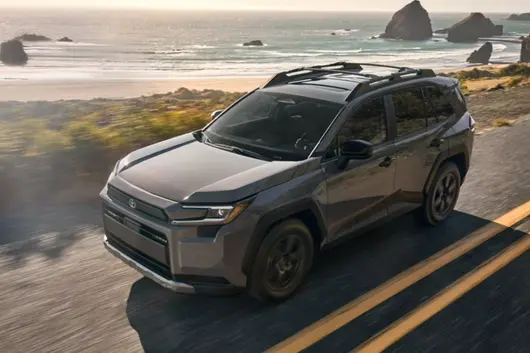
An announcement issued by Toyota Motor at the end of July stated that due to weakening demand in the Chinese market and the drag from model replacement adjustments of the popular model RAV4, the company's global production and sales in the first half of the year saw a decline. From January to June this year, Toyota's sales in the Chinese market plummeted by 17.1%, offsetting demand growth in the North American and Japanese markets. In the announcement, the Toyota Group stated: "North American and Japanese market demand is stable, demand for hybrid models and other models in the North American market remains strong, but was offset by the decline in sales in the Chinese market."

Image Source: Toyota Motor
Geopolitical conflict combined with fierce competition in the Chinese market has begun to impact the profit records set by Toyota in the previous fiscal year. In June this year, sales of Toyota and Lexus brands in the Middle East region decreased by 24% year-over-year, while sales in the Chinese market decreased by 27% year-over-year. At the performance conference in May this year, Toyota stated that the automaker exports approximately 500,000 to 600,000 vehicles to the Middle East annually, and the company estimates that nearly half of the export volume could be impacted by the situation in the Middle East.
However, Toyota also adjusted the combined sales forecast for automobiles upwards by 100,000 units from the previous forecast, to 9.7 million units, a figure higher than the previous fiscal year's total sales of 9.595 million units. Toyota stated that the upward adjustment originated from strong demand in North American and European markets, while alternative logistics channels to the Middle East were completed, driving a recovery in local sales.
Volkswagen Group's performance pressure in the first half of the year was also highly concentrated in the Asia-Pacific market, where the decline in the Chinese market was particularly obvious. Volkswagen delivered 24% less in the Asia-Pacific market in the first half of the year, and deliveries in the Chinese market decreased by 25.9% year-over-year. From the perspective of sub-sectors, the downward trend of pure electric models is particularly significant: from January to June this year, Volkswagen Group's deliveries of pure electric models in China plummeted by 47.9%. Volkswagen also had a difficult situation in the North American market in the first half of the year, with pure electric business performance particularly pronounced. In the first half of the year, the group's sales of pure electric models in North America fell sharply by 68.8%, plummeting from 31,300 units in the same period last year to only 9,800 units in the first half of the year.
General Motors' global deliveries for the first half of the year decreased by 8.9%, but supported by stable prices and strong demand for pickups and SUVs, global sales revenue still climbed slightly, demonstrating the profit moat of the North American market. However, General Motors' performance in the Chinese market was also not optimistic, as its joint venture brands face all-round siege from Chinese local brands.
Chinese Brands: From Domestic Fierce Competition to Global Offense
Represented by automakers such as BYD, Geely, and Chery, Chinese automakers ranked high on the global sales list in the first half of the year, showing an unprecedented scale presence for Chinese brands. These three automakers supported overall sales with explosive growth in overseas markets. The core engine of these brands' growth has shifted from domestic to overseas, and the globalization of Chinese automakers is changing from slogans to reality.

Image Source: BYD
Although BYD's total sales declined in the first half of the year, its structural highlight lies in the continuous breakthrough in overseas markets — cumulative overseas sales of passenger cars and pickups reached 789,000 units, a year-over-year increase of 68%, and the proportion of overseas sales to total sales has exceeded 43%. This means BYD has transformed from a "Chinese new energy giant" into a true "global new energy automaker".
BYD's export destinations in the first half of the year showed a layout characteristic of "Latin America leading, Europe breaking out at multiple points, Oceania, Southeast Asia, and Middle East differentiated expansion". Brazil continues to firmly occupy the position of this automaker's largest overseas market, and the top five countries in Europe also rank in the top ten of BYD's export destinations.
Geely's total sales for the first half of the year were approximately 1.423 million units, with outstanding overseas export performance, cumulative exports of 474,228 units, a year-over-year increase of 158%, a figure that has already exceeded the total export volume for the full year of 2025. June single-month exports were 102,874 units, a year-over-year increase of 157%, a month-on-month increase of 21%, achieving year-over-year and month-on-month double growth for six consecutive months, marking that Geely's export business has entered the stage of scale release. Geely's new energy product export sales in the first half of the year were 277,189 units, a surge of 585% year-over-year, with new energy proportion reaching 59%.
As a leader of Chinese brands going global, Chery Automobile accumulated 943,817 exports in the first half of the year, a year-over-year increase of 71.5%, with export proportion approaching 70%, making it a Chinese brand with high degree of internationalization. In July, Chery's exports of automobiles were 202,533 units, a year-over-year increase of 70.1%, breaking the record for Chinese car single-month exports for five consecutive months, becoming the first Chinese automaker to break through 200,000 exports in a single month.
Summary:
In the second half of the year, the global automotive industry will still move forward heavily burdened: weak demand, continuous heating of trade protection, cost increases brought by Middle East turmoil, and logistics and supply chain disruptions, transnational automakers will continue to promote cost reduction, production capacity contraction, and adjustment of electrification pace. These factors will also lead to the global car market still being full of high uncertainty. But a clear trend has been established: with the rise of Chinese automakers, the global automotive industry is accelerating from "Triopoly of Japan, Germany, and America" to "Multipolar Competition".

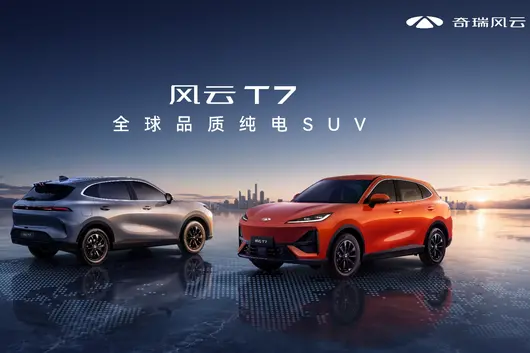
Recently, Chery Fengyun T7 officially started pre-sale, with three versions having a pre-sale guide price of 109,900-129,900 RMB, simultaneously launching 7 sets of purchase benefits. Among them, the "dual safety net" of power battery thermal runaway compensation for a new car and up to 5 million compensation for autonomous driving accidents, combined with the "dual lifetime" policy of whole-vehicle lifetime warranty and lifetime basic maintenance, directly hit the core concerns of users regarding vehicle use, and also made this pure electric SUV focusing on global quality generate maximum buzz upon its debut.

100,000-130,000 RMB level pure electric SUV is the most fierce competitive price range in the current domestic new energy vehicle market, also the interval where user pain points are most concentrated. In the past, many models either used low range versions to lower the starting price, wanting long range means adding money for high spec; or shrank in safety quality and after-sales benefits, holding the idea of "fast-making cars" for quick iteration, but compromised long-term reliability. Fengyun T7's entry took a completely different path: relying on Chery's 23 years of global technology accumulation, first going through extreme trials in multiple global regions, then returning to the domestic market with global standards. This "reverse overseas tempering" tactic brought new variables to the intense competition in the entry pure electric market.

First to break is the price threshold for long range. In the past, same-price models generally placed 600km level range on high spec versions, starting price often needed above 130,000, low spec models mostly 400-500km range. If users wanted to say goodbye to range anxiety, they had to pay higher cost. Fengyun T7 directly achieved range configuration equality across all trims. The three models all standard equipped with 65.05kWh Rhino battery, CLTC range 600km, actual tested range even exceeded 667km, achieving "reverse exaggeration".
For daily commuting users, 600km range is enough to support one charge per week, no need to frequently go back and forth to charging stations; during long-distance travel, 30%-80% fast charging only takes 20 minutes, recharging efficiency is enough to match the rhythm of mid-journey rest. With dual-source wide heat pump air conditioning, the vehicle can operate stably in a wide temperature range from -30℃ to 55℃. Pain points of range reduction in northern winters and battery degradation in southern high temperatures are alleviated, truly making long range no longer exclusive to high specs.

Second is the dimensional reduction of safety quality, bringing global-level standards down to the 100,000 RMB price level. Many users worry most about battery safety and body rigidity when choosing low-price pure electric cars. Fengyun T7 is designed against the 2026 E-NCAP five-star safety standard. The body uses 80% high-strength steel and 18.84% hot-formed steel to build a cage structure, combined with 9 airbags, basic passive protection maxed out. Rhino battery is protected by 6D protection system against extrusion and puncture impact, IP68 waterproofing capability reaches 96 times national standard, summer heavy rain wading and road water accumulation can be handled with more peace of mind.

Different from many models that only meet standards in the laboratory, Fengyun T7 invested 81 dedicated durability vehicles for synchronized road testing. Whole vehicle cumulative test mileage exceeded 6 million kilometers, conducted real vehicle validation for Southeast Asia rainy season, Middle East high temperatures, Indonesia high humidity and other global extreme environments. Equivalent to using rigorous quality standards for export overseas on a 100,000 RMB SUV aimed at ordinary families. Such quality standards are not common among same-price models.
Coming down to daily use scenarios, Fengyun T7's practicality is also powerful enough. In terms of intelligence, integrated cockpit-drive 8775 chip guaranteed infotainment system response speed. 15.6-inch high-definition screen supports mainstream mobile phone wireless connectivity, seamless navigation and music connection upon boarding. Falcon 500 driver assistance system supports 300+ full-scenario automatic parking. Dead-end parking, multi-level parking can be realized, especially friendly to narrow parking spots and complex parking lots in cities. New drivers can also easily achieve parking freedom.

Space and comfort precisely fit family user needs. 2700mm wheelbase brings same-level leading rear legroom, pure flat floor allows middle passengers to also sit comfortably. Rear seats folded down can expand to 1955mm pure flat space, trunk capacity of regular 450L, maximum 1550L, can easily accommodate daily grocery shopping and baby pickup, weekend camping gear. 9-layer cloud-sensation seats support ventilation heating, plus chassis tuned by international team, daily commuting vibration damping is gentle, long-distance travel not easy to get tired.
From market competitiveness perspective, Fengyun T7 plays a combination of "global quality + national price + full-cycle benefits". At the price end, 109,900 starting price配上 full-range 600km range, is already more sincere than most same-price models; at the quality end, Chery's 20+ years of global car building experience and full-link rigorous testing grounded product long-term reliability; most differentiated is benefit policy, dual safety net directly eliminated user concerns about battery safety and autonomous driving responsibility, dual lifetime benefits pressed long-term vehicle use cost to extremely low.

Comparing many same-price models that only provide basic triple powertrain warranty and after-sales boundaries are blurred, Fengyun T7 is equivalent to transferring more vehicle use risk to the brand end. This confidence comes both from confidence in own product quality, also grasped ordinary family user core demand of "buying car with confidence, using car saving money".
Placed in the entire industry, the appearance of Fengyun T7 is actually re-organizing the value logic of 100,000 RMB pure electric SUVs. For a long time, 100,000 RMB electric cars were default as "short-distance commuter tools", not worthy of talking quality or service. Fengyun T7 insists on breaking this stereotype: using global standards as basic quality, using configuration equality to care for entry users, using safety net benefits to solve vehicle use anxiety, putting experiences and services that only existed in past mid-to-high-end models down to national price level.

In the current industry pursuit of fast iteration, fighting price wars, Chery chooses to use slow work to polish a global car. This long-term car building idea just hits the real needs of family users. Compared to flashy gimmick functions, they need more a reliable, durable, worry-free family car.

In general, Fengyun T7's pre-sale brought new value references to 100,000-130,000 RMB pure electric SUV market. It did not use low range low spec cars to draw traffic playing word games, nor did it rely on piling up flashy concepts to grab eyeballs, but truly gave users long range, high safety, full-cycle guarantees. For consumers, budget of 100,000+ to buy quality verified by global market, undoubtedly added one high cost-performance choice. For industry, Fengyun T7 will also force same-price competitors to re-examine products and services, no longer only rely on low price to attract attention, but return to the essence of family cars. As for how much market recognition this sincerity can exchange, will need to see after launch, but at least from pre-sale posture, it has precisely hit user real pain points.


8 月 12 日,奇瑞風雲 T7 正式開啟預售。這場以「慢功造好車,久等了」為主題嘅發布會,喺這個新車平均每日上市超過 3 款嘅時代,顯得有點「不合時宜」。
但正正呢份「不合時宜」,恰恰擊中咗當下新能源汽車行業最敏感嘅神經。

「速成」嘅喧囂與「慢功」嘅稀缺
數據顯示,2026 年 7 月,新能源汽車月度新車銷量佔比首次突破 60%。行業競爭從價格博弈全面轉向價值競爭。然而,速度嘅另一面係隱憂。業內高管公開批評部分品牌為加快上市節奏刪減必要測試環節,讓消費者變相擔當試車員。全國汽車標準化技術委員會已就三項新能源汽車定型試驗規程公開徵求意見,擬將新能源車型可靠性行駛試驗總里程提升至 3 萬公里。
「速成車」嘅病根在於扭曲嘅競爭邏輯——部分企業陷入「唯快論」,怕慢咗半步就錯失賽道,怕遲咗幾日就丟掉流量。但汽車唔係快消品。正正喺呢個背景下,奇瑞用風雲 T7 給咗另一個答案。
五年磨一劍:一輛「先出海、再歸國」嘅全球車
風雲 T7 並唔係內地特供車型。佢嘅同源車型 Lepas L6 已率先喺南非開啟預售、喺泰國上市,後續仲會登入歐盟、澳新、英國、以色列、馬來等多個市場。先接受全球市場檢驗,再落地內地發售——呢套反向輸入嘅產品節奏,喺本土車企中並唔多見。

呢背後係奇瑞連續 23 年位居中國品牌乘用車出口前列、全球用戶突破 2000 萬、產品銷往 130 多個海外市場嘅深厚積澱。2026 年上半年,中國汽車出口 509.6 萬輛,奇瑞以 94.38 萬輛嘅出口量獨佔鰲頭。風雲 T7 唔係一輛先喺內地造好、再想辦法賣到國外嘅車,而係一輛由一早就按照全球標準研發、喺全球跑咗完驗證、帶著海外市場嘅真實反饋先返嚟內地嘅產品。
2 年策劃,3 年研發。放喺今日呢個「12 個月出一款新車」嘅行業節奏入面,呢個周期幾乎顯得不合時宜。但正正係呢 5 年嘅慢,令風雲 T7 喺好多維度上做出咗差異化。
安全層面,佢按照 2026 版 E-NCAP 五星安全標準開發。2026 版 E-NCAP 將整車安全拆解為安全駕駛、碰撞規避、碰撞保護同碰撞後安全四大支柱。風雲 T7 由研發階段就錨定呢個標準,仲做到咗功能安全 ASILD 最高等級。呢唔係簡單嘅「堆料」,而係把安全標準前置咗去產品定義階段。

環境適應性上,風雲 T7 嘅全域適配區間覆蓋 -40℃到 55℃。為此佢搭載咗同級首发嘅雙源寬溫域熱泵加 PTC 系統;喺熱帶高濕地區,空調濾芯做咗針對性優化;喺中東區域配備 4.5L 大容量清洗液罐;喺巴西沙石路增設電池前後樑防護。呢啲細節反映咗一種「為全球用戶造車」嘅思維方式——先理解唔同環境嘅需求再開始造車。
驗證環節更能說明問題。風雲 T7 同步投入 81 台專屬耐久車進行路試,整車累計測試里程超 600 萬公里,耐久專項實測 145 萬公里。覆蓋歐盟、澳新、中東、南非、俄羅斯、墨西哥、巴西等 100 多個極限路況環境。
全系 600 公里續航平權:打破分級溢價
風雲 T7 做咗一個反常規嘅決策——所有配置版本統一搭載 65.05kWh 犀牛電池,CLTC 續航全部鎖定 600 公里。入門車型唔砍續航,高配版本唔加價換續航,直接打破行業通行嘅分級溢價邏輯。官方實測續航可達 667 公里,30%-80% 快充只需 22 分鐘。

犀牛電池提前通過 2026 版新國標認證,循環壽命超 2500 次。按家用车年均行駛兩萬公里計算,整車 15 年無需更換電池。奇瑞同步給予三項兜底承諾:全系列滿足最新國標、電池熱失控損毀賠償同款新車、首任非營運車主三電終身保養。
安全滿配:同級頂配安全配置全系標配
風雲 T7 採用 80% 高強度鋼車身加 18.84% 熱成型鋼,九橫五縱籠式車身結構。同級最多 9 個安全氣囊,含 48L 最大體積雙腔遠端氣囊、1778mm 最長側氣簾、6s 長效保壓技術。犀牛電池 6D 鎖子甲 31 層防護,IP68 防水達國標 96 倍,側邊抗擠壓達國標 2 倍。完成正柱碰、側柱碰、偏置碰撞、40km/h 鑽卡、MCB 碰撞煞停等極限安全測試。

智能與舒享:艙駕一體,移動大平層
智能方面,風雲 T7 同級首发 4nm 製程 8775 艙駕一體芯片,NPU 算力 72TOPS,搭載 15.6 英寸 2.5K 防眩光大屏與靈犀智艙 2.0×豆包大模型。獵鷹 500 智駕配備 22 顆高精度傳感器,支援 200 多種場景自動泊車、高速領航輔助。
空間方面,車身 4570×1852×1694mm,軸距 2700mm,車內得房率 84%。9 層複合雲感座椅,同級最大純平大床模式 1955mm×1310mm,後備廂常規 450L、最大拓展 1550L。

全球品質,國民價格
風雲 T7 此次預售推出 3 款配置車型,預售價為 10.99-12.99 萬元。即日起至上市,支付 1000 元訂金可享受 7 重禮包權益。
風雲 T7 補全咗風雲序列插混、增程、純電三條技術路線嘅最後一塊版圖。對奇瑞而言,佢嘅意義唔止一款走量車型——過去奇瑞靠出口賺全球市場嘅錢,如今把全球驗證嘅成熟產品帶返內地,用長期投入攢下嘅體系能力打家用市場。

慢係慢咗啲,但每一步都踩實處。喺呢個被「速成」裹挾嘅時代,奇瑞用一輛風雲 T7 告訴市場:有些事快唔到,有些路繞唔過。
中國汽車正邁向全球市場,向高質量發展轉型。真正嘅核心競爭力,從來唔靠搶先一步嘅噱頭,而係經得起時間、路況、複雜工況檢驗嘅產品實力。風雲 T7 嘅「慢功」,或許正係呢個行業最需要嘅清醒。

喺馬來西亞嘅 SUV 市場,好多買家喺揀車嘅時候都會拿 Proton X70 同 Subaru Crosstrek 做比較。這兩款車喺價位同定位上都幾接近,今日我哋就從多個方面做一個詳細嘅對比,幫你省返做功課嘅時間。
Proton X70 喺馬來西亞嘅 OTR 售價係 RM 106,800 - 122,300,一共有 3 個版本,包括 1.5L Standard 2WD(RM 106,800)、1.5L Executive 2WD(RM 115,800)、1.5L Premium 2WD(RM 122,300) 等。
Subaru Crosstrek 喺馬來西亞嘅 OTR 售價係 RM 145,000 - 160,000,一共有 1 個版本,包括 2.0L e-Boxer(RM 150,000) 等。
從價錢來看,Proton X70 嘅起步價確實比 Subaru Crosstrek 平咗 RM 38,200。如果你預算有限,Proton 嘅入門版已經可以滿足日常需求。但都要注意,平嗰幾千蚊,可能喺配備上會有取捨,具體要睇返你嘅需求。

Proton X70 搭載 1.5L Turbo,馬力 140 hp。官方油耗 7.0 L/100km。
Subaru Crosstrek 搭載 1.5L Turbo,馬力 140 hp。官方油耗 7.0 L/100km。
兩款車用緊同一套動力系統,日常開嚟嘅感覺基本冇乜分別。油耗方面都差唔多,唔使太糾結呢一點。
Proton X70 嘅安全評級係 5★ (ASEAN NCAP),主動安全系統包括 ADAS (ACC, AEB, LKA, LDA, BSM, RCTA)。
Subaru Crosstrek 嘅安全評級係 5★ (Euro NCAP),主動安全系統包括 EyeSight。
安全配備方面,兩款車都拿到唔錯嘅評級。不過 Proton X70 嘅 ADAS (ACC, AEB, LKA, LDA, BSM, RCTA) 同 Subaru Crosstrek 嘅 EyeSight 喺功能上有些差異,如果你比較看重主動安全嘅話,可以仔細對比一下兩者嘅功能列表。

Proton X70 保養 5 年/150,000km,保養間隔 每 10,000km 或 6 個月。
Subaru Crosstrek 保養 3 年/100,000km,保養間隔 每 10,000km 或 6 個月。
總體嚟講,Proton X70 同 Subaru Crosstrek 都係馬來西亞市場幾唔錯嘅車型。揀邊一輛,關鍵仲係睇返你嘅個人需求同預算。建議大家做好功課,多比較幾間車行嘅報價,再去試車做最終決定。買車係件大事,花少少時間做功課絕對唔會錯。


