


首頁地鐵通

搜尋歷史
熱門搜尋
經銷商登入 / 註冊

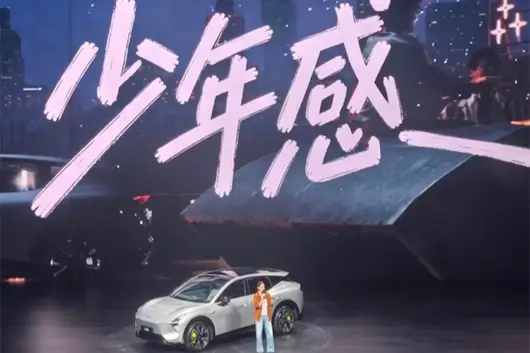
On October 29, Xpeng hosted the MONA WORLD Owner Gathering and the L05 China Launch Event in Guangzhou. 5,000 guests and owners gathered on-site to witness the official launch of the MONA family's third product — the AI Smart Fashion Large 5-Seater SUV MONA L05. The new car comes in two powertrain options: Pure Electric and Super Range Extended, with 6 configurations in total. The limited-time price starts from 139,800 RMB, with the top-spec model at 171,800 RMB, representing a 20,000 RMB reduction compared to the pre-sale price. Additionally, there are limited-time perks including free seat upgrades, high-end audio systems, custom paint colors, and discounted options for rear entertainment screens and the ROAM theme kit. This has once again exceeded consumer expectations.

As for whether the new Xpeng MONA L05 would be criticized harshly by netizens, the enthusiastic reaction from the on-site and live-streaming audiences, plus the fact that 5,000 pre-delivery units sold out within 3 minutes, speaks for itself. Consumers felt the sincerity of the Xpeng MONA L05, so naturally, they wouldn't criticize it, but were eager to take the new car home immediately. It is reported that following the price announcement, Xpeng saw a surge in online traffic, and pre-owners at offline stores rushed to secure orders. It is almost certain that the MONA L05 will sell as well as the previous MONA L03. Xpeng learned from the L03's delivery issues caused by production capacity constraints and prepared 5,000 pre-delivery units in advance, but they were snapped up in minutes, suggesting Xpeng may have understocked this time.

Large 5-Seater Space, Travel Freedom for 5 People and 9 Boxes
The MONA L05's looks have been praised many times, so we won't elaborate further here. Instead, let's discuss the space performance expected from a large 5-seater SUV. The MONA L05 redefines space standards with an 87% ultra-high efficiency ratio. Front headroom reaches 1030mm, and rear effective legroom is 1063mm, allowing even passengers 1.9 meters tall to sit comfortably. When fully loaded with 5 people, the MONA L05's 702L extra-large trunk can easily accommodate 8 suitcases, plus one more in the front trunk, totaling 9 luggage pieces. This is very convenient for group travel, eliminating worries about not fitting all luggage when fully occupied.

The roof also has roof rack interfaces, allowing large equipment like snowboards and kayaks to be carried along. With 41 storage spaces and 22 expansion interfaces inside the car, it allows seamless switching between diverse scenarios such as camping, Karaoke, board games, etc. The front row seats can be flat with one click, instantly turning into a power nap cabin, while the dual cinema mode makes long journeys full of fun.

Dual Powertrain for One Vehicle, Plus Flagship-Level Intelligence
The MONA L05 offers two powertrain options: Pure Electric and Super Range Extended, covering different travel ranges to provide diverse choices for users. The Pure Electric version has a CLTC range up to 635km, with an average power consumption of just 11.7kWh/100km. A 30%-80% fast charge takes only 15.8 minutes, adding 285km of range with just 10 minutes of charging. The Super Range Extended version offers a total range of 1310km, with a pure electric range of 310km and fuel consumption of only 5.26L/100km when the battery is depleted. Daily use allows for zero-fuel travel, compatible with global fuel standards. The range extender start-stop is imperceptible, and the quietness rivals that of a pure electric vehicle.

A crucial statistic is that mid-to-high level smart driving vehicle orders account for 91% of the Xpeng MONA series, proving that over 90% of Xpeng owners are willing to pay for advanced smart driving. Moreover, more than half of MONA owners use smart driving for their daily commute, showcasing user trust in Xpeng's ADAS. The MONA L05 Ultra SE version features the Xpeng Turing 2nd Gen VLA model with an effective computing power of 1500 TOPS, offering world-class smart driving capabilities. The Max version features the Xpeng Turing 2nd Gen VLA Lite, retaining over 90% of the full-blooded version's capabilities through model distillation, arguably the ceiling of industry L2-level assisted driving capabilities.

Global Safety Standards, 5 Million Kilometers of Rigorous Verification
The MONA L05 was developed according to three major 5-star safety standards: China, Europe, and Australia. It features a high-strength steel-aluminum mixed body, standard 7 airbags, and a multi-rescue system after collisions. Regarding active safety, it is equipped with AEB, AES, and stable driving functions even with a flat tire, and successfully passed the extreme load test with 5 people and 9 boxes. The 'Peng You Shou Wang' (Peng Friend Watch) driver incapacitation assistance system can automatically pull over to safety and send a distress signal in emergency situations. As a model developed for 82 countries globally, 660 test vehicles of the MONA L05 were used, covering over 5 million kilometers across 25 countries. It also completed the 'Golden Outer Ring' challenge, traveling 8,000 kilometers from Guangzhou to Heihe with a temperature difference of over 45 degrees Celsius, verifying reliability in extreme environments.

Final Thoughts
According to statistics, the Xpeng MONA series has delivered over 360,000 units in two years since launch, with an average monthly sales of 14,000 units. The MONA M03 has been the sales champion of the 100,000-200,000 RMB pure electric sedan segment for 24 consecutive months. The SUV product MONA L03 entered overseas markets such as Europe, Australia, and Thailand, becoming a benchmark for Chinese smart cars going global. Now with the launch of the MONA L05, it not only fills the gap in Xpeng's 150,000 RMB large 5-seater SUV market but also, with its 'Space + Intelligence + Safety' all-around performance, provides an uncompromising travel solution for young global users, expected to become another trend blockbuster in the global market. What do you think?

In Malaysia's SUV market, many buyers compare the Toyota Harrier and Ford Everest when choosing a car. These two cars are quite close in price and positioning. Today, we will make a detailed comparison from multiple aspects to help you save time on research.
The OTR price of the Toyota Harrier in Malaysia is RM 289,000 - 289,000, with a total of 1 version, including the 2026 HEV 2.5L Standard (RM 289,000), among others.
The OTR price of the Ford Everest in Malaysia is RM 266,338 - 430,838, with a total of 6 versions, including the 2026 3.0T 4WD Platinum (RM 430,838), 2026 2.0T 4WD Platinum (RM 348,838), 2026 2.0T 4WD Sport (RM 316,838), etc.
From a price perspective, the Ford Everest's starting price is RM 22,662 cheaper than the Toyota Harrier. Honestly, in this price range, a difference of a few thousand is actually not that big; the key is to look at overall cost-performance ratio and long-term usage costs.

The Toyota Harrier is equipped with a 2.0L Turbo, 220 hp. Official fuel consumption is 9.5 L/100km.
The Ford Everest is equipped with a 2.5L Diesel, 187 hp. Official fuel consumption is 8.5 L/100km.
In terms of power, the Toyota Harrier's 2.0L Turbo has 33 more horsepower than the Ford Everest's 2.5L Diesel, offering more confidence in mid-range acceleration, especially when overtaking on highways. However, the Ford Everest's fuel consumption might be more friendly; the difference for daily city commuting won't be too significant.

The Toyota Harrier body length is 4400 mm, trunk 400 L.
The Ford Everest body length is 4400 mm, trunk 400 L.
The dimensions of the two cars are almost identical, and the interior space is not very different. For cars in this class, daily usage is more than enough.

The Toyota Harrier adopts FWD drive mode.
The Ford Everest adopts FWD drive mode.
The drive modes of both cars are the same, both are FWD, there won't be too much difference in daily driving feel.

Both the Toyota Harrier and Ford Everest are mainstream choices in the Malaysian market, suitable for family use and daily commuting. If you value brand reputation and resale value more, you can prioritize the one with better reputation; if you care more about cost-performance ratio and features, choose the one with richer configurations. Ultimately, it is recommended to test drive both, as personal experience is the most important.

Overall, both the Toyota Harrier and Ford Everest are very good car models in the Malaysian market. Which one to choose depends mainly on your personal needs and budget. We recommend doing your research, comparing quotes from several dealerships, and then test driving to make the final decision. Buying a car is a big matter, spending some time researching is never wrong.


In Malaysia's SUV market, many buyers compare Toyota Harrier and Hyundai Palisade when choosing a car. These two models are quite close in price and positioning. Today, we will make a detailed comparison from multiple aspects to help you save time doing research.
Toyota Harrier's OTR price in Malaysia is RM 289,000 - 289,000, with a total of 1 version, including 2026 HEV 2.5L Standard (RM 289,000) etc.
Hyundai Palisade's OTR price in Malaysia is RM 368,838 - 399,838, with a total of 4 versions, including 2023 3.8L 2WD Luxe 7 Seats Petrol (RM 399,838), 2023 2.2T 4WD Executive 7 Seats Diesel (RM 389,838), 2023 3.8L 2WD Luxe 8 Seats Petrol (RM 378,838) etc.
From a price perspective, the starting price of Toyota Harrier is indeed RM 79,838 cheaper than Hyundai Palisade. If your budget is limited, Toyota's entry-level version is sufficient for daily needs. However, note that the few thousand cheaper might involve compromises in features, depending on your specific needs.
Toyota Harrier is powered by a 2.0L Turbo, 220 hp. Official fuel consumption 9.5 L/100km.
Hyundai Palisade is powered by a 2.0L Turbo, 220 hp. Official fuel consumption 9.5 L/100km.
Both cars use the same powertrain, and the driving experience is basically the same. Fuel consumption is also similar, no need to worry too much about this.
Toyota Harrier's safety rating is 5★ (ASEAN NCAP), active safety systems include Brand ADAS.
Hyundai Palisade's safety rating is TBD, active safety systems include Basic.
Regarding safety features, both cars have received decent ratings. However, there are some differences in functionality between Toyota Harrier's Brand ADAS and Hyundai Palisade's Basic. If you value active safety, you can compare the feature lists of both in detail.
Toyota Harrier body length 4400 mm, trunk 400 L.
Hyundai Palisade body length 4400 mm, trunk 400 L.
The dimensions of both cars are almost identical, and the interior space difference is not large. For cars in this class, daily use is more than enough.

Toyota Harrier adopts FWD drive mode.
Hyundai Palisade adopts FWD drive mode.
Both cars have the same drive mode, both are FWD, and the daily driving experience will not differ too much.

Overall, Toyota Harrier and Hyundai Palisade are both very good models in the Malaysia market. Which one to choose depends mainly on your personal needs and budget. We suggest doing your research, comparing quotes from multiple dealerships, and going for a test drive to make the final decision. Buying a car is a big deal, spending some time researching will definitely not be wrong.

喺馬來西亞嘅 SUV 市場,好多買家喺揀車嘅時候都會拿 Toyota Fortuner 同 Mercedes-Benz GLB 嚟比較。呢兩款車喺價格同定位上都幾相近,而家我哋就從多個方面做一個詳細對比,幫你慳做功課嘅時間。
Toyota Fortuner 喺馬來西亞嘅 OTR 售價係 RM 195,880 - 241,880,一共有 3 個型號,包括 2024 2.8T VRZ Diesel(RM 241,880)、2024 2.7L SRZ Petrol(RM 202,880)、2024 2.4L Standard Diesel(RM 195,880) 等。
Mercedes-Benz GLB 喺馬來西亞嘅 OTR 售價係 RM 299,888 - 352,888,一共有 1 個型號,包括 Standard(RM 299,888) 等。
從價錢嚟睇,Toyota Fortuner 嘅起步價確實比 Mercedes-Benz GLB 平咗 RM 104,008。如果你預算有限,Toyota 嘅入門版已經可以滿足日常需要。但都需要注意,平嗰幾千蚊,可能喺配備上會有取舍,具體要看你嘅需要。

Toyota Fortuner 搭載 2.5L Diesel,馬力 187 hp。官方油耗 8.5 L/100km。
Mercedes-Benz GLB 搭載 2.0L Turbo,馬力 220 hp。官方油耗 9.5 L/100km。
動力方面,Mercedes-Benz GLB 嘅 2.0L Turbo 比 Toyota Fortuner 嘅 2.5L Diesel 多咗 33 匹馬力。不過日常喺市區開,兩款車嘅動力都夠用,唔會覺得唔夠力。

Toyota Fortuner 車身長 4400 mm,車尾箱 400 L。
Mercedes-Benz GLB 車身長 4400 mm,車尾箱 400 L。
兩款車嘅尺寸幾乎一樣,車內空間差別唔大。呢個級別嘅車,日常使用完全夠用。

Toyota Fortuner 採用 FWD 驅動方式。
Mercedes-Benz GLB 採用 FWD 驅動方式。
兩款車嘅驅動方式一樣,都係 FWD,日常駕駛感受唔會有太大分別。

Toyota Fortuner 同 Mercedes-Benz GLB 都係馬來西亞市場嘅主流選擇,適合家庭使用、日常通勤。如果你更睇重品牌口碑同二手價,可以優先考慮口碑更好嗰款;如果你更在意性價比同配備,就選配備更豐富嗰款。最終都係建議兩款都去試駕,親身體驗先係最重要。
總體嚟講,Toyota Fortuner 同 Mercedes-Benz GLB 都係馬來西亞市場好唔錯嘅車型。揀邊一輛,關鍵都係要看你嘅個人需求同預算。建議大家做好功課,多比較幾間車行嘅報價,再去試駕做最終決定。買車係件大事,花少少時間做功課絕對唔會錯。

In the Malaysian SUV market, many buyers compare Honda CR-V and Hyundai Santa Fe when choosing a car. The price and positioning of these two cars are quite close. Today, we will make a detailed comparison from multiple aspects to help you save time doing research.
Honda CR-V's OTR price in Malaysia is RM 178,200 - 195,900, with a total of 4 versions, including 2026 e:HEV 2.0L 2WD RS (RM 195,900), 2026 1.5T 4WD V (RM 181,900), 2026 e:HEV 2.0L 2WD E (RM 178,200) and more.
Hyundai Santa Fe's OTR price in Malaysia is RM 225,000 - 270,000, with a total of 3 versions, including 2025 2.5T DCT 4WD Calligraphy 6 Seats (RM 270,000), 2025 HEV 1.6T AT 2WD Prestige 7 Seats (RM 245,000), 2025 HEV 1.6T AT 2WD Prime 7 Seats (RM 225,000) and more.
From a price perspective, the starting price of the Honda CR-V is indeed RM 46,800 cheaper than the Hyundai Santa Fe. If your budget is limited, Honda's entry-level version can already meet daily needs. But be aware, the difference of a few thousand might involve trade-offs in features, depending on your specific needs.

Honda CR-V's safety rating is 5★ (ASEAN NCAP), active safety systems include Honda SENSING (ACC, CMBS, LKAS, RDM).
Hyundai Santa Fe's safety rating is TBD, active safety system includes Basic.
Regarding safety equipment, both cars received good ratings. However, there are some differences in functionality between Honda CR-V's Honda SENSING (ACC, CMBS, LKAS, RDM) and Hyundai Santa Fe's Basic. If you value active safety, you can carefully compare the function lists of both.

Honda CR-V adopts FWD drive mode.
Hyundai Santa Fe adopts FWD drive mode.
The drive modes of both cars are the same, both FWD, there won't be much difference in daily driving feel.

Honda CR-V warranty 5 years/unlimited mileage, maintenance interval every 10,000km or 6 months.
Hyundai Santa Fe warranty 5 years/300,000km, maintenance interval every 10,000km or 6 months.

Overall, Honda CR-V and Hyundai Santa Fe are both very good models in the Malaysian market. Which one to choose depends mainly on your personal needs and budget. We suggest doing your homework, comparing quotes from several car dealers, and test driving before making a final decision. Buying a car is a big matter, spending time on research will never go wrong.


