


首頁北冰洋

搜尋歷史
熱門搜尋
經銷商登入 / 註冊
In the SUV market in Malaysia, many buyers compare Toyota Yaris Cross and Chery Tiggo 9 when choosing a car. These two models are quite close in price and positioning. Today, we will make a detailed comparison from multiple aspects to help you save time on research.
The OTR price of Toyota Yaris Cross in Malaysia is RM 99,900 - 109,900, with a total of 2 versions, including 2026 1.5L Standard (RM 99,900), 2026 HEV 1.5L Standard (RM 109,900), etc.
The OTR price of Chery Tiggo 9 in Malaysia is RM 166,800 - 179,800, with a total of 1 version, including 2026 2.0T Standard (RM 179,750), etc.
From a price perspective, Toyota Yaris Cross's starting price is indeed RM 66,900 cheaper than Chery Tiggo 9. If your budget is limited, Toyota's entry-level version is sufficient for daily needs. However, note that the difference of a few thousand ringgit may involve trade-offs in features, depending on your specific requirements.

Toyota Yaris Cross's safety rating is 5★ (ASEAN NCAP), active safety systems include TSS.
Chery Tiggo 9's safety rating is TBD, active safety systems include Basic.
Regarding safety features, both cars received good ratings. However, there are some differences in functionality between Toyota Yaris Cross's TSS and Chery Tiggo 9's Basic. If you value active safety more, you can compare the feature lists of both in detail.

Toyota Yaris Cross body length is 4400 mm, trunk 400 L.
Chery Tiggo 9 body length is 4400 mm, trunk 400 L.
The dimensions of both cars are almost the same, with little difference in interior space. For cars in this class, they are more than sufficient for daily use.

Toyota Yaris Cross adopts FWD drive configuration.
Chery Tiggo 9 adopts FWD drive configuration.
The drive configuration for both cars is the same, both are FWD, so there won't be a huge difference in daily driving feel.

Overall, Toyota Yaris Cross and Chery Tiggo 9 are both excellent models in the Malaysian market. Which one to choose mainly depends on your personal needs and budget. We suggest doing your research, comparing quotes from several dealerships, and test driving before making a final decision. Buying a car is a big matter, spending some time on research will definitely not be wrong.



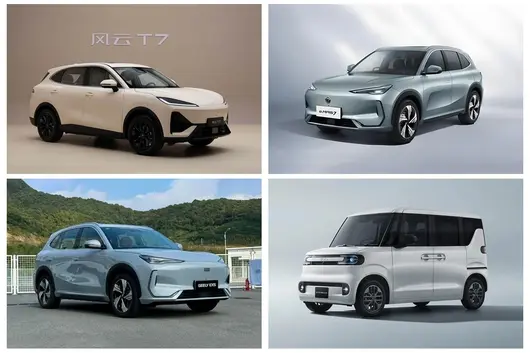
At the 2026 Chengdu Auto Show, Chery brought two special new cars -- the Fulwin T7 defined as the "first native global car of the Intelligent Electric Era", and the new Arrizo 7 "developed according to global standards from the project initiation".

Just looking at product capability, they might not be stunning, but the signal behind them is crucial -- Chinese automakers have started building cars for more than 100 countries from the very first day of R&D, instead of building for the Chinese market first and then exporting. These two cars are just an introduction. Behind them is a rapidly lengthening global model catalog and a paradigm shift across the industry.
01
Domestic Car Market: Why We Must Look Outward
To understand the rise of global models, we must first see the current situation in the domestic market: If 2025 relied on policy support to maintain "record total volume", then entering 2026, as subsidies phase out and demand overdrawn appears, the slump has spread from profitability to sales levels.
The root cause of this round of fierce competition is not complicated: structural overcapacity, high product homogeneity, and weak demand growth combined, car companies can only exchange price for volume, finally conceding profits to consumers and channels.
In 2025, Chinese automobile production and sales hit a record high of 34.4 million vehicles, but this boom relied heavily on trade-in subsidies and purchase tax exemptions. Starting 2026, new energy vehicle purchase tax changed from exemption to half collection, compounded by earlier demand overdrawn, the market clearly cooled.

According to CPCA data, narrow-sense passenger car retail in July was about 1.506 million, down 18% year-on-year; retail in August is estimated at about 1.58 million, with a year-on-year decline widening to 21.7%; 1-7 month automotive consumption fell 13.2%. The only resilient segment is new energy, August retail penetration rose to about 65%, but fuel-powered cars shrink fast -- the total pie is shrinking while competition intensity rises.
As of mid-2026, the domestic car market slump is reflected simultaneously in sales, profits, and channels, with a continuing worsening trend. Stock competition, excess capacity, and product homogeneity patterns remain unchanged. Going outward has completely changed from an optional option to a mandatory one -- overseas markets are no longer just volume exports, but also profit exports and capacity exports.
02
What is a Global Model?
Global models are not a new concept. Toyota Corolla and Volkswagen Golf, which we are familiar with, are classic global models. Compared to this, the current wave of Chinese automakers has its uniqueness -- built on the technological gap of new energy and intelligence, compounded by the capability of multiple power routes in parallel and global regulation adaptation.
Shifting from "China Defined, Global Sales" to "Global Native + Regional Customization" is the development logic behind Chinese global models. Global market demands, regulations, and usage scenarios are brought upfront to the R&D starting point, rather than adapting after product finalization.
First is platform architecture. The same platform is compatible with pure electric / plug-in hybrid / extended range / fuel, Left-hand drive / Right-hand drive, multiple climates and regulation levels, covering more markets with fewer platforms. The competition of global cars is actually competition of platform reuse efficiency.
Regarding power routes, Chinese automakers adopted a dual-line strategy of "Pure Electric for Developed Markets, Plug-in Hybrid for Emerging Markets", hedging against global charging infrastructure differences and tariff barriers for pure electric models in some markets.
Regarding industry regulations, Chinese global models need to pre-install regulations like safety, emissions, data, battery passport at the R&D stage, shifting from passive response to certification to active benchmarking against the highest global standards.

Global models transform the complexity of targeting more than 100 countries from a sales challenge into R&D capability; upgrading globalization from a sales behavior into a systematic capability.
If the 1.0 Model of Chinese automaker exports outputs "cars", then the 2.0 or 3.0 Models output the "system for building cars".
03
What is the Difference Between Global and Non-Global Models?

Currently, many Chinese automaker models are going overseas, but the truly "Global Native" representative works concentrate on a few. Their common point is prioritizing global regulations, L/R drive, multiple power upfront at the R&D starting point; the difference lies in each automaker's unique global strategy.
SAIC MG's MG4 is based on the SAIC Star Pure Electric Dedicated Platform, designed by a China-UK team, with Global R&D, Global Quality, Global Sales, debuted in Europe in 2022. In 2024, its European sales broke 80,000, becoming Europe's best-selling Chinese pure electric car for a while.

Geely Galaxy E5/EX5 is based on the GEA Global Intelligent New Energy Architecture. L/R drive was designed concurrently from the initial development (most in the industry only make L/R and then modify for export). Named "Galaxy E5" domestically and "Geely EX5" overseas, as of early 2026, it covered 35 countries, is the A-segment pure electric SUV export champion, and received dual five-star safety ratings from Euro NCAP and ANCAP. It pushed platform reuse efficiency to the extreme.

As the first global model of the LEAP3.5 Architecture, Leapmotor B10 made its global premiere at the Paris Auto Show, developed according to European leading standards, whole vehicle compliant with regulations of 53 countries and regions, and chassis jointly tuned with Maserati team under Stellantis. Overseas leverage Stellantis channels and Spanish factory for implementation.

Dolphin G is BYD's first model developed specifically for Europe, benchmarked against Toyota Yaris and Renault Clio. BYD Vice President Li Ke once stated "This car is BYD's first model truly tailored for the European market, rather than based on a Chinese market model adjusted", marking BYD upgrading from "selling domestic hits (Yuan PLUS, Song PLUS)" to "forward development for regions".

As for Chery Fulwin T7 (Lepas L6), during R&D it completed surveys of more than 5,000 users in 15 typical countries, covered 95% of global road types, designed according to 2026 version E-NCAP, whole vehicle testing over 6 million kilometers. Overseas homologous car Lepas L6 launched in South Africa and Thailand before domestic version, being the latest carrier of Chery's multi-brand + deep localization strategy.

Proton e.MAS 7, exclusive for Southeast Asian market, Geely licensed the platform and technology of Galaxy E5 to Malaysia Proton, where Proton produced and sold under local brand and local factory.
The six models mentioned above represent different strategies for global models, including Global Platform (MG4, EX5), European High Standard Premiere (B10), Regional Exclusive Forward Development (Dolphin G), and Platform Licensing (e.MAS 7). Of course, despite different strategies, the R&D starting point targets the global market.
04
Automaker Overseas Expansion, Each Showing Their Unique Skills
Doing global models is the same, but trade-offs differ.

First is the difference between heavy assets and light assets. BYD built its own factories, fleet, charging network, moving the whole industry chain overseas, pursuing long-term control; Leapmotor, Xpeng, GAC leverage Stellantis channels, Magna OEM to enter with light assets, exchanging others' systems for speed and low risk. The former has high investment but deep moat, the latter is flexible but controlled by others.
Second is the difference between single brand and multi-brand. SAIC MG bets on one century-old European brand, using MG4 to break through Europe; Chery uses Tiggo, Omoda, Jaecoo, EBRO multi-brand layered coverage for different price points and markets, deriving multiple local identities from the same platform.

Finally is the difference between global models and regional exclusive. Geely, Leapmotor tend to one global model to rule the world, such as EX5 and B10, amortizing costs via platform reuse; BYD, Chery go further, forward developing exclusive models for specific regions including Dolphin G and Lepas, achieving a finer balance between platform and localization. Strategies have no high or low, each chose the route most suitable for them.
The current status of Chinese cars going overseas is coexistence of non-global and global models -- Tiggo 8, Song PLUS DM-i, Haval H6, Changan CS55, Wuling Bingo, etc., are typical of becoming famous domestically then exporting; Geely EX5, B10, Dolphin G, Fulwin T7, etc., are representatives targeting global from project initiation.
05
Overview of Chinese Automaker Export Data
After breaking 2 million in 2021, China's auto exports entered a super high-speed growth channel: 2023 overtook Japan to top global first with 4.91 million; 2025 reached 7.098 million, holding first place for three consecutive years; first seven months of 2026 exported 6.14 million more, July alone 1.043 million, standing at 1 million for two consecutive months, industry expectation full year could attack 10 million mark.
In five years, the scale of Chinese auto exports grew nearly 2.5 times, completing the leap from "million level" to "10 million level".

Structure wise, first seven months this year, Chinese new energy vehicle exports reached 2.909 million, up 1.2 times year-on-year, accounting for nearly half of total exports, of which July alone proportion exceeded 50% for second consecutive month.

Plug-in hybrid models are the biggest variable in new energy exports: on one hand can bypass EU countervailing duties targeting pure electric, on the other hand in Middle East, Latin America, Southeast Asia with weak charging infrastructure, can balance low energy consumption and no range anxiety, triggering dual-line strategy of "Pure Electric for Developed Markets, Plug-in Hybrid for Emerging Markets".

Enterprise level, Chery led 2025 with 1.344 million, BYD jumped to second with 1.054 million, SAIC 950,000 for third. As for first half of this year, Chery, BYD continued to lead by a landslide, Geely exports already exceeded 2025 full year.
Regarding export destinations, 2025 Mexico surpassed Russia for first time to become top destination country, first half of 2026 Russia fell back, replaced by Brazil, UK, Australia. Market diversification is very key for export business risk resistance, this is also the reason global models must possess multi-market adaptation capability.
06
Model Globalization, Impact Not Just Overseas
Global models target global, but also have不可忽视 impact and significance for domestic market.
Currently Chinese top automaker export proportion generally exceeds 40%, domestic price war "blood loss" is partially offset by overseas profits, favorable for industry profit repair and anti-involution policy effectiveness; capacity and R&D costs amortized by global market, relieving domestic stock competition pressure.
And after global standards lowered to domestic, Fulwin T7 designed according to 2026 version E-NCAP standards, underwent 6 million km verification entered market at 100,000-class price, equivalent to bringing global highest safety and quality standards downgraded to most competitive market segment, Chinese consumers can buy global standard products at lower price.
And for overseas markets, Chinese automakers are positively entering high regulation markets like Europe with products meeting global strictest regulations, "Manufacturing for Market" localization strategy transforms Chinese automakers from external operators to local industry participants, this is key to gaining political legitimacy in trade protectionism era.
It can be foreseen that Chinese automaker competition in overseas markets will also upgrade from single car price-performance to logistics, charging, after-sales, finance and brand system competition.
07
Jiashi Summary
At Chengdu Auto Show, Chery launched two global models, parameters perhaps not stunning, but native global car identity itself is also a microcosm of Chinese auto industry situation and ambition.
The essence of global models is internalizing global market complexity into enterprise R&D capability. Difference from old model is not where cars sell, but for whom cars are born.
From Corolla to Golf, every generation of global car in automotive history reshaped the industry structure of an era -- this time, the row of definers appeared Chinese automakers.
(END)

In the Malaysian SUV market, many buyers compare Honda CR-V and Volkswagen Tiguan when choosing a car. These two cars are quite close in price and positioning. Today we will make a detailed comparison from multiple aspects to save you time on research.
Honda CR-V's OTR price in Malaysia is RM 178,200 - 195,900, with a total of 4 versions, including 2026 e:HEV 2.0L 2WD RS (RM 195,900), 2026 1.5T 4WD V (RM 181,900), 2026 e:HEV 2.0L 2WD E (RM 178,200), etc.
Volkswagen Tiguan's OTR price in Malaysia is RM 206,540 - 260,024, with a total of 2 versions, including 2025 Allspace 2.0T R-Line (RM 260,024), 2025 Allspace 1.4T Elegance (RM 206,540), etc.
In terms of price, the Honda CR-V's starting price is indeed RM 28,340 cheaper than the Volkswagen Tiguan. If your budget is limited, Honda's entry-level version can already meet daily needs. However, note that the lower price might mean compromises on features, depending on your specific requirements.

Honda CR-V comes with a 2.0L 4-cyl, 170 hp. Official fuel consumption 8.0 L/100km.
Volkswagen Tiguan comes with a 2.0L 4-cyl, 170 hp. Official fuel consumption 8.0 L/100km.
Both cars use the same powertrain system, the driving feel is basically the same in daily use. Fuel consumption is also similar, no need to worry too much about this.

Honda CR-V uses FWD drive type.
Volkswagen Tiguan uses FWD drive type.
Both cars have the same drive type, both are FWD, daily driving experience will not be much different.

Honda CR-V warranty 5 years/unlimited mileage, maintenance interval every 10,000km or 6 months.
Volkswagen Tiguan warranty 3 years/100,000km, maintenance interval every 10,000km or 6 months.

Honda CR-V and Volkswagen Tiguan are both mainstream choices in the Malaysian market, suitable for family use, daily commuting. If you value brand reputation and resale value more, you can prioritize the one with better reputation; if you care more about cost-performance ratio and features, choose the one with richer configurations. Ultimately, it is recommended to test drive both, personal experience is the most important.

Overall, Honda CR-V and Volkswagen Tiguan are both very good models in the Malaysian market. Which one to choose depends mainly on your personal needs and budget. We suggest doing your homework, compare quotes from several dealerships, then test drive to make the final decision. Buying a car is a big matter, spending time on research will never be wrong.


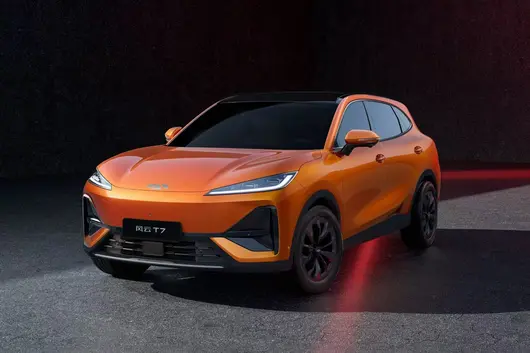
August 12th, Chery Fengyun Series new pure electric SUV — Fengyun T7 officially started pre-sale. The new car offers 3 trims, pre-sale guide price from 109,900 Yuan to 129,900 Yuan. When the industry chases the "one new car every 12 months" quick-success rhythm, this global quality pure electric SUV, after 2 years of planning and 3 years of R&D, chose to tell the market with a "Slow Work Makes Good Cars, You've Been Waiting" launch event — some things cannot be rushed, some roads cannot be circumvented.

First go overseas, then return home, a "reverse" global car
Fengyun T7 is not a "China-specific car". It is called LEPAS L6 overseas, pre-sale has started in South Africa, launched in Thailand on July 24th, landed in Indonesia in August, entered the EU in September, arrived in Australia, New Zealand and UK in October. A car must simultaneously meet regulations, climate conditions, road characteristics, and usage habits of over 130 countries and regions, the R&D cycle is destined to be long.

This is the underlying logic of Fengyun T7's "slowness" — it did not first build domestically and then find a way to sell abroad, but started R&D according to global standards, completed verification globally, and returned to China with real feedback from the overseas market.
Slow in R&D: 3 Years Polishing, Global System Support
Relying on Chery's global 1+7+N R&D system, Fengyun T7 went through a complete 3-year R&D cycle. Visited 15 typical countries, completed over 5,000 global user research surveys, incorporating different market needs into product definition in advance. Cumulative investment of 963 test vehicles, global durability test mileage reached 1.45 million km. Tests covered over 100 extreme road condition environments including EU, Australia, New Zealand, Middle East, South Africa, Russia, Mexico, Brazil, etc. Whole vehicle cumulative test mileage exceeded 6 million km.
Slow in Design: Global Aesthetics, User Co-creation

Co-created by Chery's 10 major global design centers and over 100 designers, deeply co-created with over 5,000 users globally. Homologous model LEPAS L6 debuted at Milan Design Week, widely internationally recognized. Wind-shaped front, wind-sculpted satin body, sky glow tailgate, balancing international minimalist aesthetics with Eastern elegant charm. 6 exclusive Eastern elegant colors — Blazing Orange, Mountain Smoke Purple, Cloud Pink Beige, Flowing Light Silver, Green Bamboo Grey, Ink Stone Black, among which Blazing Orange uses luxury-grade 2K 8-layer exterior paint, anti-UV, scratch-resistant. Cloud Wing wrap cockpit matches large area soft wrapping, Warm Black-Brown and Polar Night Obsidian two interior styles each have their own beauty.
Slow in Standards: Anchored 2026 Version E-NCAP Five-Star Safety
Fengyun T7 is designed according to the 2026 version E-NCAP Five-Star Safety standard, the strictest in history. The 2026 version E-NCAP divides whole vehicle safety into four dimensions: Safe Driving, Collision Avoidance, Collision Protection, Post-Collision Safety, any shortcoming in any dimension prevents reaching the Five-Star rating. The new car simultaneously achieves Functional Safety ASIL D highest level and global data compliance requirements.

The body uses 80% high-strength steel, 18.84% hot-formed steel to build a nine-horizontal five-vertical cage body. Same-class unique shotgun structure, double-frame subframe + PACK anti-collision beam, front collision 6 paths/side collision 9 paths maximize energy dispersion. 9 airbags most in same class, including 48L dual-chamber remote airbag and rear side airbag. Rhino Battery 6D super strong protection, 31-layer protection structure, IP68 waterproof 96 times national standard.
Slow in Verification: Five Extreme Environments, Full Domain Calm
Fengyun T7 crosses five extreme environments of high temperature, high cold, high humidity, high salinity, high altitude. Full domain adaptation interval covers -40°C to 55°C. 81 dedicated durability cars synchronous road test. Under Nordic extreme cold conditions, same-class first dual-source wide temperature range heat pump + high voltage PTC system increases winter range by 30%; in tropical rainy areas, 500 mm off-road water wading ability deals calmly; in Middle East high temperature sun exposure areas equipped with 4.5 L large capacity cleaning fluid tank; Brazil gravel road adds battery front and rear beam protection. Global all-road adaptation, South Africa unpaved bog escape, Brazil 140 mm high speed bump deal calmly.
Six Core Needs, Full Spec is Standard Spec

Travel Needs: All trims standard 65.05 kWh Rhino Battery, CLTC range 600 km, actual test reached 667+ km. 30%-80% fast charging only needs 20 minutes. 100 km electricity consumption as low as 10.7 kWh. Smart Needs: 4 nm Qualcomm SA8775 Cockpit-Driving Integrated Chip, NPU computing power 72 TOP. 15.6-inch 2.5K floating central control large screen, Lingxi Smart Cockpit 2.0 integrates Doubao Large Model, supports full scenario voice interaction. Comfort Needs: 4,570 mm car length, 2,700 mm wheelbase, 84% Space Efficiency. Front seats all trims standard heating/ventilation, can fully fold flat to form 1,955 mm x 1,310 mm pure flat large bed. Trunk 450 L, max expandable to 1,550 L. Peace of Mind Needs: Whole vehicle lifetime warranty (including Three-Electric) + 666 Yuan purchase value 3,999 Yuan lifetime basic maintenance. Power battery Safety Guarantee, Smart Driving Accident Guarantee (maximum 5 million within one year).
Pre-sale Benefits: 7 Benefits, Sincerity Full
During pre-sale, paying 1,000 Yuan deposit enjoys 7 benefits: 1,000 Yuan offsets 2,000 Yuan car purchase, priority delivery right, value 6,000 Yuan Blazing Orange/Mountain Smoke Purple exclusive color limited time free, Power Battery Safety Guarantee, Smart Driving Accident Guarantee (maximum 5 million within one year), Whole Vehicle including Three-Electric Lifetime Warranty, 666 Yuan purchase lifetime basic maintenance package.
Fengyun T7 is not a "fast" produced car. It exchanged slow work for global standard hard core quality, with 109,900 Yuan starting price brought global car into Chinese families. #GlobalCarsCannotBeFast#, #FengyunT7SlowWorkMakesGoodCars# — This is not a slogan, it's the answer run on 1.45 million km.
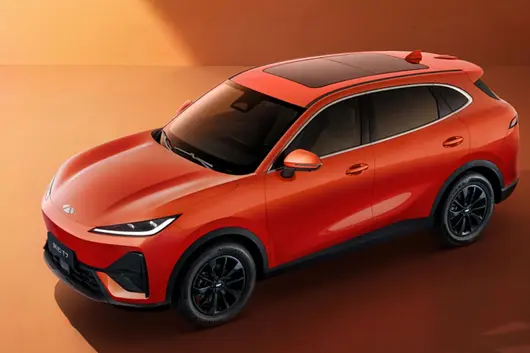

8 月 12 日,全球品質純電 SUV 風雲 T7 正式開啟預售,本次預售發布會以“慢工造好車,久等了”為主題,傳遞風雲 T7 秉持長期主義嘅造車理念,以全球標準打磨產品、扎實造品質全球車嘅堅守,亦道出品牌對用戶長久期待嘅真摯感恩。新车共推出 3 款車型,預售指導價為 10.99 萬元至 12.99 萬元,且享受 7 重購車權益。

當下全球汽車產業邁入“中國時間”,中國新能源智造持續領跑海外市場。依托奇瑞 23 年全球化技術積澱,風雲 T7 走出反向出海試煉路徑,拒絕行業速成造車思路,以全鏈路全球嚴苛標準打磨整車實力。圍繞品質生活六大核心新剛需,將顏值剛需、安全剛需、出行剛需、智能剛需、舒享剛需、安心剛需融為一體,打造全球品質純電 SUV,適配通勤、遠途、戶外、多人出行等多元場景。

內飾分溫暖黑棕、極夜黑曜兩種風格,雲翼環抱座艙搭配大面積軟包覆,鵝卵石懸浮揚聲器、菱格縫紉細節精緻;所有內飾皮革、密封條、塑料件不易硬化褪色,常年使用依舊嶄新耐看,兼顧顏值同質感。
風雲 T7 對標 2026 版 E-NCAP 五星安全標準設計、功能安全 ASILD 最高等級。2 年策劃,3 年研發,共投入 81 台專屬耐久車同步路試,整車累計測試里程超 600 萬公里,耐久專項實測 145 萬公里,同時針對東南亞雨季、中東高溫暴曬、印尼高濕等多個全球多地域進行極限實車試煉。

車身採用 80% 高強度鋼、18.84% 熱成型鋼打造九橫五縱籠式車身,採用 shotgun 結構、雙框副車架 +Pack 防撞梁,鋼筋鐵骨保障乘員艙安全,前面 9 條 + 側面 6 條碰撞傳力路徑最大化分散碰撞能量,留存乘員生存空間;除此之外,更搭載咗 9 個安全氣囊,包含 48L 雙腔遠端氣囊同後排側氣囊,360°全方位保護乘員安全。風雲 T7 全系搭載犀牛電池,超強 6D 防護構築電池安全堡壘全方位抵禦擠壓、穿刺、衝擊,為動力電池構建多層立體安全屏障。面對夏季暴雨頻繁,犀牛電池 IP68 防水為國標 96 倍,無懼雨季內澇、路面積水、戶外涉水,有效防止電池進水短路隱患。

整車尺寸 4570×1852×1694mm,軸距 2700mm,車內得房率 84%,後排純平地台,同級領先嘅 911mm 腿部空間,後排坐倒拓展 1955mm 純平大床,常規行李廂 450L、拓展至 1550L,充足載貨空間適配戶外穿越、多人結伴出行。

奇瑞唔止為用戶帶來硬核實力嘅產品,更加站喺用戶視角,全盘考量購車之後嘅全週期用車體驗,直面大家對於車輛故障、後期養車成本等實際顧慮。為此風雲 T7 推出兩大保底保障、兩項終身權益,從購車到長期使用全程守護。

從全球標準研發、全球審美設計、全球工藝製造,到全球路況驗證,風雲 T7 以全鏈路全球品質,豎起純電 SUV 嘅價值標杆。佢歷經世界淬煉,最終奔赴中國用戶,以顏值、出行、安全、智能、舒享、安心六大剛需嘅全方滿足,回應品質家庭嘅所有期待。風雲 T7,唔止係一台凝結全球技術與品質嘅座駕,更係全球標準與中國家庭需求深度共鳴嘅時代之選。現已就位,靜候每一位熱愛生活嘅你。

In Malaysia's SUV market, many buyers often compare Proton X70 and Kia Sportage when choosing a car. These two cars are quite close in price and positioning. Today, we will do a detailed comparison from multiple aspects to help you save time on research.
Proton X70's OTR price in Malaysia is RM 106,800 - 122,300, with 3 versions including 1.5L Standard 2WD (RM 106,800), 1.5L Executive 2WD (RM 115,800), 1.5L Premium 2WD (RM 122,300), etc.
Kia Sportage's OTR price in Malaysia is RM 129,639 - 179,320, with 4 versions including 2025 1.6T DCT 4WD High (RM 179,320), 2025 1.6T DCT 2WD High (RM 159,320), 2025 2.0L AT 2WD High (RM 139,639), etc.
From a price perspective, Proton X70's starting price is indeed RM 22,839 cheaper than Kia Sportage. If your budget is limited, Proton's entry-level version already meets daily needs. However, note that the savings of a few thousand might involve trade-offs in features, depending on your specific needs.

Proton X70 is equipped with 1.5L Turbo, 140 hp. Official fuel consumption 7.0 L/100km.
Kia Sportage is equipped with 1.5L Turbo, 140 hp. Official fuel consumption 7.0 L/100km.
Both cars use the same powertrain, the driving experience is basically the same. Fuel consumption is also similar, no need to worry too much about this point.

Proton X70 body length 4400 mm, trunk 400 L.
Kia Sportage body length 4400 mm, trunk 400 L.
The dimensions of both cars are almost the same, interior space difference is not large. Cars at this level are completely sufficient for daily use.

Proton X70 adopts FWD drivetrain.
Kia Sportage adopts FWD drivetrain.
Both cars have the same drivetrain, both are FWD, daily driving experience will not have much difference.
Overall, Proton X70 and Kia Sportage are both very good models in the Malaysia market. Choosing which one, the key depends on your personal needs and budget. We suggest doing your research, comparing quotes from several dealerships, then going for a test drive to make the final decision. Buying a car is a big matter, spending some time on research will definitely not be wrong.


In the Malaysian SUV market, many buyers compare Proton X50 and Kia Sportage when choosing a car. These two cars are quite close in price and positioning. Today we will do a detailed comparison from multiple aspects to help you save time on research.
Proton X50's OTR price in Malaysia is RM 89,800 - 113,300, with a total of 4 versions, including 1.5T Executive (RM 89,800), 1.5T Premium (RM 101,800), 1.5T Flagship (RM 113,300), etc.
Kia Sportage's OTR price in Malaysia is RM 129,639 - 179,320, with a total of 4 versions, including 2025 1.6T DCT 4WD High (RM 179,320), 2025 1.6T DCT 2WD High (RM 159,320), 2025 2.0L AT 2WD High (RM 139,639), etc.
From a price perspective, Proton X50's starting price is indeed RM 39,839 cheaper than Kia Sportage. If your budget is limited, Proton's entry-level version can already meet daily needs. But also note, the few thousand ringgit difference, there might be trade-offs in equipment, it depends on your needs.

Proton X50 is equipped with 1.5L 4-cyl, horsepower 105 hp. Official fuel consumption 6.0 L/100km.
Kia Sportage is equipped with 1.5L Turbo, horsepower 140 hp. Official fuel consumption 7.0 L/100km.
In terms of performance, Kia Sportage's 1.5L Turbo has 35 horsepower more than Proton X50's 1.5L 4-cyl. However, for daily driving in the city, both cars have enough power, you won't feel it's lacking.

Proton X50's safety rating is 5★ (ASEAN NCAP), active safety systems include ADAS (ACC, AEB, LKA, LDA, BSM, RCTA).
Kia Sportage's safety rating is 5★ (ASEAN NCAP), active safety systems include Drive Wise.
Both cars have the same safety rating. Safety equipment is quite complete in this class. New car safety is generally not poor nowadays, no need to worry too much about this point.

Proton X50 body length 4400 mm, trunk 400 L.
Kia Sportage body length 4400 mm, trunk 400 L.
The dimensions of both cars are almost the same, interior space difference is not significant. Cars in this class are completely sufficient for daily use.
Proton X50 Warranty 5 years/150,000km, Service interval every 10,000km or 6 months.
Kia Sportage Warranty 5 years/300,000km, Service interval every 10,000km or 6 months.
Overall, Proton X50 and Kia Sportage are both very good models in the Malaysian market. Which one to choose depends on your personal needs and budget. We recommend doing research, comparing quotes from several car dealers, and then test driving to make the final decision. Buying a car is a major decision, spending time on research is never wrong.


In Malaysia's SUV market, many buyers compare the Proton X50 and Mazda CX-30 when choosing a car. These two vehicles are quite close in price and positioning. Today, we will make a detailed comparison from multiple aspects to save you time doing research.
The OTR price of Proton X50 in Malaysia is RM 89,800 - 113,300, with a total of 4 versions, including 1.5T Executive (RM 89,800), 1.5T Premium (RM 101,800), 1.5T Flagship (RM 113,300), etc.
The OTR price of Mazda CX-30 in Malaysia is RM 122,409 - 146,409, with a total of 4 versions, including 2025 2.0L High+ Premium (RM 146,409), 2025 2.0L High+ (RM 138,409), 2025 2.0L High (RM 130,409), etc.
In terms of price, the starting price of the Proton X50 is indeed RM 32,609 cheaper than the Mazda CX-30. If your budget is limited, the entry-level version of Proton can already meet daily needs. However, note that the few thousand cheaper might involve compromises in features, depending on your specific requirements.
Proton X50 body length is 4400 mm, trunk 400 L.
Mazda CX-30 body length is 4500 mm, trunk 450 L.
In terms of space, the Mazda CX-30 body is 100 mm longer than the Proton X50, offering an advantage in passenger space. However, the Proton X50 is slightly more flexible for parking in the city, each has its trade-offs.
Proton X50 warranty 5 years/150,000km, maintenance interval every 10,000km or 6 months.
Mazda CX-30 warranty 5 years/150,000km, maintenance interval every 10,000km or 6 months.
The warranty conditions for both cars are the same, no need to worry about this. Actual maintenance costs also depend on the brand's service network and parts prices, it is recommended to ask real owners in car enthusiast groups for their experiences.
Both the Proton X50 and Mazda CX-30 are mainstream choices in the Malaysian market, suitable for family use and daily commuting. If you value brand reputation and resale value more, prioritize the one with better reputation; if you care more about cost-performance and features, choose the one with richer configuration. Ultimately, it is recommended to test drive both, personal experience is the most important.

Overall, both the Proton X50 and Mazda CX-30 are quite good models in the Malaysian market. Which one to choose mainly depends on your personal needs and budget. We suggest doing your research, compare quotes from several dealerships, and then test drive to make a final decision. Buying a car is a major matter, spending some time doing research will never be wrong.

車型概覽

三菱L200 值唔值得睇,第一步唔係望牌子或者外形,而係睇佢能唔能夠配合你嘅香港日常。 呢篇會集中講高速巡航、併線同超車信心,幫你用買家角度篩走唔適合嘅選擇。
售價仍待確認,買家可以先把佢放入候選名單,等價格落實後再同同級車逐項比較。
購車價格指南
三菱L200 目前售價仍未清晰,較理性嘅做法係先睇版本、車身大小同動力形式,等價格落實後再決定值唔值得落訂。
如果有幾個版本可揀,可以先將 2025 2.3T Standard(價格待確認) 放喺同一張清單。日常通勤重視舒適同易用,家庭買家就要優先睇後排、尾箱同安全配置。
核心規格重點
睇 三菱L200 嘅規格,重點唔係背數字,而係理解佢喺香港用車場景會帶嚟咩分別。
渦輪增壓、4 個 汽缸 嘅動力底子,重點係市區跟車夠唔夠順、高速巡航會唔會吃力。 148 Ps / 108.8 kW、400 N·m 嘅輸出,對滿載、上斜同超車都比單睇馬力數字更有意思。 車長 5305 mm、車闊 1815 mm、車高 1775 mm 可以幫你預判商場停車場、屋苑車位同後排腿部空間。 自動(AT)、前置四駆 會影響起步順滑度、濕地穩定感同長途巡航性格。
優缺點分析
三菱L200 嘅優點唔需要講到天花龍鳳,真正有價值係佢能唔能夠令日常用車更省心:動力輸出對高速同上斜更有底氣、空間同車身尺寸方便家庭買家預判實用性。
要留意嘅係,香港停車場同窄路使用要留意車身闊度、售價未清晰前唔應該太早用性價比落結論。呢啲唔一定係缺點,但係落訂前應該先諗清楚。
買家常見問題
買 三菱L200 之前,真正要問嘅唔係單一規格,而係佢可唔可以融入你每日嘅生活節奏。
常見疑問係「Mitsubishi L200 嘅動力系統係點?」簡單講,Mitsubishi L200 搭載一副 2.2 公升直四渦輪增壓柴油引擎,符合歐盟 Euro 6d-TEMP 排放標準。最大馬力 150 至 154 匹,峰值扭力高達 400 牛頓米(約 40.8 kgm),喺 2,000 轉已經可以完全釋放,低轉扭力好充沛,無論係市區起步定係載重上斜都綽綽有餘。 放到實際用車,就係要睇佢對通勤、泊車、家庭乘坐同長期成本有幾大幫助。
同級對比內容
將 三菱L200 放入同級車清單時,唔建議只用外形或者品牌光環決定。比較順序可以係:先等售價落實,再決定佢應該同邊個級距比較、再睇動力係咪足夠應付高速併線同滿載、最後睇車身大小、座位同尾箱是否適合家人。
咁樣篩選會貼近香港買家真實生活:平日塞車、商場泊車、周末去新界、甚至一家人出入,先係一部車每日要面對嘅考驗。
用車全周期指南
擁有 三菱L200 唔係買車一刻就完結,之後仲有保險、輪胎、保養、泊車同日常能源成本要處理。
如果你主要喺市區行,視野、低速順滑度同泊車輔助會好影響心情;如果經常行高速或跨區,座椅舒適度、隔音同動力從容感會更重要。


