首頁九龙

搜尋歷史
熱門搜尋
經銷商登入 / 註冊

In Malaysia's SUV market, many buyers compare the Proton X70 and Honda HR-V when choosing a car. These two cars are quite close in price and positioning. Today, we will do a detailed comparison from multiple aspects to help you save time on research.
The Proton X70 OTR price in Malaysia is RM 106,800 - 122,300, with a total of 3 versions, including 1.5L Standard 2WD (RM 106,800), 1.5L Executive 2WD (RM 115,800), 1.5L Premium 2WD (RM 122,300), etc.
The Honda HR-V OTR price in Malaysia is RM 115,900 - 143,900, with a total of 4 versions, including 2026 e:HEV 1.5L RS (RM 143,900), 2026 1.5T V (RM 137,900), 2026 1.5T E (RM 130,900), etc.
From a price perspective, the Proton X70's starting price is indeed RM 9,100 cheaper than the Honda HR-V. If your budget is limited, Proton's entry-level version can already meet daily needs. However, also note that the few thousand cheaper may involve trade-offs in features, depending on your specific needs.

Proton X70 safety rating is 5★ (ASEAN NCAP), active safety systems include ADAS (ACC, AEB, LKA, LDA, BSM, RCTA).
Honda HR-V safety rating is 5★ (ASEAN NCAP), active safety systems include Honda SENSING (ACC, CMBS, LKAS, RDM).
Both cars have the same safety rating, safety features are quite complete in this class. New car safety is generally not lacking nowadays, no need to worry too much about this.

Proton X70 body length 4400 mm, trunk 400 L.
Honda HR-V body length 4500 mm, trunk 450 L.
In terms of space, Honda HR-V's body is 100 mm longer than Proton X70, passenger space has an advantage. However, Proton X70 is slightly more flexible for parking in the city, each has its trade-offs.

Proton X70 warranty 5 years/150,000km, maintenance interval every 10,000km or 6 months.
Honda HR-V warranty 5 years/unlimited mileage, maintenance interval every 10,000km or 6 months.
Proton X70 and Honda HR-V are both mainstream choices in the Malaysian market, suitable for family use, daily commuting. If you value brand reputation and resale price more, you can prioritize the one with better reputation; if you care more about cost-performance and features, choose the one with richer configuration. In the end, it is recommended to test drive both, personal experience is the most important.
Overall, Proton X70 and Honda HR-V are both very good models in the Malaysian market. Which one to choose mainly depends on your personal needs and budget. It is recommended to do your homework, compare quotes from multiple car dealerships, and then test drive to make the final decision. Buying a car is a major event, spending time on research will definitely not be wrong.


In Malaysia's SUV market, many buyers compare Proton X50 and Chery Tiggo 8 Pro when choosing a car. These two cars are quite close in price and positioning. Today we will make a detailed comparison from multiple aspects to help you save time doing research.
Proton X50's OTR price in Malaysia is RM 89,800 - 113,300, with 4 versions in total, including 1.5T Executive (RM 89,800), 1.5T Premium (RM 101,800), 1.5T Flagship (RM 113,300), etc.
Chery Tiggo 8 Pro's OTR price in Malaysia is RM 159,750 - 159,750, with 2 versions in total, including 1.6L Turbo Standard (RM 130,000), 1.6L Turbo Premium (RM 145,000), etc.
In terms of price, Proton X50's starting price is indeed RM 69,950 cheaper than Chery Tiggo 8 Pro. If your budget is limited, Proton's entry-level version can already meet daily needs. However, also note that the few thousand cheaper might have trade-offs in features, depending on your specific needs.

Proton X50's safety rating is 5★ (ASEAN NCAP), active safety system includes ADAS (ACC, AEB, LKA, LDA, BSM, RCTA).
Chery Tiggo 8 Pro's safety rating is TBD, active safety system includes Basic.
Regarding safety features, both cars received good ratings. However, Proton X50's ADAS (ACC, AEB, LKA, LDA, BSM, RCTA) and Chery Tiggo 8 Pro's Basic differ in functionality. If you value active safety, you can compare the feature lists of both closely.

Proton X50 uses 4WD drive system.
Chery Tiggo 8 Pro uses FWD drive system.
Proton's 4WD and Chery's FWD will have different handling experiences, test drive comparison is recommended.

Proton X50 and Chery Tiggo 8 Pro are both mainstream choices in the Malaysian market, suitable for family use and daily commuting. If you value brand reputation and resale value more, prioritize the one with better reputation; if you care more about cost-performance and features, choose the one with richer configuration. Ultimately, it is recommended to test drive both, as personal experience is the most important.
Overall, Proton X50 and Chery Tiggo 8 Pro are both very good car models in the Malaysian market. Which one to choose depends mainly on your personal needs and budget. We suggest doing your research, comparing quotes from multiple dealerships, then test driving to make a final decision. Buying a car is a major matter, spending time doing research will never be wrong.


喺馬來西亞嘅 SUV 市場,好多買家喺選車嗰陣都會用 Proton X50 同 Mazda CX-30 嚟比較。這兩款車喺價位同定位上都幾接近,今日我哋就從多個方面做一個詳細比較,幫你省做功課嘅時間。
Proton X50 喺馬來西亞嘅 OTR 售價係 RM 89,800 - 113,300,總共有 4 個版本,包括 1.5T Executive(RM 89,800)、1.5T Premium(RM 101,800)、1.5T Flagship(RM 113,300) 等。
Mazda CX-30 喺馬來西亞嘅 OTR 售價係 RM 122,409 - 146,409,總共有 4 個版本,包括 2025 2.0L High+ Premium(RM 146,409)、2025 2.0L High+(RM 138,409)、2025 2.0L High(RM 130,409) 等。
從價錢睇落,Proton X50 嘅起步價確係比 Mazda CX-30 平咗 RM 32,609。如果你預算有限,Proton 嘅入門版已經可以滿足日常需求。但都要注意,平嗰幾千蚊,可能喺配備上會有取舍,具體要看你嘅需求。
Proton X50 嘅安全評級係 5★ (ASEAN NCAP),主動安全系統包括 ADAS (ACC, AEB, LKA, LDA, BSM, RCTA)。
Mazda CX-30 嘅安全評級係 5★ (ASEAN NCAP),主動安全系統包括 i-Activsense。
兩款車嘅安全評級一樣,喺呢個級別入面安全配備都算係好齊全。而家嘅新車安全性都唔差,唔使太擔心呢一點。
Proton X50 保修 5 年/150,000km,保養間隔 每 10,000km 或 6 個月。
Mazda CX-30 保修 5 年/150,000km,保養間隔 每 10,000km 或 6 個月。
兩款車嘅保修條件一樣,呢方面唔使糾結。實際保養成本仲要睇品牌嘅服務網絡同零件價格,建議去車友群問下真實車主嘅經驗。
Proton X50 同 Mazda CX-30 都係馬來西亞市場嘅主流選擇,適合家庭使用、日常通勤。如果你更睇重品牌口碑同二手價,可以優先考慮口碑好嗰一款;如果你更在意性價比同配備,嗰就揀配置更豐富嗰款。最終都建議兩款都去試駕,親自體驗先係最重要。

總體嚟講,Proton X50 同 Mazda CX-30 都係馬來西亞市場好唔錯嘅車型。揀邊部車,關鍵仲係睇你嘅個人需求同預算。建議大家做好功課,多比較幾間車行嘅報價,再去試駕先做最終決定。買車係件大事,花少少時間做功課絕對唔會錯。

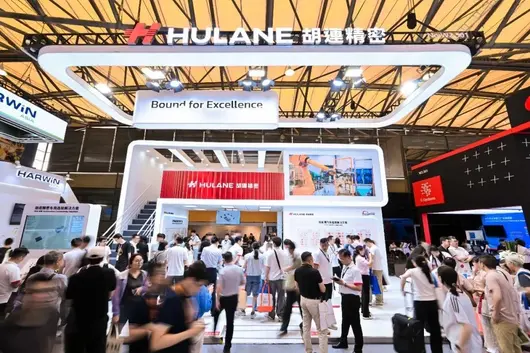
At the 2026 Munich Shanghai Electronics Show, a connector enterprise with nearly 50 years of history -- Hulian Precision, presented a clear signal to the outside world with a series of product matrices covering high voltage, high frequency, and integration: in the dual transformation of electrification and intelligence in the automotive industry, connectors are no longer simple conductive components, but the core cornerstone relating to whole vehicle safety, data transmission, and system integration.

From high-current high-voltage connectors to intelligent distribution boxes, from integrated modules jointly developed with well-known international car manufacturers to global production capacity layout, Hulian Precision's practice path reflects a typical sample of Chinese automotive supply chain enterprises seeking a role leap in the midst of industrial turmoil.
01
Technical Breakthrough: Anchoring High Voltage and High Frequency Tracks
The transformation of the automotive industry has put disruptive requirements on connectors. Li Yingde, Vice President of the R&D Department of Hulian Precision, introduced on site at the exhibition that its core product layout precisely cuts into two technical tracks, matching electrification and intelligence upgrade needs.


In the high-voltage field, with the mass popularity of the industry 800V high-voltage platform, the 60 ampere current carrying capacity of traditional vehicle-mounted connectors can no longer adapt to new energy vehicle operating conditions. The current carrying capacity of new high-voltage connectors has been improved to 300 to 400 amperes, perfectly matching the core needs of new energy vehicles for high-power fast charging and fast discharge. Li Yingde emphasized that under high-current high-power operating conditions, product temperature rise spikes quadratically, putting extremely high requirements on product insulation performance and heat resistance protection capability. For this reason, high-voltage products adopt all-around structural protection design, effectively avoiding high-voltage breakdown, thermal runaway and other safety hazards, ensuring whole vehicle charging and driving all operating condition high-voltage safety all-around.


In the intelligence field, high-frequency high-speed connectors are the core hardware supporting smart cockpits, ADAS assisted driving, and high-level autonomous driving deployment. High-frequency high-speed products are widely used in coaxial products for vehicle-mounted cameras and image sensor equipment, after four generations of iteration, volume is 40% smaller than traditional products, achieving miniaturization and lightweight upgrades.

Compared with traditional connector enterprises, Hulian Precision's core differentiated advantages are concentrated in the R&D and verification system. Li Yingde stated that smart cars operate multiple devices collaboratively, signal transmission is dense, and electromagnetic interference and signal integrity loss are prone to occur, which is the technical shortcoming of traditional connectors. For this reason, high-frequency simulation analysis technology is introduced at the product R&D stage, combined with professional network analysis equipment to complete signal integrity multi-dimensional testing, avoiding signal distortion and unstable transmission problems from the R&D source, building a solid data transmission safety defense line for intelligent driving.
02
Integration: From Single Parts to System Solution Providers
If high-voltage and high-frequency products represent technical depth, then integrated solutions reflect system integration capabilities, which is also the key for enterprises to jump out of single-product competition and achieve value upgrades.

The intelligent electric box unveiled at the exhibition completely subverted the single-function shortcoming of traditional distribution products. Traditional electric boxes only have basic power on and conduction functions, with single functions and low resource utilization; the new intelligent distribution box is equipped with intelligent monitoring, dynamic current regulation, logic judgment multiple functions, which can dynamically adjust loop current according to different vehicle operating conditions and different time periods. Taking 60 ampere and 40 ampere dual loop operating conditions as an example, the traditional solution needs to reserve 100 ampere fixed current carrying capacity, space and resource waste is serious; the intelligent distribution box can dynamically adapt to current output, accurately control temperature rise, improve circuit operation stability, while optimizing whole vehicle space utilization and reducing energy consumption.


In the field of modular integration, Hulian Precision launched an integrated connector module, solving the industry pain points of increasing vehicle-mounted modules and redundant decentralized connectors. Traditional vehicles often need 4 48PIN connectors matching 1 Ethernet connector, totaling 5 independent parts, occupying a lot of vehicle body space, assembly is cumbersome; through technical integration, integrating multiple independent parts into a single connector, significantly compressing vehicle body occupied space, simplifying car manufacturer assembly procedures, reducing whole vehicle failure rate. Among them, one benchmark product is a high-end vehicle body control module connector jointly developed by the enterprise with a well-known international car manufacturer.

Li Yingde revealed that the R&D verification cycle of this high-end customized product lasted nearly two years. From early scheme formulation, product sampling, performance verification to whole vehicle docking test, it followed the car manufacturer's strict and perfect verification system throughout the process, the production process and quality control standards are extremely high. In order to match the extreme reliability requirements of high-end car manufacturers and check hidden defects inside the product, industrial CT scanning technology was specially imported to achieve dual detection of product internal and external structure, ensuring product yield from the source. The strict technology and quality control experience polished by high-end projects also comprehensively enhance the quality upgrade of the full series of products.

The customer collaborative R&D model with deep integration broke away from the traditional passive order-taking mode. Currently, the enterprise's core products have a self-development rate of around 40% and can intervene early in the early stage of car manufacturer new model R&D, accurately converting customer scenario requirements and usage specifications into engineering development specifications and verification standards, providing customers with a full-chain integrated service from early custom development, middle-stage performance verification to later mass production supporting, truly realizing the transformation from parts supplier to whole vehicle solution service provider.
03
Competition Strategy: Breakthrough through Differentiated Customization
Current connector track competition intensifies, international giants occupy the high-end market凭借 mature standardized platforms, long-term technology accumulation, but generally have shortcomings such as cumbersome development processes, long iteration cycles, high mold costs, and insufficient customization flexibility, unable to adapt to the development rhythm of domestic new energy car manufacturers for rapid iteration, high-frequency model changes, and flexible mass production. Hulian Precision Sales Director You Jingfu elaborated the core logic of enterprise differentiated breakthrough.
With the rapid rise of new energy vehicles and large-scale outbound of domestic whole vehicles, the market catalyzes a large amount of localization adaptation, personalized customization incremental demand. Based on industry structural differences, establish "giants do standardized platforms, Hulian Precision do differentiated customized integration plans" core strategy, relying on four core capabilities to build competition barriers: reduce customer development costs through industrial vertical integration and modular development; build self-owned automotive-grade laboratories, significantly shorten product certification cycles, reduce external technology dependence; build small batch to large batch flexible scheduling system, achieve local fast response, efficient delivery.
Facing the industry status quo of intense competition and continuous cost reduction by OEMs, Hulian Precision abandoned the extensive low-price competition model, following the structural cost reduction and technology value-added route. You Jingfu introduced that the enterprise achieved internal cost reduction through R&D optimization, process upgrade, product structure innovation without sacrificing product quality; relying on vertical integration supply chain, global dual base layout, effectively hedging raw material price increases, regional supply cuts, international trade tariffs and other risks, ensuring supply chain stability. At the same time, build a replicable modular technology platform, accurately control technology iteration rhythm, reduce R&D resource redundant consumption, maintain steady operation and continuous expansion ability in industry fluctuations.
04
Global Chessboard: Dual Track Parallelism and Internal/External Complementarity
Global localization layout is Hulian Precision's core strategy to cross industry cycles and grab global incremental value. Hulian Precision Operations Director Zhang Bingjun organized the enterprise's decades of global layout history: 30 years ago from Taiwan westward layout of mainland market, consolidating domestic industry foundation; about 10 years ago formally layout Southeast Asia market, building operation centers, production factories and local teams in Vietnam, Indonesia, continuing to land R&D strength in recent years, perfecting localization system; 5 years ago established European subsidiary, built regional marketing and service system, plan to land European production base next year, through independent construction or cooperation mode perfect regional production capacity layout.

Hulian Precision International Market Development Manager Tang Jing stated that the domestic car manufacturer export mode has undergone a fundamental change, from early CKD local assembly, relying on third-party OEM, turning to autonomous leading overseas localization production, localization supporting becoming core rigid demand, and this happens to highly coincide with the group's global production capacity layout. Targeting Southeast Asia, Europe two core export markets, the enterprise implements differentiated deep plowing strategy: Southeast Asia market focuses on localization supply, ultra-fast delivery and cost adaptation, relying on existing bases to deepen local customers, expand capacity share; Europe market strictly abides by high compliance, high reliability standards, with long-term technical cooperation as the core, deepening brand trust, steadily cut into global tier one supply chain, creating high-end technology brand image.

In the dual market operation level, You Jingfu pointed out there are significant differences in domestic and foreign OEM requirements: domestic automotive market competition is fierce, model iteration speed is extremely fast, OEMs launch multiple new models annually, to product development efficiency, iteration speed, flexible delivery capability requirements are strict; overseas OEM model iteration rhythm is flat, development verification cycle is longer, access standards are strict, project profit quality is higher. Based on differentiated market characteristics, form a virtuous cycle mode: rely on domestic fast-paced market to polish technology, optimize plans, accumulate service capabilities, then output mature technology system and solutions to overseas high-end markets, achieve high-quality profit凭借 long cycle, high standard overseas projects, forming long-term pattern of domestic and foreign markets two-way empowerment, complementary growth.
05
Outlook: Anchored in Connection, Prudently Expanding Industry Boundaries
On the basis of solidifying the core main business of vehicle connectors, Hulian Precision relies on its own core technology base, prudently exploring homologous new tracks, opening up long-term growth space. Zhang Bingjun stated that mold development design and manufacturing is the enterprise's core underlying technology for deep plowing nearly 50 years, except for vehicle mounted field, in the future can also gradually plan radiation robots, AI intelligent devices, energy storage etc. diverse scenarios.

Different from following trends, cross-border expansion ideas, Hulian Precision insists on pragmatic, prudent expansion principles, not eager for scaled landing. Enterprises carry out special research on operating conditions environments, product specifications, verification systems for different industries, form special teams to continuously evaluate scenario adaptability, steadily promote cross-industry technology output and product landing, smooth automotive industry cycle fluctuations, cultivate brand new growth curve.
Walking through half a century development history, the group's strategic path is becoming clearer: respond to industry change with continuous technological innovation, build differentiated barriers with customized system services, disperse operating risks and capture global incremental value with global localization layout. In the current situation of automotive supply chain value reconstruction, domestic parts accelerating outbound, this local enterprise with deep track plowing and long-termism provides a practical sample with great reference value for the industry's high-quality transformation and upgrade.
- END -

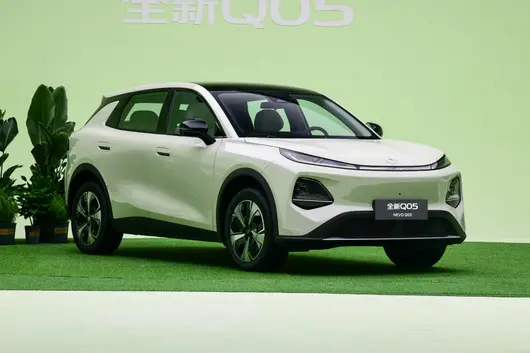
唔知有幾多朋友最近期關注 10 萬內純電 SUV 市場?近段時間睇嚟,呢個細分市場好熱鬧。就講長安啟源全新 Q05 同零跑 A10,上個月銷量分別達 15814 輛同 14372 輛,全部挺進 2026 年 4 月銷量排行全品類前 10,長安啟源全新 Q05 甚至奪得緊緊湊型純電 SUV 市場嘅銷冠。

(長安啟源全新 Q05)
值得留意係,兩款大熱門產品亮點亦唔少,9 萬級可以得到 500km+嘅續航,零跑 A10 甚至配備激光雷達,有高級智駕輔助需求嘅朋友嚟講,呢架車吸引力的確唔低。但係喺價格上,同為高配嘅長安啟源全新 Q05 506Max+ 同零跑 A10 505 激光雷達版,終端價格分別係 9.59 萬同 8.68 萬,手握 9 萬左右預算嘅朋友都可以考慮。明顯係,又去到決賽圈二揀一環節。
 (零跑 A10)
如果對預算比較敏感,咁喺長安啟源全新 Q05 同零跑 A10 之間,後者可能更受歡迎,畢竟終端價格實打實平咗幾千元。而且,高配 A10 配有激光雷達,市區/高速情況均能啟動領航輔助駕駛,呢個就係佢嘅優勢所在。當然,如果預算允許,揀長安啟源全新 Q05 高配,都有帶激光雷達嘅高級輔助駕駛。
 (長安啟源全新 Q05)
但既然係買車前嘅橫評,唔少全方位對比。首先從尺寸睇,作為緊湊型 SUV,長安啟源全新 Q05 長寬高分別係 4435*1855*1595mm,軸距為 2735mm。而零跑 A10 車型級別就係小型 SUV,長寬高分別係 4270*1810*1635mm,軸距為 2605mm。
 (零跑 A10)
如果只係考慮代步、通勤,零跑 A10 嘅細個嘅略有優勢,方便行街串巷。但實際上,好多人買車都要兼顧家用,10 萬內預算也多以剛需用車群體為主。既然係剛需,且有家用需求,嗰空間自然唔好掉鏈子。
 (長安啟源全新 Q05)
 (零跑 A10)
講返日常家庭出行嚟講,兩車之間 130mm 軸距差異,直接反映喺後排體驗。坐入長安啟源全新 Q05 後排,腿部空間平整兼寬敞,一齊坐 3 位成年人都唔會太擠;但係坐入零跑 A10 後排,無論坐寬定係腿部空間都會細少少。媽咪喺後排照顧孩子,長安啟源全新 Q05 後排更加寬敞嘅空間會更加方便佢操作,孩子都能有更大嘅活動空間。
 (長安啟源全新 Q05)
 (零跑 A10)
除咗空間,通勤黨同家庭用戶對舒適配置都比較關注。睇嚟對比,兩車都有配電動尾門、無匙進入、自適應遠近光等外部配置。但係從車廂內睇,零跑 A10 副駕無法電動調節,後排靠背都唔支援角度調節,同埋缺少後排空調出風口、車內 PM2.5 過濾裝置等。
 (長安啟源全新 Q05)
 (零跑 A10)
反觀長安啟源全新 Q05,除咗副駕支持電動調節,前排仲集成咗加熱/通風/按摩/副駕腿托功能,對比零跑 A10 只提供前排座椅加熱,佢嘅品質無疑更上一層樓。包括後排乘員都有少少照顧,例如靠背角度可調、配有後排空調出風口、後排中央扶手/杯架等,更加適合家人同行呢類場景。
 (長安啟源全新 Q05)
 (零跑 A10)
除咗舒享體驗,行駛系統嘅對比我哋都唔好忽略。首先從大家關注嘅續航睇,長安啟源全新 Q05 同零跑 A10 分別搭載 51.9kWh、53kWh 電池,CLTC 純電續航做到 506km、505km,差異大可忽略。但從電芯供應鏈睇,前者出自寧德時代,後者就係國軒高科/江蘇正力,若論品牌含金量,“寧王”順位自然靠前,更值得信賴。另外,兩車都有全球品質,按照全球嚴苛嘅標準打造,零跑 A10 符合國內、歐盟雙標準,長安啟源全新 Q05 已經喺泰國上市,未來仲會相繼落地多個國家地區,最終開拓歐洲區域,此外仲有央企背書,質量品質都好可靠。
因為本文討論嘅係 A10 嘅 505 版本,採用電池液冷技術,溫控較好,而如果係 403 版本,採用成本低嘅風冷技術,散熱效果較差。呢點上,全新 Q05 做得更好,入門就採用電池直冷技術,高配用嘅係液冷技術,能更好地實現熱管理,保證電池安全。
 (長安啟源全新 Q05)
 (零跑 A10)
動力方面,長安啟源全新 Q05 同零跑 A10 都係前置單電機佈局,電機最大動力輸出分別係 120kW/190N·m、90kW/150N·m,0-100km/h 加速時間分別做到 8.9 秒同 10.6 秒。坦率嚟講,兩款車喺純電陣營加速性能都中規中矩;但係相對嚟講,長安啟源全新 Q05 嘅 8 秒級零百加速,喺山路行駛、高速超車等情況下會比零跑 A10 更加分。
 (長安啟源全新 Q05)

(零跑 A10)
總結嚟講,零跑 A10 505 激光雷達版優勢突出:價格更低、智駕輔助覆蓋範圍更廣,適合預算優先 + 科技嘗鮮嘅消費者。而長安啟源全新 Q05 更強調“全面”二字:加少少預算同樣可以獲得高級輔助駕駛,而且尺寸更大、舒適配置更高、採用頭部電芯供應鏈,動力亦更強,綜合表現更全能。總括嚟講,預算 9 萬級追求面面俱到嘅家用體驗,長安啟源全新 Q05 506Max+ 更加值得考慮。

Have you ever seen the roads in India?
I've seen them online.
The scene is usually like this: a sedan blocked behind a cow, motorcycles running wild nearby, even milk tea vendors nearby, so "clean and hygienic".

However, in a place where many feel physically uncomfortable after watching, Toyota, Suzuki, Honda and other Japanese car companies decided to bet on India.
According to the Indian "Brand Quality Foundation" website, the three car companies will invest nearly $11 billion to build factories, increase capacity, and develop exports in India.
Some netizens commented: Did the three Japanese car companies have too much money?
In fact, they didn't have endless money to spend, nor were they bewildered by Indian curry. These Japanese car executives are much clearer than us.
Current Japanese car revenue and market share are declining. Raw material costs are soaring. Looking at the world map, finding a market that can accommodate capacity, expand share, and has gentle competition is not easy.
So, it wasn't that Japanese car companies chose India, but because they had no choice.
The Pain of Japanese Car Companies
Past Japanese cars were truly the envy of others.
Ask old drivers who drove Japanese cars over ten years ago, talking about Japanese cars, almost no one doesn't give a thumbs up, cheap price, fuel saving, durable...
Even many Japanese cars needed to be bought at a markup, but who would think this iron fortress would be beaten out of sight in a few short years.
With the wave of new energy vehicles coming, electrification and intelligence became the goal for many domestic car companies to "leapfrog". Relying on China's strong new energy vehicle industry chain advantages and car companies' own persistence on R&D and technology, Chinese independent brands quickly achieved "leapfrogging".
Domestic cars once criticized are now becoming more and more common on the roads, even surpassing joint ventures in share.
According to CPCA data, in April 2026, the share of independent brands reached as high as 62.5%, far exceeding Japan's 13.1%.

You need to know, the Chinese car market is the largest car market in the world. Losing speed in the Chinese market is like losing a huge piece of cake.
Meanwhile, the main theme of the Chinese market in recent years is still price wars. Racing on configuration, price, and service has become a normal state, which also had a huge impact on Japanese cars' profits.
Apart from China, Japanese cars are also not doing well in the US.
On January 20, 2025, Trump swore in as the 47th US President, starting a series of chaotic operations, including imposing additional car tariffs in the name of national security, causing the tariff rate for imported Japanese cars to reach as high as 27.5% at one point. Although it decreased later, it was still far higher than the initial tax rate.
This operation directly led to a tariff loss of over 2 trillion yen for seven Japanese car companies in fiscal year 2025.
Looking at Japan itself, it is actually not easy either.
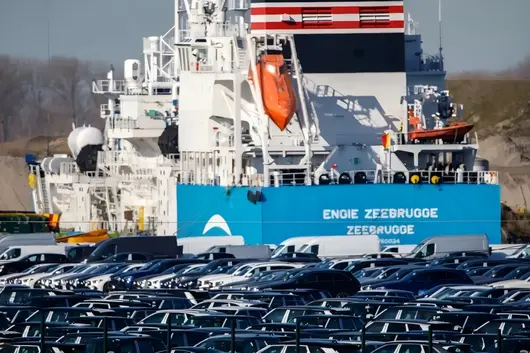
Middle East geopolitical conflicts blocked shipping in the Strait of Hormuz, transportation costs and raw material costs soared, Japanese car companies also had to suffer in silence.

Executives looking at the reports, their backs went cold, only to find a new growth curve.
So, Japanese car companies didn't fall in love with India, there was nowhere else to go.
Deep Thought on Choosing India
So, what magic does India have, to make Japanese car companies invest heavily?
The first advantage is big. In 2025, the Indian car market achieved 5.517 million new car sales, up 6% year-on-year, breaking the historical record, ranking as the third largest car market in the world, exceeding Japan for four consecutive years, second only to China and the United States.
The value of this doesn't need me to say much. India achieved this result mainly because India has been promoting tax reduction policies to promote consumption, which led to a significant increase in domestic consumption willingness.
The second advantage is close, meaning it is close to places where Japanese cars sell well, such as Africa.
So, India for Japanese car companies is more like a convenience store built in the center of a crossroad. You don't need to ship cars to eight countries separately, just build well at this stop in India, then unload ship by ship, and you can save a lot of costs.

The Nikkei also believes that India is expected to become its global car supply center.
The third advantage is stability. You know, Japanese cars' advantage is fuel cars, after all, the three major components of engines, gearboxes, and chassis, they have played for many years, technology accumulation is number one in the world.
But the Chinese car market has fully promoted electrification and intelligence development, leading to Japanese cars' advantage becoming weaker and weaker, impossible to play out. But India is different, it has the characteristics of few charging piles and slow electrification process. Indian old people buying cars still look for cheap, fuel saving, easy to fix, and these three points are exactly Japanese cars' old trade.
Especially Suzuki, always been India's car market evergreen, almost always sitting on the best-selling model throne, reputation of being worry-free, better than any advertisement.
So, Japanese car companies' vigorous layout of the Indian market is obviously carefully considered.
But, is the Indian market really that easy to mix?
The Hard-to-Bite Indian Market
Of course, India is not perfect like a hot commodity, its disadvantages are as obvious as its advantages, and every one is enough for Japanese car companies to face a hard time.
First talk about electrification. Yes, right now India has few charging piles and electric cars don't sell well, it is indeed a shelter for Japanese fuel cars. But you have to think, how long can this "shelter" avoid?
India previously shouted the slogan of 30% of new cars being electric vehicles by 2030. Although it sounds like bragging, but can't help but they really give subsidies, really build charging stations.
Imagine, what if one day India suddenly wakes up, starts vigorously promoting electrification, doing infrastructure, charging piles popping out like mushrooms after rain, then Japanese cars will be dumbfounded?
Isn't this a version of the Thai market?
Back then Japanese cars in Thailand won easily. The entire Southeast Asian market was called Japanese cars' backyard. Result Thailand took the lead in promoting electrification. Chinese electric vehicles came in, directly became a hot commodity. Look at Japanese cars again, share in Thailand falling down rapidly.

If India accelerates electrification, history will likely repeat, and this time, Japanese cars don't even have a place to flee, how to prevent will become the first problem for Japanese car companies.
Next talk about policy. India's policy is like a pot of curry, you never know if you will eat chicken or potato next time.
This magical country, today low tariff encourages building factories, tomorrow may fine you a huge amount. What's more annoying is mandatory joint venture. Foreign car companies want to sell cars in India, have to find local partners to partner up. When your factory is built, supply chain is done, India directly backstabs you. At that time whether adding money or withdrawing capital, what you get is heartache.
So you see, this market like India is like a mango that looks very sweet, bite the first mouth it's okay, chew two more mouths hit the hard core.
Japanese cars now is calculating, while the core hasn't bit the tooth, hurry up to nibble a few more mouths, but the core will bite sooner or later, just don't know which day.
Epilogue
Japanese cars this trip to India, not go for tourism, is go to make a living.
Chinese and Southeast Asian dining tables are more crowded, production and transportation costs have risen. Looking around the world, only this pot in India is still steaming, even if what is boiling inside is curry-flavored stones, have to bite hard and chew down.
Japanese car companies want to expand market, India wants to pull economy, solve employment, both sides have their own thoughts.
As for the ending is Japanese cars in India regain their glory, or like past competitors shamefully walk away, then is not known.
But no matter how, this play just started, we slowly watch is okay.
Anyway India's story, never bored.

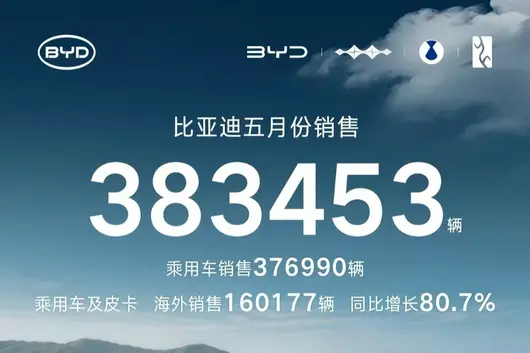
In May, China's automotive market overall presented a gentle recovery trend, with domestic brands still being the sales backbone of the market. Recently, BYD, Geely, Chery, Changan, and Great Wall, the top 5 domestic automakers, successively released their monthly performance reports. From the data, these five companies show a general characteristic of "stable total growth, divergence between domestic and international markets, and accelerated new energy penetration". Overseas exports and new energy vehicles have become the most core growth engines; export business has evolved from a "bonus item" to the "core foundation" for some companies. BYD's "dominant leader" status is further consolidated, Chery achieved high growth via exports, Geely's new energy penetration rate broke 56%, Changan focused steadily on balanced development, while Great Wall appeared slightly under pressure during structural transformation.
BYD: Export Hits New High Becomes Biggest HighlightIn May, BYD stood firmly at the top of domestic brands with a monthly sales volume of 383,500 vehicles, maintaining positive growth both year-on-year and month-over-month under a large base. Its two main brands, Dynasty and Ocean, sold a combined 330,200 vehicles, contributing 86.1% of total sales; Fangchengbao's monthly sales broke 30,000 units to reach 30,200, a year-on-year increase of 139.7%, setting a new high for the year; Denza sold 16,300 vehicles, and Yangwang delivered 286 vehicles. From a model perspective, BYD had eight models in May with monthly sales exceeding 20,000 vehicles. The Song Family and Yuan Family both broke 50,000 units, selling 51,370 and 56,691 vehicles respectively. The Sea Lion Family followed closely with 42,615 vehicles, and Seagull sales were also close to 40,000 vehicles.

BYD's biggest highlight in May was exports. Overseas new energy vehicle sales reached 160,600 units, an 80.4% year-on-year increase, accounting for about 42%. The sharp expansion of export scale effectively countered the phased weakness in domestic demand. Cumulative exports from January to May exceeded 620,000 vehicles. High export growth mainly benefited from continued ramping up of overseas factory capacity, improved ocean shipping capacity, and accelerated channel network expansion. In the domestic market, BYD promoted Megawatt Super Charging and intelligent strategies simultaneously—Megawatt charging achieved about 90% charge in 9 minutes; 20,000 super charging stations are planned to be built by 2026; all series models are available with Sky Eye B intelligent driving solutions and city navigation safety fallback plans, accelerating the popularization of high-level intelligent driving. As Gen 2 Blade Battery capacity gradually releases, the company's orders are expected to continue rising.
Chery: Sales Growth Leads the Top 5Chery Group's total sales volume in May was 247,800 vehicles, a significant year-on-year increase of 20.5%, ranking first in growth speed among the top 5. Exports remained its most core growth engine—May exports reached 181,900 vehicles, an 80.5% year-on-year increase, accounting for 73.4% of total sales that month, continuously breaking the single-month export record for Chinese brands for three months. In terms of new energy, Chery New Energy sold 100,300 vehicles, a 58.8% year-on-year increase. April and May consecutively saw monthly new energy sales breaking 100,000 vehicles.

The strong performance in exports benefited from Chery's long-term deep cultivation of overseas channel advantages and localized operation capabilities. While overseas orders continued to rise, high export growth formed a sharp contrast with domestic sales—Chery's domestic sales in May were only 60,000 vehicles, accounting for one-quarter of total sales. From cumulative data, Chery Group accumulated 1.101 million sales from January to May, but against the annual goal of 3.2 million vehicles, monthly averages need to reach about 420,000 vehicles later, and pressure remains significant.
Geely: New Energy Penetration Rate Breaks 56%Geely Auto's total sales volume in May was 237,600 vehicles, a 1% year-on-year increase, achieving month-over-month double growth for three consecutive months. In terms of structure, Geely's "New Four Transformations" transformation showed significant results: new energy vehicle sales reached 133,400 units, accounting for 56% of total sales, with new energy share exceeding 50% for four consecutive months.

From sub-brands, performance was significantly divergent. Zeekr brand sales in May reached 34,400 vehicles, a 82% year-on-year increase; Zeekr 9 Series and 8 Series models combined sales approached 50% of total sales, showing bright performance in the high-end market; Galaxy brand sales were 81,700 vehicles; Geely brand sales were 182,500 vehicles, among which China Star Series sales reached 100,800 vehicles; Lynk & Co brand sales were 20,700 vehicles, with new energy vehicle sales share rising to 71%.
In terms of exports, Geely's overseas vehicle exports in May reached 85,100 vehicles, a explosive 184% year-on-year increase, setting a brand single-month export record high. Among exported products, new energy vehicles reached 40,800 units, accounting for nearly half; hybrid and pure electric products have successively landed in Southeast Asia, Middle East, Latin America, and other markets, highlighting the results of global strategy implementation.
Changan: Multi-brand Matrix Balanced EffortChangan Auto's delivery volume in May was 209,100 vehicles, among which new energy deliveries were 92,400 vehicles, a 5.8% year-on-year increase, with new energy share about 44%. In terms of exports, overseas deliveries reached 70,700 vehicles, a 38% year-on-year increase, becoming another major growth highlight for Changan in May.
In the sub-brand matrix, Changan Qiyuan delivered 34,500 vehicles in May; All-New Q05 delivered 15,800 units, with orders breaking 3,000 units within three days of listing in Thailand; Deepal sales in May were 33,200 vehicles, a 30% year-on-year increase; January to May overseas cumulative sales were 28,700 vehicles, a significant 167% year-on-year increase; Avatr delivered 7,336 vehicles in May; Changan Auto (Gravity) delivered nearly 49,000 vehicles in May.

Changan Auto's balanced layout was fully reflected in May: the fuel car base remained stable, new energy brands Deepal and Qiyuan accelerated volume growth, high-end brand Avatr continued to break through in technical cooperation, and overseas markets simultaneously achieved breakthrough growth. The pattern of five brands working together, driven by both new energy and exports, is initially taking shape.
Great Wall: Overseas Sales Growth Year-on-Year 46.75%Great Wall Motor's sales in May were 100,400 vehicles, slightly down compared to last May's 102,200 vehicles, making it the only company among the top 5 to show a year-on-year negative growth. From sub-brands, Haval brand sales in May were 55,500 vehicles, remaining Great Wall's most important sales pillar; Tank brand sales were 17,100 vehicles; both Haval and Tank brand sales showed year-on-year declines; Wey brand sold 8,119 vehicles, a 31.78% year-on-year increase, achieving growth against the trend; Ora brand performance was most stunning, with sales of 6,018 vehicles, a significant 206.88% year-on-year increase. In terms of new energy, Great Wall sold 30,400 new energy vehicles in May, with new energy vehicle transformation gradually accelerating.

The overseas market became Great Wall's biggest highlight in May, with overseas sales growing 46.75% year-on-year. Against the background of pressure on the domestic market, strong growth in overseas business effectively made up for the decline in the domestic market. Great Wall Motor's current core contradiction lies in: Haval and Tank, the two traditional main-selling brands, face weak growth, while Wey and Ora brands, although growing notably, have relatively small volume and are not yet enough to support overall growth. How to complete the "relay" between old and new brands is the key issue Great Wall must solve subsequently.
Final ThoughtsFrom May data, the growth pattern of the top 5 domestic brands has clearly diverged, but there are three common trends worth noting: First, exports have become a key engine for domestic brands to seek stability and growth. Second, new energy transformation is still accelerating, but paths differ among enterprises. Third, technological innovation continues to deepen brand moats. Looking ahead to the second half of the year, competition in the automotive industry will continue to upgrade around these three trends. Although everyone has a common direction, these three trends are all competing for the entire enterprise's industrial chain strength, and the strong will remain strong, which has almost become an inevitable outcome.