
Search History
Popular Searches
English
Dealer Login / Sign Up
As the automotive world turns its gaze towards the Chinese capital for the 2026 Beijing Auto Show, the industry's relentless march towards electrification unveils another significant contender. In an exclusive preview captured by Yiche's editorial team ahead of the official unveiling, the SAIC Volkswagen Passat ePro has emerged from the shadows, poised to redefine the executive sedan segment for the electrified era. This is not merely a facelift or a mild-hybrid afterthought; the Passat ePro represents a deliberate and calculated evolution, integrating a sophisticated plug-in hybrid system into one of the world's most recognizable and trusted automotive nameplates.

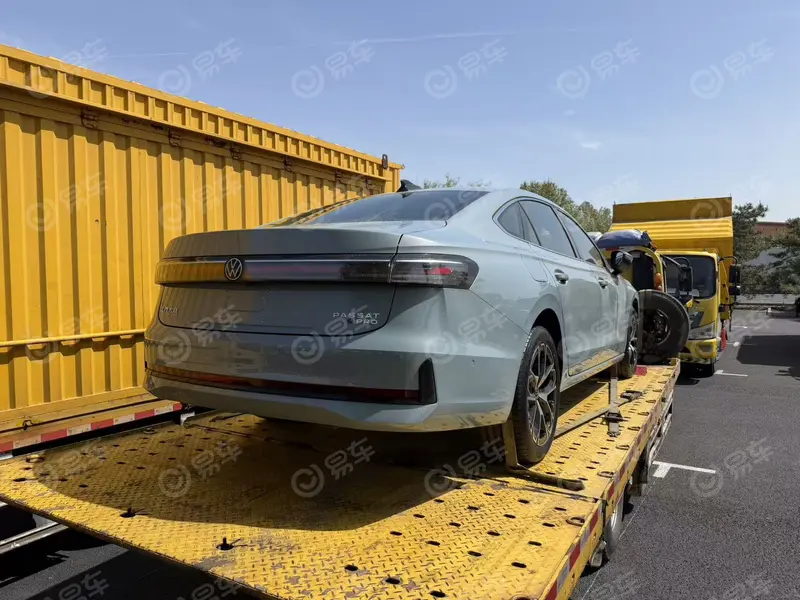
The images reveal a vehicle that confidently bridges Volkswagen's storied past and its ambitious electric future. Based on the foundational architecture of its combustion-engine sibling, the Passat ePro undergoes a series of thoughtful aesthetic recalibrations designed to signal its advanced powertrain without resorting to radical, divisive styling. The design language speaks of evolution, not revolution, appealing to a clientele that values progressive technology but within a framework of established sophistication and understated elegance.
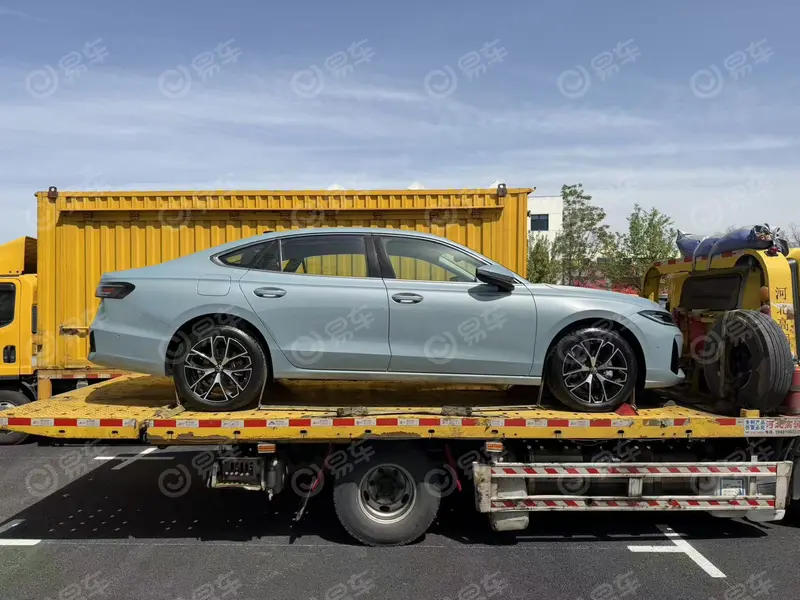
At the front, the signature Volkswagen identity is preserved yet refined. The upper section maintains the now-familiar seamless integration of the headlight units with the grille, a horizontal element that emphasizes width and stability. However, it is the lower fascia that undergoes the most telling transformation. Where the purely fuel-powered Passat might feature more aggressive, sport-oriented intakes and sculpting, the ePro adopts a cleaner, more cohesive full-width design. This simplification removes visual clutter, replacing it with a sense of polished luxury and aerodynamic consideration. The result is a front end that appears more integrated and premium, subtly distinguishing the ePro from its stablemates while enhancing its aerodynamic profile for efficiency gains.

The design philosophy of refined simplification continues seamlessly to the rear. The hallmark full-width taillight bar, a contemporary design staple that enhances nighttime visibility and brand recognition, remains proudly in place. However, the surrounding elements are treated with a minimalist's touch. The rear bumper and diffuser area are significantly cleaner, with fewer character lines and faux vents. This tidier aesthetic reduces visual weight, aligning the car's posterior with the serene and efficient character promised by its plug-in hybrid heart. The overall silhouette remains unmistakably Passat—proportioned, authoritative, and elegant—but the details whisper of its next-generation propulsion.
Yet, the true narrative of the Passat ePro is written under the hood and along its chassis. Volkswagen has equipped this pivotal model with what promises to be a highly efficient and responsive plug-in hybrid (PHEV) system. At its core lies the 1.5T EVO II engine, a unit specifically developed and optimized for hybrid applications. This turbocharged four-cylinder represents the pinnacle of internal combustion efficiency for its role, engineered to operate within its most effective ranges as part of the hybrid system, rather than shouldering the entire propulsion burden alone.

Mated to this dedicated hybrid engine is an electric motor, the duo orchestrated by sophisticated power electronics to deliver seamless performance. The system draws its electric energy from a sizeable 22kWh battery pack. This capacity is significant, placing the Passat ePro firmly in a position to offer substantial zero-emissions, electric-only driving range—a key factor for urban commuters and a major differentiator from milder hybrid systems. Early indications suggest this configuration enables the Passat ePro to tackle a comprehensive daily commute purely on electricity, drastically reducing fuel consumption and tailpipe emissions for most users' everyday journeys.
The synergy between the thermal and electric components is engineered to deliver a compelling driving experience. Volkswagen promises "rapid power response," a characteristic inherent to electric motor torque delivery. This should translate to confident, immediate acceleration from a standstill and during overtaking maneuvers, with the combustion engine seamlessly engaging for sustained power or high-speed cruising. The overarching engineering goal, however, is a dramatic reduction in combined fuel consumption. By leveraging the electric motor for urban travel and using the efficient 1.5T EVO II engine as a generator and a direct drive unit at optimal times, the Passat ePro aims to offer the long-distance capability of a conventional sedan with the running costs approaching that of a pure electric vehicle for local use.

Furthermore, Volkswagen emphasizes "ultra-long range" as a key attribute. This refers not just to the electric-only range, but to the total travel distance achievable on a full tank of fuel and a fully charged battery. This combination effectively eliminates the range anxiety associated with early-generation electric vehicles, making the Passat ePro a compelling "one-car solution" for families and professionals who require a vehicle capable of efficient daily errands, lengthy business trips, and everything in between, without the need for frequent charging stops on long journeys.
The introduction of the Passat ePro arrives at a critical juncture. Global markets, and China in particular, are navigating a complex transition towards New Energy Vehicles (NEVs). Government policies, evolving consumer preferences, and environmental imperatives are pushing manufacturers to electrify their core model lines. For Volkswagen, a brand synonymous with quality and volume in the midsize sedan segment, the Passat's electrification is not an optional experiment but a strategic necessity. The ePro variant allows the company to cater to a growing demographic of buyers who seek the space, comfort, and brand assurance of a Passat but demand the efficiency, low running costs, and environmental credentials of an electrified powertrain.
Its debut at the 2026 Beijing Auto Show is symbolic. China is the world's largest automotive market and the most aggressive adopter of electrified technology. Showcasing the Passat ePro here signals Volkswagen's commitment to its Chinese joint venture, SAIC Volkswagen, and to meeting the specific demands of Chinese consumers who are at the forefront of adopting PHEV technology. The vehicle will undoubtedly be scrutinized as a benchmark for how traditional global automakers are adapting their iconic models to compete with a new wave of domestic Chinese EV specialists.
In essence, the SAIC Volkswagen Passat ePro previewed ahead of Beijing 2026 is a statement of balanced intent. It retains the core virtues that made the Passat a global bestseller—spacious interior, refined ride, and timeless design—while injecting them with the efficiency and advanced propulsion of a modern plug-in hybrid. It represents a pragmatic path to electrification, one that acknowledges the current infrastructure landscape and diverse consumer needs. By offering a familiar form with a futuristic function, the Passat ePro is not just a new variant; it is a bridge. It is Volkswagen's carefully engineered bridge from its illustrious past in internal combustion to its all-electric future, ensuring that one of its most important nameplates remains relevant, desirable, and competitive in the dawn of a new automotive age. The full details, specifications, and driving impressions will be eagerly awaited when the curtains rise at the Beijing Auto Show, but from this first look, the Passat ePro appears ready to write a compelling new chapter in a legendary story.

香港汽車內容平台 🚗 新車・買車・玩車・用車 用香港視角,睇世界嘅車
+ Follow 【揀車有路數】日產新車賣比亞迪價?仲有激光雷達
今集試一台好特別嘅日產新車——NX8,中國特供增程SUV。外觀似熟悉嘅日產味,但內籠同科技配備竟然唔晒傳統日產套路,駕乘感受又有幾多轉變?到底仲係咪你認識嗰部日產?一齊試畀你睇。
#日產 #NX8 #增程 #BitAutoHongKong #揀車有路數 3小时前
【揀車有路數】日產新車賣比亞迪價?仲有激光雷達
今集試一台好特別嘅日產新車——NX8,中國特供增程SUV。外觀似熟悉嘅日產味,但內籠同科技配備竟然唔晒傳統日產套路,駕乘感受又有幾多轉變?到底仲係咪你認識嗰部日產?一齊試畀你睇。
#日產 #NX8 #增程 #BitAutoHongKong #揀車有路數 3小时前  【新車速報】T-Top 回歸?Nissan Z Kaze 概念車現身!
90年代 JDM 味返晒嚟?Nissan 最近喺美國 ZCON 公開 Z Kaze 概念車,以現款 Nissan Z 為基礎,換上全新 T-Top 可拆式車頂,向經典 300ZX 等 Z 系列致敬。
配合碳纖維空力套件、NISMO LMGT2 18吋輪圈,以及 GReddy 排氣、進氣同 intercooler 升級,成部車都充滿 JDM 改裝味。
「Kaze」即係日文「風」,而呢部車係 one-off 概念作品,並非量產車。10月3日仲會現身加州長灘 Japanese Classic Car Show。
如果 T-Top Z 真係量產,你會唔會心動?
#NissanZ #ZKaze #TTop #JDM #BitAutoHongKong 6小时前
【新車速報】T-Top 回歸?Nissan Z Kaze 概念車現身!
90年代 JDM 味返晒嚟?Nissan 最近喺美國 ZCON 公開 Z Kaze 概念車,以現款 Nissan Z 為基礎,換上全新 T-Top 可拆式車頂,向經典 300ZX 等 Z 系列致敬。
配合碳纖維空力套件、NISMO LMGT2 18吋輪圈,以及 GReddy 排氣、進氣同 intercooler 升級,成部車都充滿 JDM 改裝味。
「Kaze」即係日文「風」,而呢部車係 one-off 概念作品,並非量產車。10月3日仲會現身加州長灘 Japanese Classic Car Show。
如果 T-Top Z 真係量產,你會唔會心動?
#NissanZ #ZKaze #TTop #JDM #BitAutoHongKong 6小时前  【新車速報】Skyline 真係要返嚟喇!Nissan CEO:新一代12月登場
等咗咁耐,Skyline 終於有新消息!Nissan CEO Ivan Espinosa 接受《朝日新聞》專訪時透露,新一代 Skyline 將於今年12月亮相,亦係 Nissan 加快新車開發嘅代表作。
新車開發周期縮短至約 26個月,並利用生成式 AI、數碼模擬等工具加快開發流程。Nissan 官方亦已將 Skyline 列入 Heartbeat 車系,代表品牌工程技術、駕駛性能與情感。
至於動力、規格同最終量產設計,目前仍未全面公開。今次 Skyline 回歸,你最期待保留邊樣經典元素?
#Nissan #Skyline #新車速報 #BitAutoHongKong 1天前
【新車速報】Skyline 真係要返嚟喇!Nissan CEO:新一代12月登場
等咗咁耐,Skyline 終於有新消息!Nissan CEO Ivan Espinosa 接受《朝日新聞》專訪時透露,新一代 Skyline 將於今年12月亮相,亦係 Nissan 加快新車開發嘅代表作。
新車開發周期縮短至約 26個月,並利用生成式 AI、數碼模擬等工具加快開發流程。Nissan 官方亦已將 Skyline 列入 Heartbeat 車系,代表品牌工程技術、駕駛性能與情感。
至於動力、規格同最終量產設計,目前仍未全面公開。今次 Skyline 回歸,你最期待保留邊樣經典元素?
#Nissan #Skyline #新車速報 #BitAutoHongKong 1天前 Get the latest car news first!
【揀車有路數】日產新車賣比亞迪價?仲有激光雷達
今集試一台好特別嘅日產新車——NX8,中國特供增程SUV。外觀似熟悉嘅日產味,但內籠同科技配備竟然唔晒傳統日產套路,駕乘感受又有幾多轉變?到底仲係咪你認識嗰部日產?一齊試畀你睇。
#日產 #NX8 #增程 #BitAutoHongKong #揀車有路數 3小时前 【新車速報】T-Top 回歸?Nissan Z Kaze 概念車現身!
90年代 JDM 味返晒嚟?Nissan 最近喺美國 ZCON 公開 Z Kaze 概念車,以現款 Nissan Z 為基礎,換上全新 T-Top 可拆式車頂,向經典 300ZX 等 Z 系列致敬。
配合碳纖維空力套件、NISMO LMGT2 18吋輪圈,以及 GReddy 排氣、進氣同 intercooler 升級,成部車都充滿 JDM 改裝味。
「Kaze」即係日文「風」,而呢部車係 one-off 概念作品,並非量產車。10月3日仲會現身加州長灘 Japanese Classic Car Show。
如果 T-Top Z 真係量產,你會唔會心動?
#NissanZ #ZKaze #TTop #JDM #BitAutoHongKong 6小时前 【新車速報】Skyline 真係要返嚟喇!Nissan CEO:新一代12月登場
等咗咁耐,Skyline 終於有新消息!Nissan CEO Ivan Espinosa 接受《朝日新聞》專訪時透露,新一代 Skyline 將於今年12月亮相,亦係 Nissan 加快新車開發嘅代表作。
新車開發周期縮短至約 26個月,並利用生成式 AI、數碼模擬等工具加快開發流程。Nissan 官方亦已將 Skyline 列入 Heartbeat 車系,代表品牌工程技術、駕駛性能與情感。
至於動力、規格同最終量產設計,目前仍未全面公開。今次 Skyline 回歸,你最期待保留邊樣經典元素?
#Nissan #Skyline #新車速報 #BitAutoHongKong 1天前  BAWToyotaBYDZeekrGACDongfengXPengMGMaxusLeapmotorDenzaIMiCAURDeepalWulingOraJuneyao AutoKYCSkyworthAvatrFotonFordGeelyHongqiJAECOOKGMOMODADFSKTeslaHondaBMWMercedes-BenzsmartMINIPorscheNissanLexusSuzukiVolvoSubaruMazdaKiaHyundaiLand RoverRolls-RoyceFerrariAudiLamborghiniRiddaraSeresFarizonfireflyLingboxKaiyiVoyahHIMAM-HeroIsuzuBentleyPolestarMcLarenMitsubishiMaseratiPeugeotAston MartinAcuraJeepJaguarLotusVolkswagenEpiclandJACLepasLi
 © 2024 Bitauto.com. All Rights Reserved.
Bitauto (www.yiche.com and www.bitauto.com) is one of the most visited automotive websites in China. We provide detailed info on Chinese car brands available in your area. Please note that the information provided on this website is based on publicly available data and is for reference only. It may not be fully updated or accurate at all times.
Help us improve our website


